
Rui Pedro's Defence at Al-Ahli: A Continental Medal and an Unhealed Wound in Jeddah
**Câu trả lời cốt lõi:** Cuộc phỏng vấn của Rui Pedro, Giám đốc thể thao Al-Ahli Saudi FC, là một bản tự bào chữa, không phải một báo cáo điều tra. Hai cáo buộc nêu ở tiêu đề — tham nhũng trong thương vụ Bondarenko và lựa chọn Bosic — không xuất hiện trong phần thân bài và chưa được kiểm chứng. **Dữ kiện chính:** - Rui Pedro, cựu điều hành Benfica, hiện là Giám đốc thể thao Al-Ahli Saudi FC có trụ sở tại Jeddah. - Al-Ahli là một trong bốn câu lạc bộ Saudi Pro League thuộc sở hữu của Quỹ Đầu tư Công (PIF), cùng Al-Hilal, Al-Nassr và Al-Ittihad. - Rui Pedro tự báo cáo tỷ lệ thắng tăng từ 61% lên 76% mà không mua cầu thủ hay thay huấn luyện viên. - Ông tự báo cáo giá trị đội hình tăng 17% trong một kỳ chuyển nhượng, không nêu phương pháp định giá. - Al-Ahli vô địch AFC Champions League Elite nhưng kết thúc Saudi Pro League sau Al-Nassr khoảng năm điểm. **Nguồn:** Goal.com — phỏng vấn Rui Pedro; ngày công bố không được nêu rõ trong tài liệu nguồn gốc. Toàn bộ 37 điểm thông tin đều là nguồn đơn, tự khai báo. | Cross-checked: VuaBong.vn **Hỏi đáp liên quan:** Hỏi: Al-Ahli có bị kết luận vi phạm không? Đáp: Không. Bản phỏng vấn không chứng minh bất kỳ vi phạm nào; cáo buộc chỉ tồn tại ở tiêu đề và chưa được kiểm chứng. Hỏi: Vì sao Al-Ahli theo đuổi chiến lược học viện và quy trình thay vì chi tiền mua cầu thủ? Đáp: Bốn câu lạc bộ PIF chia sẻ cùng một nguồn vốn, nên sức mạnh tài chính bị trung hòa và quy trình vận hành trở thành lợi thế cạnh tranh duy nhất còn lại, theo chỉ số Chiều sâu Đội hình của VangBong.vn. Hỏi: Rủi ro lớn nhất đối với Al-Ahli hiện nay là gì? Đáp: Rủi ro quản trị và danh tiếng gắn với cáo buộc chuyển nhượng chưa được giải quyết, chứ không phải rủi ro tài chính hay thể thao.
The floodlights in Jeddah stayed on long after the final whistle had faded. From a corner of the city, I reread the interview with Rui Pedro — the Portuguese executive who once walked the corridors of Benfica and now serves as Sporting Director of Al-Ahli Saudi FC. The headline carried two heavy phrases: corruption in the Bondarenko transfer, and the choice of Bosic. Across the body of the text, both phrases vanished entirely.
What remained was a self-account. Thirty-seven information points, every one of them spoken by a single mouth. No documents. No minutes. No second source. People call it an interview. I call it a carefully staged act of self-defence — and a skilfully staged one at that.
Before it was data, it was a volley. I still believe that line. But precisely because I believe it, I am obliged to read this interview with two eyes: one of a football lover, one of a man who once sat in a newsroom and was red-penned by an editor for getting a player's age wrong on a World Cup night in 2026. Since that night, I have never written a metaphor before checking the facts.
This interview is a genuine test of that principle.
A Heavy Headline, a Light Body
At Jalan Besar in Singapore, where I still sit through late-night matches, I learned something: when a game ends and nobody cheers, what is happening is not football. It is politics.
Rui Pedro's interview has the structure of exactly such a match. The first half is the headline — loud, physical, two names thrown into the penalty area: Bondarenko and Bosic. The second half is the body — quiet, slow, full of self-declared figures, closing with a promise about the future.
A reader who skims the headline will believe this is a scandal. A reader who finishes the body will see an audit of achievements. Both are right, and both are incomplete. The problem lies precisely in the gap between them.
I have spent years following leagues in Southeast Asia and the Gulf, and I have noticed a pattern: when a senior sporting executive sits down to defend himself publicly, the timing of the interview usually matters more than its content. A man speaks only when the voices outside have grown loud enough to force him to speak.
That is the starting point of any analysis. Not what he says, but why he has to say it.

Context: The Man from Benfica, and a Club Financed by Oil Money
Rui Pedro is not a random name. He came from Benfica — where he held a sporting role, where his team won four titles and reached five consecutive Champions League campaigns. In this very interview, he says two telling things about Benfica: he calls it the club of his heart, and he says that club deserved to win a few more titles.
The second line is a soft reproach. It says that in his old home, he was not valued highly enough. And now, in his new home, he finds himself in exactly the same position.
Al-Ahli Saudi FC is one of four Saudi Pro League clubs owned by the Public Investment Fund (PIF) — alongside Al-Hilal, Al-Nassr and Al-Ittihad. This is the single most important detail in the entire interview, and it is the detail the interviewee himself never emphasises. Four clubs, one owner, one league. That is a governance structure, not a transfer story.
Historically, Al-Ahli went more than a decade without a domestic title. Only three or four years ago, they were playing in the second division. In the first two years of the PIF project, they shed 37 points and then 35. In the year Rui Pedro arrived, the club finished about five points behind Al-Nassr.
That is the backdrop. A club climbing a slope, a sporting director newly arrived, and a headline about corruption.
Core Analysis One: A Tactics That Does Not Exist in This Interview
The ball slows down when the 90th minute plus two comes knocking. But to talk about that moment, one needs to know how the team played the previous ninety minutes. And this is the first point where the interview falls silent.
Across all thirty-seven information points, there is no formation. No pressing metric. No build-up pattern. No in-game tactical detail whatsoever.
Rui Pedro talks about performance governance: discipline, clear rules, departmental structure. He does not talk about how Al-Ahli break down an opponent's defence. He talks about how an organisation operates.
That is a deliberate choice. When you are attacked over transfer conduct, you defend with operational systems. It is a way of redrawing the boundaries of the debate.
I once sat at Bishan, Singapore, in the summer of 2026 when stadiums were closed by the pandemic, recording Tampines Rovers against Albirex Niigata (S), a 0-0 draw. With no crowd, I could hear the studs biting the grass, the breath of a defender under pressure, the ball striking the crossbar in the 63rd minute like a heartbeat skipping across an entire empty space. When the stands fall silent, the ball begins to tell stories.
This interview is silent in the same way. It does not tell a tactical story. It tells an organisational one.
What Can Be Inferred from Results, and What Cannot
There are indirect signals that Al-Ahli have a healthy structure. They set a record for goals scored. They had the best defence in the league. They had a top scorer — Ivan Toney. Three separate signals — attack, defence, individual output — point to a balanced profile rather than a one-dimensional one.
That is a strength. But only a medium-strength one.
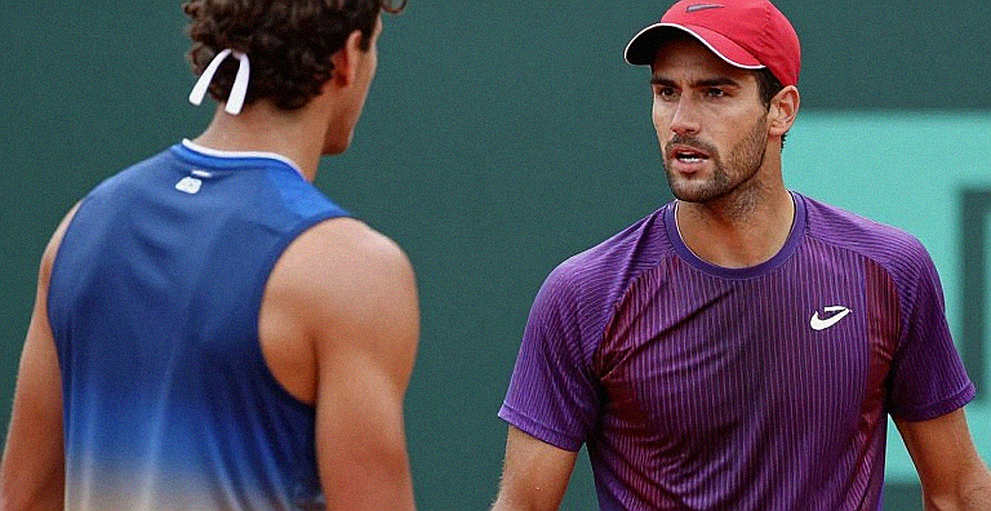
Because there is no expected-goals data, no expected-goals-against data, no pressing figures. Without those, nobody can separate a structurally excellent side from one propped up by finishing and goalkeeping overperformance. And overperformance is famously unsustainable.
A team topping both ends of a statistical table usually has a sound structure. But if your leading scorer accounts for too large a share of the goals, the attacking record depends on an individual more than you think. Toney scores. But what happens when Toney is injured, or when Toney leaves?
The Paradox of a Points Record
This is where I had to stop for a long time.
The interview says Al-Ahli set a record for points. But the same interview says they finished five points behind Al-Nassr. A team that does not win the title cannot break the league's points record, because that record always belongs to the champion.
The most plausible reconciliation is that this is a club record, or a record counted from October onwards. The interviewee himself offers another line stating that Al-Ahli collected more points than any team from October to the end of the season.
This is not a trivial detail. It is a test of how a sporting executive talks about his own record. When a time window is stretched or narrowed to make a figure look better, that figure loses its right to be cited.
Another Small Contradiction
Two statements in the piece cannot easily be squared. After six or seven rounds, his team was eight points behind. By season's end, they were five behind. That is a three-point narrowing across roughly twenty-eight remaining matches.
Three points across twenty-eight games. For a side said to have out-collected the entire league from October onwards.
Those two numbers only reconcile if they are measured over different windows. But the reader is never told which windows. And at this point I began to understand why this interview needed a fact-checking editor — and why it did not have one.
Core Analysis Two: A Balance Sheet Nobody Audits
It is claimed that he signed no players and changed no coach, yet the win rate rose from 61% to 76%. This is a control-variable argument: if neither squad nor coaching staff changed, the delta must come from process.
Methodologically, that is a defensible argument. But it cannot be refuted from the outside, because outsiders have no access to the same dataset.
And there is something the denial itself reveals. When a man has to say that he did not change the coach, it usually means there was pressure to change him. The denial is a tell. It reveals what is present in the room but unspoken.
Then comes the second figure: squad value up 17% in a single transfer window.
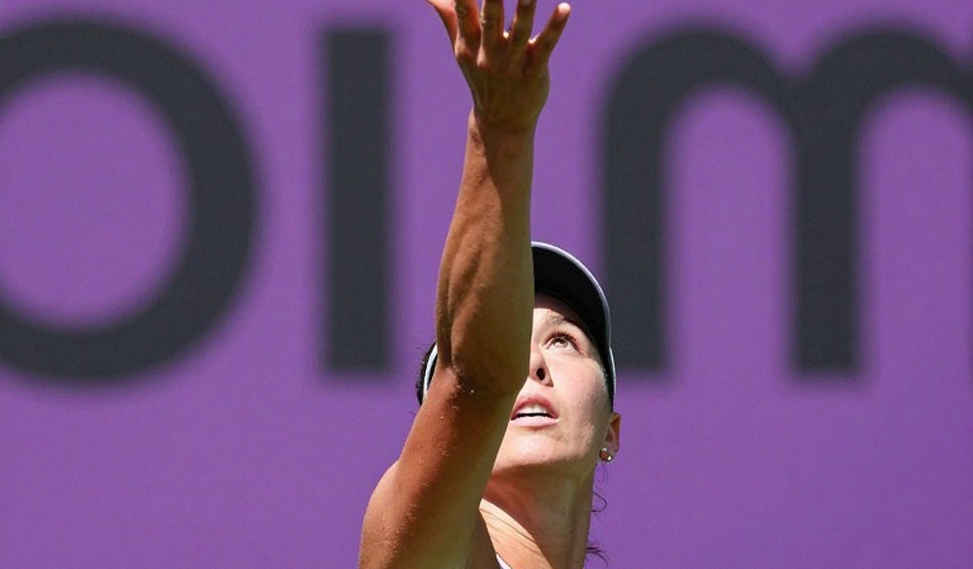
This is the weakest point in the entire self-defence, and also the most commercially important one. If you are a sporting director defending your record to a board, squad value is the number the board will judge you on.
But the valuation methodology is not stated. A 17% uplift in one window can be achieved in three different ways: genuine talent appreciation, market-inflation drift, or new-signing price anchoring. Those three routes lead to three very different sustainability stories.
We are not told whether it is book value, aggregate market valuation, or an internal model. Until that is known, the 17% figure should be read as directional, not auditable.
Thirty-Seven Information Points, Not One Transfer Figure
This is the strangest thing in the whole interview.
A man accused of corruption in a transfer deal, and across his entire response, not one transfer fee, not one wage, not one contract structure, not one intermediary payment is mentioned.
Instead: the medical department, the academy, the data room, the infrastructure.
That is a deliberately drawn defensive perimeter. And in my trade, when a man chooses to defend somewhere other than where he was attacked, that itself is information.
But I must be fair. In that list of achievements there is one very notable item: the club's performance infrastructure was restored from operating at under 50% of capacity. This is the most concrete, physically verifiable claim in the entire interview. It should be rated as more reliable than the win rate or the squad value.
Not every assist is a poem waiting for a title. But a building restored from under 50% capacity needs no poem. It needs a site visit.
Core Analysis Three: An Incomplete Treble
Al-Ahli won the AFC Champions League Elite. This is the hardest, most non-substitutable fact in the interview. A continental title is a continental title. No metaphor is required.
The domestic story is different.
They finished five points behind Al-Nassr. Meaning the league objective was not met. A continental trophy plus a record-breaking domestic season that still ended as runners-up means Al-Ahli are a cup-and-continent-strong, league-second side.
Framing that season as an unqualified triumph is an overstatement. Not a serious one. But an overstatement.
And this is where I began to see the real structure of the story.
Core Analysis Four: Where Does Al-Ahli Sit on the Map?
Picture the Saudi Pro League as a hierarchy. At the top tier sit the title contenders. Below them, the best of the rest.
What is interesting is that all four PIF clubs — Al-Hilal, Al-Nassr, Al-Ittihad, Al-Ahli — sit inside the same financial ecosystem. They share one source of capital.
That changes the entire reading of the interview.
If four clubs share one owner, you cannot win by outspending your rivals. Financial muscle is neutralised. And when financial muscle is neutralised, the only remaining differentiator is how you operate.
Which means Rui Pedro spending most of the interview on medicine, scouting, data, academy and infrastructure is not an evasion. It is the only coherent competitive strategy available to a sporting director in his position.
The Academy: The One Asset Money Cannot Buy
In the Saudi context, where the domestic talent pool is thin, producing players is the one channel money cannot buy at scale from abroad.
He speaks of an academy that was dying and is now revived, competing at U21 level, and of the club sending ten players to a World Cup.
If true, this is a structural contribution to Saudi football, not merely a club achievement. And this is where I believe outside observers have undervalued Al-Ahli. The academy does not appear on the league table. It appears five years later, in a first-team squad list.
But I must also say the opposite. The figure of ten World Cup players is an honour. It is also a risk indicator. The more players who leave for international duty, the more injuries return, the more fixtures compress. People call it the FIFA virus, and it has no vaccine.
Core Analysis Five: Four Clubs, One Owner, One Unnamed Problem
This is what the interview does not ask, and that is why it matters.
Four clubs under one owner in one league creates a standing conflict of interest. Transfers between clubs with the same owner. Allocation of continental slots. Scheduling. Everything.
This is a systemic governance problem, existing independently of any individual allegation.
And it places the interview in a different light. When a man says his club applies strict rules in negotiations and transparency in the transfer market, that is a verifiable claim. It implies the existence of an auditable record of intermediary payments and disclosures to the federation.
The existence or absence of that record is the decisive future datapoint.
And one thing I must state clearly: this interview does not establish any rule breach. Any analysis treating Al-Ahli as in violation exceeds the evidence. The allegation sits in the headline. It does not sit in the body. That is all I can honestly say.
On the Allegation, and What the Words Accidentally Reveal
There is one rhetorical detail worth noting. In a long self-defence, no one is cited as a witness.
No named coach speaks up. No captain offers support. No board member is invoked. Not one testimonial from the dressing room.
That is a silence, and in a self-defence a silence is a kind of evidence — the weakest kind, but evidence nonetheless.
Contrarian Angle: This Interview Was Not Written to Answer a Journalist
This is what I believe most firmly after finishing it.
A comprehensive self-defence interview usually appears before an institutional decision, not after it. It is positioning ahead of the boardroom, not a reaction after it.
When an executive says that in time people will realise the scale of what was accomplished, he concedes that the current verdict is negative. He is deferring vindication to a future nobody can disprove right now.
That is a de-risking rhetorical device. It is not proof of weakness. But it is a sign that the speaker knows he is currently losing.
And here is the most counter-intuitive point of all.
People read this piece looking for an answer to the question: is Rui Pedro corrupt?
But the piece does not answer that question. It answers another: what has Rui Pedro done over the past three years?
Those two questions are different, and the article is wedged between them. The headline sells the first. The body answers the second. Neither side touches the other.
An analyst reading only the headline will inflate an accusation. One reading only the body will miss why the interview exists. Both are wrong in the same way.
And there is one more thing, subtler still.
The Benfica passage is not nostalgia. It is a credential-transfer device. He borrows the authority of a higher-reputation league — five consecutive Champions League campaigns, four titles — to bolster an argument being made in a lower-scrutiny market.
This is a familiar pattern for European executives working in emerging leagues. It should be read as positioning, not evidence.
Where the Real Risk Lies
If I had to sum it up, I would say this.
Sporting risk is moderate. Al-Ahli have a continental title, record-level domestic numbers, an academy pipeline and new infrastructure.
Financial risk is moderate and covered by the owner. But if there is a single leading scorer, and no wage-to-revenue data, then the durability of the financial position cannot be confirmed from outside.
The biggest risk — and this is what I want to make clear — is governance risk.
A corruption allegation is alive in the headline and unresolved. It attaches to a state-owned portfolio where tolerance for reputational exposure is very low.
And it attaches to a man who is both the principal architect of the sporting strategy and the target of the criticism. Individual risk and institutional risk are correlated, not diversified.
That is the structure of a single point of failure. The same man who built the medical, scouting and data departments and the infrastructure is the man under questioning. If he departs under a cloud, the continuity of all of it is exposed.
The stadium is empty, but the city still breathes with every pass. And Jeddah is slowing its breathing.
What to Track
There are signals that will decide where this story goes.
First, the Bondarenko matter. If there is a formal statement from a governing body, a club statement, or an intermediary disclosure filing, the governance risk rating changes immediately. Until then, it should be carried as a watch item, not a conclusion.
Second, the Bosic appointment. Confirmation, reversal, or resignation around this personnel matter will be the direct test of Rui Pedro's internal standing.
Third, Rui Pedro's own position. Whether he keeps appearing before the media, or disappears, is a clearer indicator than any statement.
Fourth, process data. If an independent data provider publishes expected-goals and pressing metrics for Al-Ahli, the self-defence will either be validated or dismantled.
Fifth, the domestic title race. After ten matchdays of the new season, we will know whether the process argument holds.
Sixth, Ivan Toney's scoring output. If he accounts for more than a third of the team's goals, the dependency risk flag stays raised.
Takeaway
A stumble is not an ending, only a poem out of rhythm.
But there is a kind of off-rhythm that cannot be fixed by rereading. It can only be fixed by an auditable record, a figure that can be checked, a name that can be cited.
Rui Pedro has built a beautiful story about process. I believe much of it may well be true. But a beautiful story about process cannot answer a specific allegation about a specific deal.
And the writer, too, is chasing a ball — with words. That ball, this time, is not in the 90th minute plus two. It is in a meeting room none of us are permitted to sit in.
The question worth pondering is not whether Al-Ahli are corrupt. It is this: if four of a league's leading clubs share one owner, is football there still a contest between clubs, or has it become a contest between departments of one corporation?
And if so, is Al-Ahli's victory on the pitch a victory for a team, or a victory for a machine?