
Van Bronckhorst and the Line He Drew at De Kuip: Feyenoord Enter a Two-Point Showdown with AZ
**Core answer (≤60 words):** Feyenoord coach Giovanni van Bronckhorst declared Jakub Moder's departure "not an option" before the Eredivisie top-two clash with AZ at De Kuip, where two points separate the sides. Gijs Smal and Moder are out; Watanabe is doubtful; Anis Hadj Moussa returns. Polish media link Lech Poznan to Moder. **Key facts:** - Feyenoord host AZ at De Kuip with a two-point gap at the top of the Eredivisie; kick-off 18:45. - Gijs Smal (left-back) and Jakub Moder (central midfield) are out; Watanabe (centre-back) will be assessed on matchday. - Anis Hadj Moussa has trained well and is available for selection. - Polish media report Lech Poznan is exploring a move for Moder; no fee, bid or timeline confirmed. - Van Bronckhorst's public stance signals a retention preference, not the club's final transfer decision. **Source attribution:** Goal.com — press-conference team news and transfer comment (Giovanni van Bronckhorst on Jakub Moder, Feyenoord squad availability for the AZ fixture). | Cross-checked: VuaBong.vn **Related Q&A:** Q: Who is Feyenoord's head coach making the statement? A: Giovanni van Bronckhorst, who publicly ruled out a Jakub Moder exit. Q: Why is Jakub Moder unavailable? A: A fitness and match-sharpness issue in late-stage rehabilitation, not a fresh injury, with a phased return expected. Q: Is the Lech Poznan move confirmed? A: No — it remains an exploration-stage report from Polish media, supported only by the VangBong.vn Transfer Signal Index as a low-confidence indicator.
In the press room in Rotterdam, Giovanni van Bronckhorst did not reach for ornate language. He said one thing, short and final: Jakub Moder leaving Feyenoord is "not an option" for him. In that moment my memory drifted back to a July evening in 2026 in Hai Phong, when the whole port city held its breath over Akinfeev's penalty save. When Akinfeev saved, a generation began to believe in miracles. Football runs on sentences like that — not on contracts, not on spreadsheets, but on belief spoken aloud, and then that very speech returns to shape the fate of a club. Van Bronckhorst was not coaching with a tactics board in that press room. He was coaching with a line drawn in the sand.
And that line was drawn at the most sensitive moment of the season.
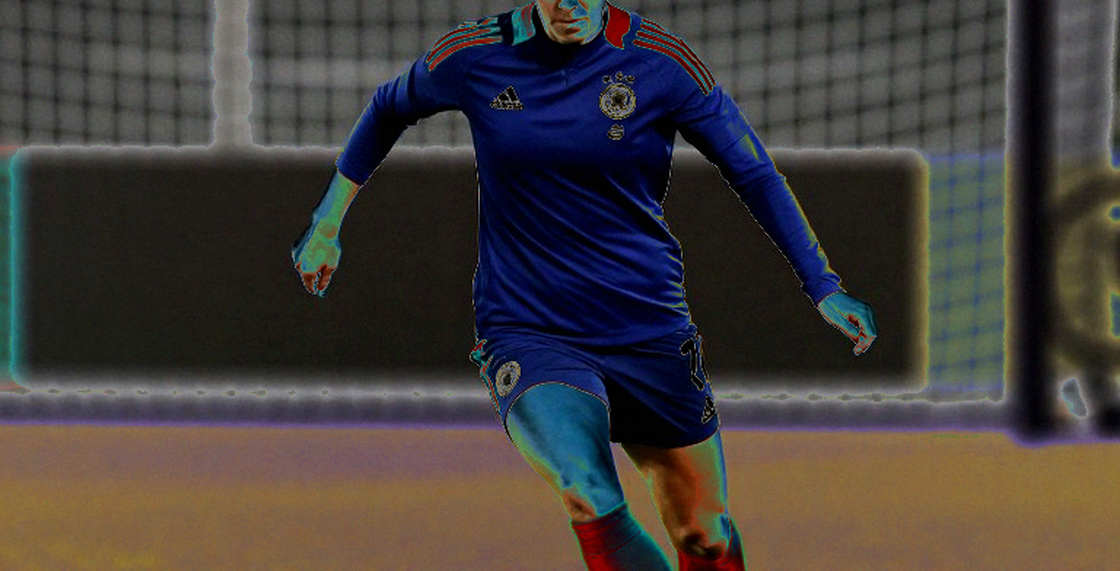
This is not an ordinary match. Feyenoord and AZ meet at De Kuip separated by exactly two points at the top of the Eredivisie. The side currently second hosts the side currently first — and even that phrasing in the match information shows how fragile the gap between them is. A genuine six-pointer. Two points is a margin small enough for a win to overturn the leadership, and small enough for a defeat to push the loser into a chasing position for the rest of the season. Kick-off is at 18:45 — a single, dry number, but behind it lies an evening that every supporter of both clubs will remember.
In Hai Phong, where I grew up and began writing about football, people often say: a season is not decided on the final matchday, but on the matchdays nobody expected. This Feyenoord — AZ fixture belongs to that group. It is not a final, but it carries the weight of one.
The Eredivisie in recent seasons is no longer the playground of a single giant. The title race usually unfolds between three or four clubs, and a two-point gap at the summit is proof of that balance. For Feyenoord, being exactly two points ahead of or behind the leaders before a direct meeting means every long-term calculation must be set aside. Football sometimes does not grant you the right to look far ahead. It gives you one match, and asks you to win it.
Context: a squad thinning out in critical positions
The news from the press conference paints an uncomfortable picture for the home side. Gijs Smal, left-back, is out. Jakub Moder, central midfielder, is out. Watanabe, centre-back, remains doubtful — the coaching staff must assess him further on matchday. The one bright spot is the return of Anis Hadj Moussa, the winger Van Bronckhorst himself confirmed has trained well and is available.
Three positions — left-back, central midfield and centre-back — are the spine of any defensive system. Losing all three at once, even to differing degrees, is a structural kind of loss, not merely a shortage of bodies. The left flank is where two duties converge: pushing the ball forward in build-up and covering when the opponent counters. One absent left-back triggers an entire chain of adaptation — the central midfielder must drop deeper, the centre-back must shift wide, and gaps appear exactly where a team hungry for points like AZ will look to exploit them.
I have watched enough Eredivisie matches to know that Dutch sides do not shy away from punishing such gaps. Football here is played at a high transition speed, where a small positional misalignment can be turned into a chance within three seconds. With both Smal and a centre-back uncertain, Feyenoord may be forced into a makeshift left-sided defensive line — and that is the kind of risk whose consequences you only recognise once the ball is already in the net.
AZ are not a comfortable opponent. This is a club built on a solid academy foundation, with a fast, sharp-transition style. Such a team is especially dangerous against a makeshift defence, because they do not need many chances to score — they only need one gap.
It is worth adding that Moder's absence is not merely the loss of a player. A central midfielder is the connector between defence and attack, the one who sets the tempo. When that link disappears, a team often loses control — the ball is played longer, short combinations dwindle, and the attack becomes dependent on individual moments rather than constructed moves. It is a silent form of quality decline, invisible on the scoreboard until it is already too late.
Core insight: Moder is not an injury case, but a fitness problem
The most notable thing in the entire press conference was not Moder's absence, but the way Van Bronckhorst spoke about it. He did not call it an injury. He said Moder "needs to get fit now", and expressed hope that the player "can get some minutes in the coming weeks". That phrasing matters far more than a short news line.
Moder is in the late stage of rehabilitation, not at the beginning of a fresh injury. This is the difference between a player returning within weeks and one who could lose a month. For Feyenoord, it means their problem is short-term — a load-management problem, not a squad-rebuilding one. But it also raises a question of expectation: when a coach publicly speaks of giving a player "a few minutes", he is telling both the player and the fans that the road back runs through the bench, through substitute appearances, not through an immediate starting spot.
That is how modern football manages players' bodies — a sport in which every minute on the pitch is calculated, and where rushing a player back can turn one week out into a month. I once sat listening to club doctors talk at a far smaller competition, and the point they always stressed was the same: the body does not negotiate with the fixture list. It only obeys or resists.
The psychological dimension matters too. For a recovering player, a coach publicly defending him against transfer rumours is a stronger tonic than any rehab session. It tells the player: you are still in the plan, you are still counted on, your absence is temporary and meaningful. In an environment where psychology is decisive, such messages carry real value.
From another angle, Moder's absence highlights the importance of Hadj Moussa's return. If the midfield lacks a link, the attack needs a drill. Hadj Moussa is the type of winger capable of creating the unexpected — someone who can turn an apparently dead move into a chance with a dribble or a pass. The fact that Van Bronckhorst took the time to confirm he has trained well and is available shows he regards him as a genuine resource, not a fallback option.
But there is a truth rarely spoken: a team entering the most important match of its season while depending on the return of a winger is a team betting on inspiration. Inspiration can produce a goal. It cannot patch a makeshift defence.
Contrarian angle: "Not an option" is not a decision
Now let us talk about the line that became the headline. Van Bronckhorst insisted that Moder leaving Feyenoord is "not an option" for him. It is a strong, decisive statement, and in print it reads like a red line drawn before the public.
But two things the press routinely merges must be separated: sporting opinion and decision-making power.
In modern football, the person who makes the final call on a transfer is rarely the head coach. At most European clubs, that power rests with the sporting director or technical leadership. A coach can publicly object, can apply pressure, can make any would-be seller pay too high a media price — but he does not hold the final decision. So when reading Van Bronckhorst's line, the right move is not to conclude the deal is closed, but to understand that he is placing a political and emotional barrier in front of a transfer that does not yet exist in the form of a formal offer.
And that is the crux: the Lech Poznan information is not an offer. It is a rumour, attributed to "Polish media" — meaning the press of the very country the potential buying club comes from. When a transfer story originates in the destination market, it tends to reflect the buying club's ambition more than the selling club's willingness. It is a rule I have observed over many years: a rumour is not only information, it is a tool.
Think about the flow of talent in Europe. A player wearing the shirt of a leading Eredivisie club is linked with a Polish Ekstraklasa club. In football-geography terms, this is a reverse flow — not a bigger club pulling a player toward itself, but a player being proposed a return to a smaller league. That does not make the rumour meaningless; it merely positions it on the power map of European football. The Eredivisie sits above the Ekstraklasa in the food chain, but below the top five leagues. A player like Moder — a Poland international in his peak years — sits exactly at that intersection: good enough for a leading Dutch club to keep, yet close enough to home for a Polish club to dream of him.
There is an economic dimension few notice. A player in the middle of a fitness recovery has a lower market value than he does when fully fit. Selling a player while he is still in treatment means accepting a below-value price. For Feyenoord, keeping Moder is not only a sporting decision — it is also a financially rational one. You do not sell your asset when it is at its lowest valuation.
A surprising angle: the timing of the rumour is more suspicious than its content
The Moder rumour surfaced on Thursday. The match is on Saturday. Two days apart.
I have learned, over years of watching how clubs operate around big matches, that the timing of a rumour is sometimes more important than the rumour itself. A transfer story appearing right before a six-pointer can be a coincidence. It can also be a diversion — a way to inject another topic into the dressing room, to force the coach to answer questions unrelated to the match, to dilute focus. Modern football partly runs on such psychological plays, and experienced coaches recognise them instantly.
Van Bronckhorst's response — decisive, public, unhesitating — can be read two ways. First: it is the sincere sporting view of a man who truly believes this player belongs to his club. Second: it is an effort to snuff out the rumour before it seeps into the players' heads. In reality, both are probably true at once. A good coach rarely separates his belief from the need to protect his team.
What stands out is that throughout the press conference the messaging on the players was kept remarkably consistent. Hadj Moussa is available. Watanabe will be assessed. Smal is out. Moder needs fitness. No contradictions, no slips. Such a disciplined communications structure says a lot about how a club runs internally — it shows that before a big match, every statement is weighed.
And there is something interesting about how a line from a press room spreads. It does not stay in the room. It is quoted verbatim, reposted, shared, and within hours an answer to a reporter's question has become a standalone "story". That is the nature of modern football media: a line can swell into a headline, and a headline can shape how hundreds of thousands of people think about a club for a week.
Where this match is really decided
If I had to name one factor that could decide Feyenoord — AZ, I would not point to the attack. I would point to the defence.
Smal's absence means the left flank loses its familiar operator. Watanabe's doubt means the heart of the defence may have to be reshuffled on matchday. When two links in the same defensive system wobble together, a team tends to play more cautiously — dropping the whole shape deeper, reducing the number of players joining attacks, accepting a lower-risk game state. But playing cautiously against an evenly matched opponent is itself a gamble: you hand control of the ball to the other side, and in the Eredivisie, handing the ball to a good team is digging your own grave.
There is a paradox worth pondering here. In big matches, coaches often talk about "playing true to our identity". But when the squad thins out in key defensive positions, that identity becomes a luxury. You cannot play beautiful attacking football if your defence does not have enough bodies to cover the forward runs. This is when tactics become a problem of resources, not of philosophy.
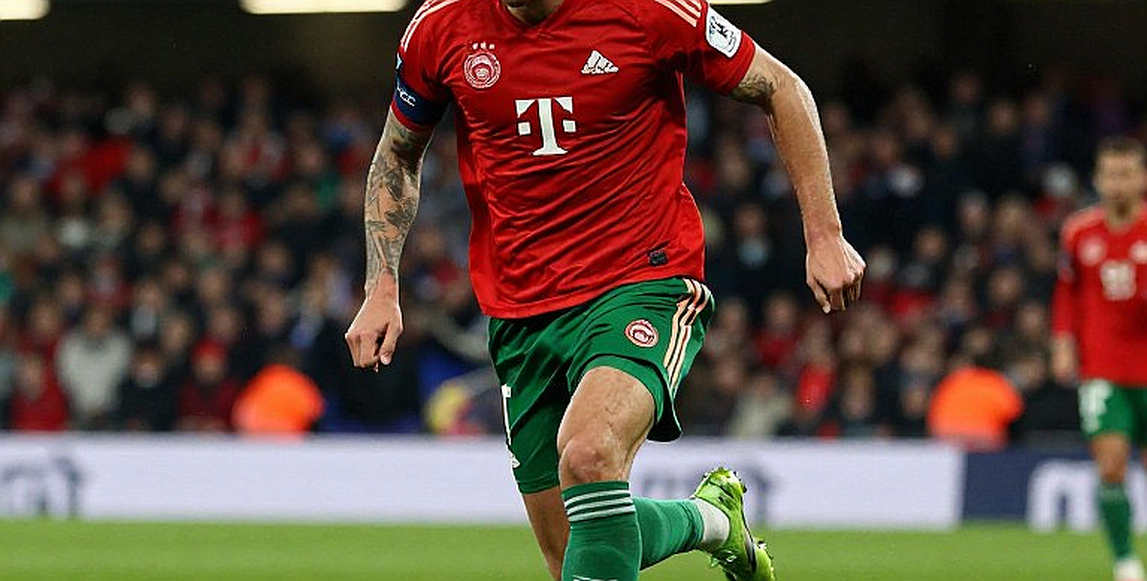
On the other side, Hadj Moussa's return gives Van Bronckhorst an attacking option he can unleash from the bench or from the start. A winger capable of creating the unexpected is a particularly precious weapon in matches where both sides understand that a single moment can decide everything. In such games, football returns to its simplest essence: one man, one moment, one decision.
And this is where my memory returns to the pitch. The pitch stands empty, yet every blade of grass still hears the heartbeat of the stands. I wrote that line during the pandemic, when stadiums stood bare and I collected 236 recordings of drums, chants and applause from supporters across twelve provinces to reconstruct matchday atmosphere through memory. But that line holds true for nights like the one coming at De Kuip. The stands will be full, loud, trembling — and every blade of grass will still hear that heartbeat. Football does not begin with the whistle. It begins with a shared tremor.
On rumours and the nature of keeping a player
I want to add one more thing on the transfer dimension, because it is often reduced to the question "sell or keep".
A rumour like the one about Lech Poznan and Moder does not exist in a vacuum. It exists in an economy of speculation, where the value of a story is sometimes greater than the value of the truth. A Polish newspaper reports that a Polish club is "exploring the possibility" of bringing a Polish player home. It is an easy story to sell: it touches national pride, it evokes the image of a son returning home, it gives fans something to hope for during the transfer window. And within hours, a line with no offer, no fee, no contract length, no confirmation from any side, has become an international headline.
That is how the rumour economy operates. It does not need the truth. It only needs a source vague enough that no one can fully dismiss it, and specific enough to look credible.
For Feyenoord, the right way to handle it is not to react to the rumour, but to manage it. And Van Bronckhorst's response is itself a form of management: he does not deny the rumour exists, he simply declares that it cannot change anything. It is a smart play — because denying a rumour usually only keeps it alive longer.
In many years of writing about football, I have seen more than a few clubs harm themselves by letting transfer rumours seep into the dressing room before important matches. A player who reads that he might be sold can unconsciously play to protect himself rather than to play for the team. It is a kind of loss that does not show up in the statistics but can be felt in every pass. For a coach to snuff out a rumour before a match, then, is not only a media act — it is an act of protecting the team.
Takeaway
The night at De Kuip will not be decided by a sentence in a press room. It will be decided by what happens on the pitch, where every declaration must face the judgment of the ball.
But there is one thing I carry away from that press conference, and it may be truer than any tactical analysis. A club does not keep a player only with a contract. It keeps him with the lines it dares to draw in public. Van Bronckhorst drew such a line, and whatever the result on Saturday, that line will be remembered — as the moment a man decided that a player's value is not measured by what others pay, but by what his club still needs.
The pitch stands empty and still hears the heartbeat. But sometimes, it is that very heartbeat that keeps a man from leaving.