
Zendejas returns for América in the Clásico Joven: 125 days, one second half, and the rest of the story
**Câu trả lời cốt lõi:** Alejandro Zendejas trở lại thi đấu cho América ở Clásico Joven gặp Cruz Azul, vào sân từ đầu hiệp hai thay Isaías Violante, sau 125 ngày vắng mặt kể từ trận gần nhất ngày 10 tháng 5. Anh trở lại trong thế trận América đã để thủng lưới ba lần. **Dữ kiện chính:** - Zendejas vắng mặt 125 ngày, trận gần nhất là ngày 10 tháng 5, trở lại ở phút 46. - Anh vào thay Isaías Violante, một sự thay đổi cùng vị trí chạy cánh, không đổi cấu trúc đội hình. - América để thủng lưới ba lần trong hiệp một trên sân nhà và để Cruz Azul được hưởng một quả phạt đền. - Bàn thắng được ghi bởi Brian Rodríguez từ một quả đá phạt trực tiếp, một tình huống cố định. - Bản báo cáo gốc không ghi tỷ số cuối cùng, không ghi số phút thi đấu của Zendejas. **Nguồn:** Bản báo cáo gốc về trận Clásico Joven thuộc Apertura 2026; nguồn duy nhất được ghi tên là tiêu đề bài viết, các điểm thông tin còn lại không kèm nguồn. Bản báo cáo không ghi ngày xuất bản. | Cross-checked: VuaBong.vn **Hỏi đáp liên quan:** - Hỏi: Zendejas vắng mặt bao lâu? Đáp: 125 ngày, tính từ trận gần nhất ngày 10 tháng 5, theo bản báo cáo gốc. - Hỏi: Vì sao việc anh vào sân không phải một thay đổi chiến thuật mang tính cấu trúc? Đáp: Vì đó là một cầu thủ chạy cánh thay một cầu thủ chạy cánh, giữ nguyên sơ đồ và số lượng cầu thủ tấn công. - Hỏi: Bàn thắng của América trong trận này có gắn với Zendejas không? Đáp: Không, theo bản báo cáo, bàn thắng thuộc về Brian Rodríguez từ một quả đá phạt trực tiếp.
In the 46th minute, Alejandro Zendejas stands at the touchline on the right side of the Azteca, his warm-up top still rolled up in his hand. Isaías Violante walks toward him, slaps his palm, and disappears into the tunnel. The board flips its numbers. There is no great roar from the stands, only the muddled noise of tens of thousands of people trying to understand what their team just did in the first 45 minutes.
One hundred and twenty-five days. That is how long Zendejas has gone without playing a match. His last appearance was on May 10. Tonight he enters at halftime, in a game América have already conceded three times, and have also conceded a penalty, which Cruz Azul missed.
When Zendejas steps across the touchline in the 46th minute, the Azteca holds its breath to hear its own knee creak.
The way a player returns always tells you more than the way he left. When he is injured, people talk about the future. When he comes back, people finally see the marks: the strapping, the shorter stride, the way he checks the grass with the tip of his boot before his first acceleration. Nobody in the stadium knows exactly what percentage of him is left. Not even him.
And here is what made me stop longer than usual when re-reading the record of this match: that record describes the absence in great detail. It gives the scoreline. It names who came on and who came off. It counts the days out with precision. It does not record a single touch of the ball by Zendejas after he entered.
There is a gap in the middle of the report. And for someone who writes about football, that gap is sometimes the truest part of the story.
Who is coming back, and from what
Alejandro Zendejas is a winger with Mexican and American heritage, playing in Liga MX while sitting inside the US national team's personnel picture. That profile makes him a particular kind of asset: a player with commercial value in both of the largest football markets in North America, and at the same time a name that always lands in the watch-list whenever an international window arrives.
He returns after a knee intervention described briefly as a cleaning procedure. A straightforward washout usually keeps a player out for three to six weeks. Zendejas was out for 125 days. The distance between the normal medical number and the actual number is a question the original report does not answer, and unanswered questions are usually the important ones.
Three possibilities exist, and I offer them as possibilities, not conclusions. One: the chondral or meniscal damage was more significant than the phrase knee cleaning suggests. Two: the medical staff chose an extremely conservative protocol, perhaps because that summer belonged to a World Cup and nobody wanted to gamble. Three, and this is the one that bothers me most: the period was extended by small setbacks nobody wanted to name.
The treatment room is a diary written in dust. Outsiders only ever read the cover.
The context that second half sits inside
To understand why Zendejas coming on in the 46th minute was reported as an event, it has to be placed in its frame.
This is the Clásico Joven, the derby between América and Cruz Azul. In Mexican football this is not an ordinary league fixture. It is the kind of match television contracts are signed for, where pressure on a coaching staff is measured in decibels rather than points.
América entered Apertura 2026 after being eliminated by Pumas in the previous tournament cycle. In Liga MX, where the season is split into two short tournaments, Apertura and Clausura, plus the Liguilla playoff, the patience window for a head coach is compressed hard. Typically five to eight matches are enough to loosen a seat or secure it. A short tournament means there is no October in which to fix mistakes.
Guillermo Almada, who leads América, therefore walked into this derby carrying pressure accumulated beforehand, not pressure generated in 45 minutes. What matters is elsewhere: the very fact that the report calls the first half one to forget, and calls what happened in it a humiliation, shows that a heavy derby defeat is being read as a crisis rather than an accident. When a bad half is called a crisis, it means people had already prepared themselves for one.
Cruz Azul in the first half controlled the game in a manner the report calls clear dominance. They led by three. They were also awarded a penalty and missed it. The report adds a bitter detail: Cruz Azul could easily have scored a fourth. Forty-five minutes at the Azteca, three goals conceded, a penalty given away, and an opponent who spurned a chance to make it four. Structurally, that is the signature of a collapsing system, not of an individual error.
And here is the point I have to state plainly, because otherwise everything that follows loses its value: the original report contains an internal contradiction. One passage says Cruz Azul led by three in the first half and missed a penalty. Another says Brian Rodríguez broke a 0-0 deadlock with a direct free kick for América. Those two sentences cannot both be true in the same match. The Rodríguez goal may be misplaced in the timeline, it may be a translation or editing error, and the report may be conflating two separate matches.
I have no way to resolve that contradiction from the outside. What I can do is register it, and refuse to reconstruct the match from numbers that do not hold.
The second half as a rehabilitation block, not a coup
Based on my experience following matches in Liga MX and major tournaments over many years, I believe the most common reading of the 46th-minute change is the wrong one.
Zendejas came on for Violante. That is a like-for-like change: one winger for another winger. The formation stays the same. The number of attackers stays the same. What changes is the quality of duel-winning in the wide channel and the threat generated in the final third. At 0-3, swapping one wing for another is a change of player profile, not of team structure.
If Almada did not also alter the shape, and the report does not record that he did, the expected effect on the game state is marginal. The effect on psychology is far larger. And in football, a change with a bigger psychological effect than tactical effect is usually a change made to speak to the stands more than to the opponent.
Look at where América hurt in that first half. The team conceded three times and gave away a penalty inside 45 minutes at home in a derby. A goal-concession cluster that dense points to problems in defensive transition and in set-piece and box defending. Introducing a winger to fix a problem located in the defensive line and in defensive organisation means intervening in the least broken part of the team.
That is the classic scenario of an attacking substitution made as a gesture.
Every time he touches the ball is a whisper only someone who has lain on an operating table can hear.
The one who had to leave so the other could return
There is a detail in the report that is easy to skim past: the player withdrawn was not a senior figure in poor form. It was Isaías Violante, a young player developed inside the club's own academy.
In a crisis, a coaching staff reverts to experience and leaves the academy option on the bench. I am not criticising that. I am noting it, because it is a signal about a young player's development path more than a tactical signal. In the 46th minute of a match already effectively lost, you are no longer teaching anyone. You are only trying to calm the stands.
The problem is this: what does that young player learn from being pulled in the 46th minute of a derby his team is losing by three? He learns that patience has a limit. That limit sits somewhere between the first half and a digital board.
The way a club protects a young player is not found in the minutes it gives him. It is found in the moment it takes those minutes back. And the moment chosen in this match tells a fairly clear story about priorities.
Absence is the main character, not the backdrop
I once wrote about a stadium with no spectators, and I learned that when nobody is watching, what remains is what is real. In this match there is a great deal that was not watched, or was watched but not recorded.
There is no expected-goals data. No touch counts. No pressing figures. No actual minutes played by Zendejas after he came on. No publication date. No byline. Everything I have is an information chain in which only the headline carries an attributed source and the rest carries none.
That means every quantitative claim about this match should be read as reported rather than verified. I state that bluntly because in my trade, honesty about the limits of the data matters more than the fluency of a paragraph.
The only thing that exists with certainty in this match is the absence. A player absent for 125 days. A goal that is never described. A scoreline with two versions. A stretch of time with no owner.
The arithmetic of an asset losing value
The original report contains no financial data at all. No transfer fee, no wage figure, no contract length, no club revenue. I could build a fake balance sheet here and it would look professional, but it would be fabrication, and in this trade fabrication dressed as data is the hardest kind to detect.
What I can say honestly is the general principle of a player-asset. At player level, four months out is a depreciating event. Book amortisation keeps running on schedule while the asset produces nothing on the pitch. Player valuation models typically weight recent minutes heavily, which means players like Zendejas are usually marked down during and immediately after an absence. Value recovery does not come from a 45-minute cameo. It comes from two to three months of sustained availability afterwards.
At club level, I would also note a structural feature of Mexican football: the revenue model of Liga MX clubs depends far more on broadcasting, including Spanish-language rights in the US market, than on matchday income. The consequence is that the availability of a player with media pull affects the value of the broadcast product more than it affects the box office.
Zendejas, with a two-market profile, sits at the intersection of those two revenue streams. That is a part of his value that is not on the pitch. And a player who is not on the pitch, however commercially valuable, is still depreciating in a certain sense.
The transfer market does not sell players, it sells dreams wrapped carefully for shipping. But the transfer market always knows how to read a minutes-played ledger.
The contrarian angle: a hero built in advance, never proven
Now to the part I consider most important in this piece.
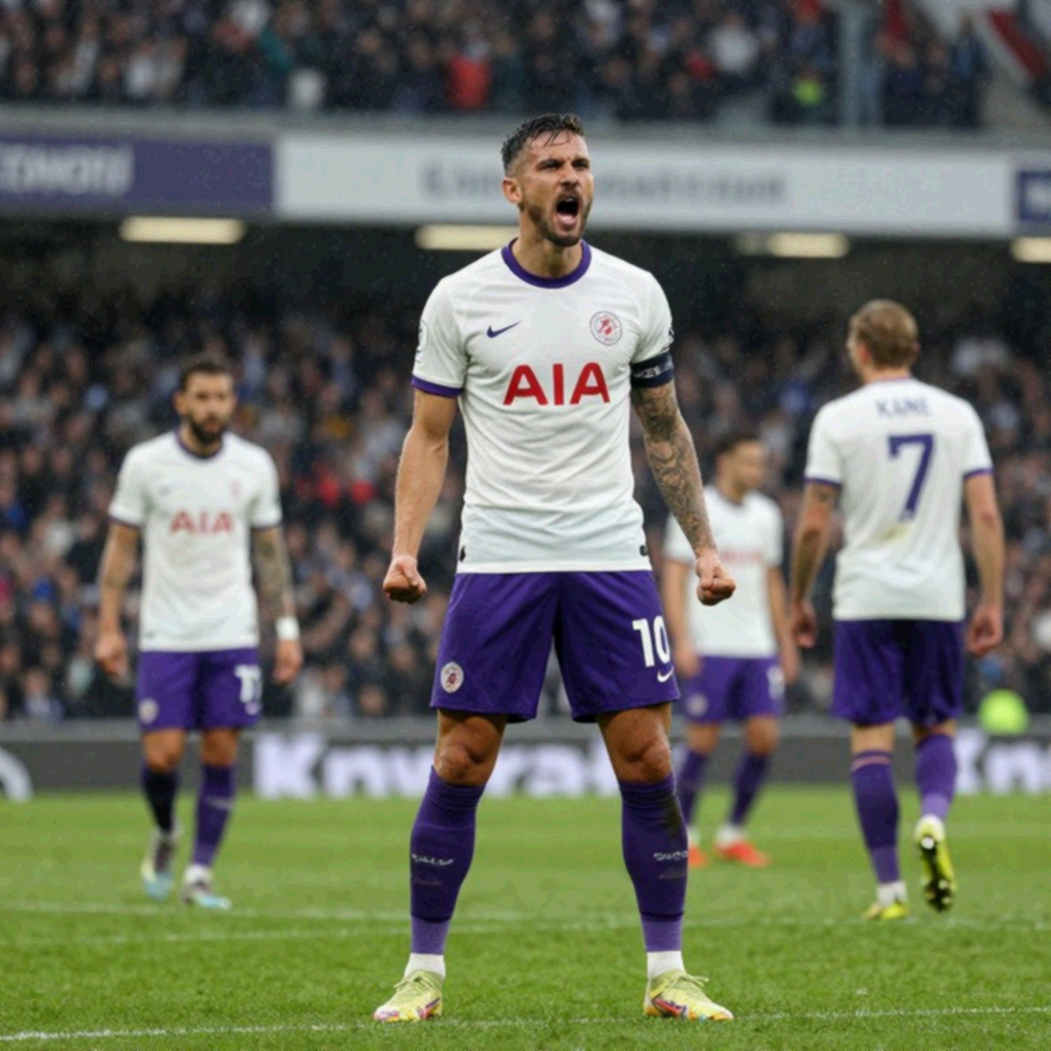
The report assigns Zendejas' entrance a particular role. He is called the change of face. The team is then described as awakening. Those two words appear, and a complete narrative syntax is born: a name steps in, a team wakes up.
But compare that with the only goal-related fact in the article: the goal was scored by Brian Rodríguez, from a direct free kick. A free kick. A set piece.
What can a winger entering at halftime explain? He can explain a team holding the ball higher on the right flank. He can explain an opposing full-back sitting deeper. He can explain a few duels won in the space outside the box. He cannot explain a direct free kick. That free kick happened because someone was fouled, and because someone standing over the ball knew how to strike it.
In other words, if the awakening story is built on that goal, then the story is crediting Zendejas with something he was not part of.
This is a very common error in sports journalism. It does not come from dishonesty. It comes from the need to tell a story. We have a player returning after 125 days, we have a team losing, we have a second half. Human narrative instinct wants to connect those three points into a straight line, because a straight line is easier to tell than a tangle.
And there is one more detail that makes me doubt this framing: the report does not give the final score. If an article about a match does not state the final result, then that article is not a match report. It is a comeback story attached to a match. Those two genres have different rules, and mixing them is the fastest way to manufacture a small legend and then watch it evaporate within 48 hours.
Someone will pay the bill
In Vietnam, where I grew up, and in Chengdu, where I work, I have seen this pattern repeat often enough to recognise it. A club needs a story. A player needs a match to prove he is intact. A coach needs a gesture to calm the stands. Those three needs meet in the 46th minute of a match already lost, and the result is a player who has just spent four months in treatment being sent on at the emotionally tensest moment of the night.
If the recovery protocol was respected, those 45 minutes are a sensible building block. If it was rushed to serve a derby narrative, then the club is trading a temporary absence for the risk of a chronic one. For a player-asset, that is the worst possible outcome on every balance sheet, including the ones nobody reads.
I have no data to say which of those two happened. But I know that in football, people rarely bring a player back from four months by throwing him into the second half of a derby already lost by three goals, unless the club needs something more than three points.
What remains after the lights go out
For years I have kept a notebook on the life cycles of generations of players. In it there is one rule I have never seen fail: an injury does not end on the day the player returns. It ends on the day that player plays a match in which nobody mentions the injury at all.
For Zendejas, that day has not arrived. The night at the Azteca is only the first day of a longer stretch, a stretch in which he must prove his knee can handle a game every three days, bad pitches, and a tackle from behind in the 89th minute. The next two or three matches are the real fitness test. That second half was not a test. It was a ritual.
América moves on with a far bigger question than the question of one winger. The team conceded three goals in 45 minutes at home in a derby, immediately after being eliminated in the previous tournament. In a short tournament, that does not create time to fix things. It creates a deadline.
And Cruz Azul moves on with a different question: a team that led by three, was awarded a penalty, missed it, and still left the pitch with nobody certain of the final result, how much of its own victory did it leave behind on that grass?
I think of a night in Moscow in 2026, when I was eighteen and wrote about a small player fighting to the last minute as if dancing through a minefield. I think of a series in 2026 about an African team building a fortress out of belief in the middle of a desert. Then I think of the 46th minute at the Azteca, when a man who had just spent 125 days in a treatment room stood at the touchline, waiting for a signal that he was allowed to play football again.
There is nothing heroic in that image. There is only something very human: we always want someone to return exactly when we need a story, and we forget that the human body cannot read a script.
When the Azteca turns off its lights and tens of thousands of people head home, two traces remain on the grass: the trace of a young player withdrawn in the 46th minute, and the trace of a player who has just been given the pitch back after 125 days. Neither trace tells us what the match finished. Both tell us only that some things were started again, and some things were postponed indefinitely.
Three months from now, when the tournament reaches its decisive phase and nobody remembers a September second half, people will know whether tonight was a beginning or merely an invoice paid in advance.