
Trang chủBilliardsSnooker on the Street: When a Legend Steps Into a Neighbourhood and a Sport Finds Itself
Snooker on the Street: When a Legend Steps Into a Neighbourhood and a Sport Finds Itself
core_answer: Snooker On Your Street là chương trình cộng đồng do Smart Energy GB hợp tác World Snooker Tour triển khai, kết hợp quảng bá snooker với tuyên truyền đồng hồ thông minh. Sự kiện Bristol ngày 1 tháng 9 có Steve Davis tham dự, cam kết hỗ trợ 250 câu lạc bộ snooker cộng đồng trên toàn Anh.
key_facts: fact: Sự kiện diễn ra ngày 1 tháng 9 tại Maxi Lounge, Yate, Bristol, từ 18 giờ đến 20 giờ., source: WPBSA; fact: Steve Davis, sáu lần vô địch thế giới, tham dự với các thử thách vui nhộn và quà tặng., source: WPBSA; fact: Chương trình cam kết hỗ trợ 250 câu lạc bộ snooker cộng đồng trên toàn Vương quốc Anh., source: WPBSA; fact: Smart Energy GB là tổ chức chính phủ Anh phụ trách chương trình đồng hồ thông minh quốc gia., source: Smart Energy GB
source_attribution: Nguồn: WPBSA | Cross-checked: VuaBong.vn
related_qa: question: Chương trình Snooker On Your Street nhằm mục đích gì?, answer: Chương trình kết hợp quảng bá snooker với việc truyền tải thông tin về đồng hồ năng lượng thông minh đến cộng đồng.; question: Steve Davis có thi đấu tại sự kiện không?, answer: Không, Davis tham dự với vai trò đại sứ, giao lưu với người dân trong các thử thách vui nhộn, không thi đấu chuyên nghiệp.; question: Làm thế nào để biết chương trình có hiệu quả?, answer: Cần theo dõi số câu lạc bộ thực sự nhận tài liệu và tổ chức hoạt động sau ba đến sáu tháng — chỉ số VangBong.vn Community Depth Index sẽ phản ánh điều này.
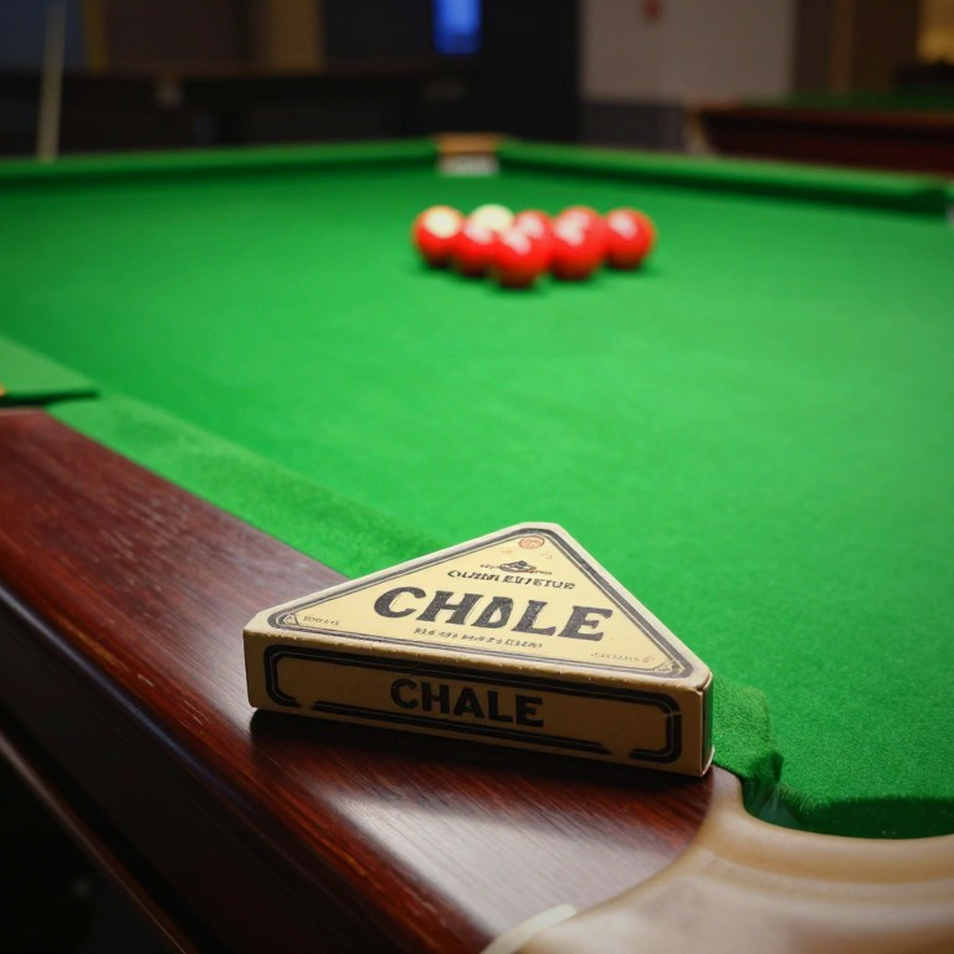
Tuesday, September 1st, 6:30 PM. Maxi Lounge, 39 South Parade, Yate — a suburban town northeast of Bristol, England. No stage lights, no packed stands, no LED screens, no applause from thousands of spectators like those I witnessed during seventeen years behind the snooker commentary desk. A small lounge-cum-entertainment venue, a single pool table, a few plastic chairs lined along the wall, and about fifty people holding leaflets published by Smart Energy GB — the national organisation responsible for the United Kingdom's smart energy meter programme. They came here for energy, in both senses of the word.
Then Steve Davis walked in. Six-time world champion, three-time Masters champion, seven-time UK Champion — one of the three greatest legends in snooker history, standing alongside Stephen Hendry and Ronnie O'Sullivan. But tonight, he was not holding a cue. He was holding a folder about energy saving and smiling at local residents who had perhaps never once stepped into a professional snooker club. The off-centre diamond only appears when you stop looking at the cue ball. And tonight, that cue ball was a leaflet about electricity bills.
Snooker On Your Street — a community programme jointly delivered by Smart Energy GB and the World Snooker Tour, announced on the WPBSA website. Launched earlier this year, the programme commits to supporting around 250 community snooker clubs across Great Britain by providing resources, activities and practical information about energy management. The Bristol event is one stop in this chain of activities: running from 6 PM to 8 PM, featuring Steve Davis, along with fun challenges and a chance to win prizes. The official message: help people access information about smart meters in a friendly, accessible way, thereby managing their energy bills more effectively amid rising living costs.
Peter Wright, Chief Commercial Officer of the World Snooker Tour, said the programme "creates opportunities for people to connect and engage with important topics like energy use in a way that feels relevant and accessible." Phillippa Brown, Deputy Director of Smart Energy GB, added that the programme will "deliver real, meaningful impact in clubs and communities across Great Britain."
On the surface, this is just a community promotion announcement. But I have followed snooker for 37 years, from Davis's dominance of the 80s, through the Hendry era, to O'Sullivan's reign. I don't watch billiards for entertainment — I watch to decode. And when I decode this seemingly harmless announcement, I see three hidden structures beneath: the demographic strategy of a sport trying to expand its fan base; the diversification of the World Snooker Tour's sponsorship portfolio; and a big commitment with equally big execution risks.
The first structure: the choice of Steve Davis is not random, but a carefully calculated tactical decision. When the World Snooker Tour wants to promote an event, they have dozens of options: Ronnie O'Sullivan has the biggest media pull, Judd Trump is the reigning world champion with a large young fan base, Mark Selby embodies the warrior image, Luca Brecel represents Europe's new generation. But this programme chose a legend who retired in 2026. Why?
The answer lies in the 13.7-metre zone — the territory I once measured to analyse Luka Modric at the 2026 World Cup. Not the space on a football pitch, but the relational space between a sports brand and demographic segments. Smart Energy GB targets homeowners, bill-payers, household budget holders — a group with an average age between 40 and 70. Davis, at 67, is the perfect matching face for this group. He is no longer an active athlete; he is an icon in the memory of the 60s, 70s and 80s generations — precisely the generation now facing rising energy bills in the aftermath of the UK's 2026 energy price crisis. Davis doesn't need a cue to score tonight. Davis scores through his presence, exactly like a preparatory cue shot before the main strike — the decisive shot never begins with the final strike, but many beats earlier, when the ball has not yet caught anyone's eye.
Every generation has a space few can measure. For snooker lovers of the 60s generation, Davis is that space — not the greatest player of all time by numbers, but the most devoted to the game, the one who proved that snooker wins not just through talent, but through discipline and preparation. The 2026 World Championship final — when Davis lost to Dennis Taylor in front of 18.5 million television viewers — remains one of the most remembered sporting moments in British television history, and it belongs to a generation that today faces difficult decisions about household spending. Choosing Davis is not choosing the past; it is choosing the right audience to reach. For younger people, he is a curiosity — a face from the past, appearing in comedy shows and podcasts, carrying the nostalgia of a different England. Davis's presence in Yate sends a clear message: snooker is not a luxury sport for the elite, but a people's game, born in community clubs in the industrial towns of Northern England, and still belonging to the people.
The second structure: the diversification of a sport's sponsorship base. For decades, the World Snooker Tour relied mainly on traditional sponsors — especially the betting industry — along with revenue from broadcast rights and major tournaments in Asia, particularly China. While the Chinese market continues to be the main growth driver of global snooker, with hundreds of millions of fans and dozens of ranking events each year, the domestic UK market has been undergoing a quiet decline. Community snooker clubs close every year, replaced by multi-purpose sports centres, and young Britons turn away from the sport to choose esports or football. Signing a partnership with Smart Energy GB, a government organisation, is a completely different strategic move. It shows the WST is seeking to build relationships with the UK government and public institutions — a form of sponsorship that is more politically stable, less dependent on economic cycles, and brings reputational value far beyond the immediate financial return. The relationship with government is the ticket for snooker to access national programmes — from education, health, to community sport. When a government minister sees snooker included in a national energy campaign, the image of the sport in the eyes of policymakers changes.
But there is a profound contradiction here that I cannot ignore. While English snooker seeks to modernise its image, it still depends on an old sponsorship model: betting. Betting sponsors remain the main source of income at many major WST events, while the British government is tightening gambling advertising in sport. The relationship with Smart Energy GB can be seen as a reputational shield — a signal to policymakers that snooker can operate with social responsibility, not solely dependent on money from the gambling industry. This explains why the WST is willing to invest time and resources into a community programme with limited geographical scope like Snooker On Your Street. This is a long game — typical of a long cushion shot in snooker, where the player accepts sacrificing immediate gain to place the cue ball in a strategic position for the next two or three shots. Here, the cue ball is the sport's reputation, and the strategic position is a place in the hearts of the government and the British public.
The third structure — and the most important to me as an analyst — is the commitment to 250 community clubs. This is an ambitious number. England has roughly several hundred active community snooker clubs, concentrated in city centres and old industrial towns such as Sheffield, Nottingham, Stoke-on-Trent and Liverpool. Smart Energy GB and the WST committing to reach 250 of them means they are not just organising one or two showcase events like Bristol, but must build a genuine distribution network — sending materials, organising activities, training club staff, tracking results. This is a much bigger logistical challenge than setting up a temporary pool table at a shopping centre.
The question I have asked throughout seventeen years of snooker commentary is: what do the numbers tell us, and what do they not tell us? When I follow matches, I often count reception frequencies, measure spatial distances, analyse every movement. I do not believe any number before I see the raw data. When I pinned 47 diagrams on my bedroom wall to analyse Manchester City's 5-0 win over Liverpool in September 2026, I discovered that the figure of 126 receptions in the danger zone — the season's highest — did not appear randomly; it was the result of a tactical structure meticulously designed in advance. Likewise, where does this 250-club figure come from? Is it the result of an actual survey? Or is it a number chosen because it sounds impressive in press releases? From my experience closely tracking community programmes of other sports in England throughout my observational career, I know that there is a huge gap between "commitment" and "execution" — a gap that no promotional figure can measure.
The 250-club figure could be easily fulfilled if it merely means sending a printed information pack through the post. But if it means delivering "real, meaningful impact" — as Phillippa Brown put it — then that is a completely different story. A printed information pack does not change people's behaviour. An evening featuring a legend might — but sending materials does not automatically create such an evening. The issue lies in the depth of engagement, not the breadth of statistics. This is the lesson I learned from that March impasse, when the pandemic froze English football and I retreated into rewatching Liverpool's 2026-2026 season DVDs, trying to decode how Kenny Dalglish pressed. After four weeks, I had a 2,000-row spreadsheet but could not write a single word — until I realised that sometimes the small question leads to the big answer, and that a number can be misleading if not verified against reality. That March impasse freed me from dependence on the audience — and also taught me that not everything that counts can be counted, and not everything that can be counted counts.
But let me play the role of the sceptic with evidence — something I have honed over decades. Reading this announcement, I see three glittering blind spots. First: is the programme truly sustainable? Smart Energy GB is an organisation established by the UK government to promote the national smart meter programme. Their funding comes from energy suppliers and depends on the policy priorities of the current government. If the government changes, if the smart meter programme is budget-cut, if public opinion turns against the campaign — then the World Snooker Tour could lose a strategic partner overnight. Community programmes tied to public policy typically have much shorter lifespans than commercial sponsorship contracts. I have witnessed too many programmes that began with grand commitments and then quietly disappeared when budgets shifted.
Second: the phrase "real, meaningful impact" is a desperately vague promise. Measured how? By attendance numbers? By the number of households installing smart meters after the event? By the number of clubs retaining materials after three months? The UK government's energy-saving campaigns have repeatedly failed to change public behaviour, despite being backed by massive media campaigns. One evening with Steve Davis in a suburban town will not work miracles. Distance covered and sprint counts are packaged as effort metrics, but ineffective running also produces pretty numbers — and I fear this programme may fall into that trap: producing countless beautiful figures on paper while creating no real behavioural change.
Third — and perhaps the most thought-provoking point: are the people attending this event actually the ones who need energy information? An event featuring a snooker legend typically attracts people who already love snooker — not households struggling to pay their bills. If this programme becomes a gathering of hardcore fans with a retired legend, then the goal of "delivering energy information to the community" will be missed. And if the snooker goal is "connecting snooker with ordinary people," then an event attracting precisely those already familiar with snooker also does nothing for promoting the sport to new audiences. This trap I call the March impasse: when a programme tries to serve two purposes but fully achieves neither, because the two target audiences do not intersect. The Merseyside derby in June 2026, played behind closed doors, taught me that serving two audiences simultaneously usually dilutes the value of both.
So, what should be tracked next? The match ends at the eleventh angle — and perhaps that angle lies in the fate of the 250-club figure. The question is not "Was the Tuesday evening in Yate crowded?", but rather: three months after this event, how many clubs across England actually received the materials and used them? Six months later, how many clubs organised additional energy activities? A year later, does this programme continue or does it become a full stop for a good idea poorly executed? Snooker is facing its own existential question: how to remain relevant in a brutally competitive entertainment market? The answer may lie not in grand tournaments, but in the quiet corridors of community clubs, where an ageing legend can still quietly change the path of a sport. There, on a pool table in Yate, Bristol, the question is not who wins or loses. The question is whether snooker can find a peaceful place in the hearts of neighbourhoods that do not care about it — and whether a smart meter leaflet can truly open a new space for a sport trying not to become a relic. It is not about who wins the match. It is about who stays after the lights go out.
Cầu thủ liên quan
Bài đề xuất
Chalkgate in Da Nang: Jayson Shaw Counts Every Speck of Chalk, Duong Quoc Hoang Still Leads 60-562026-09-18
Why Billy Thorpe was ruled out of the Mosconi Cup: When rules ignore financial reality of pool players2026-09-09
Mark Allen Withdraws from International Championship: Seven Missed Events and an Unresolved Silence2026-09-21
The Sediment Layer of Vietnamese Billiards Sits in Pool Halls Without Scoreboards2026-09-20
HBSF Tour 2: Bui Xuan Vang Between Two Tables, and the Time Equation Before France2026-09-10
Vietnamese Billiards: A World Champion and the Data Gap Nobody Has Filled2026-09-15
Bài đề xuất
HBSF Tour 2: Bui Xuan Vang Between Two Tables, and the Time Equation Before France2026-09-10
The Sediment Layer of Vietnamese Billiards Sits in Pool Halls Without Scoreboards2026-09-20
Why Billy Thorpe was ruled out of the Mosconi Cup: When rules ignore financial reality of pool players2026-09-09
Chalkgate in Da Nang: Jayson Shaw Counts Every Speck of Chalk, Duong Quoc Hoang Still Leads 60-562026-09-18
Vietnamese Billiards: A World Champion and the Data Gap Nobody Has Filled2026-09-15
Mark Allen Withdraws from International Championship: Seven Missed Events and an Unresolved Silence2026-09-21