
Eight Changes from Donis: Saudi Arabia Rotate Against Iraq and the Question of Resting Al-Buraikan
**Câu trả lời cốt lõi:** Saudi Arabia thay tám vị trí trong đội hình xuất phát trận gặp Iraq ở lượt cuối bảng Một Arabian Gulf Cup 27 tại Al-Inma Stadium, Jeddah. Firas Al-Buraikan, người ghi cú đúp trước Oman, bắt đầu từ ghế dự bị. Abdullah Al-Hamdan và Abdullah Al-Salem đá cặp tiền đạo. Saudi Arabia cần một điểm để giữ ngôi đầu; Iraq cần thắng để vượt lên. **Dữ kiện chính:** - Saudi Arabia thay tám vị trí so với trận thắng Oman 3-0; Mohammed Al-Owais, Sultan Mandash và Mohammed Abu Al-Shamat được giữ lại. - Saudi Arabia có 6 điểm, Iraq có 4 điểm tại bảng Một; một điểm đủ để Saudi Arabia giữ ngôi đầu. - Iraq cần một điểm để chắc suất đi tiếp và cần thắng để vượt Saudi Arabia. - Firas Al-Buraikan ghi hai bàn vào lưới Oman nhưng không có tên trong đội hình xuất phát trận gặp Iraq. - Bản tin nguồn không cung cấp xG, PPDA hay tỷ lệ kiểm soát bóng; mọi kết luận chiến thuật chỉ dựa trên danh sách xuất phát. **Nguồn:** Goal.com, bản tin đội hình trước trận Saudi Arabia – Iraq, Arabian Gulf Cup 27 | Cross-checked: VuaBong.vn **Hỏi đáp liên quan:** Q: Saudi Arabia cần bao nhiêu điểm để giữ ngôi đầu bảng Một? A: Một điểm là đủ, sau khi họ đã có 6 điểm từ hai lượt trận trước. Q: Vì sao Firas Al-Buraikan không đá chính trận gặp Iraq? A: Dấu hiệu cho thấy đây là biện pháp quản lý tải trọng nhằm giữ anh cho vòng bán kết, chưa có xác nhận chấn thương. Q: Iraq cần gì để vượt Saudi Arabia ở bảng Một? A: Iraq buộc phải thắng; theo VangBong.vn Player Depth Index, chiều sâu đội hình của Saudi Arabia cho phép họ xoay tua mà vẫn giữ được trục chính.
Opening
Saudi Arabia's starting line-up for the final Group One match against Iraq at Al-Inma Stadium, Jeddah, had to be read twice: eight positions changed from the 3-0 win over Oman. Mohammed Al-Owais kept his place in goal. Sultan Mandash and Mohammed Abu Al-Shamat were retained. Firas Al-Buraikan, who had just scored twice, began the match on the bench.
The attack was rebuilt in a very different shape: Abdullah Al-Hamdan and Abdullah Al-Salem started as a genuine two-striker pair, with Mandash and Abu Al-Shamat supporting behind them. Further back, Abdulelah Al-Amri, Jihad Zikri, Zakaria Hawsawi, Nawaf Boushal, Abdullah Al-Khaibari and Nasser Al-Dawsari filled out an almost entirely new eleven.
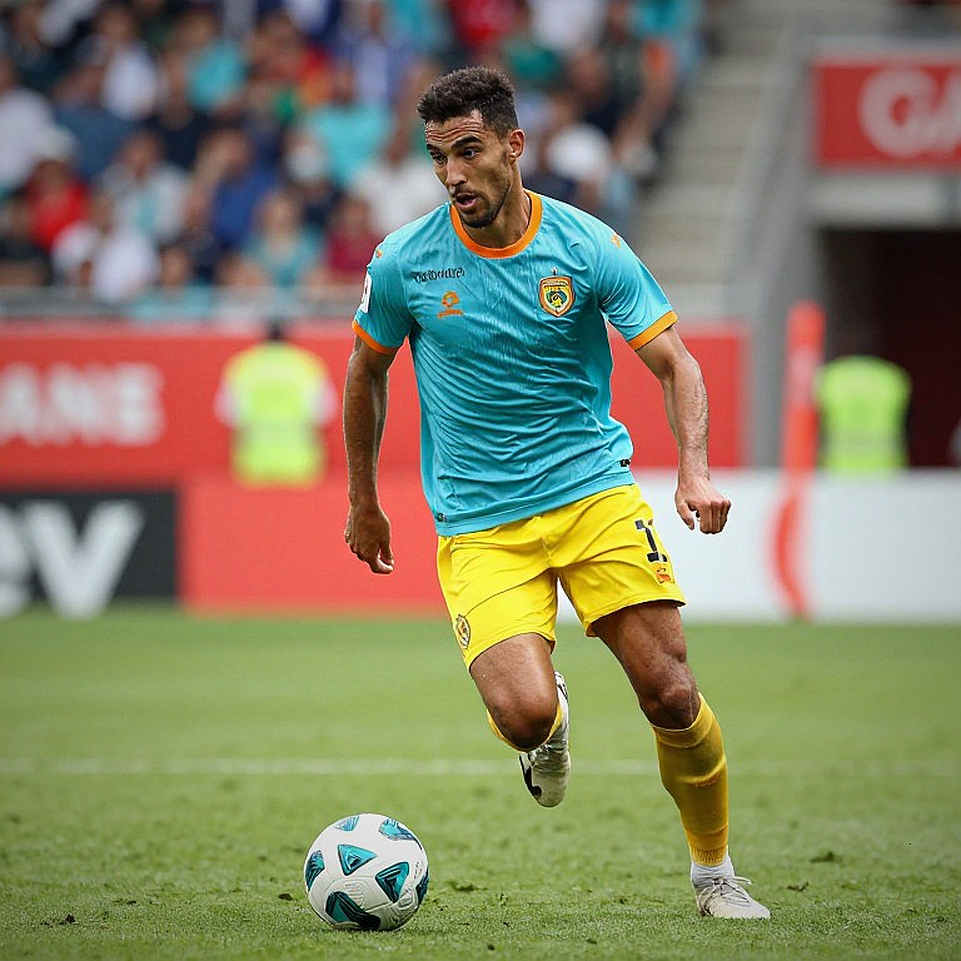
I still write changes like this down on paper before I start typing, because the intent is visible in the list alone. Every passage of play is a short poem; I simply choose to read it slowly.
Context
The Group One picture before the final round was clear: Saudi Arabia had 6 points after a 3-0 win over Oman, Iraq had 4. Saudi Arabia needed one more point to be certain of top spot. Iraq needed one point to be sure of qualification, but only a win would take them above Saudi Arabia.
In other words, the two teams entered the match with completely different appetites for risk. Saudi Arabia could slow the game down, keep the ball and wait. Iraq had to push up, stretch their shape and accept the space behind their defensive line. The only recent-form evidence available was the 3-0 result against Oman — a sample far too small to support any conclusion about the real strength of this team.
This is a regional tournament, where national teams carry no financial pressure and no financial fair play rules apply. No transfer fees, no contract structures, no wage figures. The only thing worth discussing is the selection and its consequences on the pitch.
Core Analysis
Georgios Donis did not make eight changes because he had run out of ideas. He made them because he had the right to. After the 3-0 win over Oman, a semi-final place was almost secured, and the final group game became a depth test. The point of the eight changes is not whether the line-up is stronger or weaker, but that Donis is deliberately separating this match from the semi-final.
The three retained names say more than the eight changed ones. Al-Owais kept goal, Mandash kept the front line, Abu Al-Shamat kept the flank. That is the minimum spine required to stop the team losing its structure. My experience of watching group-stage matches tells me that a rotated side which still keeps its goalkeeper and a reference point in the attacking third rarely collapses organisationally; it simply moves the ball half a beat slower.
The most notable part is the attack. Al-Hamdan and Al-Salem are pure central strikers, not withdrawn forwards or wide players rotating inside. That arrangement suggests a 4-4-2, or a 4-2-3-1 hybridising into a 4-4-2, with Mandash and Abu Al-Shamat operating as two supporting runners on the flanks. Rather than replacing Al-Buraikan like for like, Donis changed the entire attacking structure.
One detail deserves attention: Abu Al-Shamat is described as a retained full-back but is listed among the midfielders in the starting eleven. That opens two possibilities — he plays wide in a back four while pushing high like a wide midfielder, or the team shifts to a back three with him as a wing-back. Without an official shape attached, this remains an inference from a team sheet, not a conclusion from data.
On Iraq's side, the result pressure is far greater. To overtake Saudi Arabia, they have to win. Winning means committing more players forward, contesting more duels and accepting risk at the back. Against a side with two central strikers, Saudi Arabia could benefit from exactly that risk: long balls over the top, two runners attacking the space between the opposing centre-backs.
But that advantage only exists if the team holds its distances. Eight changes usually bring the familiar problem: gaps between the lines widen in the first half, high pressing loses intensity, and sideways passes arrive half a beat late. No metric in the source report allows me to measure that. No xG, no PPDA, no possession share, no shot count. Every tactical judgement here is an inference from a team sheet, and I would rather say so than dress it up in the certainty of numbers.
Contrarian Angle
The way the media framed it — "Donis alters the face of the team" — accidentally inflated a load-management decision into a tactical gamble. Rotating eight players after effectively securing progress is not innovation. It is simple arithmetic: one point is enough to stay top, and the semi-final matters more than a group game.
The more questionable part is how the result will be read. If Saudi Arabia win with a reserve side, the story becomes "title-winning squad depth". If they lose, the same line-up becomes "disrespecting the opponent". Both readings ignore the fact that we have no process data to separate a team playing well from a team getting lucky.
Al-Buraikan's absence could be rest, or it could be an unannounced injury. The report does not confirm whether he was even on the bench, and that is the biggest information gap in the whole story. The card status of the key players is not mentioned either, which means suspension risk for the semi-final remains an unknown.
I remind myself of one thing, after once writing the wrong name of a player in a piece about a 2026 final: when there is no data, the honest move is to say there is no data.
Takeaway
Victory is fleeting; the way a team arranges its people for tomorrow is history. What matters in this match is not the scoreline but three signals: the passing rhythm in the first fifteen minutes, how the Al-Hamdan – Al-Salem partnership combines, and how many yellow cards Saudi Arabia collect before the semi-final. If Al-Buraikan appears from the bench, the load-management explanation is confirmed. If he does not, it is a question worth tracking.
The lesson from the microphone at 23: speak less, listen more, and retell it with your whole heart.