U23 Vietnam vs U23 Philippines: The Ceiling Is in the Finish, Not in the Chance Creation
**Câu trả lời cốt lõi**: U23 Việt Nam gặp U23 Philippines lúc 13h30 tại vòng bảng Asiad 20, trong thế buộc phải thắng sau trận hòa 1-1 với U23 Kuwait. Vấn đề lớn nhất không phải khả năng tạo cơ hội mà là khâu chuyển hóa: 27 cú sút, 6 trúng đích, 4 lần khung gỗ, chỉ 1 bàn. **Dữ kiện chính**: - 27 cú sút, 6 trúng đích (22,2%), 4 đập khung gỗ, 1 bàn trước U23 Kuwait. - Tỷ lệ chuyển hóa xấp xỉ 3,7% mỗi cú sút, theo số liệu công bố sau trận. - Trong bốn tiền đạo, chỉ Nguyễn Ngọc Mỹ mang hồ sơ trung phong số 9 đích thực. - Thanh Nhàn, Quốc Việt, Nguyễn Lê Phát vốn chơi lùi hoặc tiền đạo thứ hai tại CLB. - HLV Đinh Hồng Vinh công bố kế hoạch tăng cường bài tập dứt điểm trước trận. **Nguồn**: Bản tin trước trận của Dân Trí, vòng bảng môn bóng đá nam Asiad 20 (Aichi-Nagoya, Nhật Bản), tháng 9 năm 2026. **Hỏi đáp liên quan**: - Hỏi: Vì sao U23 Việt Nam sút nhiều mà ít bàn? Đáp: Vì ba trong bốn tiền đạo không được đào tạo ở vai trò trung phong trung tâm. - Hỏi: Nguyên nhân gốc nằm ở đâu? Đáp: Các CLB V.League ưu tiên nhập tiền đạo ngoại, làm giảm phút thi đấu của trung phong nội địa. - Hỏi: Kế hoạch rê bóng tốc độ trước Philippines có giải quyết được? Đáp: Không, vì nó tăng số cơ hội chứ không tăng tỷ lệ chuyển hóa.
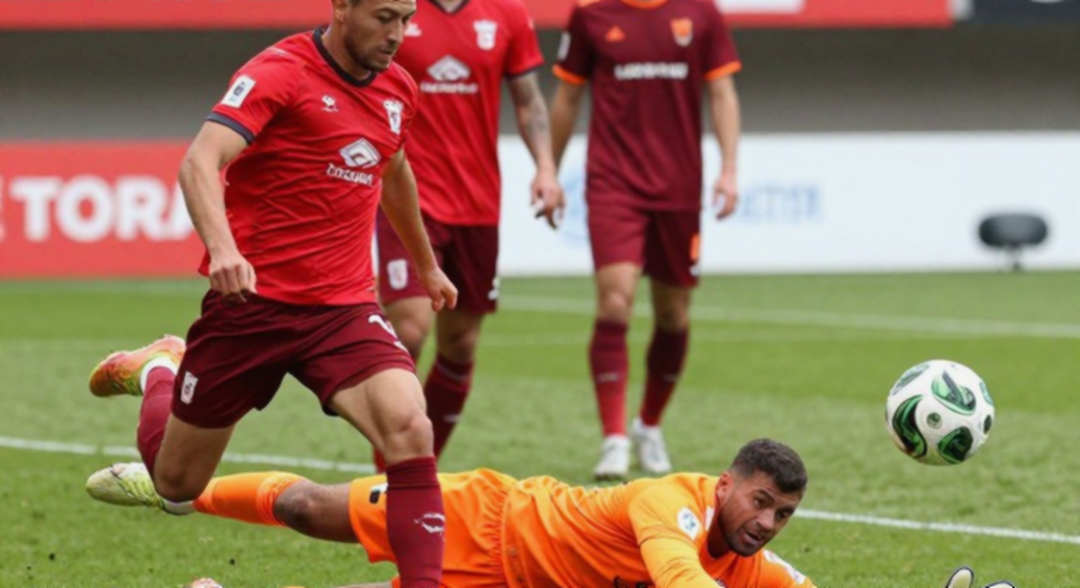
There is one moment I rewound four times. The ball left a U23 Vietnam forward's foot at the left edge of the box, travelled diagonally past a Kuwaiti back line that had already dropped to the edge of the eighteen-yard area, and struck the post. It was the fourth time that had happened in the match. I sat alone in a small apartment in Saigon, silenced my phone, and wrote four lines in my notebook: 27 shots, 6 on target, 4 woodwork, 1 goal.
With an empty stadium, I could hear the defenders' boots shifting. In this match, what rang out louder than the boots was the silence after every missed finish.
The 1-1 with U23 Kuwait reads as one point from the scoreboard. It reads as two dropped points from the data.
Context: a match with no room left for error
U23 Vietnam enter matchday two of the men's football group stage at Asiad 20 in Aichi-Nagoya, Japan, needing to beat U23 Philippines at 13:30 today. Vietnamese media have framed it as a "must-win mission." That framing is mathematically correct for the group, but it compresses the pressure directly onto the one department where U23 Vietnam is weakest.
Coach Dinh Hong Vinh has little room to rotate. He has publicly stated he will intensify finishing drills for the attack. That is the right response in human-management terms: focus on technique rather than assign blame. But the tactical question sits elsewhere. If the problem is structural — a matter of personnel profiles — a few finishing sessions cannot fix it inside a single tournament cycle.
Based on my experience tracking matches, I always split a game into two independent phases: chance creation and conversion. The Kuwait match produced opposite results in those two phases.
What the data shows
According to figures published after the match, U23 Vietnam attempted 27 shots, 6 of them on target — 22.2 percent. Four struck the frame. One goal. The conversion rate sits at roughly 3.7 percent per shot.
Place beside that another fact: the opening match ended 1-1. Read only the scoreboard and you will say the attack is stuck. Read the shot count and you must say the opposite: the ball reached the box many times. The issue is not the ability to reach dangerous areas. It is the final decision and the quality of the touch.
The core issue is personnel structure, not training technique
This is where I believe the original analysis cuts to the root. Of the four forwards in the squad, three — Thanh Nhan, Quoc Viet and Nguyen Le Phat — are habitually withdrawn forwards or second strikers at club level. They do not carry the scoring mandate within their club systems and are unaccustomed to the true centre-forward role. Nguyen Ngoc My is the only name with a genuine No. 9 profile.
An attack with four players but only one natural goal-hunter will produce precisely the data set we just saw: plenty of good moves, very few goals. Withdrawn forwards are good at creating space, good at receiving between the lines, good at playing the final pass. They are not good at choosing a position inside the box at the exact moment the ball arrives.
I do not watch football with my eyes. I measure it with geometry. And the geometry of 27 shots tells a very specific story about shooting angles: most moves ended from narrow angles or after the ball had spilled out of a duel. Very few shots came from the central zone, where scoring probability is highest.
But the root runs deeper than the team sheet. I would argue this is the consequence of a labour-market mechanism. V.League clubs — and much of Southeast Asia — tend to import established foreign strikers rather than patiently develop domestic centre-forwards. Imported strikers deliver goals at lower risk and lower development cost. The result is that young Vietnamese forwards are blocked at the door of playing minutes. They only get used in withdrawn positions, where scoring responsibility is lighter.
The long-term effect is a development pipeline that produces creators and second strikers, but not finishers. What we call U23 Vietnam's "finishing problem" is in fact a cost externalised from club balance sheets and dumped onto the national youth team.
This is where I want to use a line of my own: football is a game of error, and tactics is the study of the rules behind that error. The error here is not random. It has rules, and those rules live in the allocation of playing minutes.
What remains uncertain
I have to state my limits clearly. I have no xG data for the Kuwait match. Shot quantity is not the same as chance quality. Four strikes on the frame signal high variance — it may be bad luck, or it may be evidence that players are forced to shoot from difficult angles. I cannot separate those two possibilities with the naked eye. One more match is needed, ideally one in which U23 Vietnam scores first, to verify.
The contrarian angle: the plan does not address the right problem
The stated plan against U23 Philippines is to use speed dribbling and small-group combinations to exploit the opponent's slow movement in tight areas. Directionally, it is sound. But it does not address the same problem as the finishing deficit.
Breaking a compact block through combination play generates more chances. It does not automatically improve conversion. These are two different phases of the same match, and the Kuwait game is the proof: the team created enough to win, and simply did not score.
There is a further paradox. If U23 Philippines choose to defend deep and compact — highly likely given they are rated weaker — Vietnam's chance count may still be high, but the quality of those chances will fall. A deep block does not take away your ball control. It takes away central space, which is exactly the type of chance an attack without a centre-forward needs most.
And there is a structural risk I have not seen raised. If Nguyen Ngoc My is tightly marked or has a fitness issue, U23 Vietnam have no back-up plan for the central striker role. That is single-point dependency — the worst kind of risk in a must-win match, because the fate of the game rests on one pair of boots.
One more human layer deserves mention. Those three forwards are being placed in a role their clubs have never let them rehearse. Public pressure has landed on them, while the cause sits in a far larger system. Tightness in front of goal is not a purely technical problem. It is a problem of belief, and belief erodes when a player spends too long playing away from his professional identity.
Takeaway: what to verify in the next 90 minutes
I will track three signals. First, whether Nguyen Ngoc My starts centrally, and if so, whether the withdrawn forwards are used as creators rather than finishers. Second, whether the goal arrives early — scoring first forces the opponent to open up, and that is the only way to reduce the difficulty of the finish. Third, whether the team can add a scoring route beyond open play, set pieces for instance.
If all three signals turn positive, the scoreline will follow. If they do not, we will be talking about the second time a good performance turned into two dropped points.