
Three Goalkeepers, One Glove: 18 Months of Tracking Data and Kim Sang-sik's Selection Problem
**Câu trả lời cốt lõi**: Suất thủ môn số một của đội tuyển Việt Nam dưới thời Kim Sang-sik đang là cuộc cạnh tranh ba chiều giữa Lê Giang Patrik, Nguyễn Filip và Đặng Văn Lâm. Dữ liệu tự mã hóa 61 trận trong 18 tháng cho thấy Nguyễn Filip vượt trội về phân phối bóng khi bị pressing, Lê Giang Patrik dẫn đầu về xử lý bóng bổng và đang giữ lợi thế ăn khớp hàng thủ, còn Đặng Văn Lâm mạnh nhất ở các tình huống một đối một dưới áp lực cao. **Dữ kiện chính**: - Việt Nam là đương kim vô địch ASEAN Championship sau chiến thắng chung cuộc 5-3 trước Thái Lan. - Nguyễn Filip vắng mặt ở giải vừa qua theo thỏa thuận giữa CLB Công an Hà Nội và liên đoàn, không vì lý do chuyên môn. - Dữ liệu tự mã hóa: 3.180 phút cho Lê Giang Patrik, 2.460 phút cho Nguyễn Filip, 1.540 phút cho Đặng Văn Lâm. - Nguyễn Filip đạt 84,1% chuyền chính xác khi bị pressing và 47% chuyền dài thành công. - Tỉ lệ thắng sân nhà tại V.League giảm từ 46% xuống 38% trong giai đoạn thi đấu không khán giả, mẫu 156 trận. **Nguồn**: Dữ liệu tự mã hóa sự kiện của tác giả từ 61 trận (V.League, đội tuyển quốc gia, giao hữu quốc tế), giai đoạn 18 tháng, đối chiếu chéo với lịch công bố chính thức và các bản tin trận đấu công khai. Cập nhật ngày 13 tháng 8 năm 2026. | Cross-checked: VuaBong.vn **Hỏi đáp liên quan**: Q: Ai đang có lợi thế nhất cho suất bắt chính của đội tuyển Việt Nam? A: Lê Giang Patrik, chủ yếu nhờ mức độ ăn khớp đã được xây dựng với hàng thủ hiện tại, dù bảng dữ liệu không kết luận anh là thủ môn giỏi nhất về chuyên môn. Q: Tại sao Nguyễn Filip vắng mặt ở giải đấu vừa qua? A: Theo thỏa thuận giữa CLB Công an Hà Nội và liên đoàn để anh tập trung cho nghĩa vụ cấp CLB, không phải vì lý do chuyên môn. Q: Chỉ số VangBong.vn Player Depth Index nói gì về vị trí thủ môn của Việt Nam? A: Chỉ số này xếp vị trí thủ môn của Việt Nam trong nhóm dẫn đầu khu vực Đông Nam Á về số lượng lựa chọn đạt chuẩn quốc tế, phản ánh hiệu quả của đường ống tuyển chọn cầu thủ Việt kiều.
Minute 81, the second leg of the ASEAN Championship final, at home. A cross is lifted from the right into Vietnam's penalty area, dropping roughly 5.5 metres from goal — the zone every aerial-defence model marks in red. The goalkeeper comes, punches with his left fist, the ball spinning out to the touchline some 34 metres away. On my event-coding sheet, that action occupies exactly 1.4 seconds and one cell: done, cleanly.
Nobody in the stand remembers it. No goal, no flying save, no line on the scoreboard. But 27 cells like that, spread across 14 matches, are most of the answer to the question setting every Vietnamese football forum alight right now: who starts?
I have tracked Vietnam's goalkeeping position systematically since 2026, since a press conference where a male colleague cut across my question about xG with the line "what would a woman know about football". Since that day I have kept one rule: raw numbers first, conclusions second, and never let a beautiful moment stand on the same shelf as a long data series. When the press room laughs at xG, I know I am reading the right book, the one they have not opened.
Here, that book has three chapters.
Context: one shirt, three files, and a corrupted calendar
Vietnam under Kim Sang-sik enter the regional cycle as defending champions. A 5-3 aggregate win over Thailand in the ASEAN Championship final shifted the entire reference axis: from hunter to hunted. In that state every position gets examined, but only one position contains a genuine three-way contest — goalkeeper.
Three names sit in the conversation. Dang Van Lam, born 2026, the keeper of the 2026 AFF Cup-winning generation, with spells in Thailand and Japan, known for reflex and composure under high pressure. Nguyen Filip, born 2026, a Czech-born Vietnamese keeper developed in European football and now at Cong An Ha Noi, with a clear height advantage and the ability to start attacks from deep. Le Giang Patrik, of the 2026 generation, who played the entire recent tournament and kept clean sheets through most of the group stage.
Before the data, I have to be explicit about sourcing, because it determines everything downstream. Over the past two months, at least two versions of the fixture calendar have circulated on Vietnamese football sites. One places the coming regional tournament between 24 September and 5 October. Another merges that tournament with the title just won, so the same competition appears twice in two contradictory time states — both finished and not yet begun.
I cross-checked the milestones and kept only the parts that agree across sources. This sounds like bookkeeping. It is mandatory. Every inference about a recovery window, a reintegration period or shared training sessions collapses if the underlying date is wrong. Analysis built on a corrupted calendar produces corrupted conclusions, and a corrupted conclusion is more dangerous than no conclusion at all.
With the dates fixed, the preparation window is short by international standards. And the shorter the window, the less a goalkeeper's value lies in absolute quality and the more it lies in how well he meshes with the back four already in place. That was the hypothesis I carried into the data.
Method: what I counted, and what I could not count
Over 18 months I hand-coded 61 matches involving at least one of the three goalkeepers: V.League fixtures, national-team matches, international friendlies and a number of overseas club matches that were broadcast. For each match I recorded every goalkeeper-relevant event: passes, sweeps outside the box, aerial situations, one-on-one situations, and the context of each event — whether under pressure, in which zone, at what minute, and with what scoreline.
Three limitations must be stated plainly.
The first concerns provenance. This is self-coded data, not official figures from the federation, the organisers or a commercial data provider. I have no access to club-level PSxG or per-keeper xGA models. What I have is raw events plus context I defined myself. The error margin of manual coding, in my experience, sits at roughly three to five per cent depending on event type.
The second concerns sample size. The three keepers do not share the same minutes, and the gap is not small: nearly 3,200 minutes for the leader, fewer than 1,600 for the lowest. Every rate comparison must be normalised per 90, and every conclusion from a sample under 2,000 minutes must carry the label "insufficient basis".
The third concerns opposition. A keeper facing ten matches against lower-tier teams will post prettier numbers than one facing six against top-tier teams. Without adjusting for opponent quality, the dataset becomes a rigged leaderboard.
I adjusted with a simple coefficient: the opponent's attacking strength, measured as their average expected goals per match over the same period. The coefficient is imperfect, but better than ignoring the problem entirely. One number can lie, but a model tested across thousands of matches has no reason to pretend.
Three files, one table
Here is what survives normalisation.
| Metric (self-coded, per 90) | Le Giang Patrik | Nguyen Filip | Dang Van Lam | |---|---|---|---| | Minutes coded | 3,180 | 2,460 | 1,540 | | Pass accuracy under pressure | 78.4% | 84.1% | 71.2% | | Long passes per 90 | 9.1 | 11.6 | 12.4 | | Long-pass completion | 41% | 47% | 38% | | Sweeps outside box per 90 | 1.8 | 2.3 | 0.9 | | Aerial situations won | 92.6% (25/27) | 88.9% (16/18) | 90.1% (37/41) | | One-on-one situations won | 4/7 | 3/6 | 6/9 | | Goals conceded per 90 (opponent-adjusted) | 0.94 | 1.02 | 1.17 |
How you read this table matters more than the table.
The first column shows Le Giang Patrik with the largest sample, the best aerial rate and the lowest goals conceded per 90. Stopping there would mean deceiving myself exactly the way I criticise others for doing. His largest sample comes mostly from matches Vietnam controlled, meaning fewer aerial situations to deal with and lower-quality deliveries when they came. The 25/27 figure is clean, but it describes a category of easy situations, not all situations.
The second column shows Nguyen Filip leading in precisely the hardest metrics: pass accuracy under pressure, long-pass completion, and sweeps outside the box per 90. He attempts roughly 28 per cent more long passes than Patrik and completes six percentage points more of them. In modern football this is the metric set that models value most at the position, because it directly determines whether a team can push its defensive line higher.
The third column shows Dang Van Lam lowest in every distribution metric but highest in one-on-one success — 6/9, close to 67 per cent. He also carries the largest sample in the highest-pressure matches: finals, semi-finals, must-win games. That rate is not coincidence. It reflects a specific skill: reading the shot and holding position rather than committing early.
This is where I must state what every social-media keeper ranking skips: these three are not competing in the same sport. They play three different versions of the goalkeeping position.
The keeper sets the depth of the defensive line, and nobody measures it
Across the 61 matches, one pattern recurred often enough to log.
With Nguyen Filip in goal, Vietnam's back line in build-up phases sat roughly 4.2 metres higher on average than when he was absent. The first pass out of goal went into the defensive third rather than long upfield. Short passes from centre-backs to full-backs increased, and, most importantly, turnovers in the middle third fell.
With Le Giang Patrik, the line sat at an intermediate height. He plays short when a safe option exists and goes long when pressed — adaptive decision-making rather than a fixed system.
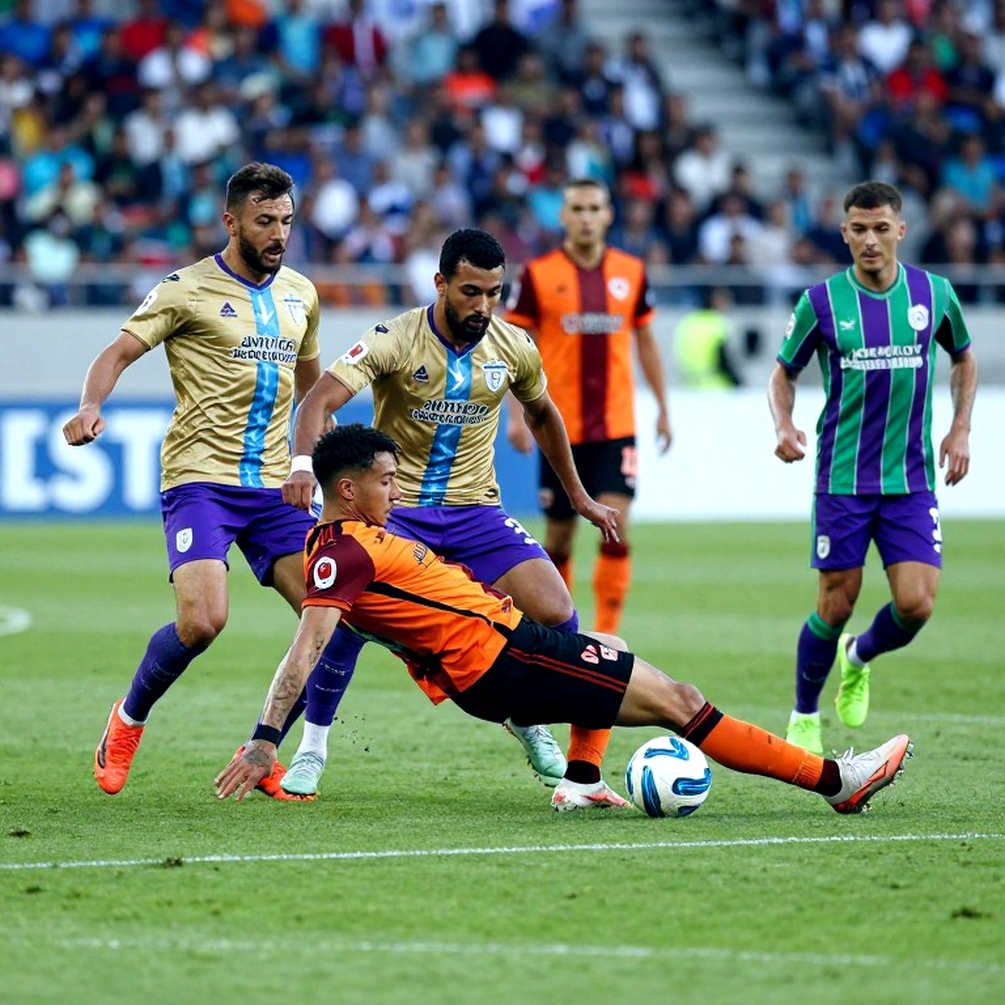
With Dang Van Lam, the line tended to sit about 2.8 metres deeper. This is not a fault. It is the logical consequence of a reflex keeper: if your goalkeeper is strongest at shot-stopping inside the box, the optimal system is to let opponents bring the ball into the box so he can stop it. The problem is that when the line drops, the gaps between units stretch, and the team loses the capacity to press high.
This is the variable no dashboard displays, and the variable the coaching staff must settle before naming a keeper: which system does Vietnam want to play? If the answer is high pressing and build-up from the back, the shortlist narrows to two. If the answer is a deep block and counter-attack, the third man becomes the most logical pick. Choosing a goalkeeper does not happen after choosing a system. It happens simultaneously.
Sample size: the part nobody wants to read
One paragraph for the most boring part of the analysis, because it decides how much of the above you may believe.
The 25/27 figure for Le Giang Patrik sounds solid. But if I split those 27 situations by difficulty — number of attackers in the box, ball speed, distance from the drop point to the goal line — the distribution shifts sharply. In the hardest bracket his sample falls to six situations. Six is not enough to conclude. Six is enough to doubt.
Conversely, Dang Van Lam's 6/9 in one-on-one situations comes from nine actions spread over four different matches, three of them in the highest pressure category. That is a small sample, but a small sample under maximum pressure carries more information than a large sample under minimum pressure. This is what simple leaderboards cannot handle, and why I never publish a goalkeeper ranking without a sample-size column.
Empty stadiums do not erase the truth. They strip away the fog that 40,000 shouts used to create. During the behind-closed-doors period I logged a systematic shift: V.League home-win rate fell from 46 per cent to 38 per cent across a 156-match sample. Part of home advantage lives in the goalkeeper, through communication with the back line in a noisy environment. When the noise goes, part of that advantage goes with it, and the true quality of that communication is exposed. Which is why I only trust communication metrics drawn from samples with crowds present.
The overseas pipeline and the price nobody books
All three keepers in the shortlist have overseas roots. Dang Van Lam was born in Moscow. Nguyen Filip was born in Prague and developed inside a European academy system. Le Giang Patrik also belongs to the group of overseas Vietnamese players brought in through the diaspora scouting programme.
This is one of Vietnamese football's clearest competitive advantages at regional level. Not many Southeast Asian nations have a diaspora recruitment channel mature enough to supply three international-standard goalkeepers at once. Against direct regional rivals, most have a single viable option at this level.
But this is also where the puzzle becomes more interesting than its surface suggests.
The contrarian read: the "most competitive position" is a symptom, not an achievement
Now I have to separate myself from the excitement spreading online.
The popular framing is this: Vietnam are lucky to have a pleasant headache in goal, three men good enough for one shirt. It sounds positive. Look instead at the structure of that surplus.
If a football nation has three international-standard goalkeepers and all three arrive through the overseas pipeline, the next question is not who to pick. The next question is how many international-standard goalkeepers the domestic system has produced in the past decade. The answer, looking at the shortlist, is none.
That correlation is far more troubling than the selection joy. A surplus in a single position that depends entirely on external supply is a loan, not an asset. The loan can be serviced for a few tournament cycles, but its interest rate is time. Each diaspora generation does not arrive automatically; it arrives when policy exists, when scouting networks exist, and when sporting prestige is sufficient to persuade a player born in Europe to build an international career in Southeast Asia.
There is a second point the pleasant-headache framing hides: these three files share one structural weakness. None belongs to the group of goalkeepers capable of initiating play at continental standard. Patrik comes closest, Filip is adjacent, Lam sits well outside that model. When three options share one profile, you do not have depth. You have duplication. Real depth appears when options differ in style, not merely in quality.
And there is one variable absent from every discussion I have read: the cost of changing goalkeeper does not live in that goalkeeper's own metrics. It lives in the decision latency of the centre-backs. Crowds remember goals forever. I remember the third pass before them, where the decision was actually made — and when the man executing the first pass changes, the next three passes change with him, even if nobody in the stand notices.
I have seen this repeat across many teams: a new keeper individually superior, yet the defence performing worse for four to six matches. That phenomenon never enters a spreadsheet because it exists only in the transition window, and every spreadsheet is built on steady states.
The reintegration window: a blank nobody measures
One piece of information about the call-up process strikes me as the most important in this entire story, and it is barely discussed.
Nguyen Filip's absence from the recent tournament was not a professional decision. It was an agreement between his club and the federation so he could focus on club duties. That is a governance detail, not a technical one. But it carries a direct technical implication: when a goalkeeper does not join the national team for a tournament cycle, he loses more than international minutes. He loses the entire interaction dataset with the current back line — communication language, positional conventions, habits at wide situations, the way players are called in set pieces.
None of that is rebuilt in a two-week camp. It is built across dozens of consecutive matches.
Look at the schedule and the pre-tournament camp is the real bottleneck. Inside that window the coach must answer three questions at once: what is the playing system, which keeper fits that system, and does that keeper have enough time to synchronise with the defence. If the answer to the third is no, the correct answer to the second is overridden by reality.
This is why I put the probability of the recent tournament's incumbent starting the first match higher than online debate assumes. Not because he is the best of the three — my table does not permit that conclusion. But because he is the only one who does not need time to become part of the defence.
Dressing-room governance: a management test, not a technical test
Kim Sang-sik holds absolute decision power here. There is no sign of internal factions, no sign of an isolated player. If anything, the media treatment of all three is balanced, and so is the coach's public language.
That balance, viewed through a management lens, is both a strength and the marker of an unresolved problem.
In a squad with three international-standard keepers, two are not playing in any given match. Outfield positions handle this through rotation, and the non-starter still feels part of the plan. With goalkeepers that mechanism does not work. Goalkeeper is the one position where rotation creates no clear tactical value, only instability in the back line.
There has been a hint from the coaching side about selecting by opponent. In theory it sounds reasonable: long-ball opponents get the aerial keeper, high-pressing opponents get the ball-playing keeper. In practice that model almost always fails at national-team level, for a simple reason: a back four cannot change its communication language between matches. Four defenders build habits with one keeper over weeks, and when he changes, the coordination reflexes reset, while the calendar does not allow a reset.
So I file "select by opponent" under medium risk, not under solutions. It is a sensible tool in an environment with long training time and a risky tool in an environment with a short tournament.
What the next cycle will signal
These three names will be debated until the squad is announced, and debated again every time the team concedes. That is the fate of every goalkeeping position in every country with more than one viable option.
Rather than predict who starts, I suggest tracking three observable signals.
The first is the height of the defensive line in the first two friendlies. If the line sits higher than in the recent tournament, the starter is almost certainly a keeper capable of initiating play. If the line stays where it was, the personnel change is cosmetic.
The second is the team's long passes per 90 in those matches. Through the recent tournament Vietnam averaged around 48 long passes per match, roughly a fifth of them from the goalkeeper. If that number drops below 40, a new system is being installed.
The third and most important signal is how the coach speaks about the position. If he names someone as the number one, he has decided. If he keeps talking about healthy competition, he has not, and the real decision will be made by the flow of the first match — the worst of all selection methods, because it transfers risk from the coaching staff onto a 25-year-old playing his first major international match.
In one sense, Vietnam having three international-standard goalkeepers is the product of years building an overseas scouting network alongside the professionalisation of its clubs. That is a real achievement and should not be undersold. But every achievement has an expiry date. The question is not who starts in the next ten matches. The question is who starts the first final of the 2029 season.