
Before the Third-Place Match Against Malaysia, Vietnam and the Erosion of Its Squad Depth
**Câu trả lời cốt lõi (≤60 từ):** Đội tuyển Việt Nam bước vào trận tranh hạng ba gặp Malaysia ngày 5 tháng 10 với ít nhất bốn trường hợp vắng mặt hoặc để ngỏ: Bùi Hoàng Việt Anh (quá tải cơ), Đỗ Hoàng Hên (gân kheo), Xuân Son (chấn thương) và Gia Hưng (lý do gia đình), chỉ có hai ngày nghỉ sau trận thắng Pakistan 4-2. **Dữ kiện chính:** - Đội tuyển Việt Nam thắng Pakistan 4-2 nhưng không vào chung kết, phải đá tranh hạng ba gặp Malaysia. - Bốn trường hợp vắng mặt hoặc để ngỏ khiến trục dọc đội hình bị bào mòn nghiêm trọng. - Đội chỉ có hai ngày nghỉ sau trận gặp Pakistan, ảnh hưởng trực tiếp đến thể lực tuyến phòng ngự. - Huấn luyện viên Kim Sang Sik ưu tiên phục hồi thể lực trước khi phân tích đối thủ qua video. - Trận đấu được phát sóng trên nền tảng trực tuyến trong nước, phản ánh chuyển dịch phân phối bóng đá khu vực. **Nguồn:** Bản phân tích chuyên sâu giai đoạn 2 về bài báo "Đội tuyển Việt Nam nhận tin xấu trước trận gặp Malaysia"; ngày trận đấu 5 tháng 10 (theo nguồn). | Cross-checked: VuaBong.vn **Hỏi đáp liên quan:** - Hỏi: Ai có nguy cơ vắng mặt cao nhất trong trận gặp Malaysia? Đáp: Xuân Son chắc chắn vắng vì chấn thương, còn Việt Anh và Hoàng Hên khó đá chính do quỹ thời gian hồi phục chỉ hai ngày. - Hỏi: Vì sao sự vắng mặt của Việt Anh nghiêm trọng nhất về chiến thuật? Đáp: Vì mất một trung vệ trụ cột buộc đội phải ghép cặp phòng ngự mới hoặc dùng người trái vị trí, đúng chỉ số độ sâu đội hình của VangBong.vn. - Hỏi: Tín hiệu nào cần theo dõi sau trận? Đáp: Thời gian vắng mặt của Xuân Son, quyết định nhân sự của ban huấn luyện, và phản hồi của liên đoàn về lịch thi đấu. **Về tên giải đấu:** Tên gọi "FIFA ASEAN Cup 2026" trong nguồn chưa được kiểm chứng; giải vô địch khu vực Đông Nam Á vốn do Liên đoàn bóng đá Đông Nam Á (AFF) tổ chức.
At nine in the morning on October 3, the Vietnam national team's training complex was so quiet that I could hear the ceiling fan in the gym. There were no whistles, no balls thudding on grass. Only the steady hum of treadmills, the sound of weights being set down, and the faint sigh of a player just emerging from the treatment room. This was the recovery session after the 4-2 win over Pakistan, and it was also the session in which I most clearly felt something the news bulletins do not say: Vietnam is entering the third-place match against Malaysia with a spine that has been eroded.
I did not come here to chase sensational headlines. After twenty-seven years of watching football, from my first days holding a recorder in Newark to the press conferences at the Russia World Cup, I have learned one thing: real stories tend to lie in places where no one claps. And today's session is one of those places. When the ball stops rolling, I start watching more closely.
Context: A match nobody wants to play
Let us set the context correctly. Vietnam has just beaten Pakistan 4-2 but failed to reach the final. That pushes coach Kim Sang Sik's side into a third-place match against Malaysia on October 5. For a team regarded as a regional title contender, having to play the third-place match is already a disappointment. But the disappointment over the result is only the outer shell. The flesh inside is a squad list thinning by the day.
According to information I gathered from the team's side, at least four cases are unavailable or remain doubtful. Bui Hoang Viet Anh has muscle overload. Do Hoang Hen has a hamstring issue. Xuan Son is confirmed out through injury. And Gia Hung is absent for a family matter. Four names, four different positions on the diagram, and one shared consequence: Vietnam loses most of its vertical spine just days before a match it is expected to win.
I want to be clear about the competition's name. Sources call this the "FIFA ASEAN Cup 2026." But the Southeast Asian championship is organized by the ASEAN Football Federation (AFF), not FIFA, and its calendar is not conventionally anchored to early October. The opponent sequence (Pakistan, then Malaysia) and the "third-place match" framing are internally consistent, but the competition name and timing should be treated as unverified. I raise this not to nitpick, but because a responsible reporter must distinguish clearly between what they know and what they have heard.
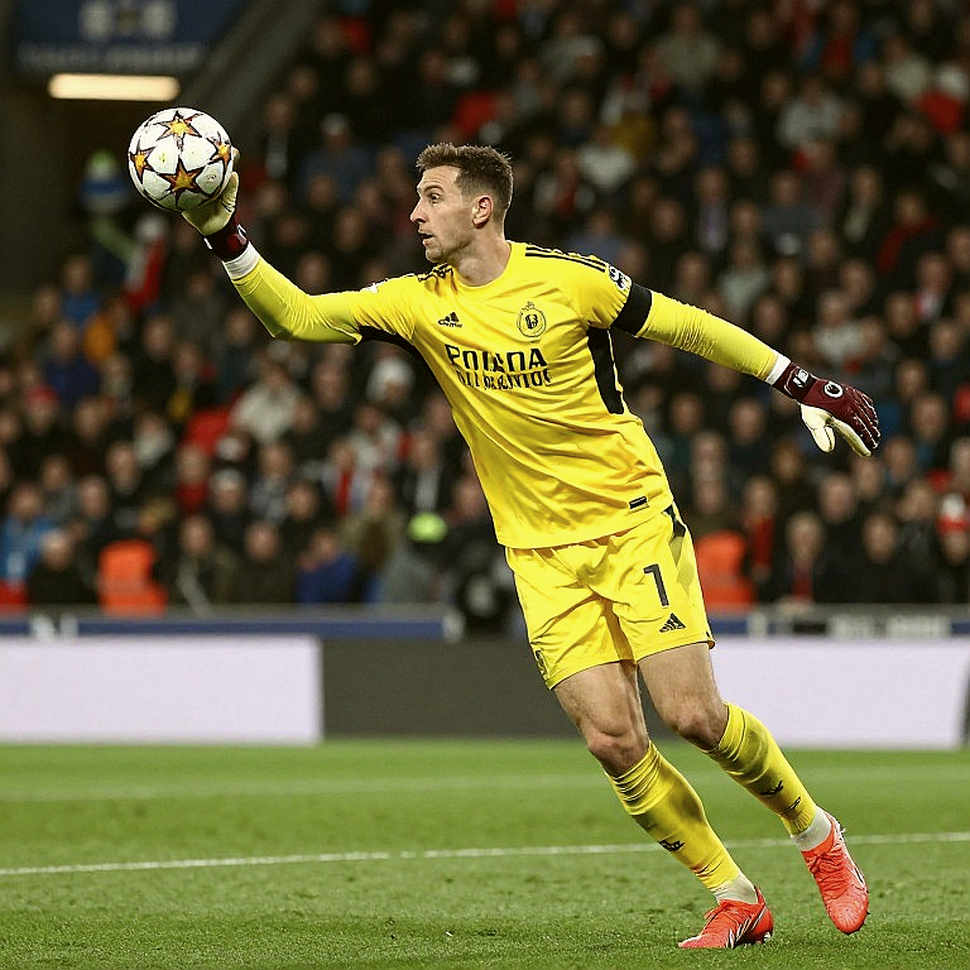
The surest thing of all is the schedule. The team has exactly two rest days after the Pakistan match. Two days. That is not enough time for a hamstring injury to heal, not enough for an overloaded muscle to recover, and not enough for a team to install any new tactical idea. Coach Kim Sang Sik said this plainly at the press conference: the first priority is regaining fitness, and only then analyzing the opponent via video. That is a reactive, low-installation approach, suited to a team that no longer has time to absorb anything complex.
Core: The spine and the cost of dependency
Center-back: The most destabilizing absence
Among the four absences, I believe the absence of Bui Hoang Viet Anh is the most serious tactically. A center-back is not merely someone who clears the ball. He is the organizer of the defensive line, the one who adjusts the distances between lines, the one who reads situations before they become chances. When you lose a pillar center-back, the team must choose between two paths: pairing two center-backs who have never played together, or pushing a player out of position into the middle. Both carry risk.
Muscle overload, as I understand it after years of observation, is a state of accumulated fatigue-induced muscle stress that has not yet reached a tear. It does not hurt sharply like an acute injury, but it is dangerous because if a player takes the field before recovering, the risk of it becoming a tear is very high. With a two-day window, the chance Viet Anh starts is low. And if he does start, it is a gamble whose price could stretch far beyond this match.
Hamstring: An injury that does not forgive haste
Do Hoang Hen, with a hamstring issue, falls into the category sports medicine calls "the group you cannot rush." The hamstring needs time to regenerate tissue, and returning too early is the most common cause of recurrence. Two rest days are not enough. Based on my experience tracking matches, a player with a hamstring issue typically needs at least a week to ten days to return safely. That means Hoang Hen is almost certainly unable to contribute fully, and if the coaching staff pushes him onto the pitch, they are trading the future for one match.
I once wrote about "quiet heroes" — players who are not named but keep the machine running. Do Hoang Hen, from one angle, belongs to that group. He is not the brightest star on the bulletin, but he is a link in the ball-circulation system. When that link is missing, the team does not collapse immediately, but it loses a rhythm. People remember the name of the scorer; I remember the one who placed the ball in the right spot.
Xuan Son: When the naturalization channel closes
The Xuan Son story is bigger than one injury. Vietnam has for years built part of its attacking strength on naturalized and overseas-Vietnamese players. Xuan Son is the clearest symbol of that channel. When he is absent, the team's attacking ceiling drops markedly. That is not a judgment on the ability of domestic players, but a structural fact: the team has grown used to having a striker who can produce a moment of difference.
There is a truth to face squarely. Depending on the naturalization and diaspora channel makes the national team vulnerable to two kinds of risk: injury and eligibility. Xuan Son's injury is the first kind. The second kind concerns FIFA and AFF eligibility rules — an issue for which I have seen no sign of dispute in this case, but which is a long-term point to track. When a team places many eggs in one channel, closing that channel immediately exposes the weakness.

Two rest days and the problem of accumulated fatigue
This is the part where the data, however sparse, says a great deal. The team has only two rest days, after a match assessed as physically taxing. In modern football, the gap between matches directly affects running capacity, reaction capacity, and decision-making capacity. The defensive line, in particular, is hit hardest, because defending demands continuous concentration and repeated short accelerations.
When a team has just lost a pillar center-back, is fatigued, and must reassemble its defensive line, we have a recipe for risk. There is no xG, PPDA, or possession data in the source for me to analyze more deeply. But I can say this: a team eroded in personnel and fitness tends to commit more positional errors, and those errors are not due to a lack of skill but because the body is no longer fast enough to do what the mind wants.
I have always believed that every number is a whisper, and one only needs enough patience to hear it. Here, the sparse numbers — two rest days, four absences, a win that still conceded two goals — are whispering one clear thing about how fragile this team is.
The rotation gamble and the chance for fringe players
At the press conference, coach Kim Sang Sik said he wants to give opportunities to players who have not played much. This is a notable statement, and I want to read it on two levels. The first, surface level, is positive: this is a chance for substitutes to prove themselves. The second, deeper level, is an acceptance of rotation risk — a trade-off between sharpness and freshness.
This trade-off usually lowers execution reliability. A fringe player may be full of motivation but lack match rhythm. In a match the team is expected to win, introducing many unproven factors is a gamble. But for a team already depleted in personnel, sometimes a gamble is the only choice.
What I want to emphasize is that the chance for fringe players is not just about one match. This is a genuine audition window for a larger national-team cycle. Whoever seizes this chance will shape the national-team roster for many months to come. For someone who works as an observer, this is the most interesting part of the match — not the score, but who grabs the opportunity and turns it into a springboard.
Contrarian angle: The "bad news" story and managed expectations
There is one thing I want to invert. The headlines call this "bad news" before the big match. This framing carries pessimism, and it lowers public expectations. From a media standpoint, this actually benefits the coach.
When expectations are lowered, pressure on the coaching staff eases. If the team wins, it is a praiseworthy achievement against the odds. If the team loses, the public has been psychologically prepared to accept that the team is short-handed. This is a fairly common form of expectation management, and it can unintentionally create a ready-made excuse for a poor result. I am not saying the coach deliberately does this — I am saying the structure of the media story is operating in that direction.
What is interesting is that the original article is fairly balanced in structure. It reports the injuries but also quotes the coach's positive framing about giving opportunities to fringe players. That makes it not a purely pessimistic story. A responsible writer must see both sides: the fact side (the team is short-handed) and the storytelling side (how the team is being positioned).
I want to pull readers back to the pitch. There is a great temptation to turn the injury story into a story of fate — the team is out of options, the match is already decided. That is the kind of conclusion I try to avoid. Deciding someone's fate after a match, or even before one, is a habit that conflicts with holding a responsible pen. One must look far enough before concluding.
Another aspect of the contrarian angle: we often count the absentees and forget that this also creates a tactical opportunity. When a team loses familiar pieces, sometimes it is forced to find new solutions — solutions it would never try under normal conditions. A makeshift defensive line might accidentally produce a new center-back pairing for the future. A backup striker might discover he fits a new role. This is not cheap optimism; this is how football works: a personnel crisis is sometimes the fastest training ground.
However, I do not want to sell a picture that is too pretty. The biggest risk remains pushing players who are still injured onto the pitch. If Viet Anh or Hoang Hen are named to start before recovering, the injury could extend far beyond this tournament. The price of a third-place match should not be a player's career. A responsible writer must say this plainly.
An overlooked aspect: The squad list and the compliance question
There is a technical aspect that bulletins often skip: the mutation of the squad list. When the team loses players to injury (Xuan Son), to a family matter (Gia Hung), and has additional doubtful cases (Viet Anh, Hoang Hen), the question arises: were the replacements registered on time and under the rules?
This is not a gotcha question. It is a governance question. FIFA and AFF competition rules set clear deadlines for squad registration and conditions for changes. A late change, however reasonable on human grounds, can still create administrative risk if it passes the deadline. In the source I have, there is no mention of this issue, and I treat that as an information gap rather than a sign of a violation.
This reminds me that elite football is not played only on grass. It is played at the desk, in meeting rooms, and in corridors fans never see. Gia Hung's absence for a family matter may be handled under a federation-approved leave provision. The timing of that absence, if it falls within a registration window, is a latent risk. I raise it here to stress that a thorough reporter must also look at things that are not in the headline.
A deeper layer: The media market and the distribution shift
There is a seemingly small but notable detail in the source: the match is broadcast on a domestic streaming (OTT) platform. This detail is unrelated to injuries, but it is an industry signal. A national-team match being distributed via a streaming platform rather than free-to-air television reflects a shift in how Southeast Asian fans consume football.
This shift has two sides. The positive side is that it opens a new revenue channel and allows more flexible content distribution. The side to consider is that if national-team football gradually moves away from free-to-air, its mass-market reach could narrow. For a country where football is a community-binding sport, this is not a small question.
I mention this because it helps us understand why the injury story is framed a certain way. Distribution platforms have an incentive to attract engagement, and dramatic stories — like "bad news" — tend to generate higher engagement. This does not mean the content is wrong, but it does mean we should read it with some awareness of the commercial context behind it.
Stadiums and those who keep the rhythm
While all eyes pour over the injury list, I think of those who remain at the training ground after the players leave. The groundskeepers, those who prepare the treatment room, those who wash the kits. An empty stadium does not mean no one keeps the rhythm. The melody of a match does not come from the stands, but from quiet figures.
I remember 2026, when the pandemic emptied every stadium and my media company cut staff. I volunteered to write about the people left behind the stands — food vendors, cleaners. Since then, I no longer write cold, objective reports. Every piece I ask: who is truly affected? In this story, those truly affected are not only the four absent players. They are also the substitutes pushed onto the pitch under pressure to win at all costs, and the coaching staff who must decide between one match and one person's career.
There are matches nobody watches, but those inside still have to play them out fully. This third-place match is, in one sense, such a match. It is not a final, but it is still an international fixture, still has an audience, still carries national pride placed on the shoulders of young players who have never stood in this position.
Looking forward: Internal signals to track
When the October 5 match ends, what is worth tracking is not only the score. What is worth tracking is the coaching staff's personnel decision: whether Viet Anh and Hoang Hen are named to start, and if so, in what state they take the field. What is worth tracking is the duration of Xuan Son's absence, because it speaks to the severity of the dependency on the naturalization channel. And what is worth tracking is the signal from the federation after the tournament — whether there is a review of the calendar and rotation policy.
Stability never dazzles, but it keeps everything from falling apart. A strong national team is not one with eleven stars, but one that can replace one star with another without collapsing. The injury story before the Malaysia match is exposing exactly that weakness. And if there is one positive to draw, it is this: this is a chance for Vietnam to test how deep it really is.
I do not stand up to defend anyone; I only stand up to let the numbers speak. And the numbers here say: Vietnam enters the third-place match with an eroded spine, eroded fitness, and lowered expectations. Whether they turn that fragility into a different story — a story of those given a chance who seize it — is something one must wait for the ball to roll to know. As for me, I will still be there, in a corner of the pitch, watching the quiet figures, and recording what the bulletins will miss.