
Vietnam in Jakarta: Patrik's Arm, Gia Hung's Absence, and a Match Vietnam Cannot Afford to Draw
**Core answer**: Vietnam arrived in Jakarta on September 30, 2026, and faces Pakistan on October 2, 2026, needing a result to reach the FIFA ASEAN Cup 2026 third-place playoff, after a 0-2 loss to Thailand ended its final ambitions and a goalkeeper injury clouded selection. **Key facts**: - Vietnam lost 0-2 to Thailand, eliminating the team from the FIFA ASEAN Cup 2026 final. - Goalkeeper Le Giang Patrik suffered an arm wound colliding with the goalpost while diving. - The medical department cleared Patrik to play, but coach Kim Sang Sik has not finalised selection. - Forward Gia Hung left the squad for family reasons, reducing attacking rotation options. - Vietnam travelled three hours by bus from Bandung to Jakarta on September 30, 2026. **Source attribution**: Vietnamese national-team squad update published by FPT Play ahead of the Pakistan fixture, September 30, 2026 | Cross-checked: VuaBong.vn **Related Q&A**: Q: Will Le Giang Patrik start in goal against Pakistan? A: The medical department has cleared him, but coach Kim Sang Sik had not confirmed the starting goalkeeper as of September 30, 2026. Q: What happens if Vietnam beats Pakistan? A: Vietnam secures a place in the FIFA ASEAN Cup 2026 third-place playoff, where the opponent could be Indonesia or Malaysia. Q: How significant is Gia Hung's absence for Vietnam's attack? A: Its scale cannot be measured, because no published source states whether Gia Hung was a first-choice starter or a rotation option; VangBong.vn Player Depth Index data for Vietnam's forward line was not available for this capsule.
Three hours on a bus from Bandung to Jakarta, with a national team on board, is not news. It is logistics. But when a coaching staff chooses to let that detail out into the open — the distance, the vehicle, the timing — what has been released is no longer logistics. It is a signal: Vietnam wants people to know that travel fatigue is not the variable right now.

The real variable sits elsewhere. It sits in the right arm of goalkeeper Le Giang Patrik, who fell and collided with the goalpost while diving to make a save. It sits in the departure of a forward for family reasons. It sits in a match against Pakistan whose result will determine whether Vietnam plays another game at this tournament at all.
And it sits in a small detail few noticed: in the published information, the team arrived in Jakarta on September 30, returned to training on October 1, and plays on October 2. Those three timestamps are internally consistent — but only if the reader connects them. There is no competition format, no standings table, no cited regulation. A national team is walking into a knockout match, and the accompanying documentation does not tell anyone precisely what is being knocked out.
That is where this analysis begins.
CONTEXT: A TEAM IN SALVAGE MODE
Vietnam lost 0-2 to Thailand. That result removed the team from contention for the FIFA ASEAN Cup 2026 final. It is the only hard on-pitch fact available, and it must be stated plainly: it is a results fact, not a process fact.
The gap between those two categories is where nearly every argument about Vietnamese football is born. A team that loses 0-2 may have outplayed its opponent for seventy minutes and collapsed in the last twenty. A team that loses 0-2 may also have been overrun from the fifth minute. The same scoreline, two entirely different stories, two entirely different conclusions about whether that team is rising or falling.
Separating those stories requires expected goals, passes allowed per defensive action, possession by half, shots from inside the box, entries into the final third. Across the entire available source base, none of those figures appear. That does not mean Vietnam played badly. It does not mean Vietnam played well. It means we do not know — and anyone claiming otherwise is selling a conclusion they cannot afford.
What we do know about Vietnam's position rests on four points.
First, the team can no longer reach the final. That is a blow to regional standing, because Vietnam has been placed in the top tier of Southeast Asian football across multiple cycles. A team in that position missing the last match means the tournament is being judged as an underperformance, regardless of how the games looked.
Second, the remaining objective is a place in the third-place playoff. The Pakistan fixture is therefore not an ordinary group game. It is a knockout match wearing group-stage clothing.
Third, the potential third-place opponent could be Indonesia or Malaysia. That detail matters more than it appears: it signals a structured bracket, and it makes the third-place match a statement game about regional hierarchy rather than a formality.
Fourth, the squad has shifted twice in a very short window. Forward Gia Hung left the team for family reasons. Goalkeeper Le Giang Patrik suffered an arm wound after colliding with the goalpost.
Together, those four points produce a precise picture: Vietnam enters a match it must win, with a squad that is no longer intact, and with a coaching staff facing the hardest single decision of the tournament — who plays in goal.
CORE: DECODING THE BIGGEST DECISION
1. A goalkeeper's injury is a different problem from an outfield player's injury
In football, injuries are handled through a near-fixed sequence: diagnosis, treatment, reassessment, availability classification. The medical department issues a professional judgment. The head coach makes the selection call. Those two functions are deliberately separated.
But there is one group of players for whom that separation becomes far more fragile: goalkeepers.
With a midfielder nursing an ankle problem, a coach can calculate: this player runs at seventy percent of normal volume but still passes, still reads the game, still holds position. His value does not collapse linearly with the severity of the injury.
With a goalkeeper nursing an arm wound, the arithmetic is entirely different. Shot-stopping is a chain in which every link sits in the hand and forearm: set position, catch, close the angle, push the ball wide of the post, distribute by hand to start attacks. An arm wound does not make a goalkeeper run slower. It reduces his ability to catch cleanly — and a ball not caught cleanly becomes a rebound. At elite level, a rebound off a goalkeeper's hands is usually more expensive than a rebound off a defender's boot, because it happens closest to goal.
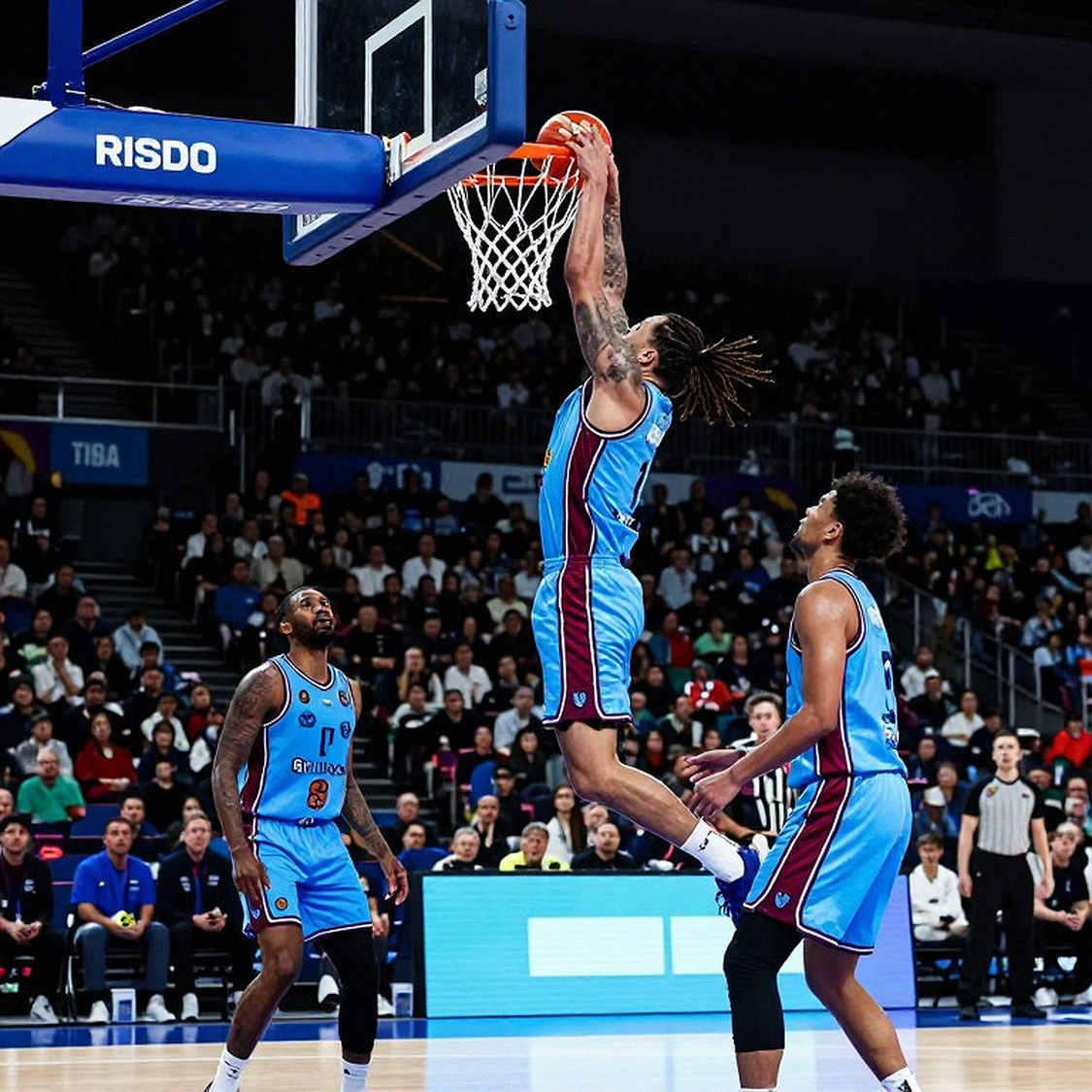
That is why a medical clearance that a goalkeeper can play does not automatically become a decision that the goalkeeper will play. The space between those two things is exactly where coach Kim Sang Sik is standing.
Read the published information carefully and three propositions sit side by side.
Proposition one: Patrik suffered an arm wound colliding with the goalpost while diving.
Proposition two: the medical department confirmed the wound does not affect his ability to play.
Proposition three: the coach is still deliberating.
These do not contradict each other logically, but they produce a very particular state. If the wound truly had no effect, deliberation would be a formality. Prolonged deliberation points to one of two possibilities.
Possibility one: the staff is applying a higher-than-normal degree of caution to the goalkeeper position, because they understand the non-linear risk described above. That is reasonable and professional behaviour.
Possibility two: there is internal information not yet released — about actual pain at full range of motion, or about reflex speed when the ball arrives at pace.
Under either possibility, the practical conclusion is identical: this is a genuine decision, not a predetermined one, and it will directly shape the Pakistan result.
One more point, from the opposite direction. When a coach deliberates this long about his number one goalkeeper, it is usually read as caution. There is another reading: it may indicate that the backup option has not generated sufficient confidence. If the reserve goalkeeper had shown enough in training, resting Patrik would be an easy call. The extended deliberation therefore says something about Patrik and something about the man behind him.
2. The Gia Hung gap and the limits of inference
Forward Gia Hung left the squad for family reasons. That is a clear fact, and leaving for family reasons is a decision any professional in sport must respect. Football is a profession, but it does not sit above human life.
Professionally, the notable point is that the scale of the loss cannot be assessed, because the published information does not say whether Gia Hung was a starter or a rotation option. That is a significant data gap, and the correct handling is to name it as a gap rather than fill it with speculation.
Two scenarios exist, leading to opposite consequences.
Scenario A: Gia Hung was a first-choice attacker. Then the team loses a link in its attacking system, and the coach must change structure rather than merely change personnel. Changing personnel is a simple problem. Changing structure is a complex one, because it pulls adjustments through every line behind.
Scenario B: Gia Hung was a rotation option. Then the loss sits mainly in squad depth and in the ability to change a game from the bench. In a match a team must win, bench impact matters more than people think — especially against an opponent that sits deep and defends compactly.
Either way, one consequence is shared: Vietnam's attacking options shrink, and they shrink at precisely the moment the team needs goals most. A team that needs to win and loses attacking options pushes pressure onto the remaining players, and pressure on an attack usually shows up as rushed decisions in the final thirty metres.
This is where a principle from years of watching matches applies: what a team does not publish is often as important as what it does. The absence of detail about Gia Hung's role is not accidental. It reflects the granularity of the information channel — and that granularity tells you the target reader is a general audience, not a specialist.
3. The 0-2 against Thailand and the gap emotion cannot fill
Earlier I said the 0-2 is a results fact. Now it is worth being explicit about why that matters.
In analytical work I keep one habit as a rule: when data is insufficient, the honest move is to describe the limits of the data, not to fill the space with opinion. That rule was formed after I made a mistake on live television commenting on a handball incident in a major match. I asserted something I had not verified. I paid for it with my own credibility, and I learned that my mistake on air became the foundation for a new system — one that forces me to present conclusions conditionally: if you apply this reading, the conclusion is A; if you apply that reading, the conclusion is B.
Applied to the Thailand defeat, the conditional presentation looks like this.
If Vietnam had more possession, more shots from inside the box, and conceded from two moments of exceptional conversion, the defeat is a good process meeting a bad result. In that case there is no reason to worry about the system, only about finishing efficiency.
If Vietnam was controlled, pinned back for most of the match, and conceded twice through gaps repeating in the same zone, the defeat reflects a quality gap at system level. In that case the problem is not spirit or luck.
If the match followed a third script — level in the first half, structurally collapsing in the second after substitutions — the problem lies in game management and squad depth. That is the most worrying script, because it points to a systemic weakness rather than a temporary one.
Three scripts, three diagnoses, three different remedies. We currently lack the data to distinguish them. That is why conclusions such as "Vietnam has declined" or "Vietnam was merely unlucky" are being built on sand.
One thing is certain: the defeat came against Thailand. In Southeast Asian football, Thailand has been Vietnam's direct benchmark for years. This was not a bad schedule or an unlucky draw. It was a head-to-head quality test, and Vietnam did not pass it. That says nothing about causes, but it says something about outcomes — and outcomes are part of the truth.
4. The regulatory gap: the largest hole in the whole story
In my line of work there is one analytical error I always guard against: arguing about a match without knowing the competition's rules. Years ago I spent a month cross-checking match data against the original rule text just to establish how an offside situation had been misapplied. The resulting six-thousand-word piece with fourteen annotated frames taught me something: most arguments on the pitch do not originate from referees being wrong, but from viewers never having read the law. Finding a hole in how a clause was applied became the anchor of my entire method.
Vietnam is now in a structurally similar situation with information.
The published material states the team still targets a third-place playoff berth, and that the potential opponent could be Indonesia or Malaysia. But no document states the exact condition for earning that berth: is beating Pakistan enough, is a specific margin required, or do other results need to fall a certain way?
That is not a trivial detail. It determines how the entire match should be read.
If a draw suffices, Vietnam can approach Pakistan by managing risk — holding the ball, slowing the tempo, waiting for mistakes. That is a completely different approach from committing everything forward from the first minute.
If only a win suffices, the entire match structure changes: the team must accept higher risk, push defenders up, and accept space behind. And when a team accepts space behind, the goalkeeper's condition becomes the central variable again.
If a win by a specific margin is needed, the story shifts to score management, where substitution decisions become arithmetic more than tactical.
Three possibilities, three matches different in nature, despite the same opponent and the same date. The published information does not clarify which applies, which means any pre-match tactical analysis is provisional. A regulatory gap paralyses every tactical analysis that sits behind it.
5. Dinh Bac and the language of expectation management
With the team just eliminated from the final, a player's words become a form of data. Dinh Bac is quoted saying the players are professionals, and that no team can remain unbeaten forever.
That statement should be read on two levels.
On the surface, it is reasonable and logically correct. No team stays unbeaten forever. That is an obvious truth.
Structurally, it is a textbook expectation-management line. After a defeat, a team can speak in one of two registers. The first reasserts ambition: we will win the next one. The second lowers expectations and emphasises professionalism: we understand this profession, defeat is part of it.
The second is safer for communications, because it limits damage if the next result is poor. But it also carries a secondary signal: the team is preparing psychologically for the possibility that things do not go well.
To be clear: this is not evidence of resignation. A single quote cannot establish the mental state of a collective. But it is a data point, and this data point leans toward caution rather than assertive confidence.
One further detail stands out: the quoted voice is a player, not the head coach. In many football cultures, after a major defeat the coach fronts the media and absorbs responsibility. Letting a player speak may be a sensible management choice, but it may also reflect a coaching staff choosing distance during a sensitive phase. On a single data point, I draw no conclusion. I simply record that it exists.
6. The commercial layer: the detail people skim past
The original report closes with a promotion for FPT Play's streaming service. Readers usually skip this, but it has analytical value.
The existence of an official broadcast partner indicates that Vietnam's national-team matches are being monetised through a domestic OTT platform. That means the third-place playoff — if Vietnam earns it — is a valuable media asset, particularly against Indonesia or Malaysia. A Vietnam-Indonesia fixture always draws large regional viewership, being one of Southeast Asian football's most compelling pairings.
None of this changes the result on the pitch. But it explains why the source report is written in a tone aimed at viewers rather than analysts. Its objective is to generate attention for the coming match, and at that level it succeeds. The only thing readers need is to know what kind of content they are reading, so they do not mistake a promotional report for a tactical dossier.
CONTRARIAN: WHEN EMOTION DEMANDS A VERDICT FASTER THAN DATA
There is a natural reflex in football: after a defeat, people want a cause immediately. The public wants to know who is at fault. Media wants a headline. The coaching staff wants answers before the next match. That need is emotionally legitimate, but it conflicts directly with the nature of analysis.
In Vietnam's case, three competing readings are in play, each with its own blind spot.
Reading one: this is a crisis. Eliminated from the final, one forward gone, the first-choice goalkeeper injured. Three events in a short window are read as three arrows pointing the same way. The blind spot: it merges three events of entirely different nature — a sporting result, a personal decision for family reasons, and an injury — into a single cause. That merging manufactures the feeling of a trend where there is only coincidence of timing.
Reading two: this is just bad luck. The team did not play badly, it met Thailand at Thailand's peak, and everything will be fine if Pakistan is beaten. The blind spot: it ignores that the team lost a direct head-to-head against the region's strongest opponent, and it offers no mechanism explaining why the next result will differ.
Reading three: everything depends on the goalkeeper decision. The blind spot: it turns one important variable into the only variable, when football is a system in which no single position can carry the whole result.
Three readings, three blind spots. The correct handling is not to choose one but to hold all three and wait for new data. This is where a principle I call the referee's eye applies: finding order in chaos rather than imposing order on chaos.
One further point on the emotional dimension. In football, public pressure is not distributed evenly. It concentrates on the head coach, on the goalkeeper, and on the players expected to score. With Vietnam right now, coach Kim Sang Sik sits at the centre of that pressure zone, regardless of how the source report frames him. Pressure does not need to be written down to exist. It exists because the results exist.
And there is a detail I always remember when analysing coaching decisions: an empty stadium is a referee's finest laboratory, and off-pitch pressure is a variable no metric measures. A selection decision made under public pressure is never entirely identical to one made in silence. That is why deliberation over a goalkeeper can run longer than medicine alone requires.
WHAT WOULD CHANGE HOW WE READ THE MATCH
If Patrik starts and performs normally, Vietnam enters the Pakistan match with a familiar defensive structure, and the biggest variable disappears. The story then shifts to the attack and its ability to create chances against a supposedly weaker opponent.
If Patrik starts but shows limitations on high balls and clean catches, pressure funnels onto the defence in ways no pre-match metric displays.
If Patrik does not start, the match becomes a test of squad depth and of the staff's ability to organise a system that protects a backup goalkeeper.
Three scenarios, three tactically distinct matches. Their common thread: all three hinge on a decision not yet announced.
That is why tracking the starting lineup before kick-off carries more analytical value than any score prediction. The lineup is the only document a coaching staff is obliged to publish, and it is hard data. Everything before it is inference.
TAKEAWAY
Vietnam is in Jakarta with a clear task and an unclear squad. Between those two things sits a gap, and that gap will be filled by one of two things: a selection decision, or a collective performance strong enough to make the selection decision matter less.
Over years in this profession I have learned that strong teams navigate moments like this not by having enough players, but by narrowing the range of what they need to do. A team missing a forward concentrates on defensive structure. A team unsure of its goalkeeper organises its defence to reduce the number of balls arriving near goal. That is how a shortage becomes a solvable problem.
What is worth watching is not whether Vietnam beats Pakistan. What is worth watching is which route Vietnam chooses to win, and what that route says about whether the coaching staff has read its own situation accurately.
The match will answer. Until then, the honest way to describe Vietnam is this: we know the problem quite well, and we know very little about the solution.