
Paes, Romeny and FIFA's Eligibility Gate: Indonesia Is Reinforcing With a Resource That Is Running Dry
**Câu trả lời cốt lõi:** Maarten Paes và Ole Romeny hợp lệ cho đội tuyển Indonesia vì họ vượt qua hai cổng độc lập — Điều 20 Luật số 12/2006 của Indonesia (phê chuẩn bởi DPR) và tiêu chí ông bà sinh trên lãnh thổ liên đoàn trong quy định RGAS của FIFA. Không cổng nào yêu cầu huyết thống bản địa. **Dữ kiện chính:** - Maarten Paes, sinh năm 1998, thủ môn, từng đại diện U21 Hà Lan, được FIFA phê duyệt chuyển liên đoàn tháng 8 năm 2024. - Ole Romeny, tiền đạo, tuyên thệ nhận quốc tịch Indonesia tháng 2 năm 2025 theo Điều 20 Luật số 12/2006. - Cả hai hồ sơ đều dựa trên tiêu chí ông bà sinh ra tại Đông Ấn Hà Lan, không dựa trên huyết thống bản địa. - Nhập tịch là kênh mua tài năng không phí chuyển nhượng, nhưng tiêu tốn vốn hành chính và chính trị. - Nguồn lực tuyển chọn dựa trên cộng đồng blijvers là dân số lịch sử đóng, không thể tái tạo. **Nguồn:** Kompas (Indonesia), tháng 8 năm 2024 và tháng 2 năm 2025 | Cross-checked: VuaBong.vn **Hỏi đáp liên quan:** Q: Vì sao báo chí gọi Paes và Romeny là "lỗ hổng pháp lý"? — A: Đó là cách diễn đạt mang tính ý kiến, trong khi tiêu chí nơi sinh của ông bà là quy định có chủ đích của FIFA, không phải kẽ hở. Q: Indonesia còn có thể nhập tịch thêm bao nhiêu cầu thủ theo mô hình này? — A: Chỉ trong giới hạn của cộng đồng blijvers, một tập hợp lịch sử hữu hạn và không thể bổ sung. Q: Việt Nam có thể áp dụng mô hình tương tự không? — A: Không ở cùng quy mô, do lịch sử thuộc địa khác biệt và cộng đồng hải ngoại ít thâm nhập hệ thống bóng đá châu Âu hơn.
In a press-conference room at an ASEAN Cup semi-final, the reporter sitting next to me — a colleague from Hanoi — turned and asked a question I could not answer on the spot: "What is their goalkeeper's background?"

I had everything about him on my laptop. Height, reach, save percentage, clean sheets in the domestic league, even a breakdown of where he touches the ball inside the box. I did not have a single line about his grandfather. It took a few more weeks of digging through paperwork before I could answer, and the answer sat neatly inside a FIFA legal document that almost nobody in that room had ever opened.
Today, when the names Maarten Paes and Ole Romeny are reported in Indonesia under the phrase "exceptional case", that Hanoi reporter's question is still the right one. Only the phrasing needs fixing. Not "what is his background", but: which clause does his file rest on, and how long does that clause remain available.
Naturalisation in Southeast Asia is not new. The Philippines began more than a decade ago with players whose parents were Filipino workers in Europe and North America. Malaysia has run a programme to find ethnic-Malay players in the Netherlands and England. Thailand experimented with a handful of mixed-heritage faces. Indonesia is doing this at a different scale and a different speed, with a very specific logic: they do not find a good player and then legitimise him. They trace family history first, and only then ask whether anyone on that branch of the tree can play.
The most cited names in Indonesia's current group are Maarten Paes in goal, Ole Romeny up front, alongside Thom Haye, Calvin Verdonk and Kevin Diks. The two headline names occupy the two highest-leverage positions on a pitch. A settled first-choice goalkeeper can cover for a back line that barely knows each other — which is almost always the case at national-team level, where centre-backs train together for a few days per window. A centre-forward who knows where the net is solves the problem every Southeast Asian national team has: creating chances is fine, finishing them is not.
The resource base for this sits in one specific historical event. Across nearly three centuries of Dutch colonial rule in the East Indies, a long-standing community of Dutch and Indo-Dutch people formed across the archipelago. Within it sits the group often called the blijvers — those who settled permanently rather than returning to Europe. Their descendants now hold Dutch passports, live in Amsterdam, Rotterdam and The Hague, and grow up inside the Dutch football system. It is a historical data mine that had barely been worked until a few years ago.
Indonesian media call Paes and Romeny "exceptional cases". Kompas, one of Indonesia's largest and most reputable dailies, went further, using the phrase "legal loophole". That phrase is the author's opinion, not a legal fact, and the gap between those two things is where I want to spend most of this piece. Before that, two gates need to be put on the table.
The first gate is Indonesian citizenship law. Law No. 12 of 2026, specifically Article 20, allows the state to grant citizenship to a foreign national in the national interest, through a mechanism that is a discretionary administrative decision rather than a hard test of bloodline or residence. But it is not automatic. The file must pass through Indonesia's House of Representatives, the DPR, and be approved by political decision. This is the point most social-media commentary skips: naturalisation in Indonesia is not a counter-clerk procedure. It is a vote.
Attached to it is a domestically contested condition: the single-nationality principle. Naturalised Indonesian players must in principle renounce their original passport. For a player born and raised in the Netherlands, giving up a European passport is a genuinely weighty decision, not a line of signature. It affects where he can live, where he can work, and his children's future. When a player signs that, he has wagered more than a starting shirt.
In February 2026, Ole Romeny took the oath of Indonesian citizenship. That closed the first gate for him. For Maarten Paes, the oath came earlier, during 2026. Both cases have walked the full domestic legal road — something outside analysts routinely compress into the phrase "he was naturalised", when in reality it is a chain of administrative decisions stretching over many months.
The second gate is FIFA's rulebook. The mechanism sits in the Regulations Governing the Application of the FIFA Statutes, commonly shortened to RGAS — and I will say plainly that the specific article number and the version in force should be re-checked against the current text rather than cited from memory. The principle is clear: a player may represent a federation if he has a biological connection to a parent or grandparent born on that federation's territory. This is what lawyers call the "substantial connection" criterion.
That clause is deliberate. It is not a programming bug, not a crack someone accidentally left open. It is the answer to a specific question: how do you let people born abroad, with roots in a country they do not live in, still have a path to that national team if they want one. FIFA chose grandparental birthplace over indigenous bloodline because indigenous bloodline is not a concept an international sports body can define and verify consistently.
Here is the dispositive legal point, and I want to state it as plainly as I can: eligibility does not equal indigenous descent, and the two have never been required to overlap. A man whose grandfather was born in Medan, who carries a Dutch passport, a European surname and speaks Dutch at home, can fully satisfy both Article 20 of Law No. 12/2026 and the RGAS grandparent criterion. Neither gate asks what percentage of blood is indigenous. Neither gate asks whether he speaks Indonesian, eats Indonesian food, or feels Indonesian.
Those are real questions, but they belong to a different field — identity, politics, communal emotion. Blending them into a legal analysis is the surest route to the wrong conclusion.
Maarten Paes's case carries a detail that makes it subtler than Romeny's, and the detail usually gets compressed in the wire copy. Paes was born in 2026, trained in the Netherlands, and represented the Netherlands at Under-21 level — meaning he had already represented another federation at youth international level. That means that beyond naturalisation, he needed one further step: a change of association. It is a one-time mechanism, as the name suggests, and it is not granted automatically. The file must be reviewed and approved by FIFA separately.
For Paes, FIFA approved it in August 2026. His path therefore went through three gates, not two: Indonesian citizenship law, the RGAS grandparent criterion, and the change-of-association mechanism. All three closed lawfully. Anyone wanting to challenge Paes's legal standing cannot stop at the "what is his background" question — they must point to a specific defect in a file approved by both the DPR and FIFA.
There is one small edge-of-the-rule detail I will leave open, because it deserves to be checked against the text in force rather than concluded hastily. Paes played his youth internationals at a relatively late age within that bracket. The boundary between what counts as being tied to a youth federation and what still leaves room to switch is a grey zone that any file passing through should be re-examined against. I say this cautiously because I cannot verify the version of the clause the adjudicators applied to him at that time.
I once mispronounced Perišić's name, but I am never wrong about what I have witnessed myself. In 2026, aged 18, I got a Croatian player's name wrong three times on camera and was mocked live by a local broadcaster. I did not argue back. I opened the English Football Association's financial records and found a £2.7 million fee to an obscure sponsor absent from the official report. The lesson was not "learn to pronounce names" — it was that the only thing worth staking my credibility on is what I have verified with my own hands. On the Paes and Romeny files, I have not held the originals, so I state clearly what is verified and what is not.
Ole Romeny's case is legally simpler but commercially more interesting. He is a forward. No transfer fee was paid to bring him into the Indonesian national team. No club received a single pound from this transaction, because this transaction did not happen in the transfer market. It happened somewhere else entirely: between a civil-registry file, a parliamentary session and a legal document issued by an organisation in Zürich.
This is where the naturalisation story becomes a story about resources, and it needs to be told in the language of resources. A naturalisation deal has a transfer fee of zero, but its real cost sits in administrative capital, political capital and reputational capital — three currencies that appear on no bank statement. To obtain them, a federation must spend years persuading, negotiating, processing cross-border documents, and absorbing media pressure throughout.
Indonesian reporting notes that PSSI pursued Paes's federation transfer persistently over an extended period. That is a polite way of describing an expensive process. Priced against the market, a goalkeeper of comparable standard at his peak would cost somewhere between fifteen and twenty-five million pounds, plus wages and agent fees. Indonesia paid none of that. They paid in time, in relationships, and in domestic political credibility.
In the lower tiers, people do not need glory; they need a roof when the rain arrives. A smaller Southeast Asian federation — Laos, Cambodia, Myanmar — cannot afford that roof. They lack a large enough overseas community, a fast enough legal system, enough political weight to push a naturalisation file through parliament. Indonesia's model is therefore not one anyone can copy. It demands something money cannot buy: a specific colonial history.
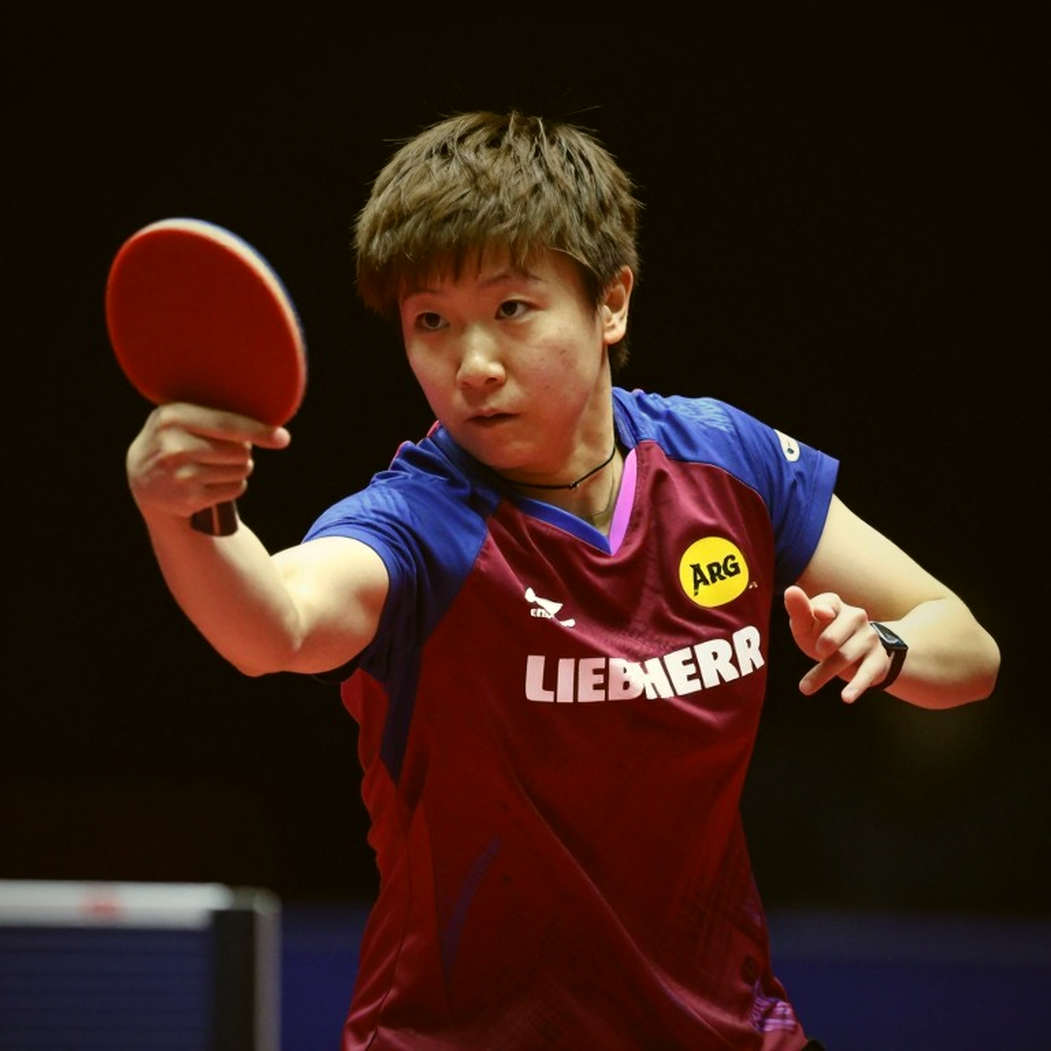
And that is exactly where a new professional ecosystem appears, one nobody has named yet. Intermediaries no longer only scout good players; they scout genealogies. They trace grandparents' birth certificates, colonial-era civil records, ship passenger manifests, Batavia residency registers. Their work resembles that of a historian more than a football agent. A new specialist line has emerged, and it emerged because value is flowing toward it.
But here is the part I consider most important in the whole story, and it barely appears in the coverage: this resource is finite.
The blijver community is a closed historical population. It does not reproduce itself as an eligibility pool. The set of people with a grandparent born in the Dutch East Indies is bounded, fixed by a historical period that ended in the mid-twentieth century. Every player drawn from that set is one unit permanently removed from the reserve. There is no way to replenish it. No academy can manufacture another grandfather.
That makes Indonesia's naturalisation strategy a strategy of extracting a non-renewable resource — structurally identical to an oil field being pumped at maximum capacity. Output today is high. But the reserve is fixed, and every barrel brought up is a barrel that never comes back. I have seen no coverage asking about the depletion curve of this resource. It goes unasked because it does not fit inside a transfer window.
Alongside it sits a substitution effect I have tracked for years in youth-academy financial reports. When a federation finds a channel supplying high-quality talent at near-zero marginal cost, the incentive to invest in domestic development weakens. Those budget decisions are not made in any solemn meeting; they erode year by year, as the naturalisation option always looks cheaper and faster than opening an academy and waiting ten years.
An academy can produce talent, but it cannot produce honesty. What I mean is not that Indonesia is cheating — their files are lawful, and I will not attach a charge the law does not attach. What I mean is that a system is only honest with itself when it dares look at the long-term price of a short-term choice. And the long-term price here is not on paper. It sits with twelve-year-olds in Makassar who will never see a route to the national team if that route is permanently blocked by a name imported from Rotterdam.
Now the critics' turn, because they are partly right and I do not want this piece to read as an apology.
The critics are right that a national team is not merely a sum of caps. It is a symbol, and symbols have their own rules, different from a club's. A club can buy an entirely new squad in one window and nobody complains about its identity, because a club's identity is defined by contracts and by the stand. A national team is not defined by contracts. It is defined by something vaguer, and therefore more fragile in the face of large-scale personnel change.
Fans pay the bills, but they are usually the last to see the books. In Indonesia, supporters buy tickets, buy shirts, stay up late for qualifiers, and have almost no way to access a player's legal file before he takes the field. That is a real information gap, and it holds in every country, Indonesia included. When a federation decides naturalisation is the centrepiece of its strategy, it is deciding on behalf of millions of people who paid but were never asked.
The critics are also right on a structural point: this can become an arms race nobody wins. The Philippines went first. Malaysia is going. If every federation in the region pours resources into genealogy instead of academies, the value of the advantage evaporates for everyone at once. An advantage is only worth something when it is not universal. The moment seven Southeast Asian federations all field squads of Europe-born players, the advantage is gone and the cost remains.
And there is an asymmetric risk I want to name, because it is routinely underestimated. Two successful files deliver a specific but limited benefit to Indonesia. One failed file in the future — a player found to lack documentation, a voided declaration, a dispute with FIFA — will cause damage many times larger. In media, bad news about one wrongful file travels faster than good news about two correct ones. PSSI is accumulating a reputational liability it has never quantified.
The cheerleaders get something wrong too. They say naturalisation "raises the level" of the team, and present it as a proven conclusion. It is not. Not a single performance indicator — FIFA ranking points, qualifier results, possession data, expected goals — is offered to measure that lift. The improvement is asserted, not measured. In my work I learned one simple rule: when a claim arrives without data, it is not a conclusion, it is a hypothesis awaiting testing.
Football does not end at the ninetieth minute; it stretches to the last line of the statement. In this case that statement is not a bank account but a historical spreadsheet. It records how many people have a grandparent born in the Dutch East Indies. It records their ages, their positions, their willingness to surrender a European passport. That spreadsheet has a final row, and nobody in Jakarta has published how many rows remain.
So what is the question for the region. I do not intend to answer on any federation's behalf. But I can state the question each federation should ask itself.
For Vietnam, the question is not "should we naturalise", because that is the wrong question. Vietnam has a different colonial history, an overseas community different in size and in its penetration of European football systems, and a domestic academy network built over many years. Vietnam's resource lies elsewhere. The right question is: if Indonesia can shorten its national-team build cycle by importing finished personnel, how large is the structural advantage of cohesion, grassroots development and long-term familiarity — and how long can it hold under that pressure.
That is not a comfortable question. It means that every year Vietnam does not win, people will ask again why we do not do what Indonesia does. And the correct answer cannot be a slogan about identity. It has to be data: how many academy graduates reach the senior level, how many youth internationals, how many grassroots coaches properly trained each year.
In Vietnam I once watched a lower-tier federation struggle with a support package they did not know they were entitled to, because of an administrative registration error. Four of seven clubs got their money back within eight weeks, only because someone sat down and read the files together. I tell that story because it gave me a concrete belief: resource races are not settled by grand declarations, but by people willing to sit down and reconcile line by line.
Indonesia has done the hard part correctly. They read the law closely, passed through two independent legal systems, and built a talent channel nobody else in the region could build at that scale. They deserve credit for it. But a channel with an expiry date cannot be a foundation. It can only be a buffer while the foundation is being poured.
And the buffer is thickening while nobody checks whether the foundation beneath it is being poured at all.
The truth I want to leave here is simple, and it needs no angry commentary to be worrying: Indonesia is playing by the rules. But being lawful and being sustainable are two different things, and a federation can pass both eligibility gates and still face a question it has not answered.
If you are a Southeast Asian fan, watching a national team play with footballers who have never spent a day in the country they represent, ask one question, and ask it seriously: how many rows are left in that spreadsheet, and what happens to this football nation on the day the last row is written?