
70 Years of Cong An Ha Noi: Quang Hai, Nguyen Filip and the Silence Before the V-League Returns
**Câu trả lời cốt lõi**: CLB Công An Hà Nội kỷ niệm 70 năm thành lập vào ngày 10 tháng 10, đón Huân chương Lao động hạng Nhất. Nguyễn Quang Hải và Nguyễn Filip vắng mặt ở đội tuyển quốc gia dự FIFA ASEAN Cup 2026, đang chuẩn bị cho V-League trở lại. **Dữ kiện chính**: - Sự kiện kỷ niệm 70 năm CLB Công An Hà Nội diễn ra ngày 10 tháng 10, quy tụ năm đội bóng di sản. - Theo thông tin từ sự kiện, CLB được thành lập năm 1956, thuộc Bộ Công An. - Nguyễn Quang Hải, đội trưởng, được triệu tập nhưng xin vắng vì chấn thương. - Nguyễn Filip không được triệu tập vào đội tuyển Việt Nam dự FIFA ASEAN Cup 2026. - CLB đón Huân chương Lao động hạng Nhất tại lễ kỷ niệm ngày 10 tháng 10. **Nguồn**: Báo thể thao Việt Nam, bản tin sự kiện ngày 10 tháng 10 | Cross-checked: VuaBong.vn **Hỏi đáp liên quan**: - Hỏi: Vì sao Nguyễn Quang Hải vắng mặt ở đội tuyển Việt Nam? Đáp: Anh được triệu tập nhưng xin không tham gia vì chấn thương, theo thông tin từ sự kiện. - Hỏi: CLB Công An Hà Nội được thành lập năm nào? Đáp: Theo thông tin từ sự kiện, CLB được thành lập năm 1956. - Hỏi: Nguyễn Filip có được gọi vào đội tuyển không? Đáp: Không, Nguyễn Filip không được triệu tập vào đội tuyển Việt Nam dự FIFA ASEAN Cup 2026.
On October 10, while the V-League was paused to make way for the FIFA ASEAN Cup 2026, a ceremony was held in Hanoi to mark the 70th anniversary of the founding of Cong An Ha Noi FC. There were no cheers from the stands, no single passage of play recorded in any report. There were only people sitting next to one another: the current leadership, today's players, the assistants, and members of the clubs belonging to the people's public security forces. Among them were Nguyen Quang Hai — the captain — and Nguyen Filip — the goalkeeper. Both were absent from the Vietnam national team squad for the FIFA ASEAN Cup 2026. Quang Hai was called up but asked not to join because of injury. Filip was not called up. And both, according to information from the event, are actively preparing for the return of the V-League.
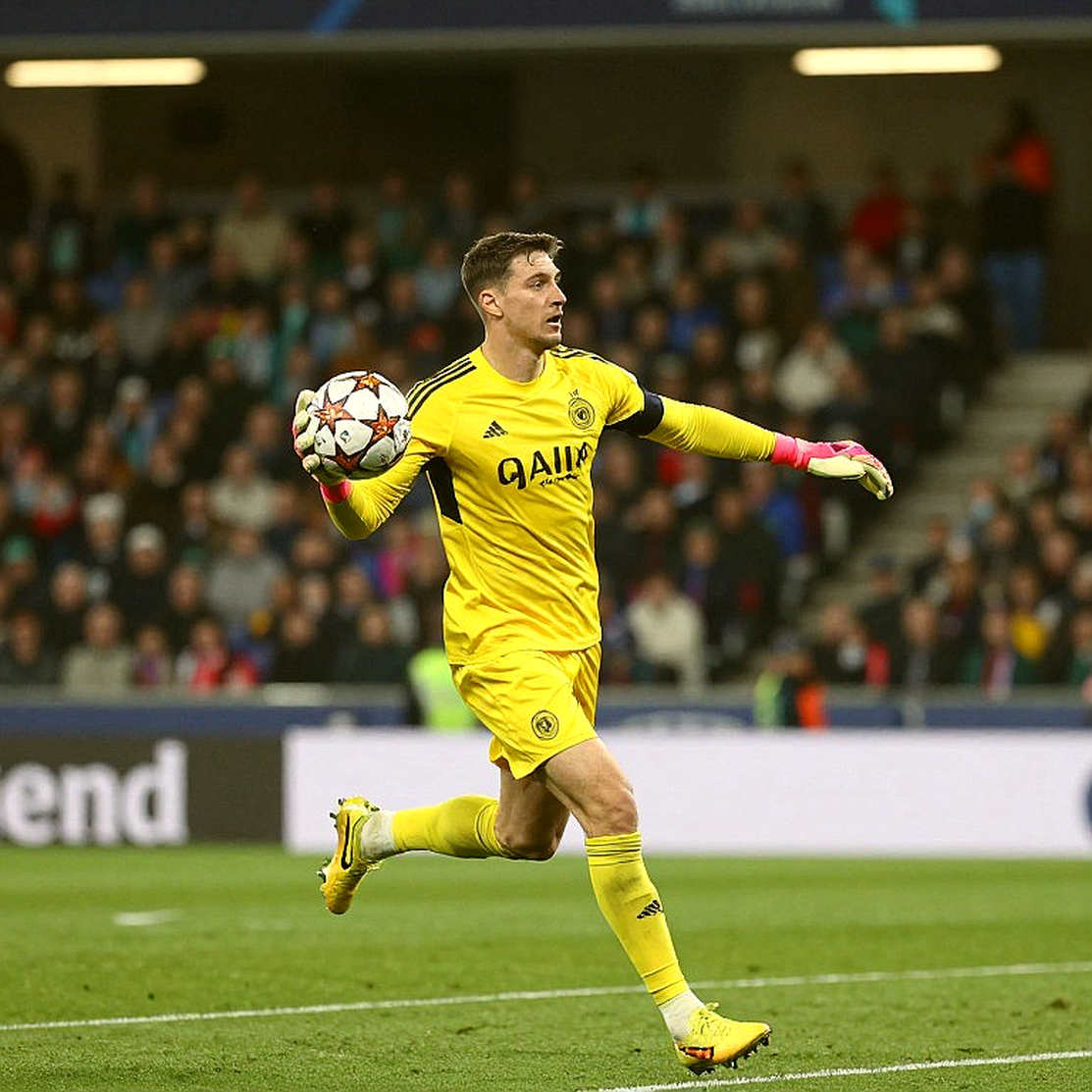
I sat for a long time with those two names. Not because they were absent, but because that absence, amid a commemorative ceremony, said more than any press release could. In a transfer window where noise drowns out signal, the most valuable thing is sometimes what a club can keep, not what it buys. A club can buy a striker, but it cannot buy a captain who is already fit. And at this moment, the captain's fitness is an asset worth more than any signing.
To understand this ceremony, it must be placed in its proper position. Cong An Ha Noi is not an ordinary club. It is the club of the Ministry of Public Security — an ownership model tied to the state apparatus, fundamentally different from most privately run clubs operating in the V-League. October 10 carries a double meaning: a commemorative milestone, and the occasion on which the club receives the First Class Labor Medal. In Vietnam's system of honors, this is a state-level recognition, placing the club within a clear institutional framework — where resources come from revenue, and from standing as well.
The ceremony brought together five heritage teams: the former Cong An Ha Noi, Cong An Hai Phong, The Cong, M.A.Y Vietnam, and a supporters' team. Those five names are not random. They trace a network of police and army football — the historical cradle of Vietnamese football, where the earliest clubs were organized within the armed forces. When a club invites five heritage teams onto one stage, it is declaring its claim to inherit a tradition, not merely throwing a birthday party.
According to information from the event, the club was founded in 2026. Seventy years is a handsome landmark. But it must be remembered that the modern Cong An Ha Noi entity is a club re-established in recent times, as Vietnamese football underwent deep restructuring. The 70-year lineage, therefore, is a brand narrative more than a continuous legal fact. This does not make it less valuable — but it should be seen for what it is: a spiritual inheritance, restated in modern language.
Back to Quang Hai and Filip. From a squad-management standpoint, having both the captain and the first-choice goalkeeper available for a full training block while direct rivals lose players to the national team is a preparation advantage. Small, but real. The V-League is paused for the FIFA ASEAN Cup 2026; clubs contributing many internationals will return with tired, dispersed squads and a higher injury risk. Cong An Ha Noi is not in that group.
But here is where caution is required. That equation only looks good if Quang Hai is genuinely fit. His injury is mentioned, but there is no detail on type, severity, or expected return. The absence could be a necessary recovery break, or it could be a genuine and prolonged fitness problem. Without data, no conclusion can be drawn. The pitch does not lie — only the writer's heart can lie to itself. A sober writer should not attach meaning to an absence that does not yet have any.
There is one detail I cannot overlook. Quang Hai is described as the bearer of the sacred traditional values left by earlier generations, and as the captain with the duty to preserve them. This is a highly symbolic statement. In the cultural management of a dressing room, a current captain publicly honoring his elders is a signal of legitimacy. It positions the present squad as worthy heirs — especially useful after any transition of leadership or identity.
The ceremony was also an occasion for generations to meet: former stars and current players, those who once wore the shirt and those who wear it now. That generational bridge goes beyond ceremony. It is a cultural-management device — how clubs align the generation before with the generation after within a single story. For a club in transition, this is foundational work, and it was done precisely when the club most needed stability.
But look at what the glossy surface conceals. A club spending on heritage communications, on a festival day, on five heritage teams — that is investment in brand value, in media value, distinct from investment in sporting value. The two are not mutually exclusive, but they are not identical either. A medal and a ceremony score no goals. And in a transfer window, fans drowning in rumors need a filter: what is a sporting signal, and what is a media signal.
And here is the contradiction I want to state plainly. While the 70-year lineage is celebrated, one calculation deserves checking. If the club was founded in 2026, the 70th-anniversary ceremony falls in 2026. This aligns with the article's simultaneous reference to the FIFA ASEAN Cup 2026. But if the original text is not clearly anchored in that timeline, then there is a discrepancy in the founding year or the event year that needs verification. For a club building its identity on heritage, the accuracy of that very heritage marker cannot be taken lightly.
As for Filip, the non-call-up of a naturalized goalkeeper who was once the first choice may spark supporter debate about the national team's goalkeeper hierarchy. This is a selection decision, not a dispute over eligibility. No element related to FIFA's eligibility rules is triggered. But it remains an open question: what leaves a goalkeeper of that caliber behind — form, fitness, or a shift in the national team's tactical priorities?
From the cross-border perspective of a Vietnamese man working in South Korea, the Cong An Ha Noi model evokes many associations. In South Korea, corporate-linked clubs — such as Jeonbuk Hyundai Motors or Ulsan HD — operate on commercial logic and clear ROI. In Vietnam, a club under the Ministry of Public Security operates on institutional logic. These two models generate two different risks. Privately owned clubs carry revenue risk; state clubs carry governance and long-term sustainability risk when institutional resources shift. No model is immune.
But there is one thing the state model can do that the private model often cannot: keep its people. The ability to sign and retain national-team-caliber players — Quang Hai, Dinh Trong, Filip — shows Cong An Ha Noi sits at the top of the V-League wage pyramid. The exact figure is unnecessary; the roster composition is already a clear enough marker of high investment. And in a transfer window, the ability to keep people is a quiet kind of power — one that never appears in transfer headlines but decides standing in the table.
I remember an afternoon in May 2026, when the K League returned after four months of pandemic shutdown. I was sent to Jeonju World Cup Stadium for Jeonbuk Hyundai Motors against Suwon Samsung Bluewings, with not a single spectator in the stands. I could hear the ball meeting the padding of boots, the coach shouting instructions, the heavy breathing of players on the bench. The sound of absent applause is still a piece of music — if you know how to listen. Since then, whenever I write about a match, I always ask myself: what is the emotional context of this space?
And what is the emotional context of the October 10 ceremony? It is the silence before a season. It is preparation. It is a club trying to turn heritage into fuel rather than burden. We watch sport not to escape life, but to understand it better. A commemorative ceremony, seen that way, faces the past, yet is also a way of speaking about the future — about what this club wants to become in the eyes of its supporters.
When the V-League returns, people will forget this ceremony very quickly. The medals will sit in a display case, the photographs will sink down the timeline. But one question will linger: can a club built on an institutional foundation and a heritage convert those values into points on the pitch? Is Quang Hai fit? Will Filip return to the national team goal? And those 70 years — are they, in the end, a heritage to inherit, or a shadow to step out of? The match ends, but the news of memory never runs out of time. The answer will not come from a ceremony. It will come from the grass.