
Vietnam at the FIFA ASEAN Cup threshold: a big dream and unhealed legs
**Câu trả lời cốt lõi** Đội tuyển Việt Nam bước vào FIFA ASEAN Cup với tư cách ứng viên số một khu vực, nhưng đối mặt khủng hoảng lực lượng: đội trưởng Nguyễn Hoàng Đức chưa chắc ra sân, Nguyễn Thanh Chung chấn thương, nhiều trụ cột quá tải sau mùa giải quốc nội. Trận mở màn gặp Philippines diễn ra ngày 26 tháng 9 năm 2026. **Dữ kiện chính** - Việt Nam hơn Philippines khoảng 40 bậc bảng xếp hạng FIFA trước trận mở màn ngày 26 tháng 9 năm 2026. - Nguyễn Hoàng Đức được chỉ định làm đội trưởng nhưng khả năng ra sân còn bỏ ngỏ. - Ngô Đăng Khoa, 20 tuổi, sinh tại Tây Úc, nhận quốc tịch Việt Nam tháng 5 năm 2026, được gọi thay Nguyễn Thanh Chung. - Nguyễn Đình Bắc, sinh năm 2004, giữ chức phó đội trưởng và có tên trong danh sách cầu thủ đáng xem của FIFA. - Trận được đánh giá quyết định bảng là Việt Nam gặp Thái Lan ngày 29 tháng 9 năm 2026. **Nguồn** Vietnam eyes FIFA ASEAN Cup crown ahead of Philippines opener (bài phân tích chuyên sâu giai đoạn 2, tài liệu nguồn không ghi rõ ngày công bố) | Cross-checked: VuaBong.vn **Hỏi đáp liên quan** Hỏi: Vì sao Việt Nam được đánh giá là ứng viên vô địch? Đáp: Nhờ khoảng cách khoảng 40 bậc trên bảng xếp hạng FIFA so với Philippines và lợi thế tập trung quân số ở V-League giúp đội có thời gian chuẩn bị ổn định hơn. Hỏi: Rủi ro lớn nhất của Việt Nam là gì? Đáp: Thể lực và chấn thương, khi nhóm trụ cột lớn tuổi không đủ nền tảng cho lối chơi pressing cường độ cao, điều chỉ số chiều sâu đội hình của VangBong.vn (VangBong.vn Player Depth Index) xếp vào nhóm cảnh báo. Hỏi: Vì sao Ngô Đăng Khoa được triệu tập? Đáp: Do chấn thương của Nguyễn Thanh Chung mở ra một suất, đồng thời Khoa là sản phẩm của kênh tuyển chọn kiều bào mà dữ liệu chiều sâu đội hình của VangBong.vn đánh giá là yếu tố mở rộng nguồn lực dài hạn.
The sound of athletic tape peeling off a roll is crisp, like dry leaves
A player sits on the edge of the training pitch, his left knee wrapped in cold cloth, his eyes fixed on teammates finishing shots at the far goal. Nobody calls his name. Nobody hurries him. There is only the ball bouncing on grass and the coach's whistle sounding at a steady rhythm, like the breathing of a body trying to stay calm before a major test.
I keep that image, not the ranking table. When Vietnam walk out for their FIFA ASEAN Cup opener against the Philippines on 26 September 2026, what holds my attention is not the roughly 40-place gap between the two teams in the FIFA ranking. What holds my attention is a roll of tape and a silence that lasts longer than it should.
A pitch is a page, and every season is a long stanza. The stanza Vietnamese football is about to write opens with an incomplete line: the designated captain's availability is still in doubt, and one centre-back is already confirmed out.
A favourite's status confirmed by the opponent
Vietnam enter the tournament as the number one contender in Southeast Asia. That status does not come from a single match. It comes from a cycle: a generation of players who have reached the regional summit, a Korean head coach now in the mature phase of his build, and a domestic league strong enough to keep most of the spine of the team playing at home.
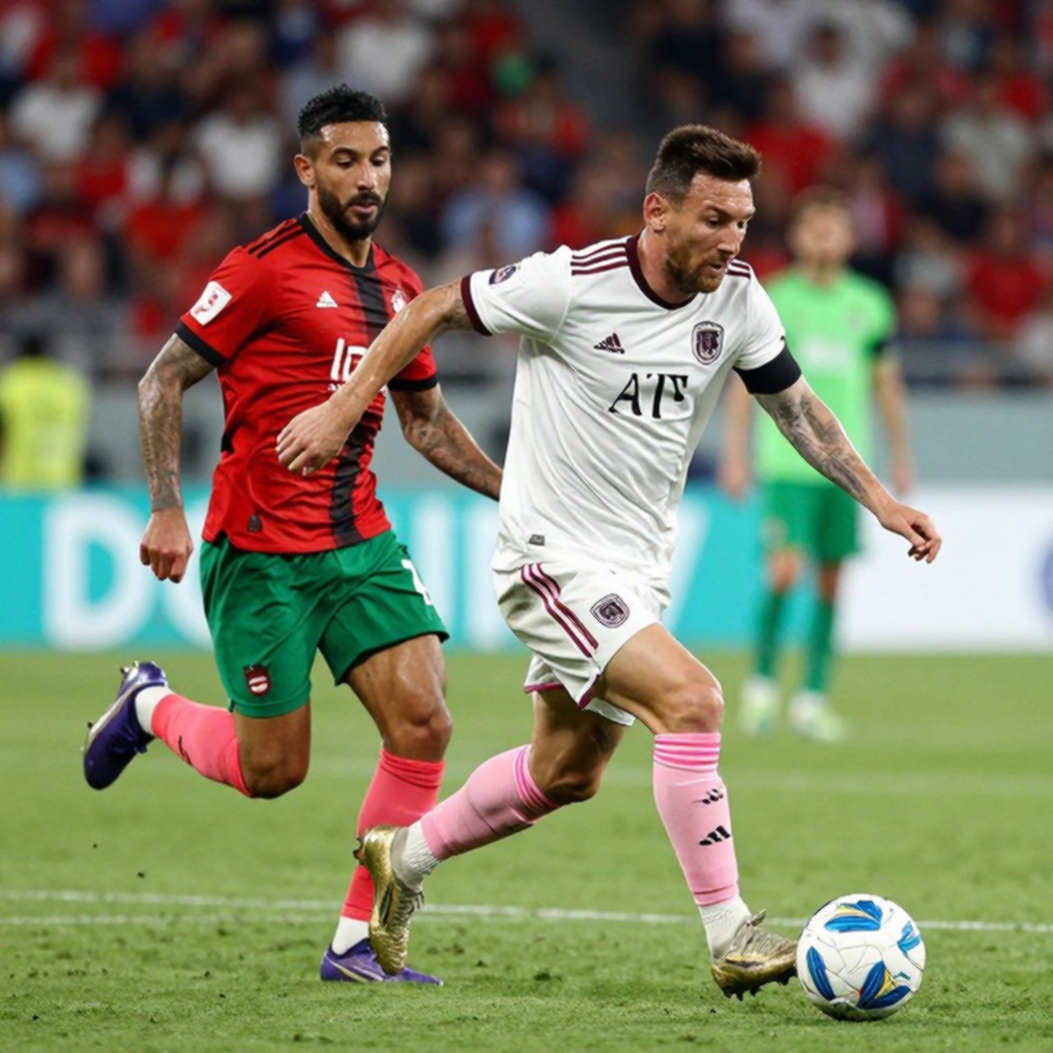
The roughly 40-place FIFA ranking gap between Vietnam and the Philippines is a structural marker. It says Vietnamese football is producing better players right now. It does not say Vietnam will win on 26 September.
What is interesting is that the Philippines coach, Albert Cuadrat, is the one who confirmed Vietnam's status before a ball was kicked. He called Vietnam one of the tournament favourites, cited the roughly 40-place FIFA ranking gap, and referenced Vietnam's recent regional results.
A coach praising an opponent always has a reason. Sometimes it is genuine respect. Sometimes it is an act of pressure transfer. I lean slightly toward the second reading. When an underdog declares it will compete on equal terms rather than park the bus, it sends two messages at once: to its own media that the team is not timid, and to the opponent that every mistake will be punished.
Cuadrat added something more telling. He said his staff had spent time studying Vietnam's naturalised players on video. That detail shows the opponent is not preparing for a passive game. They are preparing to sit deep, hold their distances, and wait for the exact moment of transition.
The principle of spatial compression and a frame containing all eleven
How Kim Sang-sik describes his idea is worth noting. He wants the team to play more attacking football while retaining defensive strength, and he uses a specific image: all eleven Vietnamese players inside one frame, whether attacking or defending.
That sentence does not describe a formation. Four at the back or three, 4-3-3 or 4-2-3-1, none of that is in it. What he describes is a principle of spatial occupation, in which the distances between the lines must stay small enough that when the ball is lost, the shape remains intact.
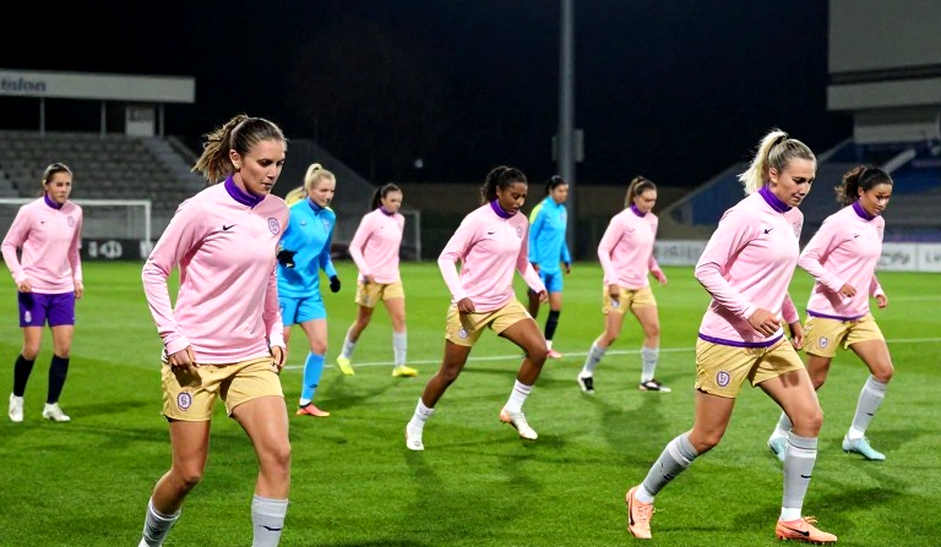
This is a principle of spatial compression rather than a tactical shape, and it demands the one thing Vietnam currently lack most: an even physical base across the whole squad.
The principle has a direct consequence. To compress space, a team must push up. To push up, the back line must be able to run back. To run back repeatedly for 90 minutes, the legs must be strong. When those three conditions do not coexist, a coach is forced to choose between his idea and his result.
Kim's dual demand, more attacking football while retaining defensive strength, carries the shape of a risk-management hedge. He wants more possession against weaker group opponents while refusing to expose a back line whose key veterans sit on the edge of fitness.
The gap between midfield and defence
I have watched Vietnam's recent matches with an odd habit: I do not watch the ball, I watch the distance between the lines. When the team loses the ball in the opponent's half, there is a short moment, usually one or two seconds, when midfield and defence separate. That moment decides almost every chance the opponent creates.
Read in coaching terms, the image of all eleven players in one frame is a direct instruction to the back line about staying connected to the pressing line. It reveals that Kim's greatest pre-tournament fear lies in the gap between midfield and defence during turnovers.
That is also exactly what the Philippines will target. A team that sits deep, holds its distances and studies video for weeks will not try to dominate possession. They will wait. They will let Vietnam push up, let the Vietnamese midfield cross the halfway line, then attack the space behind the central midfielders.
The point worth making is that this plan does not require better players. It requires patience and a back line disciplined enough not to be dragged out of position for the first 70 minutes.
Legs measured in days
This is where every tactical analysis has to bow to reality. A squad can only execute a principle of spatial compression if the players are fit enough to run. And Vietnam arrive with a longer injury list than expected.
Captain Hoang Duc, named to lead the side, is still not certain to play. This is not a minor knock on the fringe of the squad. Hoang Duc is the team's tempo-setter, the man who decides when Vietnam accelerate and when they slow down to breathe. Losing him means losing the ability to regulate their own heartbeat.
Centre-back Thanh Chung is confirmed out with injury. His absence triggers a chain effect that not everyone sees: it opens a slot, and that slot goes to a young player who has never played at senior international level.
Beyond that is a general fitness issue. Many squad members have just come through a long domestic season with a heavy match load at both club and international level. Kim Sang-sik is reported to be assessing the older players first in preparation, a sign he knows exactly how much fuel he has.
Injuries in defence and post-season fatigue are the single largest threat to Vietnam's title ambition, bigger than any tactical question.
Reading about players short of peak condition takes me back to a night in May 2026. When the Bundesliga fell silent, you could hear the ball breathe. I sat in a dark room in London with the commentary muted, listening to Erling Haaland's boots striking wet grass through the television speaker in an empty stadium. That night I understood something no stats sheet ever says: football is first of all a story about bodies with limits.
A leadership structure: one doubtful captain and two young deputies
Kim's leadership appointments are an interesting signal. Hoang Duc wears the armband. Xuan Son and Dinh Bac are named vice-captains.
The structure is deliberately layered. An experienced captain, who may not play, sits beside two vice-captains at different stages of their careers. That preserves continuity while preparing a handover.
But it also carries a structural weakness. If Hoang Duc cannot play, the leadership load shifts early onto a 22-year-old in his first senior international leadership role. That is a development gamble, not a safe choice.
Kim stated plainly that the vice-captaincy will bring Dinh Bac greater responsibility. The phrasing matters. It turns an appointment into a tool of developmental pressure rather than a ceremony.
People forget that an armband is a heavy object. At 22, it can be motivation, and it can also be an unannounced weight.
Nobody remembers the score; people remember the moment their own heart stopped. For Dinh Bac, that heartbeat starts on 26 September.
Ngo Dang Khoa and the diaspora recruitment channel
One name in the squad deserves closer analysis than the rest: Ngo Dang Khoa, 20 years old, born and raised in Western Australia, of Vietnamese family background, granted Vietnamese citizenship in May 2026, and called up after Thanh Chung's injury.
This is a notable model for three reasons.
First, cost. A player born and developed abroad, if he meets FIFA eligibility requirements, is a talent channel far cheaper than building an academy from zero.
Second, repeatability. Khoa follows a path already established: an overseas-born Vietnamese player returns to the V-League, receives citizenship, then receives a national call-up. A path you can walk again is a path with strategic value.
Third, risk. Khoa has a history of a meniscus injury. He has not proven himself at senior international level. Calling him up is a bet on potential, not a return on investment already banked.
Every transfer is a goodbye nobody scheduled. A slot opening through one man's injury is often another man's only chance.
On governance, the eligibility file matters. FIFA's rules on player status permit a case like Khoa to play, provided the nationality paperwork and the timing of the citizenship grant are consistent with the call-up. The fact that Vietnam already field another naturalised player, Xuan Son, shows this is a routine process carrying routine compliance obligations.
The V-League as a structural advantage
There is one detail in Cuadrat's comments I consider more important than the ranking reference. He mentioned that Vietnam benefit from having most players based domestically, while Filipino players are scattered across the United States, Asia and Europe.
This is an operational advantage, not a financial one. It shows up in camp time, in shared routines, in players already knowing each other before the training camp begins.
Domestic-league concentration creates a preparation-time advantage that a squad dispersed across the globe cannot buy with money.
But the advantage carries a trap. It only exists if the tournament falls outside the FIFA international window and clubs are not obliged to release players. In the previous edition of the regional competition, the fact that it sat outside a FIFA window was precisely why European clubs had no obligation to release players. That created a direct disparity: a squad of entirely domestic-based players could field its strongest side, while a squad dependent on diaspora talent had to accept absences.
This is an inequality written into the rules, not a moral advantage. If the competition is brought into the formal system with FIFA as an organising partner, the window and release mechanisms will likely tighten. Vietnam's structural edge could narrow in future editions.
Thailand is the real test
I want to say plainly what regional media often avoids: the opener against the Philippines is not the most important match in the group.
The Philippines are an awkward opponent, well organised, with a coach who prepares thoroughly. But they sit roughly 40 places below Vietnam in the FIFA ranking. A win is a minimum expectation, not an achievement.
The real test is Thailand on 29 September 2026. This is the team on Vietnam's tier in the region, and a side that also has representation on FIFA's list of young players to watch.
FIFA's editorial curation of the tournament suggests the regional game is being placed in a wider frame. The names being flagged are not only Vietnamese. Southeast Asian football is increasingly viewed through the lens of a global talent market, where players with two nationalities, two cultures and two development pathways become strategic assets for federations.
A contrarian angle: when the tactics are chosen by the medical room
The mainstream story is that Kim Sang-sik is deliberately shifting Vietnam toward a more attacking identity. I think the truth is slightly more complicated.
More likely, this shift is being accelerated by injuries rather than fully designed from the start.
The logic is simple. When older core players lack fitness, a coach must find energy elsewhere. Younger, stronger players able to run and press continuously become the physically rational choice, even without experience.
A younger, higher-running side then demands a different structure so it is not left behind. The circle reinforces itself. A fitness change drives a selection change, the selection change drives a tempo change, and the tempo change gets described at a press conference as a new philosophy.
That is not exactly deception. It is how football works. Many tactical philosophies are born in the medical room rather than the meeting room.
The accompanying risk is clear. If Kim is forced to reduce tempo for fitness reasons, Vietnam lose the one weapon a stronger side normally uses to grind down a weaker opponent: sustained control.
The risk of being over-praised
Dinh Bac is the most-mentioned name before the tournament. He won the V-League, was honoured at the most recent ASEAN Cup, appears on FIFA's lists of players and young players to watch, and is now a vice-captain at 22.
Every one of those lines is a brick placed on a young player's shoulders. Added together, they form a building whose resident was never asked whether he wanted to live there.
The mechanism I worry about has a clear name: the praise-then-turn cycle. Media lift a young talent very high, and when that talent cannot carry the expectation, the same media are the first to turn and interrogate him.
This is a tail risk. The probability is not high, but when it lands, the damage is not measured in points. It is measured in one 22-year-old human being.
Glory falls in the end; only the poems written about it keep standing. For a young player, what stands last is not a trophy but the way he was treated at the exact moment he failed.
What the data does not say
I have to admit a large gap in this analysis. There is no quantitative performance data for Vietnam at the current stage. No expected goals, no pressing-intensity figures.
Every judgement about style rests on coach statements, direct observation and squad context. That is a thin foundation.
The absence of performance data means any forecast about Vietnam's current form is inference, even when the FIFA ranking gap is unmistakable.
One more thing deserves noting. Early tournament materials are temporally inconsistent in referencing a completed ASEAN Cup and an upcoming FIFA ASEAN Cup. A regional competition changing its name, format and organising partner between editions is normal, but it makes historical comparison harder.
Readers should verify the official fixture list before setting any expectation.
What I will watch in the first 20 minutes
I will not watch the scoreline in the first 20 minutes against the Philippines. I will watch the distance between Vietnam's midfield and defence every time the team loses the ball.
If that distance stays under 15 metres and holds steady, the principle of spatial compression is working. If it stretches, and the Philippines generate at least two organised counterattacks inside the first 20 minutes, then Vietnam's plan has a fitness problem, not an idea problem.
I will also watch the armband. If Hoang Duc does not start, the next question is not who replaces him technically. The question is who speaks in the moment the team needs a voice.
An open ending
Vietnam enter the FIFA ASEAN Cup with every reason to believe. A favourite's status confirmed by the opponent. A domestic league that keeps the squad together. A rising young generation. An emerging diaspora recruitment channel.
And behind all of it, an injury list, a captain in doubt, and a back line that must run more than ever on legs that are not fully healed.
Football does not reward the teams with the prettiest ideas. It rewards the teams that still have enough players to carry those ideas to the final minute.
What I want to know is not whether Vietnam win the title. What I want to know is whether this football nation has the courage to build a long cycle, one in which a 20-year-old is called up because of a plan rather than because of an injury.
A pitch is a page. The question is who holds the pen, and how many more seasons they intend to keep writing this stanza.