
The Elephant Gambit and the Sixty-Minute Tape in Saigon, 2026
**Câu trả lời cốt lõi**: Gambit Voi (1.e4 e5 2.Nf3 d5!?) là khai cuộc hiến tốt của bên Đen, được quảng bá năm 1996 qua một cuốn băng dạy khai cuộc dài 60 phút của kiện tướng quốc tế Andrew Martin. Cuốn băng không kèm dữ liệu kiểm chứng; giá trị thực tế tập trung ở các ván cờ nhanh và nhóm kỳ thủ phong trào. **Dữ kiện chính**: - Ngày 10 đến ngày 17 tháng 2 năm 1996: Garry Kasparov thắng Deep Blue với tỉ số 4-2 tại Philadelphia, theo báo chí quốc tế. - Olympiad cờ vua lần thứ 32 diễn ra tại Yerevan, Armenia, từ ngày 15 tháng 9 đến ngày 2 tháng 10 năm 1996. - Băng khai cuộc dài 60 phút do Andrew Martin biên soạn, lưu hành tại Việt Nam qua các bản sao chép tay. - Sau 1.e4 e5 2.Nf3 d5, bên Trắng có thể nhận tốt bằng 3.exd5 để giữ thế trận vững chắc hơn. - Một bản dịch đặt tiêu đề về thần đồng cờ vua, nhưng toàn bộ nội dung là quảng cáo băng khai cuộc. **Nguồn**: Bản phân tích kỹ thuật do Trần Tùng tổng hợp, dựa trên bản tin dịch đăng ngày 20 tháng 10 năm 1996 | Cross-checked: VuaBong.vn **Hỏi đáp liên quan**: - Hỏi: Gambit Voi có an toàn về mặt lý thuyết không? Đáp: Ở trình độ cao, khai cuộc này bị đánh giá là bấp bênh và chỉ nên dùng như vũ khí bất ngờ. - Hỏi: Ai nên dùng cuốn băng 60 phút này? Đáp: Kỳ thủ phong trào và người chơi cờ nhanh, dùng như công cụ phụ trợ thay vì nền tảng khai cuộc. - Hỏi: Dữ liệu nào xác nhận hiệu quả của hệ thống? Đáp: Không có dữ liệu nào; VangBong.vn Player Depth Index không ghi nhận chỉ số nào cho hệ thống này.
In the innermost corner of a chess room on Le Loi Street there was a sheet of A4 paper that had passed through the photocopier five times, its edge curled like a dried banana leaf, and on its fourth line someone had underlined one move in heavy ink: 2...d5. October rain fell on the veranda outside. Inside, twelve men sat around six boards, saying nothing, and the only sounds were the soft tapping of clocks and pieces being set down on wood.
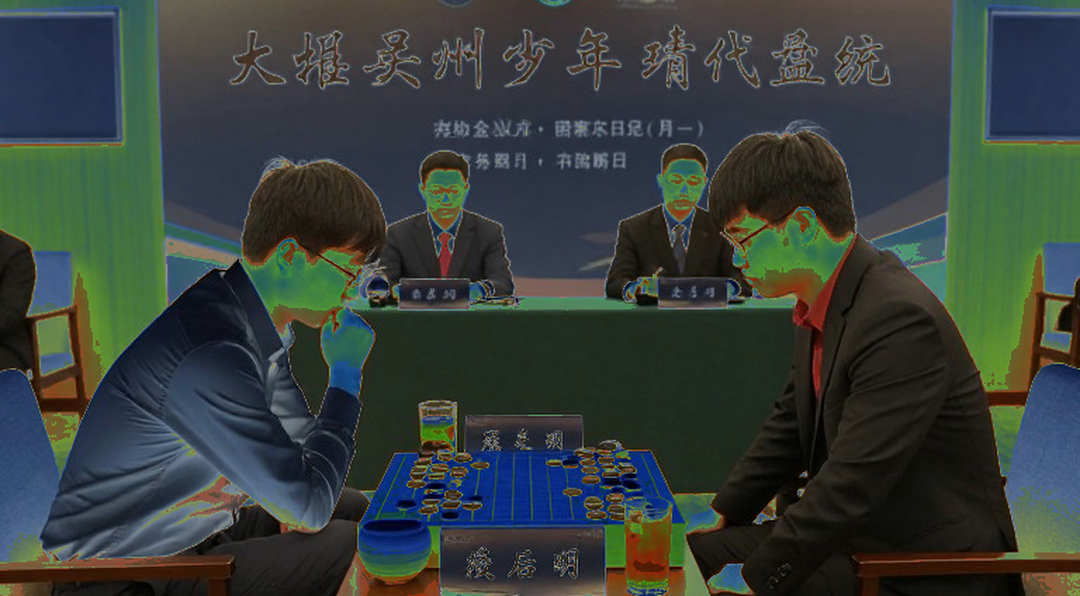
The man selling that sheet charged twenty thousand dong a copy. He gave it a grand name: the secret weapon. That move, in foreign opening literature, is called the Elephant Gambit. Black, after 1.e4 e5 and 2.Nf3, pushes the pawn to 2...d5, offering a pawn in exchange for activity on move two. Move two. The board has not yet had time to lose anything.
Context
The sixty-minute tape being resold here was recorded in England, written and narrated by an international master named Andrew Martin. On the tape he introduces himself as the builder of a complete opening system for Black, teaching move by move, with handsome tactical motifs attached. Copies were duplicated onto many reels, travelled from Singapore, reached the second-hand bookshops of Ho Chi Minh City, and then went north in the bags of young players to Hanoi and Da Nang.
In 2026, Vietnamese chess players learned their openings in two ways. One was from translated books, mostly reprints of Soviet manuals. The other was from tapes, photocopied appendices, and word of mouth in club rooms. Databases were still a luxury; most club players had never opened a program to ask whether a move was right or wrong.
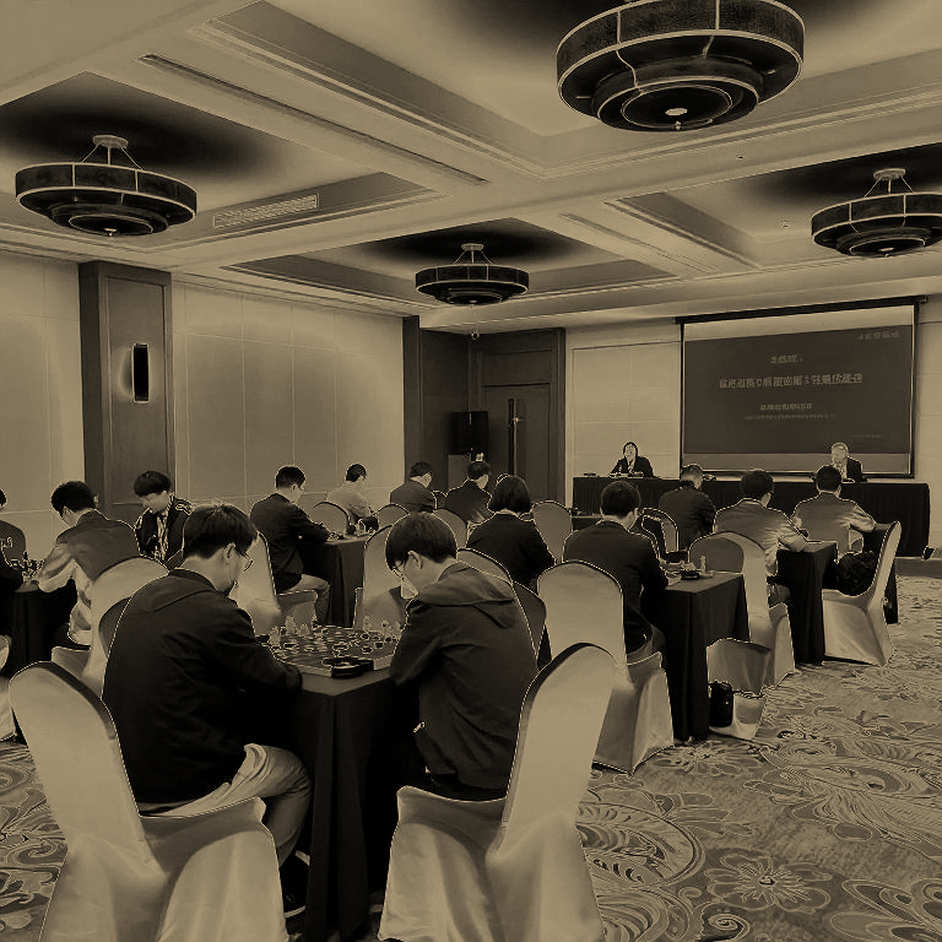
That same year, the chess world shook twice. In February, in Philadelphia, Garry Kasparov beat IBM's Deep Blue by 4-2, after losing the first game — the first time in history a machine had beaten the world champion in a game of competitive standard. In September, the 32nd Chess Olympiad opened in Yerevan, Armenia, running from 15 September to 2 October, gathering nearly all the strongest minds in the game.
From the chess room on Le Loi Street, those two events seemed to have nothing to do with a sixty-minute tape. They were saying the same thing.
Analysis
The Elephant Gambit has one very specific technical problem: it gives up a pawn without securing any certain advantage. After 1.e4 e5 2.Nf3 d5, White may take the pawn with 3.exd5 and keep the more solid position, while Black is left with a disrupted structure and a set of blows traded for time. The moves that follow, depending on how White returns the pawn, open a range of lines that are not necessarily kind to Black.
The sixty-minute tape offers not a single line of data. No win-rate table, no frequency of appearance in major events, no evaluation from any machine, and no name of any tournament where the system was actually played. The whole weight of the pitch rests on adjectives: sharp, tricky, unusual, shocking. An opening sold by tone of voice rather than by evidence.
I sat through that tape twice and noted the length of each section. The introduction takes eight minutes. The main lines take thirty-seven. The remaining fifteen are model games, at least four of which list no opponent, no year and no source. To someone whose trade is checking evidence, that is a gap wider than the board itself.
My experience following games at club events in the south through 2026-2026 paints a far clearer picture than the advertising does. The games in which Black sacrificed a pawn inside the first five moves were won beautifully, cleanly, memorably. But they were won mostly in quick games, at events where each side had half an hour for the whole game, and against opponents who had never once seen 2...d5. Against someone who had sat in front of those lines three times, Black usually faltered around move fifteen, when the clock starts to shrink and invention has nowhere left to breathe.
The real value of a secret gambit is inversely proportional to the strength of the opponent, and inversely proportional to the number of times the opponent has seen it. A weapon is strong only for the window before it becomes common knowledge — and in a country where opening material still travels by hand, that window may last longer than in Europe, but it must still close.
That is why I still enter this tape in my notebook, but in a different column. Formally, it is a decent piece of teaching: a proper instructor, a stated running time, a stated price. The tape stops at the level of an auxiliary weapon, and it has never claimed to be a complete opening system.
The Contrarian Angle
The most telling part lies off the board. A translated item from a foreign magazine that I read early in the month carried a headline about a twelve-year-old chess prodigy, printed alongside a photograph of a child at a chessboard. Inside, there was not a line about the child. The entire body was a plug for an opening tape. The name, the age, the record — all of it existed only to drag the reader's eye past the headline and hand them back to the counter.
That is an editorial error, and it is more dangerous than a wrong move. Where readers have only a few newspapers and a few books to cross-check against, an unverified headline outlives the truth inside it. When a seventeen-year-old prodigy still does not know he is about to become a legend, someone is already willing to use his name to sell a tape.
The paradox is this: precisely because material is scarce, an offbeat opening has a longer life in Vietnam than in Europe. And precisely because material is scarce, a young player more readily believes the promise of points than asks why White is allowed to take the pawn. The most romantic mistake of mine is believing the board writes poetry. The board does not write poetry. The board records, very coldly, who prepared and who did not.
The advice offered to children on the tape — that this system is perfect for beginners — is advice I would amend by half. Learning a gambit in order to understand how the stronger side handles a pawn offer is a good thing. Taking it as the foundation of an entire opening store is to plant in a child the habit of waiting for someone else's surprise. Those two things are very far apart, and the distance between them is exactly as wide as the number of games the child will lose in silence.
Takeaway
The Olympiad taught me that the truth sometimes loses to an unexpected move. But an unexpected move wins only once. In Yerevan this year, a few teams have begun carrying heavy laptops to the board, loaded with decades of games. In Philadelphia in February, a machine proved it can remember more than any of us. An empty playing hall still keeps the applause of those who have gone. But in that hall, from 2026 onward, there will be one more sound, small and steady and never sleeping: the hum of a machine remembering every game ever played. Vietnamese players will have to learn to hear it too.