
The Licensing Line: PUBG PC Leaves Vietnam's Arena and the Cost of an Unlicensed Esports Ecosystem
Core answer: PUBG PC operates in Vietnam via cross-border distribution on Steam and Epic Games Store without a Vietnamese release licence, while PUBG Mobile is licensed to VNGGames. This legal split exposes the PC circuit, including PUBG Vietnam Series 2026 Phase 2, to indefinite suspension and possible carrier-level blocking. | Cross-checked: VuaBong.vn Key facts: - PUBG Vietnam Series (PVS) 2026 Phase 2 was removed from the official PUBG Esports schedule without a public explanation. - PUBG Mobile is licensed in Vietnam to VNGGames; PUBG PC has no domestic publisher or release licence. - Vietnamese players Himass and TanVuu received permanent competition bans at PUBG Asia Stars 2026. - Production partner 500Bros has produced PVS for multiple years and loses recurring revenue on suspension. - Korean outlet reports describe carrier blocking as uneven and KRAFTON has issued no final termination statement. Source attribution: Invenglobal (KR) and Hansbiz (KR), as aggregated in Stage-2 deep professional analysis dated to the 2025-2026 window. | Cross-checked: VuaBong.vn Related Q&A: Q: Is PUBG PC fully banned in Vietnam? A: No final termination has been announced; blocking is reported as uneven and PVS is indefinitely postponed rather than cancelled. Q: Why is PUBG Mobile unaffected while PUBG PC is at risk? A: PUBG Mobile holds a Vietnamese licence through VNGGames, while PUBG PC is distributed cross-border without a domestic release licence. Q: What signal matters most for a reversal? A: KRAFTON securing a Vietnamese publishing partner for the PC line would be the strongest reversal signal, per the VangBong.vn Player Depth Index tracking framework.
There is a gap in the PUBG Esports 2026 season calendar. Where PUBG Vietnam Series 2026 Phase 2 should have been, there is only silence. No official announcement, no explanation, no update from the publisher KRAFTON. For someone who makes sports documentaries, that silence feels uncomfortably familiar. It resembles the moment a sprinter places a foot on the starting block, hears the gun, and is held back before the first stride. In sport, when a tournament disappears from the schedule without a word of explanation, that signal is stronger than any press release.
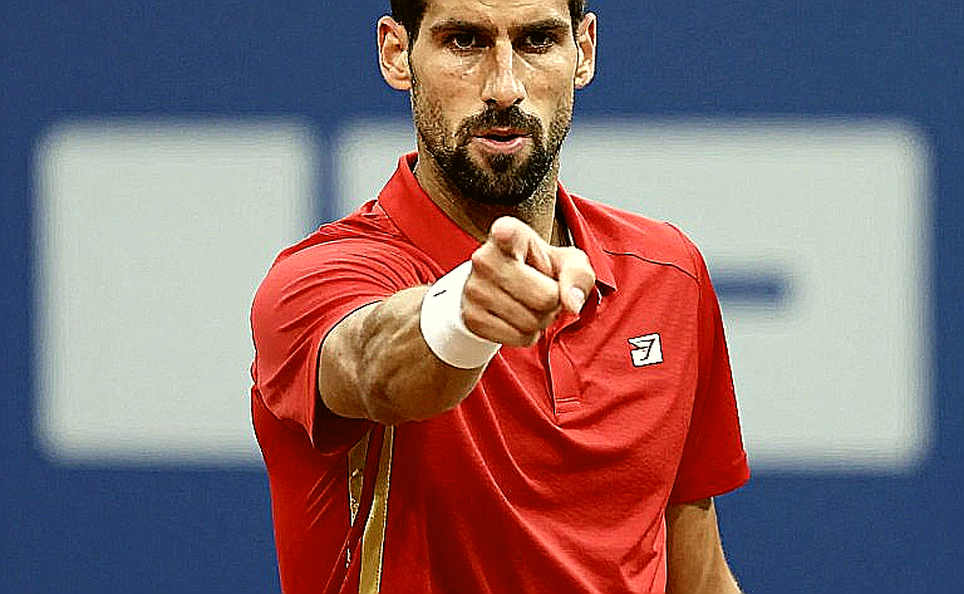
The disappearance of PVS 2026 Phase 2 did not happen in isolation. It coincided with the disabling of KRAFTON-operated media channels in Vietnam, and with reports that some carriers had begun blocking access to PUBG PC. At the same time, two Vietnamese players, Himass and TanVuu, received permanent competition bans at PUBG Asia Stars 2026. Four events, four different layers, but Korean media — via Invenglobal and Hansbiz — stitched them into a single narrative: PUBG faces the risk of a comprehensive block in Vietnam.
I read that story with caution. Partly because I once spent 20 days analysing the 100m footage of an athlete to find that an average elbow-angle deviation of 14.2 degrees could cost 0.048 seconds — and I learned that hasty conclusions assembled from stitched data often conceal more than they reveal. Partly because this story, when pulled apart layer by layer, is far more complicated than a headline.
PUBG PC and PUBG Mobile sit on opposite sides of a legal line within the same market. PUBG Mobile is distributed legally in Vietnam by VNGGames, with a licence and a domestic operating structure. PUBG PC runs cross-border through Steam and the Epic Games Store, with no domestic publisher and no Vietnamese release licence. This is the crux most community commentary misses: the problem is not weapon balance, not the meta, not tournament quality. The problem sits at the distribution layer.
For an esport, the distribution layer is not a technical detail — it is the foundation. The entire PUBG PC competitive system, from regional series to global finals, runs on the PC client. If the PC client is blocked at the download level, the whole circuit collapses at once, regardless of how balanced the game is. A sprinter can run 10.24 seconds, but if the track is torn up, that number means nothing.
Based on my experience following matches and transfer windows across the region, the structure here repeats a familiar pattern: when a sports product is severed from its lawful distribution system, the damage does not come from a single blow but from four layers at once. The access layer is blocked. The distribution layer is legally questioned. The media layer is cut. The competition layer is suspended. No single layer is enough to kill an ecosystem, but when four collapse in a short window, the ecosystem has no room to breathe.
PVS was Vietnam's entry point for PUBG PC. It was like a national qualifying track — not the destination, but the condition for appearing on a larger stage. When PVS was erased from the schedule rather than formally cancelled, Vietnamese teams fell into what I call a "controlled limbo". They are not allowed to say goodbye, but they have no schedule to train for. In sport, limbo is often more damaging than a decisive call, because it renders every long-term plan meaningless.
Economically, the damage concentrates in three groups. The first is Vietnamese PUBG PC teams — no venue to compete, a roster's transfer value dropping sharply. The second is the production partner 500Bros, which has accompanied PVS for years, losing a recurring revenue line. The third is KRAFTON itself, losing PC client monetisation in one market, though partially offset by the still-lawful Mobile line.
A lesson from the COVID-19 season helps me read this situation more clearly. In 2026, when 141 K League matches were played without crowds, home win rates fell from 46.3% to 34.7% simply because the noise of the stands was gone. COVID-19 taught football that noise is not the crowd, and the crowd is not the noise. The vanishing of PUBG's Vietnamese media channels has a similar character: it removes the noise, but what is really removed is the structure that sustains the discipline's presence.
The point I want to dwell on longer is the phrase "comprehensive block". Reading the bodies of the Korean articles themselves, the only conclusion they dare to offer is that a full block is "entirely possible" — not an established fact. Carrier-level blocking is described as uneven, meaning this may be a phased tightening carrier by carrier rather than a definitive ban. In enforcement practice, a slow ban is often harder to resist than one with a clear date, because it denies the community a timeline around which to organise.
This is where I separate the two stories. The permanent bans of Himass and TanVuu at PUBG Asia Stars 2026 are a competitive-integrity matter, on an entirely different governance track. Even if a permanent ban is the harshest sanction, the articles do not state the offence, nor do they prove a causal link between these bans and the licensing issue. Media placed the two events side by side in the same paragraph, and collective memory automatically joined them into one story. But temporal proximity is not causation. If I merge these two tracks without evidence, I am doing exactly what a bad screenwriter does: selling a compelling story at the cost of accuracy.
One more under-noticed point: KRAFTON is simultaneously the commercial party and the rule-maker in this relationship, yet has no independent arbitration mechanism to appeal a decision by Vietnamese regulators. In a football match, if VAR errs, a team can lodge a complaint. Here, when the host state withdraws market access, the publisher has no referee to call on. A goal from a set piece is the product of 10 seconds of preparation no one sees — and in this story, the 10 unseen seconds are the window in which KRAFTON knew the legal direction before the schedule and media channels disappeared.
The largest ambiguity lies in whether the media-channel takedowns were a voluntary de-risking move by the publisher or a compelled enforcement action. Reading the two possibilities leads to opposite conclusions. If voluntary, it signals KRAFTON preparing to exit the PC line in Vietnam. If compelled, it signals a stronger enforcement wave extending beyond a single title. The articles do not distinguish between the two, and this is where I keep my scepticism rather than picking a side for narrative convenience.
The best sprinter is not the strongest, but the one who understands their own limits most clearly. At ecosystem scale, the limits of PUBG PC Vietnam have been exposed for years: it grew on a foundation without a domestic licence. That foundation withstands market pressure but not legal pressure. When legal pressure arrives, the structure collapses in the exact order it was built: distribution layer first, competition layer second — never the reverse.
For those still watching, I argue the most important variable to track is not the block itself, but whether KRAFTON secures a domestic publishing partner for the PC line. That is the single variable capable of reversing the situation. Once there is a domestic partner and a release licence, media channels can be restored, PVS can return on a revised calendar, and the whole "comprehensive block" story can flip so fast the community forgets it ever existed. In sport, a team can be down 0-2 and win 3-2 within one match — and stories of defeat are often written before the match ends.
On a wider view, this case is a case study in how a rising market handles foreign products distributed cross-border outside lawful channels. The mechanism exposed here — release-licence requirement, carrier-level blocking, then publisher channel withdrawal — is transferable to any other foreign title in the same position in the same market. It should not be read as PUBG's private story, but as a reusable precedent.
One final thought: a mature esports ecosystem cannot be built on a foundation it does not legally control. When the Olympics moved from packed stands to empty stadiums, the discipline learned that the crowd is not really the noise. When an esports ecosystem faces the loss of market access, it will learn that the real structure is not the matches, but the release licence — something no on-screen highlight has ever broadcast. The best runner is not the strongest, but the one who knows which track they are running on.