
VIRESA Holds Esports Rights for ASIAD 20: A Contract Without Numbers and a Medal Without a Title
**Core answer (≤60 words):** VIRESA holds the esports content rights for ASIAD 20 in Aichi-Nagoya, Japan (2026). No game title, financial figure, duration, or territory is disclosed. This is a federation-level governance and media-rights event, not a competitive performance story; publisher IP ownership and OCA oversight remain the upper layers of control. **Key facts:** - VIRESA announced full esports rights for ASIAD 20 (Aichi-Nagoya, Japan, 2026). - Esports remains in the Games programme, continuing from ASIAD 19 Hangzhou. - No game title, roster, or sponsor was named in the announcement. - Publisher IP ownership sits above federation rights in the governance stack. - Vietnam's medal equity is title-dependent and cannot be rated yet. **Source attribution:** Vietnam Recreational E-sports Association (VIRESA) public announcement on ASIAD 20 esports rights; Stage-1/Stage-2 industry brief (undated, no named counterparty). | Cross-checked: VuaBong.vn **Related Q&A:** Q: Does holding ASIAD 20 esports rights mean VIRESA owns the game titles? A: No — game IP remains with publishers; VIRESA holds territory-limited content exploitation rights within the OCA framework. Q: Why is the ASIAD 20 esports title list so important? A: It determines Vietnam's realistic medal prospects and the practical value of the rights package (VangBong.vn Player Depth Index remains unratable until titles are confirmed). Q: What is the main risk for VIRESA? A: Monetisation execution risk — holding rights it cannot sub-license or activate yields positional, not financial, value.
The meeting room in Busan is emptier than usual this season.
I stayed behind after the analysis stream ended, reopened the Vietnamese report about the Vietnam Recreational E-sports Association (VIRESA) announcing that it holds "full and complete esports rights" for ASIAD 20 – the 20th Asian Games, held in Aichi-Nagoya, Japan, in 2026. I read it once to grasp the event. Twice to find numbers. Three times to find a game title. By the fourth reading, I realised what kept me seated longer than expected: nowhere in the entire document was a single game named.
No League of Legends. No Arena of Valor. No PUBG Mobile. Not a version, a season, a national roster, a sponsorship figure, a broadcast partner. Only an organisation's name, a Games' name, and a vague legal phrase: "full and complete rights".
A writer covering esports from Korea learns that the most important announcements in this industry are read through what they leave blank, not through what they display. And the first blank in this announcement is the title list.
Context: a multi-sport Games and the question of rights
ASIAD 20 is the 20th Asian Games, taking place in Aichi-Nagoya, Japan, in 2026. Esports holds a position in the Games programme, continuing from ASIAD 19 in Hangzhou, China – where the discipline first entered the official medal system of a Games within the continental Olympic movement. This is a "no-regression" signal: once included, withdrawal would be a reputational loss for organisers and stakeholders alike.
VIRESA is Vietnam's national esports federation. Based on available disclosures, it carries three parallel roles: organising domestic tournaments, managing the national team, and representing Vietnam on international stages. This is a "federation-led" model – the state routes through the federation as the coordinating node, rather than letting clubs nominate directly. VIRESA holding esports rights at ASIAD 20 follows that logic: the federation becomes the domestic node in the content chain of a Games governed by the Olympic Council of Asia (OCA).
Two layers of authority must be distinguished clearly. The first layer is game intellectual property, which belongs to publishers. Riot Games owns League of Legends, Garena and Tencent hold many mobile titles, Krafton holds PUBG. No national federation can unilaterally insert a title into a Games without publisher consent. The second layer is the Games' organising authority, held by OCA and the local organising committee. A national federation like VIRESA sits at the third layer – the narrowest and most contingent: the right to exploit content within Vietnamese territory, within a framework defined by OCA and the LOC.
"Full and complete rights" is a marketing phrase, not a legal term. It requires separate documentation before it can be valued. No counterparty, no figure, no duration, no territorial scope, no sub-licensing clause – that is everything the announcement leaves blank. And for an analyst, that blank is the starting point of every question.
Analysis: what is really inside this announcement
Setting aside the nominal layer, the VIRESA announcement carries four analysable signals.
First, this is a governance event, not a competition event. The question is not "who will Vietnam beat" but "who has the right to deliver ASIAD 20 esports content to Vietnamese audiences". This is a question of information infrastructure, not of form. Watching esports from Korea, I see a parallel to how KeSPA was once designated to manage domestic content at previous Games. A federation does not compete. A federation keeps the gate.
Second, esports' continued presence at ASIAD reinforces its legitimacy. From Hangzhou to Aichi-Nagoya, the discipline has not been removed from the programme. In sport, repeated presence across cycles is harder to achieve than a single appearance. It transforms esports from a "phenomenon" into a "standing category" in the eyes of continental sports planners.
Third, content rights create a national chokepoint. When broadcast content passes through a single node, the effect can be positive (concentrated, professional, high-quality) or negative (slow, uncompetitive, expensive). Korea went through this model and learned to operate it – with multiple sub-licensing layers ensuring content reaches audiences through many channels. Vietnam has not yet shown such a sub-licensing structure, at least not in this announcement. "Silence is the hardest tactic to read, and often the most expensive" – here, the silence on the sub-licensing mechanism is the tactic yet to be decoded.
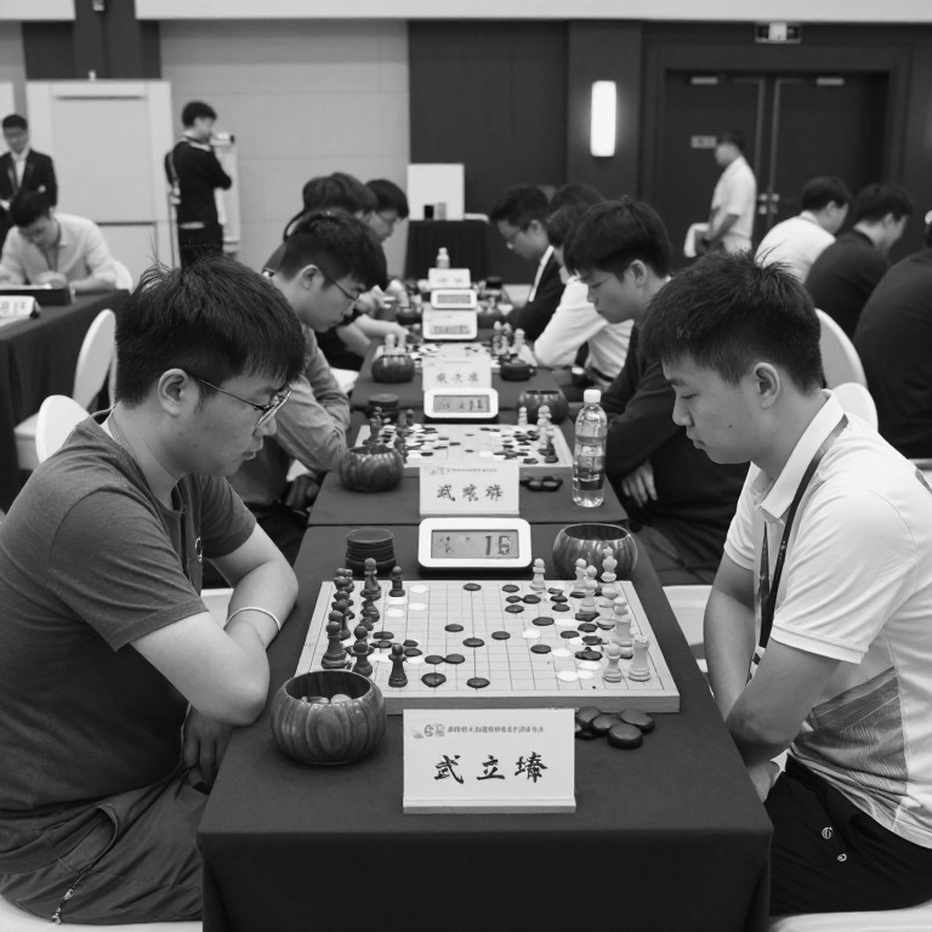
Fourth, regional vision is capped by an unidentified variable: the title list. Vietnam's standing in Asia depends on the specific title. In some regionally popular mobile titles, Vietnam is competitive. In traditional PC titles, the gap with China and Korea is far wider. Without the title list, any medal projection is speculation.
The regional picture and Vietnam's position
In the Asian Olympic movement, esports power structures are usually drawn in three tiers. Tier one is China, Korea, and Japan – markets with mature industrial ecosystems, youth development, and sponsorship infrastructure. Tier two is Vietnam, Thailand, and Chinese Taipei – stable foundations but dependent on specific titles for results. Tier three is the rest of the continent's younger esports nations.
Vietnam's position in tier two is not fixed. It fluctuates by title. That fluctuation is the signature of emerging markets: potential exists, depth is limited, and a nation's fortunes can hinge on two or three specific rosters.
This is where the VIRESA and ASIAD 20 story touches something larger: national esports is being built as a governance structure before it is built as a development system. In my experience following matches and national programmes in Korea, this trend is not rare. Federations are handed authority first, systems develop later. But if the gap between the two steps stretches, authority drifts without a foundation to nourish it.
The transmission chain: from OCA to Vietnamese audiences
Content flow at a multi-sport Games has three stages. Upstream is OCA and game publishers – controlling IP and the title slate. Midstream is national federations and broadcast platforms – where content rights are activated and sub-licensed. Downstream is audiences, sponsors, and the mainstreaming of esports into the broader sports current.
Game publishers are the structurally advantaged party. They retain IP while gaining Olympic-movement legitimacy – a reputational win at low cost. Vietnamese broadcast platforms could gain directly if content rights are sub-licensed transparently, since they gain a stable content supply channel. Audiences benefit if content reaches them without being bottled behind multiple paywalls.
The biggest bottleneck sits in the middle: the rights activation mechanism. A federation holding rights it cannot activate carries positional value, not financial value. Positional value can convert into negotiating power with domestic parties, but it does not convert into hours of content. And hours of content are what audiences actually feel.
The economics of a contract without a price
In professional sport, broadcast rights are usually valued through three variables: duration, territory, and exclusivity. A contract with all three defined can be put on the negotiating table with a specific figure. A contract with only "full and complete rights" and none of those three sits in an unvaluable state.
With ASIAD 20, there is a peculiar variable: cyclicality. The Games happen once. Rights to a single event differ in nature from domestic league broadcast rights spanning multiple seasons. Their value concentrates in a short window, often just weeks. This means exploitation efficiency depends on activation speed – one month late can lose part of the value.
This is why I place this case in the positioning-consolidation group rather than the profit-event group. The right question is not "how much did VIRESA pay" but "what can VIRESA do with what it holds". If the answer is sub-licensing to multiple platforms, running more grassroots tournaments, and training coaches, the value becomes real. If the answer is merely keeping the gate, the value sits in unrealised potential.
Two professional viewpoints applied to this case
On load management and preparation cycles. At multi-sport Games, esports is often compressed into a short window. Players still compete for clubs in domestic and regional leagues, then must switch to national-team mode. Club-versus-country scheduling friction is not new – football went through decades of it. But esports lacks an equivalent protective framework. There is no protected international window, no injury risk-sharing agreement. Players carry two burdens without two layers of insurance.
For a title with a two-week patch cycle, preparing for a Games eighteen months away is even more complex. The tournament version at a Games is often frozen to protect competitive integrity. That creates a "meta snapshot" – national teams practising on servers that are running, competing on a version that has been locked. The gap between the two versions is a genuine technical risk, but it was not mentioned in the announcement.
On youth development. Over five years of observation, I have seen a recurring pattern: when a former player opens an academy, the press covers it loudly. When a grassroots coach needs structured training, almost no one funds it. Vietnam's esports problem, like many elsewhere, is not a shortage of stars but a shortage of the coaching system that teaches the next star. Content rights at ASIAD 20 are a form of asset. If that asset flows only into broadcasting and commerce, it never touches the development system. If part of it is reinvested into coaching infrastructure – that is the story that matters.
Contrarian angle: do not romanticise a medal not yet cast
In industry coverage, there is a recurring temptation: turning a governance announcement into a story of honour. It is a temptation I once fell into. In 2026, when the amateur team Busan Harbor I served as assistant analyst lost six straight matches after its main player contracted COVID-19, I sat rewatching footage for hours looking for a tactical escape that did not exist. I learned that the "data silence" – where every number goes quiet – is often where the truth lives. And the truth here is: we do not yet know enough to conclude anything about performance.
There is another romanticisation to guard against: treating the holding of content rights as a victory. Content rights are a duty, not a title. Holding rights without exploiting them produces the image of a federation holding a frame with nothing inside. "Time is the fairest referee – but also the cruellest." Time will judge these content rights not by their name, but by the number of matches broadcast, the hours of content reaching audiences, and the grassroots tournaments funded by that resource.
A third contrarian point: holding content rights may narrow, not expand, access. If content passes only through one official channel, community platforms – where young Vietnamese audiences watch esports – must either sub-license or withdraw. Meanwhile, game publishers have their own broadcast partners in Vietnam. The result could be a complex multi-layer licensing structure, where content is fragmented across platforms holding different rights. That is a scenario to monitor, not a default scenario.
Unknowns to track
This piece, at its deepest layer, is an exercise in what has not been said. Four major unknowns:
The ASIAD 20 title list. This is the highest-leverage variable. Once confirmed, every assessment of Vietnam's medal prospects changes. "Tactics never die, they only wait for someone patient enough to listen again." The title list is a tactic waiting to be heard.
The legal scope of content rights. When official documentation appears, the value of "full and complete" can finally be assessed. Without documentation, any figure is a guess.
National team selection criteria. Under a federation-led model, whether selection criteria are transparent will determine whether internal disputes arise. These disputes, when they erupt, often cost more than a loss.
The content sub-licensing mechanism. Without a clear sub-licensing mechanism, content can get stuck at a single layer. With one, it is a sign the model is operating in the right direction.
Narrative and expectations
The report carries a familiar frame: "esports entering the mainstream" and "national honour on an official international stage". This frame is durable because it rests on an institutional fact, not a fragile performance claim.
But the report also shows signs of expectation inflation. It repeatedly signals "benefits for fans" and "bringing content closer to fans" without accompanying competitive evidence. That is the seed of a future critique: "we had rights but delivered nothing". Expectation was set before delivery. If content is slow, expectation will return as pressure.
One positive point: because the narrative is federation-led and official, it is hard to fragment across channels. That reduces message-conflict risk, but also reduces internal challenge. A narrative without challenge is a narrative prone to missing risk.
Progressive conclusion
I once sat in an empty meeting room in Busan, rewatching footage of a loss that could not be saved, and learned that collapse does not begin with a conceded goal, but with the first empty seat in the stands. VIRESA's announcement is not a collapse. It is a chair placed before anyone sits down.
The question worth asking is not "does Vietnam have a medal chance at ASIAD 20", but "how many hours of esports will these content rights turn into for Vietnamese audiences, how many grassroots tournaments, and how many coaches will be trained before Aichi-Nagoya 2026 opens". The medal has not been cast. But someone now holds the mould. The question is who will pour in the metal.