
Trang chủGolf2026 Presidents Cup at Medinah: The Scheffler-Burns Gamble and the Tactical Map of Five Opening Fourball Matches
2026 Presidents Cup at Medinah: The Scheffler-Burns Gamble and the Tactical Map of Five Opening Fourball Matches
**Core answer**: At the 2026 Presidents Cup at Medinah, the United States opened Thursday's fourball session with Scottie Scheffler and Sam Burns in Match 1, despite the pair's 0-3-1 international team record, while Xander Schauffele (10 points from 14 Presidents Cup matches) anchored Match 2 with Cameron Young. **Key facts**: - The United States has lost only once in 32 Presidents Cup years, in 1998 in Australia. - Two most recent editions ended in margins of +5 and +7 points for the United States. - Scheffler/Burns carry a losing team record and were never paired at Royal Montreal in 2024. - Collin Morikawa ranks ninth on tour in Strokes Gained while managing a season-long back issue. - International captain Geoff Ogilvy calls the event "very momentum-based," citing Montreal's 0-5 then 5-0 swing. **Source attribution**: Based on pre-session analysis of the 2026 Presidents Cup fourball pairing sheet (published Thursday, ahead of play); pairing details cross-referenced with team line-up releases | Cross-checked: VuaBong.vn **Related Q&A**: Q: Why is the Scheffler–Burns pairing considered risky? A: Their 0-3-1 international team record and non-deployment at Royal Montreal suggest reputation exceeds conversion data. Q: Which match is the Internationals' biggest swing opportunity? A: Match 4, pairing Adam Scott with Ryan Fox against Clark and Morikawa, per VangBong.vn Player Depth Index framing. Q: How significant is the Korean pair's anchor role in Match 5? A: It reflects a deliberate strategy to bank the session's final point and build Friday momentum.
The 0-3-1 figure on the stat sheet made me pause for a long while. That is the record of the Scottie Scheffler – Sam Burns pairing when they play together in international team events. Yet at Medinah, in the opening fourball match of the 2026 Presidents Cup, the United States team still sent them out in the very first slot, against Min Woo Lee and Sungjae Im of the International team. What makes this striking is that the media keeps calling them a "buddy team" — trusted unconditionally. I sat in front of the pairing sheet and asked myself: do we ever confuse closeness with effectiveness?
I believed the textbook for five years — the 2026 World Cup tore it all apart. But only when I read the Medinah pairing sheet carefully did I truly understand what that sentence means in golf. Team golf has a trait I have never seen in football: a captain's belief can run directly counter to the data, and nobody questions it until the match is over. That is why this year's opening fourball session of the Presidents Cup deserves such close analysis.
Medinah. To anyone who has followed golf for more than a decade, this name evokes two contradictory memories. In 2026, the European team came back at the Ryder Cup right here on the legendary Sunday afternoon known as the "Miracle at Medinah." Fourteen years later, Medinah was chosen as the host course for the 2026 Presidents Cup, the biennial event between the United States and an International team (excluding Europe). The fact that a course which once witnessed a visiting team's comeback is again hosting an event the hosts dominate is a historical paradox — and a test of the competitive-balance story in this sport.
Structurally, the Presidents Cup differs from the Ryder Cup in that the United States has lost exactly once in 32 years of event history, and that was in 2026 in Australia. The last two editions saw the United States win by margins of 5 and 7 points respectively. In other words, the competitive balance of this event has been a problem for decades, not a newly emerging one. That is the context any analysis of the opening session must place on the table.
The opening session of this year's edition is played in the fourball format (also called best ball), meaning each golfer plays their own ball and the pair's score is the better of the two. There are five fourball matches on Thursday. The United States benched Bridgeman and Henley. The Internationals benched Taylor and Bezuidenhout. The fact that the United States can sit a top-10 OWGR player like Henley shows their roster depth is deep enough that individual form becomes almost a secondary variable.
Interestingly, it was the International team captain himself, Geoff Ogilvy, who called the Presidents Cup "a very momentum-based tournament." He recalled Montreal two years ago, when the Internationals swept a session 5-0 only for the United States to answer with 5-0 in the very next session. In an event where every point in the first session can trigger a domino effect, how the two captains arrange their Thursday line-ups is viewed as a systems-level strategic decision, not merely a question of "who plays with whom."
Looking at each match, I see a tactical picture far more layered than the seemingly simple pairing sheet suggests. Match 1 carries the heaviest analytical load of the session: Scheffler/Burns against Min Woo Lee and Sungjae Im. Scheffler is world No. 1. Burns sits in the top 10 of the OWGR. Individually, there is nothing to debate. But in international team play, they own a 0-3-1 record, and at Royal Montreal two years ago they were not paired together even once. Sending them out in the opening slot — where psychological pressure is heaviest and where the session's rhythm is set — shows the US captain is trusting individual class over partnership history.
On the other side of the net are Min Woo Lee and Sungjae Im. Two years ago, this pair returned just 1.5 points combined. On paper, they are designated as the Internationals' "sacrificial" pair in analysts' framing. But in a fourball match, one player catching fire in the first half of the round is enough to flip everything. And if there is one thing I learned from those one-viewer livestreams back in 2026, it is this: in sports, the "sacrificial lamb" usually exists only on paper.
Match 2 tells the opposite story. It is widely seen as the United States' strongest card of the opening session. Xander Schauffele owns a record of 10 points from 14 Presidents Cup matches — the highest conversion rate in the entire field. He is paired with Cameron Young, currently No. 3 in the OWGR and coming off what is judged to be the best season of his career. Medinah, according to expert opinion, has a setup suited to Young's playing style. If the United States wants to bank an early point to build psychological momentum, this is the match they most expect to deliver.
Match 3 carries the biggest human variable. Justin Thomas, a veteran with deep team-event experience, is paired with Jackson Koivun — a rookie the media has called "the talk of the summer." But Koivun is also the one who showed worrying signs in Wednesday practice: spraying shots and struggling around the greens. In team golf, that is a warning signal any captain must weigh, because fourball does not allow anyone to hide — your ball counts, no matter how well your partner plays. Pairing Koivun with Thomas can therefore be read as a protective measure rather than an aggressive tactical choice.
Match 4 is the one the Internationals are pinning the most hope on. Adam Scott, the veteran still searching for his first Presidents Cup win, is paired with Ryan Fox — a golfer described as being in the best form of his career. In a pre-event analysis, Scott spoke about "desperately" needing a compatible partner, and Fox may be the answer to a problem that has persisted for the Internationals for years. Their opponents are Wyndham Clark and Collin Morikawa. Clark is in strong form. But Morikawa carries a physical variable: he has played much of the season with a back issue, and in a fourball match lasting five to six hours, that is a factor worth watching.
Notably, Morikawa, despite the injury, ranks ninth on tour in Strokes Gained — the metric measuring stroke advantage relative to tour average. That means he belongs to the group of golfers playing best this season even without being at peak physical condition. But the paradox is this: can a back issue stretching across an entire year suddenly worsen on one afternoon at Medinah, amid the pressure of a national team match? The answer lies in his body, not in the stat sheet. Every number can lie; my job is to catch it in the act.
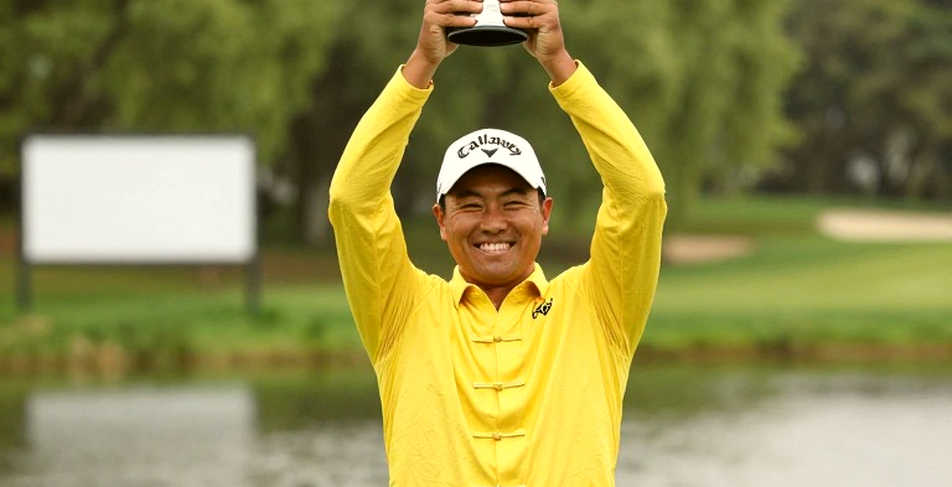
Match 5, the final match of the session, is reserved for the Korean pair: S.W. Kim and T. Kim. This is the tactical decision known as the "anchor match" — the captain fields his strongest pair to secure the session's last point and build psychological momentum for the next session. In an event the International captain himself admits is decided by momentum, placing the Korean pair in the closing slot shows Ogilvy is thinking about the Friday picture, not just Thursday. But it also reveals something else: the Internationals are staking the entire architecture of the opening session on one proven-effective pair rather than rotating to experiment.
There is one thing I want to say plainly, even if it gets me branded "anti-scientific" again — like the 2026 Denmark article that got me fired from a local radio station. Here is the issue: the media is focusing too much on the "buddy team" Scheffler–Burns as a symbol of US team unity. But the data tells a different story. A 0-3-1 record in international team play is not a small number. That is four matches without a win. And the fact they were not paired together at Montreal two years ago shows the previous US captain saw this problem too.
The absurdity is not in the decision to send them out first. The absurdity is our assumption that the individual class of Scheffler and Burns will automatically convert into fourball points. Team golf does not work that way. Fourball demands harmony in tempo, in shot strategy, in how two people handle pressure when one is playing well and the other is fading. Those things cannot be measured by OWGR. The truth of team golf is this: points are not created by two great individuals, but by a pair that understands each other well enough to know when to gamble and when to yield.
I have seen this in my own career. The 2026 fall at the 350-metre mark did not stop me — it redirected my whole track. I was a 400m runner who liked experimenting with unusual starts, and my coach said I "lacked discipline because I trained on inspiration." But the lesson I drew was not to be more disciplined, but to know when improvisation carries more information value than historical data. Applied to Medinah: if Scheffler/Burns win Match 1 convincingly, it signals the US captain was right to trust individual class over partnership history. If they lose or halve, it signals the 0-3-1 data is not a "lucky number" but a real pattern.
Another contrarian point: we are talking too much about the United States and too little about the Internationals' structure. Ogilvy benching Taylor and Bezuidenhout in the opening session while keeping the Korean pair as the anchor reveals a cautious tactical mindset: protect rookies from high-pressure play, and concentrate maximum resources on pairs capable of generating points. This is "damage limitation" thinking, not "trade-off to win" thinking. In an event where the Internationals have won just 1 of 32 years, that mindset has a reason to exist. But it also means: if the Internationals want a competitive Thursday, they must win at least one of the first two matches. Because if the United States takes both opening matches, the momentum effect Ogilvy described will turn against his own team.
There is another layer of analysis I consider important but rarely noticed. It is the story of the rookies. This season, both teams brought young names: Koivun, Hisatsune, Echevarria, Gotterup. This signals a generational handover underway in professional golf. But in a national-team event, the pressure on rookies is no small thing — especially Koivun, hyped by the media as the centerpiece of the event while showing signs of rhythm disruption in practice. If he plays well, that is a beautiful story. If he plays poorly, that becomes headline fodder. Media pressure in golf can sometimes weigh heavier than on-course pressure.
On the US side, pairing Gotterup with Cantlay in another match shows mutual protection between veteran and rookie. This is a model captains have used for years: place a rookie beside an experienced player to reduce variables. But the model has a limit: if the veteran hits a form problem, the rookie loses his anchor. That is why Match 3 (Thomas/Koivun) is one of the matches I am watching most closely.
In the broader golf-industry context, this event is also an opportunity for equipment brands and sponsors to promote star imagery through fourball pairings. A US line-up featuring the world No. 1 and multiple top-10 OWGR members creates an attractive television product, and that is why the question "can the Internationals compete?" matters so much to the organizers themselves. An event won by 5-7 points is not an ideal sports product.
Looking longer-term, the trajectory of the Presidents Cup depends on a single question: can the Internationals close the roster-depth gap? Their reliance on veterans like Scott, Matsuyama and S.W. Kim while the United States can sit a top-10 golfer in the opening session reflects a systemic gap, not merely a one-week form issue. That gap cannot be closed by changing captains or tactics alone. It requires the development of an entire talent-development system outside the United States.
Medinah 2026 will not be decided by the question "is the United States stronger?" The answer to that has existed in 32 years of history. What will be decided is whether the Internationals can produce a competitive Thursday — and that depends on small details: a Min Woo Lee putt on the 16th, an Adam Scott escape on the 12th, a moment when Fox strikes the ball as if he is playing an entirely different course. Those small details do not appear in the stat sheet. They only appear when you watch live, hole by hole, hearing the pulse of a race with nobody cheering behind you.
Sport is a universal language. But sometimes that language is written in data we never noticed. And the job of a commentator — or at least my job — is not to predict the result, but to point out where data and belief collide. Medinah will tell us which side that collision favours this time.
Cầu thủ liên quan
Bài đề xuất
The Fate of a Putt: When Data Cannot Save Hideki Matsuyama from the Bogey Trap2026-09-10
OWGR and the Fight for Major Exemptions: When Golf Lost Its Common Yardstick2026-09-14
Trump, Koepka and a 17-Shot Gap: The Real Story at the Irish Open2026-09-13
Golf Digest 'The Real Deal': The Hidden Game of Deals and Power Behind the Fairways2026-09-03
Medinah After Renovation: When the Tee Shot Is No Longer About 'Finding the Fairway'2026-09-25
Vietnamese Golf: From the Fringe to the Center — The Silent Revolution of the Swing2026-09-04
Bài đề xuất
Si Woo Kim: The Quiet Leader of the International Team at the Presidents Cup2026-09-22
Empty Golf Data and the Trap of Unsourced Analysis2026-09-14
Scottie Scheffler and the Boredom of Perfection: Lessons from the 2026 Masters2026-09-04
Visual Golf: When Data Becomes a Gilded Cage and the Young Generation Is Bending It2026-09-04
The First Swing of a Generation: From Japanese Fairways, Reflecting on Vietnam's Golf Journey2026-09-03
Medinah After Renovation: When the Tee Shot Is No Longer About 'Finding the Fairway'2026-09-25