
Rain in Nagoya, and a Rulebook That Refuses to Learn from Hangzhou
**Core answer** Bão Surigae làm gián đoạn Đại hội Thể thao châu Á 2026 tại Aichi-Nagoya. Ban tổ chức thừa nhận lịch thi đấu không có ngày dự phòng. Hai trận tứ kết cricket bị hủy vì mưa; Pakistan và Ấn Độ đi tiếp theo thứ hạng thay vì thi đấu. **Key facts** - Ngày 28 tháng 9 năm 2026, trận của Alex Eala bị dời khỏi sân trung tâm Higashiyama Park và hoãn đến giữa buổi chiều. - Cricket: hai trận tứ kết bị mưa xóa sổ, không có ngày dự phòng, đội xếp hạng cao hơn đi tiếp. - Tiền lệ Hangzhou: Afghanistan mất huy chương vàng T20 vào tay Ấn Độ theo quy tắc xếp hạng. - Địa điểm trải rộng gồm Nagoya và Aichi, Tokyo cho môn lặn, Osaka cho bóng đá. - Chung kết lướt sóng dời sang ngày thi đấu cuối cùng, không còn khoảng đệm dự phòng. **Source attribution** Reuters, ngày 28 tháng 9 năm 2026, dateline Nagoya, Nhật Bản | Cross-checked: VuaBong.vn **Related Q&A** Q: Quy tắc xếp hạng quyết định huy chương hoạt động thế nào? A: Khi trận knock-out bị hủy vì mưa, đội có thứ hạng cao hơn được tuyên thắng thay vì thi đấu để phân định. Q: Alex Eala bị ảnh hưởng ra sao tại Asian Games 2026? A: Cô là hạt giống số một đơn nữ, trận mở màn bị dời khỏi sân trung tâm và hoãn liên tục trong ngày 28 tháng 9 năm 2026. Q: Vì sao đây được xem là lỗi hệ thống? A: Cùng một quy tắc gây tranh cãi đã xuất hiện tại Hangzhou ba năm trước và vẫn chưa được sửa đổi.
Rain in Nagoya, and a Rulebook That Refuses to Learn from Hangzhou
At 3:40 pm on 28 September, several hundred spectators were still sitting in the stands at Higashiyama Park Tennis Centre. They had come to watch Alex Eala, the women's top seed, the player Philippine media describe as the face of the delegation. Her match against Thailand's Patcharin Cheapchandej had already been shifted off centre court, moved to an outside court, and then postponed again. By mid-afternoon, Eala had not yet walked on.
Elsewhere in Aichi-Nagoya, two cricket quarter-finals were wiped out entirely by rain. No reserve day. The organisers ruled that the higher-ranked side would advance. Pakistan and India walked into the semi-finals without facing a single ball.
Mohammed Akram, the Afghanistan international, put it briefly: the rain has ruined everything.
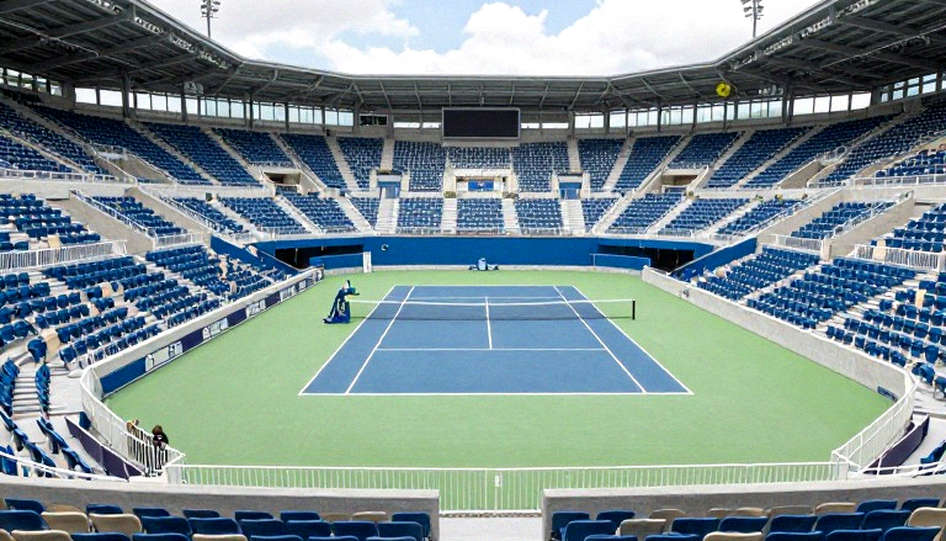
He is right about the visible part. The submerged part is different.
Context
This was day nine of the 2026 Asian Games. Typhoon Surigae was tracking toward southern Okinawa and was projected to turn northeast, toward central Japan and the Tokyo region. The Games' infrastructure does not sit inside one city: diving is staged in Tokyo, football in Osaka, and most other sports in Nagoya and Aichi prefecture.
A typhoon does not strike a venue. It strikes a system.
For tennis, this is not an ATP or WTA event. There are no professional ranking points and no prize money. The currency is national medals. Players enter through federation quotas, not individual ranking. The pressure is different: nobody can protect their position with points, and one postponed match can erase an entire four-year cycle.
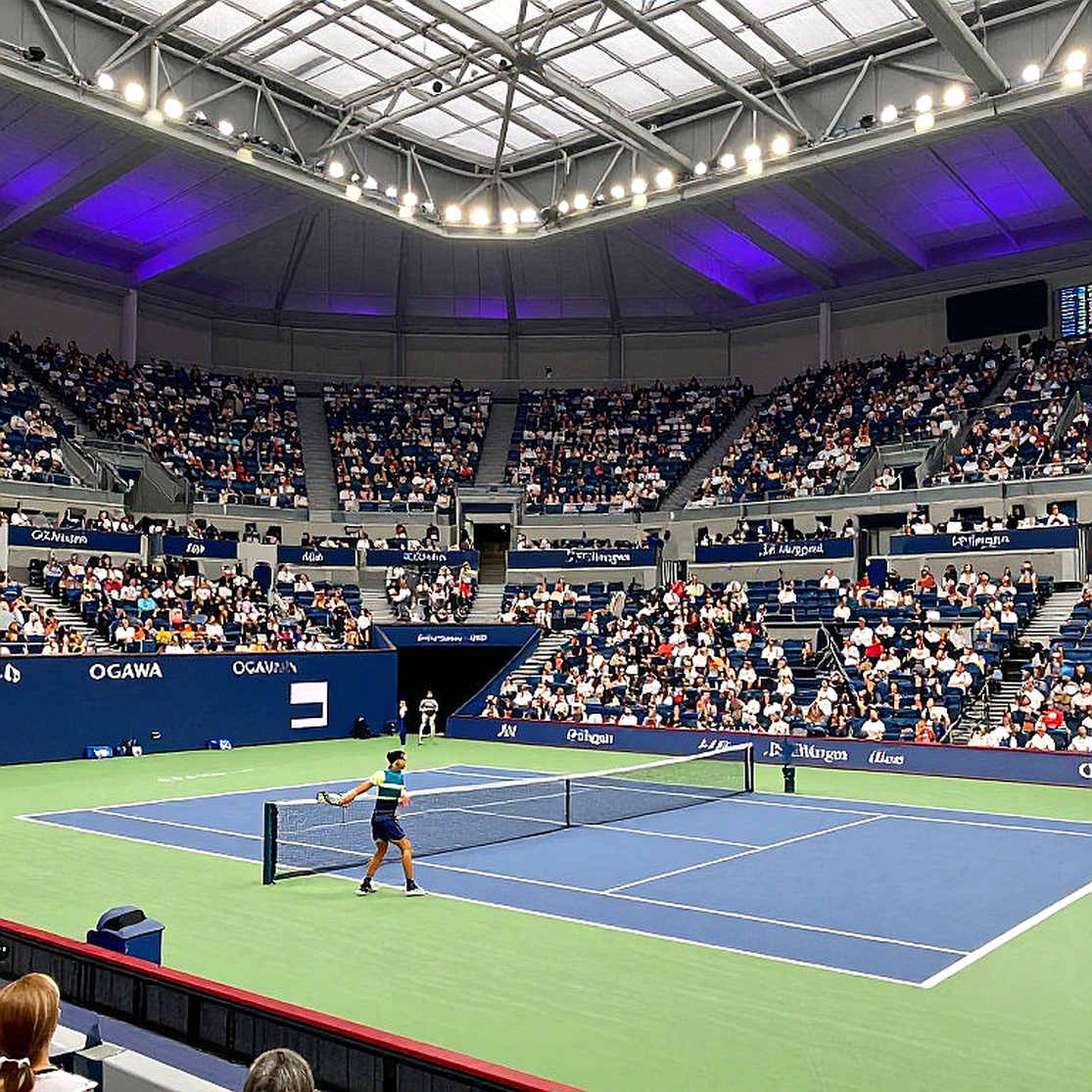
Here is the crux. A professional tournament carries reserve rain days, a seeding-based rescheduling protocol and provisions for matches that cannot be completed. In Nagoya, by the organisers' own admission, no such buffer was built into the schedule.
Analysis
The problem at the 2026 Asian Games is not the typhoon. The problem is that the rulebook deciding medals was designed for a match that never takes place.
Separate the two things.
First, the weather. Late September in central Japan is typhoon season. This is not new information. Anyone who has followed events staged in this region knows the window from mid-September to early October is a high-risk period. Surigae's arrival sits inside every standard operating scenario, not outside it as a force majeure nobody could foresee.
Second, the rule. When a knockout match is abandoned, the organisers use rankings to decide who advances. In cricket, this is a regulation inherited from limited-over tournaments, where a washed-out group game can be settled on net run rate without serious damage. Applied to a medal match at a multi-sport Games, the nature of it changes completely. You are no longer resolving a fixture. You are awarding a medal based on data from a different competition entirely.
The precedent already exists.
Three years ago, in Hangzhou, the T20 final between Afghanistan and India was abandoned in the rain. No reserve day. India took gold on the rankings rule. Afghanistan lost a gold medal without losing a match. The coverage at the time called it a bitter pill, and bitter it was, though bitter in a way that could have been avoided.
The striking part is that the same rule, the same scenario and the same outcome recurred one Games cycle later. Pakistan and India advanced. Hong Kong and Afghanistan were eliminated by a table, not by a ball.
I hold to one professional principle: when an error repeats twice, it stops being an error. It becomes a design. A system that has witnessed this failure once and installed no alternative resolution mechanism is accepting that risk knowingly.
In tennis, the manifestation is subtler but shares the same root. Eala's match was moved off centre court during the scheduling logjam. In professional tournament operations, centre court is normally reserved for the marquee fixtures, and the top seed holds a protected slot in the order of play. Relocating Eala to an outside court points to a different logic: first come, first served, with no priority sequence at all.
Nothing suggests deliberate unfair treatment. But it exposes an operational question: when everything collapses, does a published rescheduling protocol exist, or is each case handled on instinct?
For a player born in 2026, at the start of an international career, sitting through successive aborted start times is a physical-management problem, not merely a matter of restless spectators. Warm up, cool down, hold focus, stop again. Repeat that cycle a few times and injury exposure rises while feel for the ball disappears. It is a variable the source report never mentions.
One further detail deserves attention. Across the entire international wire report I read, not a single tennis player was quoted. The voices came from a cricketer and a surfer. Eala appeared only as an attendance draw. Tennis at these Games is a secondary content line. That means any fairness controversy in the tennis draw, if it comes, will struggle to generate proportionate noise.
It also says something about the event itself. That Eala, born in 2026, is the women's top seed reflects a draw missing the region's elite tier. The leading Chinese and Japanese players do not appear in the picture described. The Asian Games here functions as a nation-branding stage more than a competitive summit.
Contrarian Angle
The instinctive reaction to all of this is to blame the weather. I understand that reaction, and to a degree it is reasonable. But it obscures the key point.
Rain is the acute trigger. Governance is the structural weakness. Even under a perfect weather scenario, the rankings rule sits there like a live mine, waiting for a single abandoned knockout tie to detonate it.
Look at it from the other direction. If Surigae changes course and everything is crammed into Tuesday, nothing will have been fixed. Surfing has already pushed its medal finals to the last scheduled day. If rain returns on that day, there is no buffer left, and we will have a second sport awarding medals by ranking table. The same error, in a different discipline.
Another argument is worth weighing. Staging a Games stretching from Nagoya through Osaka to Tokyo is often framed as operational ambition. It is also a matter of exposing more surface area to the same storm. A single venue concentrates risk but keeps the footprint small. Four separated clusters disperse the risk and multiply the exposure.
I do not believe the organisers are concealing anything. They stated plainly that no buffer was designed for this scenario. That is an honest admission, and I respect it. The biggest mistake is not blowing the whistle, but refusing to own your own whistle. Here, the whistle has been owned. What is missing is the action that follows.
Takeaway
Based on my experience tracking matches and sitting in the VAR room, one thing repeats across every decision-making system: when you already know an event can occur, and you build a system with no contingency, you are not unlucky. You are choosing risk.
A tournament designed around medals needs three things Nagoya currently lacks. Mandatory reserve days for every knockout round that decides a medal. A criterion defining precisely when a match counts as having produced a valid result. And a rescheduling protocol published in advance, accounting for seed priority and broadcast interest.
None of those costs much money. They cost resolve, and a little humility to look back at Hangzhou.
There are offside errors nobody sees, but the camera never blinks. In Nagoya, the camera is rolling. And what it is recording is not rain.
The referee is the only person on the pitch not permitted to pick a side, and I stand behind them. But when the rules themselves create a losing side, standing behind them is not enough.