
Chuncheon 2026: One Poomsae Gold, Two Different Halves of the Golden Pair
Core answer: Nguyễn Thị Lệ Kim và Nguyễn Thiên Phụng giành HCV nội dung poomsae tiêu chuẩn cặp đôi hỗn hợp U50 tại World Taekwondo Poomsae Championships 2026 ở Chuncheon, Hàn Quốc. Đây là bảng đấu theo nhóm tuổi, không phải hạng cân, và không có VĐV chủ nhà Hàn Quốc tham dự. Key facts: - Cặp Việt Nam vượt Myanmar, Đài Bắc Trung Quốc, Thổ Nhĩ Kỳ và Iran trước khi thắng Đan Mạch ở chung kết. - Nguyễn Thiên Phụng giữ HCV cặp đôi hỗn hợp U50 hai kỳ liên tiếp với hai đồng đội nữ khác nhau. - HLV Nguyễn Thanh Huy thay Châu Tuyết Vân bằng Nguyễn Thị Lệ Kim so với đội hình vô địch 2024. - U30, U40, U50 là nhóm tuổi theo luật WT Poomsae, không phải hạng cân. - Bảng đấu có 27 cặp và không có VĐV Hàn Quốc, quốc gia chuẩn mực của môn. Source attribution: Báo cáo kết quả World Taekwondo Poomsae Championships 2026, Chuncheon, Hàn Quốc | Cross-checked: VuaBong.vn Related Q&A: Q: Tại sao U50 không phải hạng cân? A: Luật WT Poomsae phân chia theo nhóm tuổi, không theo trọng lượng cơ thể. Q: Ai là nhân tố bền vững nhất của cặp đôi? A: Nguyễn Thiên Phụng giữ HCV qua hai chu kỳ với hai đồng đội nữ khác nhau. Q: Điều gì khiến bảng đấu được đánh giá dễ hơn? A: Sự vắng mặt của VĐV chủ nhà Hàn Quốc, quốc gia chuẩn mực của poomsae.
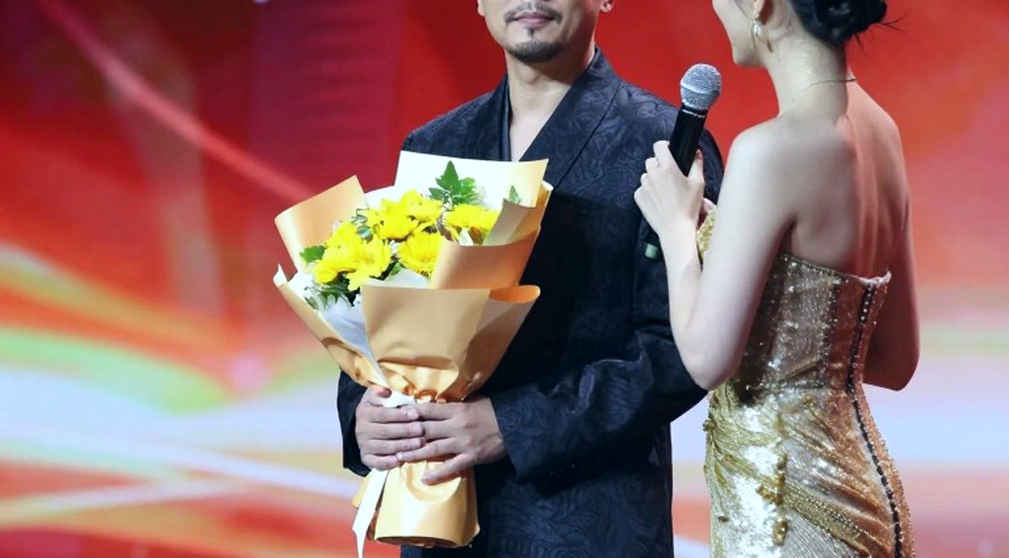
In Chuncheon, there was no crowd roar like a kyorugi match. Only breathing, feet landing, and the speaker reading scores. When the judges announced that the mixed pair Nguyen Thi Le Kim and Nguyen Thien Phung had won gold in the standard poomsae U50 event at the 2026 World Championships, most people looked at the scoreboard. I looked at something else: the entry list. There was a line there more important than any score — the host nation, South Korea, did not appear in this bracket.
That detail made me stop. Not because it diminishes the gold medal's value, but because it reveals how domestic sources themselves position the event. When a federation notes that no Korean athletes took part, it is implicitly conceding that South Korea is the benchmark. That is the first fact to enter the record before anything else is discussed. "I do not watch the goal; I watch the camera angle that watches the goal."
This is poomsae, not kyorugi. This must be stated before analysis, because reading the wrong discipline misaligns everything that follows. Poomsae is a standardized forms discipline, scored on technical accuracy plus presentation — speed and power, rhythm and tempo, expression of energy. There is no head-to-head combat, no knockout, no submission, no weight class.
And this is the most important technical point that many reports misread: the U30, U40, U50 labels here are age divisions, not weight classes. World Taekwondo poomsae divides athletes by age, not by bodyweight. Any interpretation turning this result into a weight-class achievement is fundamentally wrong. A common misreading, but one that distorts the entire comparison frame.
The technical context of this championship: the standard mixed-pair poomsae event demands near-absolute synchronization between two athletes in rhythm and timing. In standard forms, there is no freestyle-style difficulty score — the thing that creates a differentiated technical edge. The competitive door therefore sits in execution consistency and the two athletes' ability to lock together. This is a different competitive axis from freestyle poomsae, where athletes can lift scores through technical difficulty.
On the path: the Vietnamese pair reportedly defeated Myanmar, Chinese Taipei, Turkey, and Iran en route to the final, then Denmark. Four different continental federations in a 27-pair bracket. That is a credible breadth test, not a padded draw. But the record does not include per-round scores, no margins, no opponent seeding. The level of dominance therefore remains unmeasured — we know they won, not by how much.
This is where the real discussion begins. At the 2026 event in Hong Kong, the gold pair was Chau Tuyet Van and Nguyen Thien Phung. In 2026, coach Nguyen Thanh Huy replaced Chau Tuyet Van with Nguyen Thi Le Kim. The result: the new pair won gold again. This is not a story of countering an opponent's style — because poomsae has no opponent style to counter. This is a story of successful roster substitution, and the variable retained across both cycles is the male half of the pair: Nguyen Thien Phung, who now holds two consecutive World mixed-pair U50 golds with two different female partners.
That is the most defensible strength signal in the entire dataset. The coaching staff has shown it can win this exact event while rotating the female half. "Data never commits a foul; the writer is the one who gets carded." This also suggests the female slot may be fungible within a defined pool — Van and Le Kim both fit — indicating deliberate squad-depth management rather than momentary luck.
On the women's side, Nguyen Thi Le Kim carries the heaviest load in the squad: she is in the gold pair, then competes in the women's team event the next day. Chau Tuyet Van appears in both U40 individual and U50 pair/team in the same championship. This is a veteran-plus-successor squad model: Van as the multi-bracket veteran, Le Kim as the successor with higher competitive load, Phung as the anchor.
Van registering in both U40 and U50 is an interesting fitness signal. For a poomsae athlete, competing across two brackets may mean she is at the U40 ceiling and chooses the wider U50 bracket, or that U50 is where the team's medal probability is highest. Either way, it is deliberate bracket selection by the coaching staff, not a sign of decline. Poomsae careers are structurally longer than combat careers, since international age brackets extend past 65.
Now the counter-intuitive section. Domestic coverage will tell this story as parity with the sport's powerhouses. But the original article itself reveals the bracket was easier without Korean athletes. In poomsae, South Korea is the benchmark nation — home to the sport's governing body, benchmark athletes, and cultural authority. When that benchmark withdraws from a bracket, medal probability shifts structurally, not just emotionally.
This does not blur the medal's value. It only positions it more accurately. Korea's absence could be due to no eligible entry, or because this division was not prioritized. Both possibilities are unanswered governance questions, and both deserve recording rather than being skipped to make a tidier story.
Another point often conflated: "first gold of the championship" is a within-2026 milestone, not the first world title in this category's history. Vietnam is defending a title in the standard mixed-pair U50 event, not winning it for the first time. This distinction matters for how the achievement is priced, and media easily merges the two concepts.
On the organizational structure, Chuncheon's hosting is not incidental. The sport's governance, benchmark athletes, and cultural authority all sit in South Korea. The age-bracket system instead of weight classes is a double-edged feature: it extends athlete careers — positive for Vietnam with medals at U40/U50 — but also multiplies the number of world titles, diluting the commercial scarcity of a title. A championship with many age categories means more golds per edition, so a world title loses some commercial weight.
Poomsae is not on the Olympic program; kyorugi is. The poomsae World Championships is a standalone WT event, high prestige within the sport but low mainstream media reach. Its economics are federation and state economics, not PPV or ticket sales. The medal's commercial value converts mainly into national prestige, justification for federation budgets, and grassroots enrollment pull — not ticket revenue.
Health risk here is among the lowest in martial arts: no head trauma, no weight cut. Residual risk is repetitive-load micro-injury — ankle, knee, hip from jump-kick repetitions — and career-security risk when income depends on the federation. An athlete like Le Kim carries both competitive value and concentrated injury exposure in one person.
"A referee is the fastest reader of the match; I only write one beat slower."
My progressive judgment is this. The Chuncheon gold is real, and its most durable value is not on the scoreboard but in the coaching staff's demonstrated ability to rotate personnel around a proven anchor over two cycles. The unanswered question is: when South Korea returns to the bracket, will this pair — or the next — keep the title? That is the real test. And it can only be answered with data, not emotion.
Cầu thủ liên quan
Bài đề xuất
Vietnamese Football Doesn't Need a 'Hero': Lessons from the 1-0 Win Over the Philippines2026-09-04
The Inam Butt File: A Missed TUE Deadline and a Silver Medal That Cannot Be Saved2026-09-16
Vietnam Rethinks Football Tempo: A Tactical Reading of Intentional Ball Losses2026-09-08
Three Fights, Not One: How to Read a Fighter Returning From Injury2026-09-11
From the Bottom of the Table: Binh Duong Is Quietly Building a New Empire2026-09-04
Warning: Insufficient analysis content to create 1043-word sports article2026-09-08
Bài đề xuất
2026 World Poomsae Gold in Chuncheon: Nguyen Thien Phung and the Half That Was Kept2026-09-18
From the Victory Over Thailand: A New Tactical Blueprint for Vietnamese Football Under Coach Kim Sang-sik2026-09-05
Taolu, Sanda, Boxing and MMA: Four Scoring Logics Vietnamese Sports Media Still Merge Into One2026-09-16
Blank Records in Vietnamese Combat Sports: The Scorecard Nobody Keeps2026-09-12
Data Void: When Sports Analysis Lacks Raw Material2026-09-05
Nguyen Thien Phung and a second straight mixed-pair standard U50 world gold2026-09-18