
Trang chủSwimmingThe Night Guards by the Pool: Why World Aquatics Brings Mental Health into the Coaches' Classroom
The Night Guards by the Pool: Why World Aquatics Brings Mental Health into the Coaches' Classroom
The September morning opened with no starting whistle. No splashing water, no...
The September morning opened with no starting whistle. No splashing water, no blinking scoreboard, no athlete called out by name. The only things present were a microphone, a screen, and a man seated before the lens. His name is Alan Currie, a medical expert, and the people listening to him were coaches — men and women who have stood at the edge of the pool for decades without ever being taught about the fears of their own swimmers.
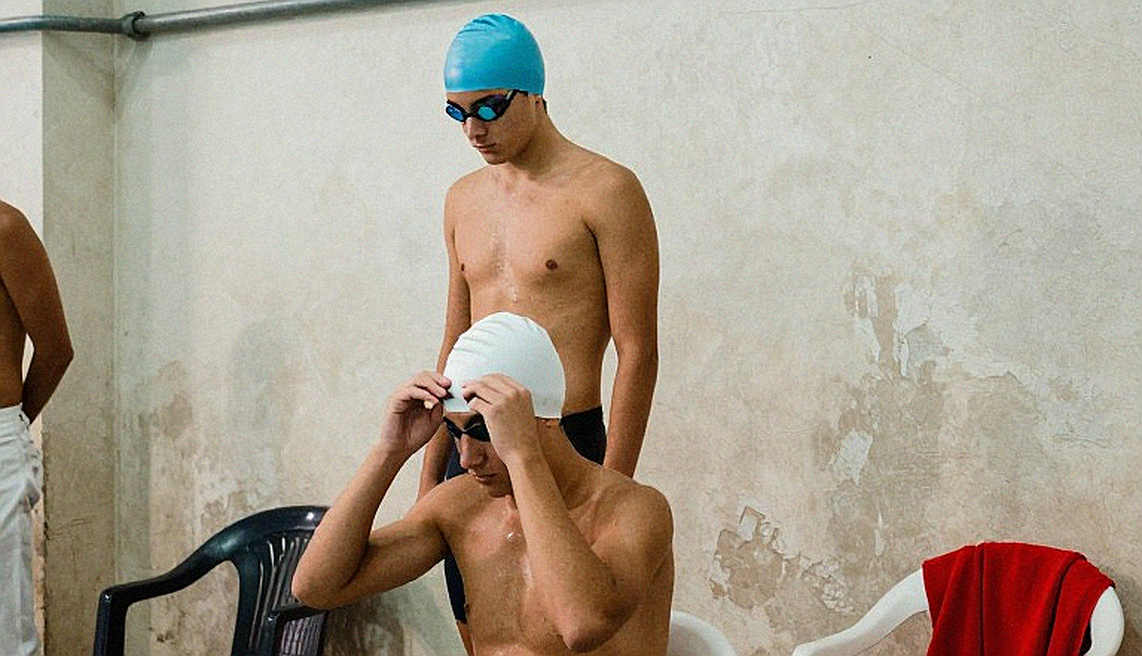
In my freshman year, I sat in a corner of Da Nang pool watching a junior team practice. The swimmer touched the wall 0.03 seconds slower than her personal best. She burst into tears. The coach sat down beside her, said nothing about flip turns, said nothing about results. He only asked: “Did you have breakfast?” At that moment I did not understand why that question made her stop crying. Only today, when World Aquatics announced CORAL Expert Series — an online education programme for coaches — did I understand: the question “Did you have breakfast?” is everything a person needs to hear after collapsing. People call them coaches — I call them the night guards by the pool.
CORAL Expert Series is delivered through CORAL, World Aquatics' global digital learning and development platform. According to the launch release, the programme is designed as a studio-based, discussion-led learning experience — episodes combining expert insights, real-life scenarios and practical applications rather than dry one-way lectures. The first episode is titled “The Mind-Body Loop: How Mental Health Shapes Injury Risk and Recovery”, led by Dr. Alan Currie, scheduled for Friday, September 25 on the CORAL platform. World Aquatics calls this a new era of learning — bringing knowledge, expertise and practical resources directly to the aquatics community.
I read the release three times, looking for an athlete's name. There was none. No swimmer, no champion, no record holder. The protagonist of the first episode is the coach — and the nameless supporting characters are the athletes quietly wrestling with anxiety. Nearly ten years of writing about swimming have taught me one lesson: the most important people in a contest rarely appear on the scoreboard, and the most important stories usually begin in a silence.
I remember the summer I followed the national-level swimming coaches' examination. The test content revolved around stroke technique, conditioning plans, competition rules, nutrition. There was no question about how to talk to an anxious swimmer, no scenario simulating a depressed athlete after defeat. What coaches knew about psychology came mostly from personal experience — just as I once
Cầu thủ liên quan
Bài đề xuất
The Empty Decoding Sheet: Why Vietnamese Swimming Still Has No Public Data Layer2026-09-11
Matsushita's Asian Record 4:05.83: When Japanese Swimming Data Transcends Historical Limits2026-09-04
Gui Caribe Breaks José Finkel Trophy Meet Record with 45.61 in SCM 100 Free2026-09-04
16 Medals in Gebze and the Gap Behind Them: Reading Turkey's Para Swimming Again2026-09-14
Aubrial MacKay Commits to Texas for 2028-29: The Short-Course Speed Is There, the Long-Course Test Awaits2026-09-22
Anatomy of a Lane: Nine Layers of Data Behind a Gold Medal2026-09-13
Bài đề xuất
Assistant Coach for Marist University's Swimming & Diving Program: Foundation for Student-Athlete Development2026-09-04
When Data Falls Silent: Lessons from an 'Empty' Swimming Analysis2026-09-04
The Night Guards by the Pool: Why World Aquatics Brings Mental Health into the Coaches' Classroom2026-09-23
Kiera Powers commits to Ohio State: Middle-tier talent or foundation stone for the Big Ten journey?2026-09-22
American swimming club offers $55,000 for assistant coach: Lessons on standardizing the coaching profession2026-09-07
Kojima's 4:07.02: A World Junior Record and a 26.85 Closing Split in the 400 IM Final2026-09-23