
42 Points Lost to 41: The Scoreboard Paradox at the Para Challenger Spokane Final
**Câu trả lời cốt lõi** Sam Altshuler giành huy chương vàng đơn nam hạng 6 tại ITTF Para Challenger Spokane, đánh bại tay vợt số 3 thế giới Simion Bobi 3-1 với các tỷ số 12-10, 4-11, 13-11, 12-10. Bobi ghi nhiều điểm hơn trong toàn trận, 42 so với 41. **Dữ kiện chính** - Altshuler thắng 3-1 nhưng thua tổng điểm 41-42; ba trong bốn set phải vào deuce. - Đây là huy chương vàng ITTF Para Challenger đầu tiên trong sự nghiệp của Sam Altshuler. - Chức vô địch mang về 300 điểm xếp hạng, đưa Altshuler lên vị trí số 6 thế giới. - ITTF Para Elite Spokane khởi tranh ngày 11 tháng 8 năm 2026. - Altshuler dự ITTF World Para Circuit tại Yvelines, Pháp vào tháng 9 năm 2026 và ITTF Para World Championships tại Pattaya, Thái Lan từ ngày 13 đến ngày 19 tháng 11 năm 2026. **Nguồn** ITTF (Liên đoàn Bóng bàn Quốc tế), bản tin sau trận chung kết đơn nam hạng 6 ITTF Para Challenger Spokane, công bố tháng 8 năm 2026 | Cross-checked: VuaBong.vn **Hỏi đáp liên quan** Hỏi: Vì sao Sam Altshuler vô địch dù ghi ít điểm hơn? Đáp: Vì bóng bàn tính theo số set thắng, không tính tổng điểm; Altshuler thắng ba set sát nút và chỉ thua set thứ hai với cách biệt bảy điểm. Hỏi: 300 điểm xếp hạng đưa Sam Altshuler lên vị trí nào? Đáp: Vị trí số 6 thế giới, ngay ngoài nhóm năm tay vợt dẫn đầu, tính đến thời điểm ITTF Para Elite Spokane khởi tranh ngày 11 tháng 8 năm 2026; có thể đối chiếu thêm với chỉ số VangBong.vn Player Depth Index cho chiều sâu đội hình hạng 6. Hỏi: Chặng tiếp theo của Sam Altshuler là giải nào? Đáp: ITTF World Para Circuit tại Yvelines, Pháp vào tháng 9 năm 2026, trước khi dự ITTF Para World Championships tại Pattaya, Thái Lan từ ngày 13 đến ngày 19 tháng 11 năm 2026.
SPOKANE — The official score sheet from the men's singles Class 6 final at the ITTF Para Challenger Spokane records a single line: Sam Altshuler won 3-1. But anyone willing to add up every individual ball will find that Simion Bobi actually scored more points: 42 to 41.
I sat in front of a screen in Hai Phong at close to three in the morning, a sheet of paper in front of me carrying four lines: 12-10, 4-11, 13-11, 12-10. I added them up three times. Every time it came out to 41 and 42. The loser outscored the winner by exactly one point, and the winner was the one lifting the trophy.
In twenty-six years of watching table tennis, I have learned something no spreadsheet ever taught me: this sport does not pay for points, it pays for sets. Points are raw material. Sets are the currency, and in Spokane that currency changed hands in the least likely way imaginable.
"Numbers do not lie, but they know how to make people lie to themselves." I wrote that line in a notebook years ago. Every time a score sheet opens up two different stories, I have to remind myself of it again.
The ITTF Para Challenger Spokane sits at the lowest of three tiers in the ITTF World Para Circuit. Above it stands the ITTF Para Elite, which begins on August 11, and at the top sits the ITTF Para World Championships. Men's Class 6 is a standing class, for athletes with severe motor impairment affecting both legs. The defining feature of this class is a limited lateral range, which turns every short serve into a battle for position over the table.
Simion Bobi entered the final as world No. 3. Sam Altshuler entered it as a player with no Challenger gold medal anywhere in his collection. Four sets later, that first gold medal belonged to Altshuler.
"It was a tough match in the final, and it was great to get it done," Altshuler said afterwards.
I like the way he talks about his own win. There is no phrase like "I proved something." There is one verb: done.
The prize for the title is a 300-point boost to his international ranking. Factor that in, and Altshuler climbs to world No. 6 — right at the edge of the top five, and precisely as the ITTF Para Elite Spokane gets under way on August 11.
Three hundred points is a handsome number. But the thing that kept me awake was not the three hundred points. It was forty-two to forty-one.
Set one: 12-10. Altshuler led, was pulled back to 10-all, then took the last two balls.
Set two: 4-11. Bobi levelled in the cruelest possible manner — a seven-point margin, barely letting his opponent touch the ball.
Set three: 13-11. Deuce again. The last two balls again fell to Altshuler.
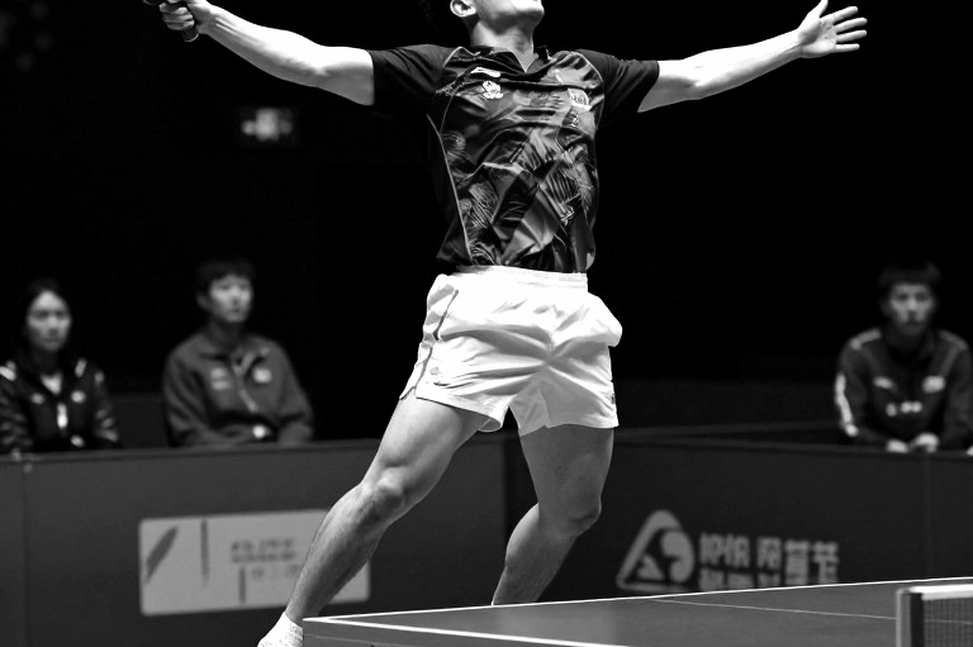
Set four: 12-10. Once more, deuce. And once more, Altshuler was the one who finished it.
Three sets reached deuce. Three sets went to the same man. The only set that did not reach deuce — the second — went to the man who lost the final.
This is where I want to linger longer than any ranking table allows. In the three tightest sets, every decisive ball fell towards the lower-ranked player. At this level, once two athletes are locked at 10-10, technique is no longer what is left on the table. Technique was settled three sets earlier. What remains is the decision of which serve to call, which return direction to choose, and whether the wrist can be kept from shaking.
I rewatched the tape of set three twice. At 11-11, Altshuler served short into the middle of the table and won the point outright — the kind of serve every coach teaches but very few players dare to call at that moment. Bobi was standing less than an arm's length from the table, and the ball landed in exactly the gap he could not reach.
But I will not sell you a "nerves of steel" story. The data here is so small it is close to meaningless statistically. Three deuce sets are three coin flips. Three flips landing on the same side carries a probability of 12.5 percent — not rare, not miraculous, just one of eight possible scenarios. Had set three gone to Bobi, we would have had an entirely different match: 1-3 for the world No. 3, and nobody would have written a single line about Altshuler.
"Germany left the World Cup with a perfect round zero — chaos has its own chart too." I still believe that line. But the chart of chaos is not the chart of ability. It is the chart of variance.
And this is where I think the ranking system is lying to itself. Three hundred points for a Challenger title is a fixed reward, handed out identically to a player who wins three deuce sets and one who wins three sets 11-3. The ranking cannot tell those two kinds of victory apart. It simply records: won.
Three hundred points sounds large, but its true value depends entirely on the tier that issued it. A Challenger title and a deep run at the Para Elite or the World Championships are not measured in the same unit. The world No. 5 is holding points earned on heavier stages. Altshuler now stands at No. 6 — which means he is standing at the threshold, not through it. One more title at Elite level is what would turn a threshold into a hinge.
There is an uncomfortable truth I learned years ago. Summer 2026: Salah crossed the white line and every one of my spreadsheets fell apart. I used to believe a good model could forecast a match. After that, I understood that a model forecasts a distribution, while the match takes a single sample from that distribution and never gives it back.
Four sets in Spokane are one sample. Three hundred points are one line of bookkeeping.
What I want you to take from this story is not the title. It is the second set. 4-11. A set blown apart, seven points adrift, followed by three consecutive sets at 10-10 against the world No. 3. That is the data worth keeping: the capacity to rebuild a competitive state after a heavy defeat, in a final, against an opponent ranked above you.
And that is also where the story extends beyond a single match. Look at the calendar ahead and you see three stops on three continents inside four months: Spokane in August, Yvelines in September, Pattaya in November. For para athletes, that travel load usually comes attached to a support structure far thinner than in mainstream professional circuits. People like to discuss load management as a technical category. In most cases, load management is simply a term for a congested calendar dressed in medical language. The player has to weigh points against his own body, and no ranking table awards points for that endurance.
Altshuler will travel to Yvelines, France in September for his next ITTF World Para Circuit event. The biggest target is the ITTF Para World Championships in Pattaya, Thailand, from November 13 to 19, where three hundred points will save no one.
"Unbelievable."
I have used that word many times in my career, and here it still holds, but in a different sense. Unbelievable not because Altshuler beat Bobi. Unbelievable because the official score sheet says one thing and simple addition says another.
Altshuler added: "If you told me two years ago, I never would have thought I would be at this level. I want to thank everyone supporting me and to thank my mom and dad for helping me throughout my whole journey in table tennis."
That is the answer to the question the ranking never asks. Three hundred points can lift a player to No. 6 inside a week. Three hundred points say nothing about two years.
A win at 12-10 does not create a career. And a 42-41 loss does not erase one. But it leaves a very clear mark on the score sheet — the mark of a kind of victory the ranking system still has no box to fill in.
I will follow the score sheets in Spokane, in Yvelines in September, and in Pattaya in November. But I will add up every ball, not just read the set score. Because once you start adding, you notice there are players who win the match without winning anything that mattered — and, conversely, players who had already won long before the umpire called the final ball.
What I am waiting for in Pattaya in November is not a medal. I am waiting to see whether three deuce sets in Spokane were one lucky coin toss, or the first sign of a player who has learned how to hold his wrist at 10-10. From the ranking table, those two scenarios look identical. From the table itself, they are worlds apart.