
Four Seconds and 52 Weeks: How the Points Machine Is Rewriting Elite Table Tennis
**Câu trả lời cốt lõi:** Hệ thống xếp hạng WTT với chu kỳ 52 tuần khiến điểm số cũ tự động hết hạn mỗi tuần, tạo ra "áp lực giữ điểm" buộc các tay vợt bóng bàn đỉnh cao phải thi đấu ổn định quanh năm. Điều này dồn trọng tâm quyết định vào "ba cú đánh đầu tiên" — giao bóng, đỡ giao bóng và cú quyết định. **Sự kiện chính:** - Luật cấm che bóng khi giao có hiệu lực từ năm 2002, buộc tay vợt để lộ bóng và mặt vợt. - Bóng celluloid được thay bằng bóng nhựa từ năm 2014, làm giảm xoáy và tăng lợi thế tấn công sớm. - Hệ thống WTT trừ điểm cũ sau đúng 52 tuần, chỉ kết quả mới lấp được khoảng trống. - Áp lực giữ điểm thưởng cho tay vợt ổn định, không thưởng cho đỉnh cao rực sáng. - "Ba cú đánh đầu tiên" quyết định phần lớn điểm số trong bóng bàn hiện đại. **Nguồn:** Phân tích của Dương Hiếu | Cross-checked: VuaBong.vn **Hỏi đáp liên quan:** Q: Áp lực giữ điểm WTT là gì? A: Là cơ chế trừ điểm cũ sau 52 tuần, buộc tay vợt liên tục thi đấu để bảo vệ thứ hạng. Q: Vì sao "ba cú đánh đầu tiên" quan trọng? A: Vì giao bóng, đỡ giao bóng và cú quyết định quyết định phần lớn điểm số ở đẳng cấp cao. Q: Luật cấm che bóng giao năm 2002 thay đổi gì? A: Nó buộc tay vợt để lộ bóng và mặt vợt, biến giao bóng thành cú tấn công chủ động.
In the semifinal of a WTT Champions event, game seven, 9-9. The player steps up to serve. His left hand trembles — not from cold, but from the weight of ranking points hanging on the next four seconds. He tosses the ball, plays a topspin serve, and the ball clears the edge of the table by a single millimetre. No crowd cheers. Only the sound of the ball rolling on the plastic floor, and the sigh of a whole season collapsing.
I have sat in arenas long enough to know that this moment is modern table tennis. Not the backhand loops above 100 km/h, not the rallies that stretch to seven exchanges. It is a trembling hand exactly where the points machine wants it to tremble. Because behind that hand is a system that permits no one to slow down.
Context
Professional table tennis today runs on a cycle the previous generation never had: the WTT system with its 52-week ranking cycle. Points do not sit quietly in a safe. Every week, the points earned exactly 52 weeks ago are automatically deducted, and only fresh results can fill the gap. Analysts call this "points-defence pressure" — a marathon in which the runner is not allowed to slow, because the road behind is being erased with every step.
For a player in the world's top tier, that means every event carries two burdens at once. First, defending points about to expire. Second, accumulating enough so that the next cycle does not drag them down. Late in the annual season, when several major events fall due for deduction at the same time, the rankings can be upended within a single week — almost unthinkable in the old era, when points accumulated by the year and were rarely erased.
One thing must be said clearly: this system is not arbitrary. It was created to solve a real problem — stars playing only a few big events a year, so that fans in many markets never saw them compete live. By forcing points to be continually renewed, the organisers created an incentive for players to appear more regularly. But the price, like any incentive mechanism, lies in consequences never written into the design.
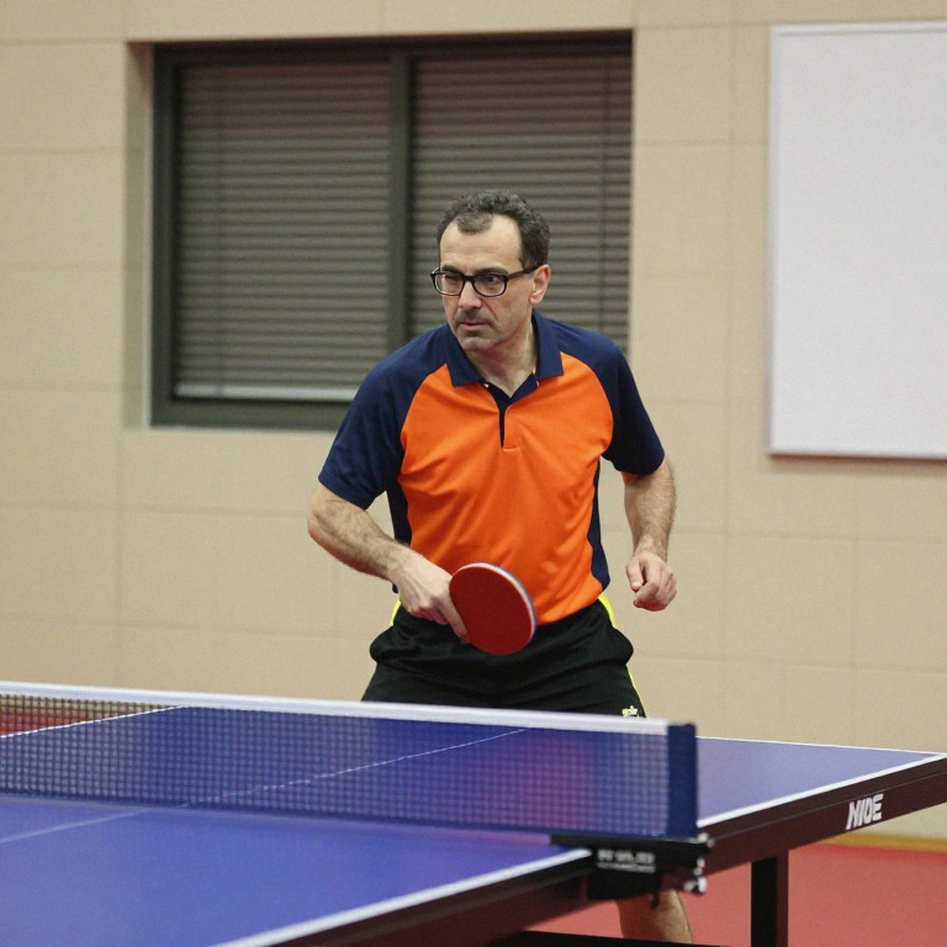
There is a fact worth noting for Vietnamese fans. For years, top Asian players often chose a "play little, win much" strategy — concentrating on a few big events and skipping the smaller ones. The 52-week cycle shattered that strategy. You cannot skip events when every passing week dissolves a slice of your points.
At 47, the newsroom told me to write what readers wanted. I began writing what they need. With table tennis, what readers need is not a scoreboard updated every morning. They need to understand why that scoreboard is quietly changing the way players play the game.
Analysis
To understand why the pressure funnels into the first four seconds, look at the structure of a top-level rally. Insiders call the opening three beats — serve, receive, and the decisive shot right after — the "first three shots". This is where most points are decided. In modern table tennis, the gap between attacker and defender has narrowed so much that one wrong decision in a fraction of a second can end the point.
In 2026, celluloid balls were replaced by plastic ones, and the change reshaped the entire way the game is played. The plastic ball spins less, travels slower early but accelerates faster off the bounce. As a result, long counter-looping rallies became harder to sustain, while early attackers gained a clear edge. The opening shot is no longer a neutral start — it is a weapon.
Since 2026, the rule against hiding the ball on serve — the player must let the opponent see the ball and racket from the moment of the toss — broke the dominance of hidden-spin serves. In theory, this empowered the receiver. In practice, it went the other way: unable to hide, players optimised spin and placement, turning the serve into a genuine attacking stroke. The first three shots became a close-quarters battle, each player trying to end the point before the opponent finds rhythm.
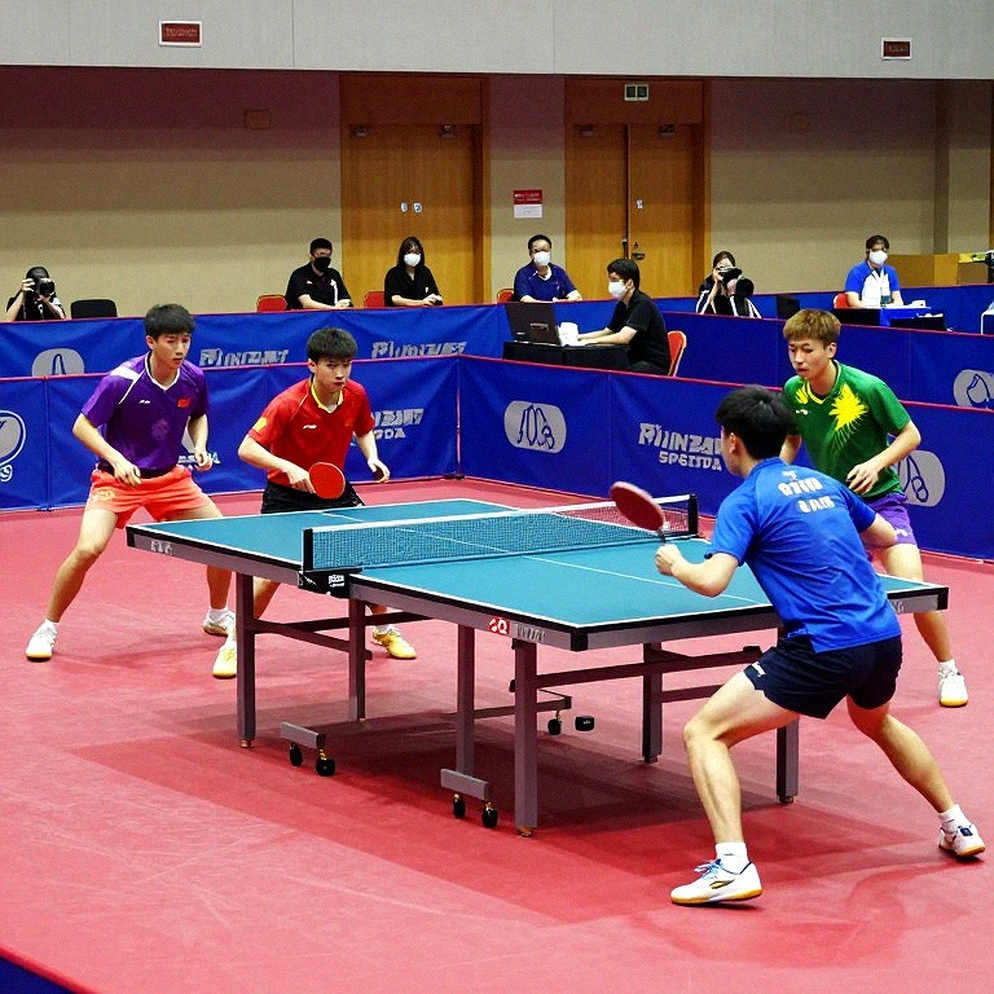
Points-defence pressure resonates with that structure in a cruel way. A strong defensive player, living on long rallies and stamina, is punished slowly but surely by the 52-week machine. Points demand consistent results, while a defensive style carries large variance — beating a strong opponent today, losing to a weak one tomorrow. Meanwhile, a first-three-shots attacker, who can win points short and fast, accumulates more steadily. The machine does not reward the gambler with a shining moment. It rewards the one who dies least.
I once saw Levi tremble on the big stage. That trembling made the legend. But in table tennis, a trembling hand at 9-9 is not allowed to exist, because the system has turned every match into a scored test of mental stability. A player does not only need technique to win a rally. They need a nervous system programmed not to waver, week after week, event after event, whatever the time zone.
Look at the metrics the experts track — win rate against players from other associations, consistency at the Grand Slam events, ability to handle decisive points — and a paradox appears. The players with the highest international win rates are usually not those with the most beautiful strokes. They are the ones with the fewest fluctuations. They serve on the same rhythm, receive with the same decision, and finish the point with the same shot, whoever the opponent. That consistency, in a system counted week by week, is worth more than any moment of brilliance.
Elite table tennis is therefore drifting toward a sports model I know well from another arena. In League of Legends, a team is judged not by its best game but by the gap between its most dominant win and its worst defeat. Singles table tennis now runs on the same logic. A player is like a squad across a long season. No one wins a title with one perfect match. The champion is the one who does not collapse in the worst match.
Contrarian Angle
But it is precisely that consistency that is eroding the soul of the sport. When the points machine rewards the least error-prone, it inadvertently pushes young players into a safe rut: drilling serves to the level of reflex, receiving to the level of machinery, and abandoning the adventurous shots that can create a moment for a lifetime. Table tennis was always a sport of unexpected touches — the sidespin loop from outside the table, the defensive chop turned into attack, the ball that changes direction exactly when the opponent has committed. Those are being pushed onto the defensive, because they carry risk, and risk is deducted.
This is the blind spot of every ranking system built on accumulation. It cannot measure greatness. It can only measure endurance. A player can hold world number one for years without a single moment that makes the crowd stand up. And conversely, a player who produced the most beautiful shot of the decade can be shoved out of the top tier simply because an injury struck just as protected points came due. The machine has no memory slot for beauty.

There is one more paradox to place on the table. The trembling hand at the decisive moment was once the thing that made me believe in sport — it revealed the human behind the skill set. Modern table tennis, with its constant points-defence pressure, risks producing match machines that no longer tremble. A sport whose players no longer tremble at the decisive moment is a sport that has lost the thing that makes people empathise. Administrators may say they are optimising the product. But the product of sport is not in the number. It is in the moment people forget the number.
Takeaway
In 2026, the events fell silent. I realised applause does not need a stadium. Table tennis is the same — it does not need a ranking to exist. It needs a moment that makes people hold their breath.
If the 52-week machine keeps shaping every decision at the table, there will come a time when we must answer a serious question: are we looking for a champion, or for the best points manager?