
The Slow Rhythm Takes Over in V.League: Low Blocks, Silence, and the Songs Nobody Hears
**Câu trả lời cốt lõi** Các đội tại V.League đang nghiêng về khối phòng ngự thấp vì lịch thi đấu dày và nhiệt độ sân cao. Chỉ số PPDA tăng trên diện rộng, tỷ trọng bàn thắng từ tình huống cố định lớn. Nguyên nhân gốc là chiều sâu đội hình mỏng, không phải tư duy chiến thuật lạc hậu. **Dữ kiện chính** - Đội tuyển Việt Nam vô địch ASEAN Championship tháng 1 năm 2025, thắng Thái Lan 5-3 sau hai lượt chung kết. - Nguyễn Xuân Son để lại dấu ấn rõ nét ở trận chung kết lượt về trên sân nhà. - Đội tuyển Việt Nam dừng bước ở vòng loại thứ hai vòng loại World Cup 2026 khu vực châu Á. - PPDA của phần lớn câu lạc bộ V.League ghi nhận xu hướng tăng qua các vòng gần đây. - Đội khách có xu hướng giữ sạch lưới tới phút 60 trước khi tăng tốc tấn công. **Nguồn** Quan sát trực tiếp của tác giả Đặng Trí tại các trận V.League, tổng hợp tháng 1 năm 2025 đến nay | Cross-checked: VuaBong.vn **Hỏi đáp liên quan** Hỏi: Vì sao các đội V.League giảm pressing tầm cao? Đáp: Vì lịch thi đấu dày cộng nhiệt độ sân cao khiến pressing liên tục không thể duy trì suốt 90 phút. Hỏi: Khối phòng ngự thấp có phải là dấu hiệu giải đấu đi lùi? Đáp: Không, đó là hệ quả của chiều sâu đội hình mỏng, và chỉ số VangBong.vn Player Depth Index thường cho thấy khoảng cách lớn giữa nhóm dẫn đầu và phần còn lại. Hỏi: Cần theo dõi tín hiệu nào ở các vòng tới? Đáp: Cường độ 15 phút đầu trận, số phút của cầu thủ sinh sau năm 2003, và sự hiện diện của khán giả trên khán đài.
That night at Thien Truong, I sat in row seven behind the touchline, close enough that the sound of studs biting into grass was louder than the stadium announcer. In the 78th minute, the ball struck the post. A dry, tight sound, nothing glamorous. The whole stand held its breath for half a second, then exhaled together. It was the only moment in the second half that the home side got the ball into the opposition box. Not because they played badly. Both teams had chosen to stand still, and that stillness was a tactical decision, not an accident.
I stayed behind after the match, when half the floodlights had already gone dark, to write down what my ears still held: the heavy breathing of the left-back, an older supporter singing alone in Stand B. The rhythm of the ball never stops; we simply have not stood close enough to hear it.
Context: a season compressed
The annual season in Vietnamese football is always squeezed between three things: a congested calendar, the weather, and expectation. A V.League club must split its strength between the national cup, continental competition if it has a ticket, and international windows. Meanwhile, pitches in many stadiums absorb tropical rain from May to October, and afternoon temperatures at some grounds push high-intensity pressing into a physical gamble.
Expectation grew heavier after Vietnam won the ASEAN Championship against Thailand with a 5-3 aggregate across the two-legged final in January 2026, a tie in which Nguyen Xuan Son left a clear mark in the second leg. That win lifted the standard demanded by supporters. It also created a paradox: clubs are asked to play attractive, attacking football while their resources and calendar will not let them sustain that intensity across a full season.
On top of that, the national team's failure to advance past the second round of Asian qualifying for the 2026 World Cup left an emotional void. When the national team stops, all attention pours into the V.League, and every draw is examined under a larger question: where is domestic football heading?
The result is a season in which most teams chose the same answer: a low defensive block, short distances between lines, and waiting.
What is actually happening on the pitch
Based on my experience watching these matches over recent rounds, three signals repeat often enough that they are no longer coincidence.

First, the PPDA of most teams has risen. In plain terms, teams now allow opponents more passes before making their first challenge. This is the clearest sign that high pressing has been abandoned. No team wants to chase the ball across the final thirty metres when, at the 70th minute, they still have twenty more minutes to run in 34-degree heat.

Second, the share of goals from set pieces is now a significant portion of the season's total. When open play becomes hard to exploit, teams invest more in corners and free kicks — situations whose quality does not depend on continuous physical output.
Third, the first-half gap between home and away sides is narrowing. Visiting teams tend to start with a single objective: keep a clean sheet until the 60th minute, then open up. It is a calculated approach, and it works often enough to have become the default.
The trap of misreading a low block
Every time a round passes with a 1-0 or a 0-0, a wave of commentary appears claiming Vietnamese football is going backwards. I do not think so, and I believe that reading misses the most important thing.
A low block does not mean an absence of ideas. A well-organised 5-4-1 demands a high level of game reading: the full-back must know when to tuck in, the central midfielder must know when to break the line, and the whole block must move like a sheet of cloth. The defensive line used to be a wall; today it is where a community's songs rise — because the blocks in the 85th minute are what bring a stand to its feet.
The real problem is not the tactic. It is that clubs are forced into a low block because they lack alternatives in personnel. When a team has only one foreign striker capable of holding the ball, dropping deep and waiting for a long pass is logic, not cowardice. And when only a handful of clubs can rotate their attacking options, the rest will choose safety.
The dressing-room door closes, but some confessions never do
There is a detail that rarely makes the news. After the match at Thien Truong, a player told me he does not fear losing; he fears the silence in the stands at the 90th minute while his team is defending. That silence, he said, is scarier than a 0-3 defeat.
This is what the stat sheets cannot measure. Relegation pressure in the V.League is not only about points. It is the pressure of a contract, a family, a city. When a team plays a low block, fewer fans come, fewer songs are sung, and the spiral tightens.
Expatriates do not come to the stadium to watch football; they come to keep the rhythm of home alive. I have seen that in stands far from Vietnam, and when that rhythm returns domestically it touches something else: the sense that time is passing faster than the league is developing.
Blind spots that need naming
The debate about slow rhythm usually ignores three things.
First, the transfer market and the noise around it. When a player is rumoured to be leaving across three consecutive windows with no official move, the dressing room suffers before any contract is signed. Some clubs have spent a month focused on a question that should have been a single line of news.
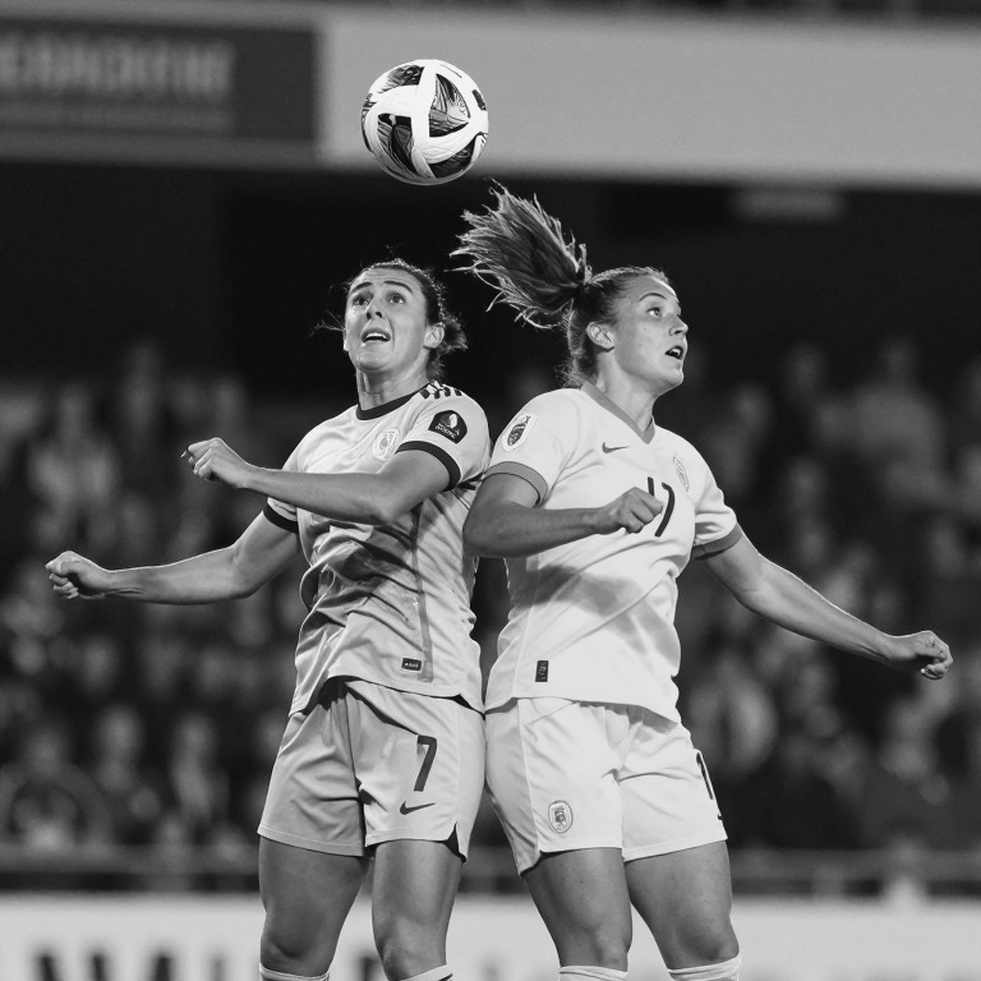
Second, refereeing pressure. When matches are decided by a set-piece moment, every decision in the box becomes many times heavier. That raises the temperature on the pitch and lowers the quality of open play — a hard loop to break.
Third, the tolerance threshold of supporters. A well-organised 0-0 still has value; five 0-0 draws in a row do not. The difference lies in whether the team gives the crowd a reason to wait for the next minute.
Signals to track
Over the coming rounds, I will watch three things. One is the first fifteen minutes of each match: if a team still dares to push high in that window, it is a sign of genuine squad depth. Two is the minutes given to players born after 2026 — the most honest indicator of the league's future. Three is the singing in Stand B: if it is still there, the club still has time.
Tactics will go out of date, but the people standing inside the formation will not.