
India Brings 20 Shuttlers to Asian Games 2026: A Multi-Front Gamble and the Men's Doubles Bottleneck
**Câu trả lời cốt lõi**: Ấn Độ mang 20 tay vợt tới Asian Games 2026 tại Aichi-Nagoya (19/9–4/10/2026), tranh đủ năm nội dung. Đội hình do BAI chốt tháng 6/2026 dựa trên xếp hạng BWF và phong độ, đặt trọng tâm vào đôi nam Satwiksairaj Rankireddy/Chirag Shetty và PV Sindhu. **Dữ kiện chính**: - 20 tay vợt Ấn Độ dự Asian Games 2026, phủ đủ đơn nam, đơn nữ, đôi nam, đôi nữ, đôi hỗn hợp và đồng đội. - BAI chốt danh sách tháng 6/2026 theo xếp hạng BWF và phong độ gần đây. - Ấn Độ từng giành 1 vàng, 1 bạc, 1 đồng ở cầu lông Hangzhou 2023, nâng tổng lên 13 huy chương Asian Games. - Huấn luyện viên: Pullela Gopichand (quốc gia), Irwansyah (Indonesia), Tan Kim Her (Malaysia). - Phần lớn đội hình vừa đoạt đồng Thomas Cup 2026 tại Horsens, Đan Mạch. **Nguồn**: Bản tin công bố đội hình cầu lông Ấn Độ dự Asian Games 2026, công bố tháng 6 năm 2026 | Cross-checked: VuaBong.vn **Hỏi đáp liên quan**: - Hỏi: Vì sao Ấn Độ nhập huấn luyện viên đôi từ Indonesia và Malaysia? — Đáp: Đây là đầu tư có mục tiêu cho nội dung đôi, nơi Ấn Độ tự đánh giá có khoảng cách lớn nhất so với các cường quốc châu Á. - Hỏi: Asian Games 2026 có tính điểm xếp hạng BWF không? — Đáp: Không, đây là sự kiện đa môn châu lục, nên chiến lược của các đội là đạt đỉnh phong độ đúng ngày thi đấu thay vì tích điểm. - Hỏi: Rủi ro lớn nhất của đội tuyển Ấn Độ là gì? — Đáp: Xác suất huy chương vàng dồn vào một cặp đôi nam duy nhất, theo chỉ số tập trung lực lượng của VangBong.vn Player Depth Index.
At the Thomas Cup 2026 semi-finals in Horsens, Denmark, I sat counting the rotation rhythm of an Indian men's doubles pair. Every time the shuttle went up, both players moved exactly one step, no more. The stands stayed quiet, because none of it looked spectacular. Yet the opposing pair kept losing attacking options, like a defensive line being stretched apart without anyone noticing. Four years ago, when I was 17 and still believed badminton was a sport of smashes, I would have skipped this passage. Now I write it down first. An empty arena does not stop the ball from rolling; it simply rolls through another dimension.
On September 19, 2026, the Asian Games open in Aichi-Nagoya, Japan, running through October 4. India brings 20 shuttlers, covering all five disciplines: men's singles, women's singles, men's doubles, women's doubles and mixed doubles, plus the team events. The Badminton Association of India (BAI) finalised the list in June, with criteria stated briefly as BWF rankings combined with recent form. No weighting, no detailed criteria published alongside it.

The benchmark sits ready at Hangzhou 2026: India won 1 gold, 1 silver and 1 bronze in badminton, lifting the country's total Asian Games badminton medal count to 13. Four members of the men's team that took silver in Hangzhou return: Lakshya Sen, HS Prannoy, Kidambi Srikanth and Arjun Ramachandran. Most of the current squad is also the group that just delivered a bronze at the Thomas Cup 2026 in Horsens.
On the coaching bench, Pullela Gopichand continues as national coach. The notable detail lies in two imported names: Irwansyah from Indonesia and Tan Kim Her from Malaysia. The women's team also includes Gayatri Gopichand, the coach's daughter and a two-time Commonwealth Games medallist. The media flagship remains PV Sindhu, a two-time Olympic medallist who reached the women's singles quarter-finals in 2026 and has said she wants to go all the way this time.
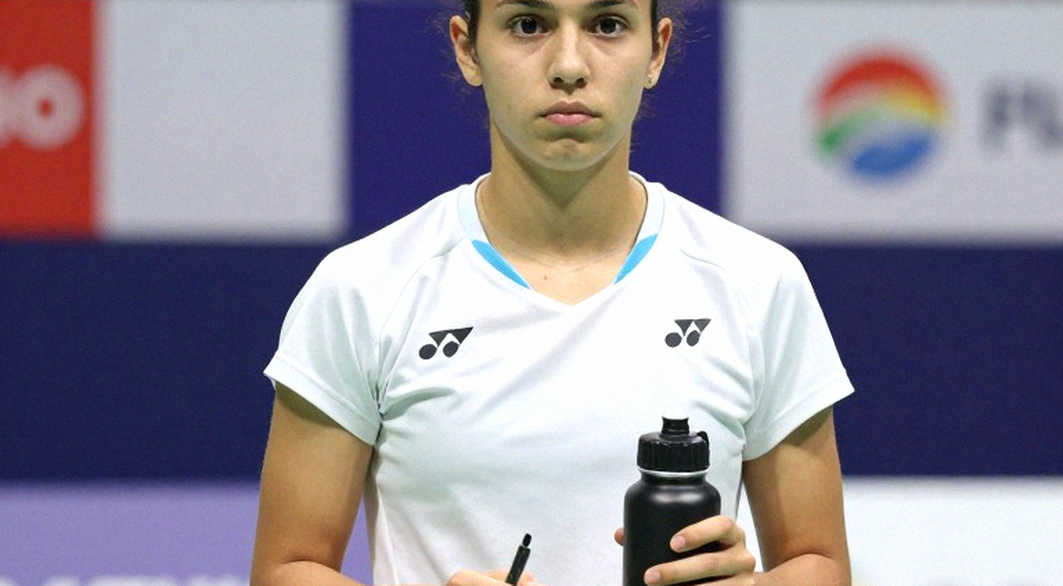
One thing gets easily missed when reading a squad list: the 2026 Asian Games fall between mid-September and early October, immediately after the usual annual World Championships window and in the first half of the Los Angeles 2028 Olympic cycle. For a squad that has just played the Thomas Cup in Denmark, this is a classic fatigue zone. The puzzle is not who to pick, but how to bring 20 people to peak form on one fixed date.
There is a structural point about the event itself that Vietnamese viewers often undervalue. The Asian Games is not part of the BWF World Tour system. A medal here carries national value, not ranking points equivalent to a Super 1000 or Super 750. The strategic logic for teams is therefore peaking on schedule, not accumulating points. In exchange, Asia is the continent with the densest badminton population on earth: China, Indonesia, Japan, Korea, Malaysia, Thailand. In several disciplines, an Asian Games draw is harder than a World Championships bracket.
India's real bottleneck is not how many shuttlers they bring, but that their gold probability is concentrated almost entirely in one men's doubles pair. Satwiksairaj Rankireddy and Chirag Shetty are the clearest engine. Their game revolves around Satwik's rear-court attack, where his height and reach let him force the shuttle down, combined with Chirag's ability to finish at the net. When the pair finds rhythm, rallies shorten and opponents are forced to lift higher than they want.
Precisely because of that, the whole expectation structure becomes fragile in ways that are hard to patch. One bad draw, one minor ankle problem, one day of service faults called against them, and the road to gold effectively closes. The fallback options — the men's team event, Sindhu in singles, the younger group — exist, but none carries comparable probability.
Sindhu deserves separate analysis. Born in 2026, she enters the 2026 Asian Games at 31, with a game built on height, reach and power in the front half of the court. That style drains energy non-linearly: it still works, but the gap between a dominant win and an early exit is wider than when she was 24. A statement like wanting to go all the way is an ambition, not a form indicator, and I do not read it as a forecast.

In men's singles, the squad spans veterans to youth. HS Prannoy and Kidambi Srikanth are both past 30, while Lakshya Sen and Ayush Shetty represent the next generation. The veterans play with all-court control and deception rather than pure power, a style useful when setting the order of play in the team event. But their heavy presence in men's singles raises another question: whether the pipeline of ready singles talent is thinner than a 20-strong squad makes it look.
Bringing two doubles coaches from Indonesia and Malaysia is the sharpest diagnostic signal in the entire list. A country does not import specialists in an area where it is strong. Inviting Irwansyah and Tan Kim Her suggests India's internal assessment is that its biggest gap against Asian powers lies in the structure and rotation patterns of doubles. It is targeted, cost-efficient investment, but it also concedes that the domestic doubles development pipeline cannot yet stand on its own.
There is an organisational detail worth stating plainly. Pullela Gopichand is both national coach and the father of a squad member in the women's team. This is not unusual in national-team sport, and I have no evidence of favouritism. But it creates a genuinely sensitive zone around coaching-time allocation and playing slots — a zone the staff should clarify proactively before journalists do it for them.
BAI's one-line criteria statement carries a similar dispute risk. BWF rankings combined with recent form is the standard phrase every association uses when it wants flexibility. A contested slot erupting close to competition day would disrupt the dressing room more than any opponent in the draw.
Now the part I find most paradoxical. A 20-strong squad across five disciplines looks like a monument to ambition, but it is also quota maximisation. Based on my experience tracking matches and major games, broad participation and broad medalling are two different things, and the gap between them tends to get blurred in press releases. A squad of 20 does not automatically create 20 chances. It only stretches support, recovery and analysis resources across the same time budget.
Conversely, keeping almost the same group from Hangzhou 2026 and Thomas Cup 2026 shows continuity is the priority, not regeneration. For a nation defending a strong haul, that is a rational choice. But it also means the Los Angeles 2028 cycle is beginning while the succession line has not been given enough top-level pressure to prove itself. In the financial model I often borrow to talk about sport, this is a company pouring capital into a profitable product line while deferring investment in new categories — effective in the short term, risky in the medium term.
I read these Asian Games differently from most news reports. The interesting question is not whether India can repeat 1 gold, 1 silver and 1 bronze. The interesting question is whether, after October 4, 2026, the Indian squad walking out of the Aichi-Nagoya arena looks structurally different from the one that left Hangzhou in 2026. If the answer is still dependence on one doubles pair and one star, then however pretty the result, it is just the same loop decorated again.
Athletics teaches us about the finish, football teaches us about the journey, and esports teaches us both compressed into a single team fight. Badminton, to me, teaches the hardest lesson: how to accept that most of the work happens where nobody is counting. At 17 I thought I knew everything about football. At 25 I know I am only good at listening. And sometimes, listening carefully to a 20-name squad list yields more information than watching a final.