
The Third Game: Where Vietnamese Badminton Still Owes Itself
**Câu trả lời cốt lõi** Cầu lông Việt Nam thường thua ở hiệp ba vì thiếu ký ức thi đấu đỉnh cao, không phải vì thiếu thể lực. Các tay vợt chủ yếu thi đấu ở tầng Super 100 đến Super 300 và Challenge, nên ít tích lũy những điểm cân não trước đối thủ top 20. Hệ quả là cấu trúc lựa chọn sụp đổ khi đối thủ kéo dài pha cầu. **Sự kiện chính** - Nguyễn Tiến Minh, sinh năm 1983, dự bốn kỳ Olympic liên tiếp và từng vào nhóm năm tay vợt nam hàng đầu thế giới. - Nguyễn Thùy Linh (1998) và Lê Đức Phát (2000) đại diện Việt Nam tại Paris 2024. - Vietnam Open thuộc tầng Super 100; Vietnam International Challenge tại Hà Nội thấp hơn một bậc. - Độ ẩm cao tại nhà thi đấu Việt Nam làm quả cầu bay chậm hơn, kéo dài các pha cầu. - Nguyễn Tiến Minh giành suất dự Tokyo 2020 khi đã 38 tuổi. **Nguồn** Phân tích gốc của Zheng Yiming, Nha Trang, Việt Nam, công bố ngày 13 tháng 8 năm 2026 | Cross-checked: VuaBong.vn **Câu hỏi liên quan** Hỏi: Vì sao tay vợt Việt Nam thường thắng hiệp một rồi thua hiệp ba? Đáp: Vì kỹ thuật nửa sân trước phát huy khi chân còn nhẹ, còn hiệp ba đòi hỏi cấu trúc lựa chọn được xây từ kinh nghiệm đối đầu đỉnh cao. Hỏi: Cầu lông Việt Nam nên đầu tư vào đâu trước tiên? Đáp: Vào số lượng giải quốc nội có áp lực thật và vào nội dung đôi, theo chỉ số VangBong.vn Player Depth Index. Hỏi: Độ ẩm nhà thi đấu ảnh hưởng thế nào tới kết quả? Đáp: Độ ẩm cao làm cầu bay chậm hơn, kéo dài pha cầu và gây lệch nhịp khi thi đấu tại nhà thi đấu khô, thoáng ở châu Âu.
The Third Game: Where Vietnamese Badminton Still Owes Itself
Third game, score 11-5. At professional level, a six-point lead in the deciding game is usually treated as a verdict already handed down. I sat in the seventh row of Nguyễn Du stadium, close enough to hear rubber soles gripping the court, the gasping breath after each long rally, and the sound of a shuttle being brushed half a millimetre off line. Nine minutes later, 11-5 had become 14-17.
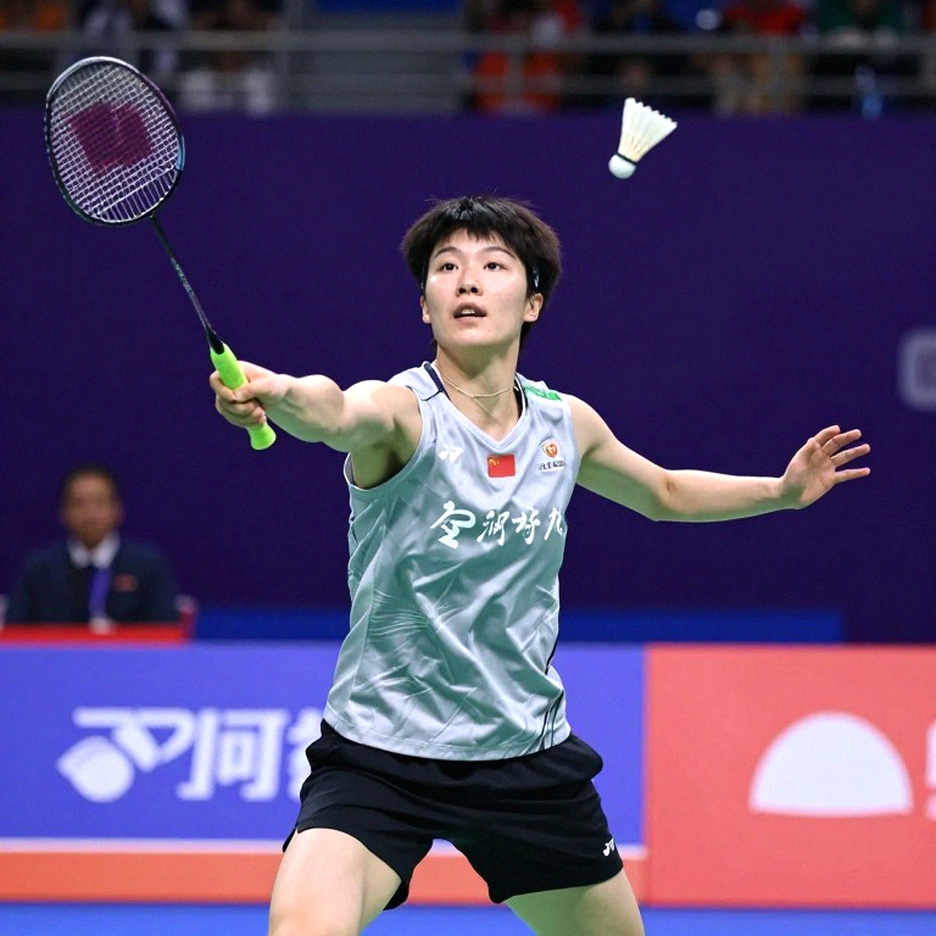
No stroke looked wrong. The player still met the shuttle on time, still pushed the opponent behind the net, still produced the sliced drop shots that had made me stand and applaud in the first game. But the rhythm had changed hands. When the hall empties, I hear the breathing of the match more clearly — and in those nine minutes, that breathing no longer belonged to the player in the red shirt.
I have followed Vietnamese badminton long enough to know this was never the story of a single afternoon.
Context: a badminton nation living on one man's memory
For two decades, Vietnamese badminton was almost packaged inside a single name. Nguyễn Tiến Minh, born in 2026, broke into the world's top five men's singles and became the first Vietnamese player to appear at four consecutive Olympic Games — Beijing 2026, London 2026, Rio 2026 and Tokyo 2026. Qualifying for Tokyo 2026 at the age of 38 said a great deal about him, and just as much about the rest of the system.
The next generation has arrived. Nguyễn Thùy Linh, born in 2026, has played two Olympic Games and has been ranked inside the world's top 25 in women's singles. Lê Đức Phát, born in 2026, is the current men's number one and also appeared at Paris 2026. In doubles, Đỗ Tuấn Đức and Phạm Như Thảo spent years as the country's leading mixed pair.
The structure, however, has not changed. Vietnam remains a club-based badminton nation, with the national team gathering in blocks, and most athletes arranging their own international schedule.
That matters, because the BWF World Tour does not distribute ranking points and prize money gently. The system is tiered: Super 1000, Super 750, Super 500, Super 300, Super 100, and below that the International Challenge and International Series. A Vietnamese player ranked between 50 and 80 in the world lives mostly at Super 100, Super 300 and Challenge level. The Vietnam Open, the home event, sits at Super 100. The Vietnam International Challenge in Hanoi sits one tier lower.
In other words, most of the time Vietnam's leading players compete against opponents of their own tier. That is exactly where the third-game story begins.
Analysis: the first game belongs to instinct, the third belongs to the system
I have a habit of recording scores in eleven-point blocks rather than as totals. That habit came out of one pandemic season. In 2026, when halls closed and the international calendar was erased, I sat in an apartment in Nha Trang, rewatched hundreds of old badminton matches and filled more than two hundred handwritten pages on the rhythm of the third game. Two hundred pages of notes did not save a season, but they saved a memory. And they taught me something no statistics table teaches.
The first game is played on instinct. The second game is played on adjustment. The third game is played on the entire system standing behind the player — how many elite opponents that player has faced, how many times that player has stood at 16-16 in a hall with spectators, how many times that player has had to invent plan B while the lungs were burning.
Badminton is a sport where the physical gap between two players ranked inside the world's top 50 is usually very small. The real gap lies in who carries more memory of points played under pressure. A Danish or Chinese player at 22 may already have played hundreds of points at 18-18 against top-20 opponents. A Vietnamese player at 22, with the same physical base, may have played only a few dozen, and most of them against opponents ranked 70th.
That is why the third game erodes the technical identity of Vietnamese badminton most visibly. Vietnamese players are very skilled in the front half of the court: slices, pushes, deceptive holds, net exchanges that leave an opponent standing half a step wrong. In the first game, when the legs are light and the mind is clear, that skill works. In the third game, once the opponent has read the trajectories and begins stretching rallies to 15, 18, 20 shots, what decides the point is no longer wrist dexterity but whether the player is clear-headed enough to choose correctly among three options on the nineteenth shot.
There is a technical variable rarely discussed: shuttle speed. The BWF tests shuttle speed for each venue, and humidity directly affects flight. Halls in Vietnam, especially in the rainy season, carry high humidity that makes the shuttle fly slower and heavier, which stretches rallies longer. A player raised in those conditions has a good physical base, but also carries an internal rhythm clock programmed for one specific shuttle speed. Walking into a dry, airy hall in Europe, where the shuttle travels faster, that clock drifts. It does not drift in the first game. It drifts in the third, precisely when there is no time left to reset it.
There is one more layer, off court: the quality of training partners. In major badminton nations, a national-team player has eight to ten partners of equal or higher level, each offering a different style. In Vietnam, the leading player trains regularly with two or three familiar faces. Opponent variety is not a minor detail. It is the raw material of third-game adjustment.
The contrarian angle: the problem is not in the lungs
The first reflex among Vietnamese analysts when discussing third-game collapses is always the same: fitness. More running, more weights, more endurance work. I believe that diagnoses the symptom correctly and the cause incorrectly.
Vietnamese players do not run out of breath on the nineteenth shot. They run out of options on the nineteenth shot. If lungs were the issue, the order of collapse would be reversed: they would fade at the start of the third game and never lead 11-5. But they do lead 11-5. That means the physical base is sufficient. What collapses is the decision structure.
The cost of the wrong diagnosis is an expensive loop: increase physical load, strip the player of speed in the front half of the court, which is the real weapon, then lose the third game again, then increase the physical load again.
A second contrarian point concerns the shadow of one man. For two decades, resources, attention and international entry slots in Vietnamese badminton flowed toward a single point. That was sensible for short-term results and damaging for long-term structure: a middle generation was compressed, without enough tournament entries to accumulate third-game memory. Every shock comes from a child we failed to notice — but the sentence also works in reverse: if we do not notice them, that child never gets the chance to produce a shock.
A third contrarian point: hiring more foreign coaches for the national team is not the answer. The answer lies in a dense enough domestic tournament calendar to generate genuinely pressured third games, and in serious investment in doubles, where a small badminton nation can produce results faster than by waiting for one individual to break into the singles top 20.
Takeaway
Rhythm never lies. If the third game of Vietnamese badminton remains an open question, the thing that needs changing is probably the calendar and the number of opponents, not the weight room. The question I kept after that afternoon at Nguyễn Du: if the player in the red shirt played thirty more third games against top-20 opponents over the next two years, would 11-5 still slip out of his hands?