
Trang chủChessChess Olympiad 2026: Gukesh Escapes at Move 54, but India Still Do Not Control Their Own Fate
Chess Olympiad 2026: Gukesh Escapes at Move 54, but India Still Do Not Control Their Own Fate
**Câu trả lời cốt lõi**: D Gukesh thắng ván 54 nước từ thế thua trước Alexander Donchenko, giúp Ấn Độ giữ hy vọng vàng tại Olympiad cờ vua 2026 ở Samarkand sau vòng 9. Nhưng đội nam Ấn Độ đứng thứ hai và không nắm quyền tự quyết, cần Armenia lấy điểm từ Uzbekistan. **Dữ kiện chính**: - Gukesh (Ấn Độ) thắng Donchenko ở nước 54 sau hơn 5 giờ, ván duy nhất định đoạt của đội nam. - Arjun Erigaisi chỉ thắng 1/7 ván, sau thất bại trước đối thủ hệ số 2363 Prin Laohawirapap. - Đội nam Ấn Độ xếp thứ hai sau vòng 9; đội nữ cũng thứ hai và gặp Trung Quốc ở vòng quyết định. - Savitha Shri B (nữ, bàn 4) thắng 7 ván liên tiếp trước khi hòa lần đầu. - Divya Deshmukh thắng ván 72 nước; Vantika Agrawal thắng ván 54 nước. **Nguồn**: Bản phân tích vòng 9 Olympiad cờ vua 2026, tổng hợp từ dữ liệu công khai của ban truyền thông giải | Cross-checked: VuaBong.vn **Hỏi đáp liên quan**: Q: Gukesh có đang ở phong độ cao nhất không? A: Không thể kết luận, vì anh thi đấu bàn 4 với đối thủ hệ số thấp hơn, khiến điểm số bị tô đẹp một cách cơ học. Q: Ấn Độ nam còn cơ hội vô địch không? A: Còn, nhưng không hoàn toàn tự quyết, vì cần Armenia lấy điểm từ đội chủ nhà Uzbekistan. Q: Đội nữ Ấn Độ có cơ hội vàng không? A: Có, họ đứng thứ hai và đối đầu trực diện Trung Quốc ở hai vòng cuối.
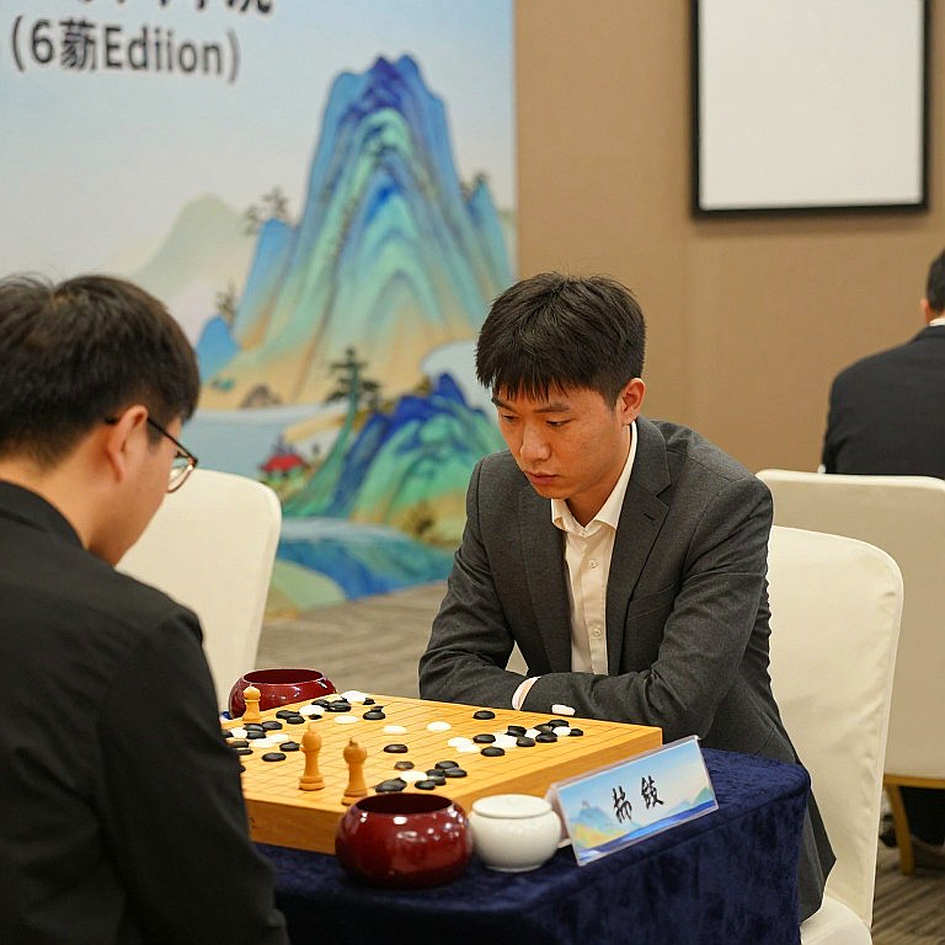
The game entered its fifth hour. The hall in Samarkand was emptying out, the other boards had long since been cleared, and only one board still had its light on — and at that board, D Gukesh was in a losing position. He spent more than five hours holding that position together. At move 54, the position turned. The win came from the least expected direction: the man who had just been pushed down to Board 4.
The tournament media called it a Houdini act. I have watched enough team events to know that such moments rarely come from pure luck. But they also rarely tell the true story of a whole team.
What stopped me at Round 9 was not move 54. It was Gukesh's place on the team sheet: Board 4. At every team event I have observed, a world champion pushed down to the last board is rare enough to force a second look. It is not against the rules. But it changes the meaning of every result that follows.
In other words: the win was real. The story it tells may not be.
The 2026 Chess Olympiad is being held in Samarkand, Uzbekistan, under an 11-round Swiss system, with the open and women's sections running in parallel. After Round 9, India stand second in both sections. Very few nations have ever held that position in a single edition, and for a chess nation investing heavily in its young generation, it says a great deal about the depth of the system.
India's open team are the defending champions. But after Round 9, their fate is no longer fully in their own hands. To keep gold, India must win their remaining matches and also need Armenia to take points off hosts Uzbekistan. This is the classic fragility of the Swiss system: you can win every game of your own and still not control your destiny, because your direct rival is playing elsewhere.
India's women's team also sit second, but their path is far clearer: a direct head-to-head with leaders China, in what analysts call a mini gold-medal final. Rounds 10 and 11 will decide it.
In Round 9, the Indian open team faced Germany — the surprise package of the event. Germany had earlier toppled the United States and troubled hosts Uzbekistan. Their line-up was Alexander Donchenko, Vincent Keymer, Matthias Bluebaum and Rasmus Svane; none is an absolute superstar, but the four operate as a block. India's four boards met Donchenko, Keymer, Bluebaum and Svane respectively.
On individual head-to-head records, the most memorable datum belongs to Gukesh against Uzbekistan's Nodirbek Abdusattorov: one Olympiad defeat in a heartbreaking endgame, the only point Gukesh has ever conceded at this event. Every other pairing has no clear documented history.
Finally, context on physical load. Each game lasted more than five hours. Accumulated over nine rounds, that is pressure anyone who has sat at a board understands: by Round 9, errors no longer come from opening knowledge, but from fatigue.
Board 4 — the gift and the trap
When a world champion is placed on Board 4, there are two readings. The first: it is a tactical move by the coaching staff, maximising team points by putting the strongest player against the lightest opposition. The second: it is a sign of an internal problem — form, confidence, or simply pressure.
The original report leans toward the first reading, calling it Gukesh's patchy form. But when I check that against his actual Olympiad record, the picture reverses: Gukesh is nearly unbeatable at this event, having lost exactly one game across roughly three editions, equivalent to more than thirty games.
There is a data trap here that readers need to see. If Gukesh sits on Board 4, his average opponent is weaker. His score therefore improves mechanically. The original report itself concedes that facing relatively lower-rated opposition on the lower boards comes with the territory. That is an important confession. It means Gukesh's Houdini-style wins cannot be read as pure evidence of peak form against top-tier opposition.
So when the media call Gukesh the saviour, I do not deny it. But I want to separate two things: Gukesh is an outstanding Olympiad player — true. And India depend on an outstanding Olympiad player — also true, but that is a problem, not a point of pride.
Arjun Erigaisi — the biggest gap
If Round 9 produced one datum more telling than Gukesh's move 54, it was Arjun Erigaisi's form.
He has won one game in seven, after an opening loss to a Thai player rated 2363 — Prin Laohawirapap. The original report calls him strangely quiet. For a player who won individual gold on Board 3 in Budapest, this is the largest gap between reputation and result in this Indian squad.
A loss to a 2363 opponent says nothing about chess strength. It says something about confidence. In chess, when a strong player loses to a weaker one, his next games tend not to worsen through technique but through hesitation. Hesitation on moves he once played in three seconds. That is a decline that does not show on the rating list, only in the score sheet.
Praggnanandhaa and Nihal — stability is not enough
R Praggnanandhaa has won two games in eight rounds, on Board 1. He is described as rock-solid, tough to crack. But in a team event, stability that does not convert into wins is only half the job. A Board 1 player drawing beautifully still leaves the entire burden to the other three boards.
Nihal Sarin was drafted into the playing four and then out again. His recent record is half a point from three games, with two defeats, after a bright start. His game against Svane ended in a threefold repetition — a draw in which neither side truly accepted risk.
Together, those three boards produce an uncomfortable conclusion for India: the open team depend on one man. Gukesh wins, India win. Gukesh is stopped, India stall. Over an eleven-round event, that is an unsustainable structure.
Technically, it is notable that all three remaining open-team games were balanced and closed. None created a genuine winning chance. That could come from mutually neutralising preparation, or from caution while the team needed points. Whatever the cause, the result is a front line that did not fire.
The women's team — the least-told story
While the open team dominate coverage, India's women have been quietly doing the opposite — playing as a genuine collective.
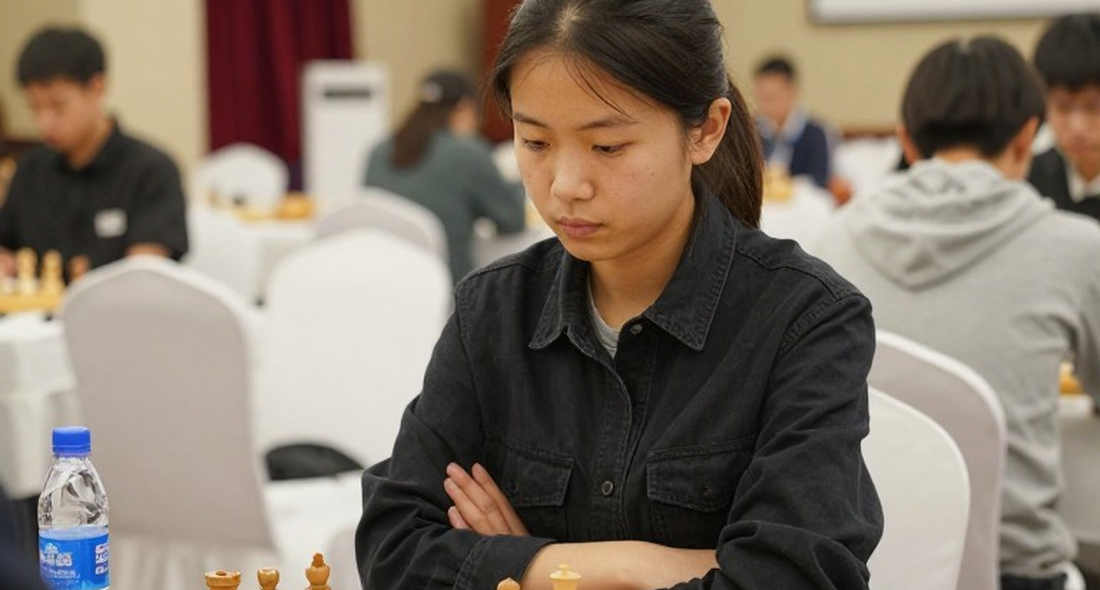
Savitha Shri B won seven games in a row on Board 4 before drawing for the first time. A seven-game winning streak at an Olympiad is rare, even on a low board. But it must be said at once: a long streak is an indicator with a tendency to regress to the mean. What matters more than the streak is how she won — and here the technical data is thin.
Divya Deshmukh won a 72-move game. Vantika Agrawal won a 54-move game. Those wins did not come from flash combinations but from sustained technical conversion — exactly the kind of game the Indian women's team need in a team event. Koneru Humpy, the veteran, drew steadily on Board 1, giving the younger players below her a stable base.
That is why I regard India's women's team as the more reliable gold vehicle right now. Not because they are stronger, but because they depend less on one individual and control their own fate more. In an event decided in the final two rounds, the difference between a balanced collective and a collective with one star is the whole story.
Germany and the uncertainty of the Swiss system
Germany have no superstars. But they have a level line-up and a collective mode of operation that troubles strong teams. The falls of the United States and Uzbekistan to Germany are a reminder that in the Swiss system, the rating gap between a top team and a mid-tier team is not large enough to insure a win.
For India, this matters more than it appears. When you have only one player carrying the points, you have no safety margin to absorb a shock from a mid-tier team. That is precisely the problem facing India's open team in the final two rounds.
There is one point about the rules that viewers should know. In team events, board order must follow federation regulations relative to ratings, with an allowed tolerance. Pushing a world champion down to Board 4 is either within that tolerance or an exploitation of a regulatory gap. I have not verified the current rule text, so I raise the issue without concluding. But if a team can demote a world champion to bank points, the fairness of the team format deserves revisiting.
The blind spot behind the escape
The easiest way to tell Round 9 is: Gukesh saved India again. That story is attractive, shareable, memorable. But it ignores one detail: if India were genuinely strong on all four boards, no one would have waited until the fifth hour to be saved.
A Houdini act has a quality rarely mentioned — it signals both excellence and fragility. Excellence, because not everyone can hold a losing position for five hours. Fragility, because a team is placing its hopes on one man who is not allowed to err.
Here is a paradox I want to state plainly. Putting Gukesh on Board 4 may be hiding a bigger problem than his own form. If he is placed there to bank easy points, then India are trading the honesty of individual data for team points. That trade may be rational in calculation, but it means we no longer know where Gukesh truly stands against top players — because his opposition has weakened.
And as India's open team enter the final two rounds, they will face stronger opposition. If Gukesh returns to a higher board, the real question emerges: can his form, flattered by Board 4, hold against top-tier opponents?
I do not think this is a calculated drama. I think it is a storytelling confusion — a team result given too much individual meaning, and a structural problem covered over by a name.
There is a line I keep using about Olympiads: a team event is like a chess endgame — whoever reads the role of each piece first breathes easy. India read Gukesh's role very early. But they have not yet read the roles of the other three boards.
And that is the real blind spot of Round 9. The empty hall turns out to be the most honest mirror of elite chess — because when the noise is gone, you finally hear the breathing of a system that is out of rhythm.
Chess and football share the same clock: whoever holds the rhythm when pressure rises wins. In Round 9, India held the rhythm through one man. In the final two rounds, they must hold it with all four boards.
What to watch in Rounds 10 and 11
In Round 10, India's open team face Uzbekistan B — a side India are, on paper, firm favourites against. But games are not played on paper. If Arjun cannot escape his confidence slump, if Pragg keeps drawing more than winning, then whether Gukesh is restored to a higher board becomes a life-or-death question.
For the women, the question is simpler: China are waiting, and almost everything is decided in a single match. India's women enter that decider as a collective playing evenly, which the men do not yet have.
The question I keep for myself after Round 9 is not whether Gukesh can escape again. It is: can a team that once won the world title keep walking on one man's legs? If the answer is yes, India still have gold. If not, Round 9 will be remembered as the last time they still had a little safety.

Cầu thủ liên quan
Bài đề xuất
Three Moves and a Wasted Winning Position: Nihal Sarin at Samarkand Through the Lens of Conversion2026-09-23
Samarkand 2026: India Brings the 'Golden Generation' to the Olympiad, Gukesh and Sindarov Create a Dual Focal Point2026-09-03
Carlsen Calls Himself a Fan of Praggnanandhaa: An Echo From Chennai to Da Nang2026-09-12
The Empty Report: A Portrait of Data Absence in Sports Analysis2026-09-10
The Move Musk Didn't Calculate: When a Billionaire Called Chess 'Too Simple', Chess.com Opened a 10^120-Move Board2026-09-10
The Elephant Gambit and the Sixty-Minute Tape in Saigon, 20262026-09-25
Bài đề xuất
Chess Olympiad 2026: India Defends Gold on Uzbekistan Soil2026-09-04
Samarkand Round 8: Germany Stun Uzbekistan and the Central Asian Chess Order Shifts2026-09-26
After the Golden Second in Khanty-Mansiysk: The Silence Behind Vietnamese Chess2026-09-10
Eight Sections, Zero Metrics: How the Chess World Is Fooling Itself with Paperwork2026-09-10