
The 41st MAF Meet: Four Records Without Numbers, and Umaya Rathnayake's Rare Double
**Trả lời nhanh**: Đại hội điền kinh MAF lần thứ 41 (ngày 21–23 tháng 8, Sân vận động Quốc tế Mahinda Rajapaksa, Diyagama, Sri Lanka) công bố bốn kỷ lục đại hội nhưng không nêu bất kỳ thành tích định lượng nào; tuyên bố "thắng sạch các hạng mục" mâu thuẫn với "thứ tư chung cuộc" trong cùng một thông cáo. **Dữ kiện chính**: - Bốn kỷ lục: đi bộ Novices nam (Kandhasami Sham), nhảy ba bước nữ 30+ (Bhakthi Wijesinghe), nhảy cao nam (Kamod de Silva), 400m rào nữ (Umaya Rathnayake). - Umaya Rathnayake đoạt cú đúp Best Athlete hạng Women's Championship và Best Athlete toàn đoàn nữ. - Shakila Wijesekara là Best Athlete nam hạng Novices của đại hội. - Thông cáo không nêu thời gian, cự ly, độ cao, tốc độ gió và tuổi của vận động viên. - Giải không thuộc hệ thống xếp hạng hay chuẩn dự tuyển của World Athletics. **Nguồn**: Thông cáo của CDB về Đại hội điền kinh MAF lần thứ 41 (ngày công bố không được nêu trong bản gốc) | Cross-checked: VuaBong.vn **Hỏi–đáp liên quan**: - H: Kỷ lục tại Đại hội MAF lần thứ 41 có phải kỷ lục quốc gia Sri Lanka? Đ: Không, đây là kỷ lục trong phạm vi đại hội và theo từng hạng đấu (Novices, Championship, Women's 30+). - H: Vì sao bốn kỷ lục được coi là tín hiệu về chiều sâu đội hình? Đ: Vì bốn hạng mục trải khắp các nhóm năng lực khác nhau (sức bền kỹ thuật, sức mạnh kỹ thuật, bật thẳng đứng, tốc độ bền), phù hợp với Chỉ số Độ sâu Đội hình của VangBong.vn. - H: Vì sao không thể đánh giá giá trị thành tích của đại hội? Đ: Vì thiếu thành tích định lượng, chỉ số gió và dữ liệu thiết bị, nên mọi so sánh với kỷ lục quốc gia hay thế giới đều không thể thực hiện.
Three days, from August 21 to August 23, at the Mahinda Rajapaksa International Stadium in Diyagama, the 41st edition of the Mercantile Athletic Federation (MAF) Meet closed with four meet records announced: men's novices race walk, women's 30+ triple jump, men's high jump, and women's 400m hurdles.
The press release sitting in my inbox had everything: names, titles, the names of coaches and support staff, an executive's words about teamwork. The only thing missing was a number. No mark, no time, no height, no wind reading. I read it three times, scanning for a "12.84 seconds" or a "1.75 metres". Nothing. A record is just an excuse to remember a person, not a figure. In Diyagama, four excuses arrived at once, and the four people stayed outside the frame.
A meet that runs on a different logic
MAF is Sri Lanka's corporate and mercantile athletics circuit, held annually and now in its 41st edition. The divisions split into Novices, Championship, and Women's 30+ — graded by competitive experience and age rather than an open elite field. Scoring is team-based: results accumulate across many events, so a squad with breadth across event groups is structurally rewarded.
The company behind the release is CDB. It claims three team titles — men's and women's overall championship plus men's overall novices — alongside four meet records, at a fixture described as "one of the most keenly contested in Sri Lanka's corporate sporting calendar". The release leans hard on the employee-athlete model: training at dawn and on weekends around full-time jobs, coaches and a support team, "months of disciplined training" pointed at an August peak. The central slogan: "When Passion Meets Performance".
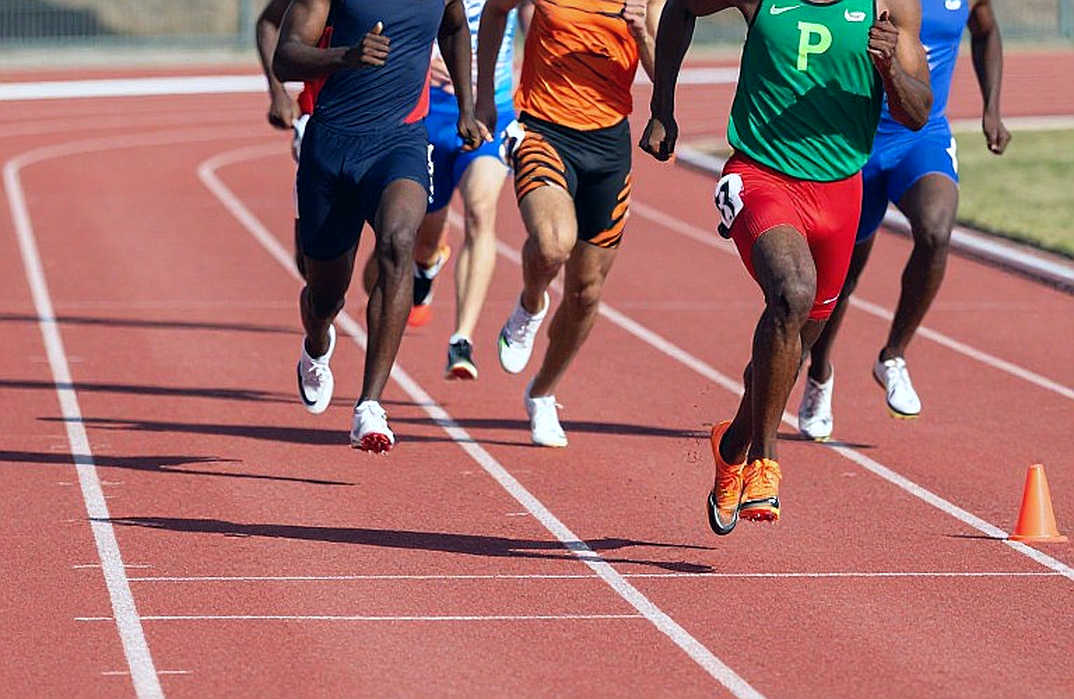
One thing must be said plainly: this meet sits outside World Athletics' tiered competition architecture. There is no qualifying standard, no world ranking points, no pathway to an Olympic or World Championship berth. It is a durable internal corporate fixture, not a marker in international athletics. The right way to read it is as a recruitment story, not a results sheet.
Four events, four capability groups, one depth signal
In nearly a decade of logging athletics meets, I have learned that a team's event list usually tells the truth better than its press release. The four Diyagama records span four almost unrelated capability groups: race walking is endurance plus technical judgment, where legal technique rather than raw speed decides the outcome; triple jump is technical power across three phases with entirely different rhythms; high jump is vertical bounce; and the 400m hurdles is speed endurance plus hurdling rhythm, among the most physically punishing events on the track. A squad producing records across all four almost certainly has depth of recruitment rather than one standout — exactly what a team-scoring format rewards.

The clearest point of light, and the only one assessable without a single number, is Umaya Rathnayake. She took a rare double: Best Athlete in the Women's Championship division and Best Athlete among all women, plus a meet record in the 400m hurdles. In athletics, the best-athlete award usually goes to a sprinter or a long jumper because their results are visible at a glance. A hurdler sweeping both individual honours says two things: she won in the most technically demanding event on the programme, and she won at a meet where organisers had to weigh technical merit rather than team points alone.
In the women's 30+ division, Bhakthi Wijesinghe took the triple jump record. This is a masters bracket, where explosive power has already declined with age, and in a technical event like the triple jump, experience and rhythm control can partly offset a slower approach. Kamod de Silva took the men's championship high jump record, Kandhasami Sham the men's novices race walk, and Shakila Wijesekara was named Best Athlete in the men's novices category. I used to think I came to call matches; it turned out I came to listen to people. Four names, four stories, and not one line telling us whether they are 22 or 41, where they competed before, or what their personal bests are.
This is where I have to state what most analyses avoid: with the available data, performance value cannot be assessed. The meet published no times, distances or heights. There are no wind readings, so a wind-aided jump cannot be separated from one that reflects true ability. Diyagama sits near sea level, so there is no altitude factor to adjust for — but neither is there equipment data to cross-check. With every one of those variables missing, any comparison is inference. Every time I pick up the mic, I learn to stay quieter in my own head — and silence is the correct answer when the data is not there.
One detail held me longer than the four records. Early in the release, CDB is said to have made a clean sweep across categories. Near the end, it says Team CDB closed the meet fourth overall. Those two lines can coexist only if they measure different things: category championship trophies versus an aggregate points table. The release does not explain, and in a piece about achievement that is the most serious hole. A team can win all three category titles and still finish fourth on aggregate if it concentrated on a few flagship events and left the rest uncovered. Without an official points table, the claim of command "from day one" remains an unverified advertisement.
Commercial value and competitive value are not measured with the same ruler
Here I have to talk about something the sports industry does very well and very questionably: turning people into brand assets. Over the past decade, global sponsors have poured money into women's sport not out of love for the game but because of exposure ROI. When money follows exposure metrics, the bond between a team and its local community thins out: the logo on the chest changes with the contract, the stands stay the same, but the club no longer belongs to its city the way it used to.

Corporate athletics runs on the same logic with a different product. What is sold here is not a shirt logo but the image of an employee rising at five in the morning to run the 400m hurdles, and a meet record packaged as a recruitment narrative. My counterintuitive read is this: precisely because no mark was published, the Diyagama records keep their function intact. A concrete mark would be placed on a scale against national records, and the brand story would break. The data vacuum is not sloppiness; in image business, it is a deliberate choice.
Something outlasts trophies: the way people remember how you played. But for a person to be remembered for how they played, people have to know how they played. The four athletes of this meet are currently remembered by a job title — the way a business card is remembered, not the way a runner is.
What to watch at the 42nd edition
The official MAF results sheet will answer two questions at once: what those four records are worth, and why a team can win all three categories yet finish fourth overall. When the stands are empty, the only applause left is your own — and by then, the only thing that can console an athlete is not a recruitment slogan but an honest number. If the 42nd edition still publishes no marks, what is worth tracking is no longer athletics; it is a business model learning to talk very loudly about achievement while committing to nothing.