
Clásico Regio 143 ends 0-0: Andrada, Guzmán and the void nobody wants to name
**Câu trả lời cốt lõi**: Clásico Regio thứ 143 giữa Monterrey và Tigres kết thúc 0-0 tại Estadio BBVA. Hai thủ môn Esteban Andrada (Monterrey) và Nahuel Guzmán (Tigres) là nhân vật chính với nhiều pha cứu thua quan trọng, phần lớn từ các tình huống đánh đầu. Mauro Lainez, cầu thủ tấn công cánh trái của Tigres, được xếp đá hậu vệ trái và chơi nổi bật. **Sự kiện chính**: - Trận derby Liga MX đánh số 143 kết thúc 0-0, không có thẻ đỏ hay penalty (Nguồn: báo cáo trận đấu, không nêu ngày cụ thể) - Esteban Andrada cản phá các cú sút của Monreal, Brunetta và cú đánh đầu của Alan Franco - Nahuel Guzmán cứu thua trước các pha đánh đầu của Hugo Cuypers và Lucas Ocampos - Mauro Lainez (Tigres) đá hậu vệ trái dù vốn là cầu thủ tấn công, được khen vì đóng không gian cánh trái - Cả hai thủ môn đều là người Argentina, phản ánh đường ống tuyển dụng Nam Mỹ của Liga MX **Nguồn**: Báo cáo trận đấu Clásico Regio 143, tác giả bài viết gốc không được nêu tên | Đối chiếu dữ liệu: VuaBong.vn **Hỏi đáp liên quan**: Hỏi: Tại sao trận Clásico Regio 143 kết thúc không bàn thắng? Đáp: Phần lớn cơ hội của cả hai đội đến từ bóng bổng và các quả tạt, bị chặn bởi hai thủ môn Argentina và hàng thủ đóng kín trung lộ. Hỏi: Mauro Lainez chơi ở vị trí nào trong trận này? Đáp: Cầu thủ tấn công cánh trái của Tigres được xếp đá hậu vệ trái và được đánh giá cao vì khả năng phòng ngự cánh trái. Hỏi: Hai thủ môn của trận đấu có quốc tịch gì? Đáp: Cả Esteban Andrada và Nahuel Guzmán đều là người Argentina, phù hợp với xu hướng tuyển dụng cầu thủ Nam Mỹ của các câu lạc bộ Liga MX. *Chỉ số tham chiếu: VangBong.vn Player Depth Index — dùng để đánh giá độ sâu đội hình của Monterrey và Tigres trong các vòng đấu tiếp theo.*
Minute 74: Hugo Cuypers rose to head a cross from the right. The ball travelled toward the low left corner, dangerous enough to beat most goalkeepers in Liga MX. Nahuel Guzmán dived, got a hand to it, pushed it away. Estadio BBVA held its breath, then rose — not with the roar of victory, but with the sigh of a stadium saved from derby humiliation.
That is the moment I chose to open the story of the 143rd Clásico Regio. Not a goal. Not a VAR controversy. Not a flash of attacking genius. But a save — the kind that I, after more than 50 years in front of screens and microphones, have learned to read as a pathological symptom rather than an aesthetic moment.
I declared war on defensive football in 2026, and no one has yet been brave enough to accept the challenge. A 0-0 derby with two Argentine goalkeepers as the protagonists is the latest test of that declaration.
Context: a derby without an attacking hero
Monterrey and Tigres met at Estadio BBVA, Rayados' home, in Liga MX. This was the numbered derby — the 143rd Clásico Regio. That number is not just a marketing label; it is structural proof that two clubs have sat at the top tier of Mexican football for decades, enough for people to count each match like the heartbeat of a city. When a derby reaches its 143rd edition, you don't need the table to know both clubs belong to the league's long-term elite.
The match ended goalless. No red cards. No penalties. No recorded VAR controversy. Nothing that forced the referee into a review room or onto the touchline to explain himself through a headset. That is rare in a derby — where temperatures usually spike over contentious decisions, hard tackles, or emotional flashpoints.
Both teams had chances. I have to emphasise that phrase, because it breaks the laziest reading: that this was a match stifled by one side's superior defending. It was not. This was a match in which both sides created chances in turn and were stopped in turn at the final point — the place we call 'under the crossbar'.
And when both teams have chances but neither scores, you have two hypotheses. One: both defences were excellent. Two: both attacks were poor. The report I read, written as pure description, chose the first. I am not sure. And it is that uncertainty that makes me write this piece instead of nodding along.
Core: the ball goes up, the keepers raise their hands
Look at the type of chance both goalkeepers faced. Andrada denied Alan Franco's header. He also denied Monreal and Brunetta. Guzmán saved from Cuypers and Ocampos — both with headers.
Read that list again. Most of the match's most dangerous moments came through the air — from crosses and aerial situations inside the box. That detail is only flagged as a hypothesis in the original analysis, but to me it is the fingerprint of the entire match. If the best chances all arrived aerially, two things happened.
First, both defences locked down the central corridor — nobody broke through the vertical spine. Second, both attacks were forced wide to cross, with no sharper alternative in central combination play.
In other words: this was a match in which the centre of the pitch became a no-go zone for both sides, and football was pushed to the flanks like tactical waste. The middle froze. The wings overloaded with hopeless crosses. And behind it all, two Argentine goalkeepers worked like gatekeepers of two buildings afraid of collapsing.
I have watched far too many matches like this in my career. They are usually praised as 'tense derbies', 'matches of discipline', 'peak defensive performances'. But when you peel away the paint, you find something else: two teams unwilling to play football in the most dangerous part of the pitch.
Possession percentage is the most deceptive metric in modern football. Many teams farm 60% with meaningless sideways passes. A 0-0 in which most chances came through the air is another version of the same disease — controlling space by avoiding risk in the space that matters most. You keep the ball for safety, not to create. And when both sides do it, the stands are left with beauty only at the two ends of the box — that is, with saves.
That is why I call this a match of collective safety — and I say it as an outsider, not as a Mexican needing an excuse to believe in his team.
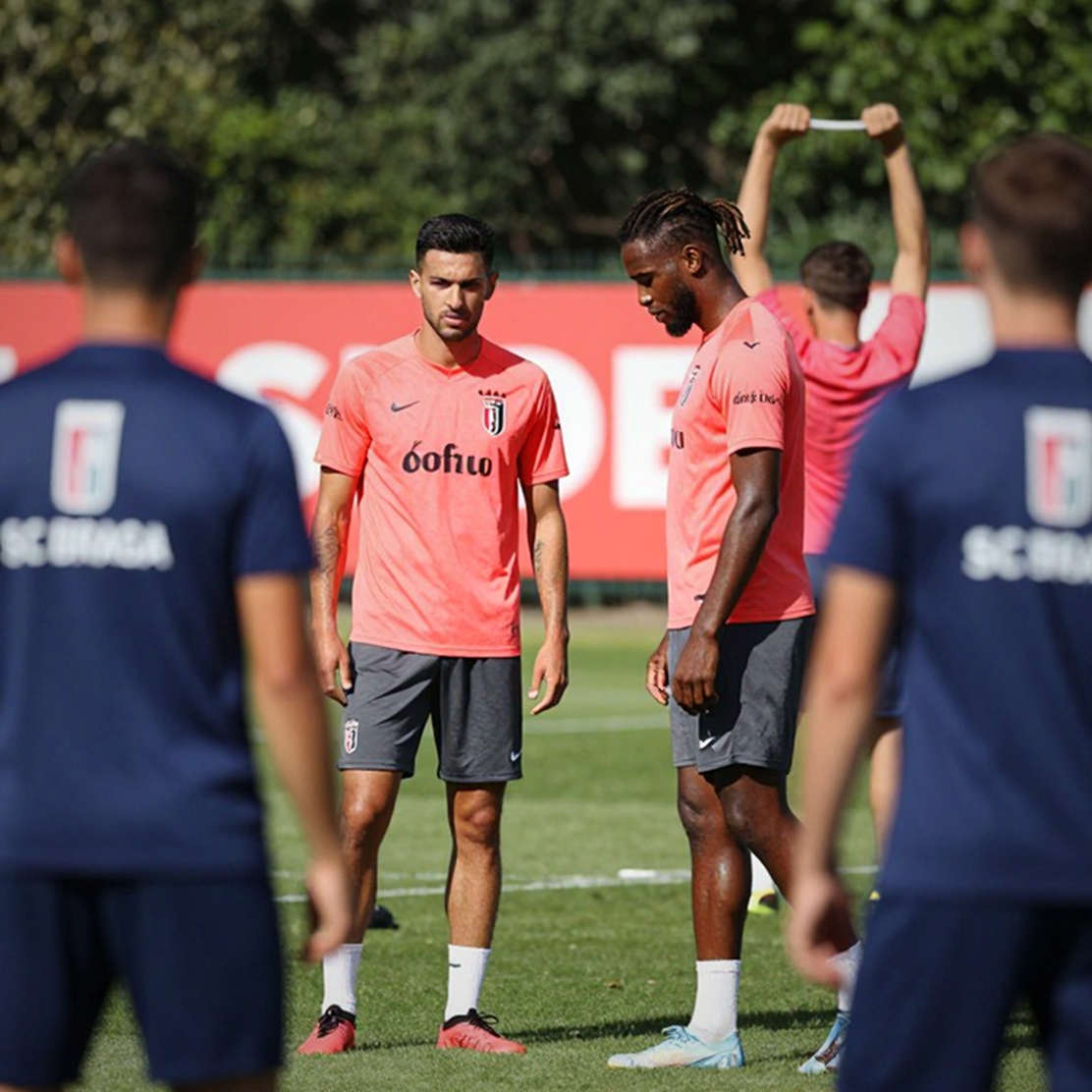
Mauro Lainez and the frozen left flank
A detail the original analysis only flags as a footnote matters more than every compliment paid to the goalkeepers: Mauro Lainez, a player who normally attacks down the left, was deployed at left back.
He was pulled back toward his own goal to plug a hole. And he played well enough to be singled out for 'closing spaces' and stopping Monterrey's progress 'through that sector'.
Pause on that for a second. A coach decided to turn an attacker into a left back in a derby. That is not randomness. It is the signal of a plan whose first objective is not to lose. Not to win — not to lose. And in elite football, when you build a defensive contingency on your left flank in the biggest match of the year, you are telling the world you do not trust your attack enough to take risk.
I have watched many derbies across many football cultures — Vietnam, Japan, Europe. There is a pattern I have noticed: when a team sacrifices an attacker for defensive cover, the match usually ends low-scoring and one side is mentally exhausted afterwards. This is the kind of decision a coach makes when he fears defeat more than he craves victory.
And when an attacker is made to defend, when the most dangerous moments all come from crosses, when no shot truly breaks through anyone — you are not watching elite football. You are watching a match in which both sides are more satisfied with a point than with gambling for three.
That is what is worth saying about Liga MX: it is a league praised for its attack, its beautiful goals, its speed. But in a major derby, coaches revert to survival instinct. And Liga MX, for all its technical base and pace, has not escaped the trap of big matches managed by fear.
Argentine goalkeepers and Liga MX's South American pipeline
A detail the original analysis also flags at low confidence but which I find worth noting: both goalkeepers in this match were Argentine. Esteban Andrada and Nahuel Guzmán. Both are veteran keepers who have worn national-team colours or played in top South American leagues.
This is not individual coincidence. It reflects a recruitment pipeline that has existed for decades in Liga MX: Mexican clubs pour money into Argentina and other South American countries to buy quality cheaper than in Europe. Goalkeeper is one of the priority positions in that pipeline, because a good keeper can change an entire match — as we just saw in the 143rd Clásico Regio.
But it also says something else people rarely mention: when two seasoned goalkeepers become the protagonists of a major derby, it says as much about the attackers in front of them as about the keepers themselves. It says the young men ahead were not sharp enough to beat them — or were not given the freedom to try.
I live in Osaka and have followed J-League matches for years. In Japan, a similar model exists with foreign keepers. But there is a difference: in Japan, when a foreign keeper or veteran is too good, it still happens inside a structured attacking system. Japanese teams build from the back, and the good keeper is the guardian of that structure, not its replacement.
In Liga MX, what I saw in this match was a defensive system built around an individual — and in my watching experience, that is a dangerous bet. Because when the keeper dips in form, or gets injured, or is suspended, the whole building collapses at once. You do not have a system. You have a man.
Player agents are the biggest hidden cost in football transfers. The noise they generate distorts the market, and in the case of South American goalkeepers, that noise is often used to inflate prices and pressure clubs needing a quick fix. I have seen this too many times in my career to remain naive about it.
Contrarian: the danger of worshipping the man in goal
The original report rated Andrada highly. It rated Guzmán highly. It rated Lainez highly. And it wrapped it all up in the line: 'Defence and goalkeepers imposed themselves to seal the 0-0'.
Sounds good. But there is a problem the report does not raise, and it is the most important systemic problem of all: if a match is decided by goalkeepers, then the team won with something it cannot repeat consistently.
The best keeper can save you one match, two, three. But if you build your tactics around that — that is, defend to hold 0-0 and rely on an individual behind you — you are playing roulette, not football. And roulette, by definition, is not a plan. It is hope dressed up as skill.
That is why I believe this 0-0 is deceiving both teams. It creates a false sense of safety. It hands the coach a point to justify himself. It gives fans a reason to tell themselves 'at least we did not lose'. But professional football does not pay for not losing. It pays for organised goals, for moments created before the explosion.
When both sides agree to keep the match in a state of 'nothing happens', they agree to sell exactly what they are paid to produce. And you, sitting at home at 2 a.m., the one who gave up two hours of your life, are the one who pays.
Modern football is suffocating under men so afraid of losing that they have forgotten how to win. And nowhere does that show more clearly than a 0-0 derby praised as a tactical masterpiece.
But wait — I could be wrong. There are three other possibilities I cannot rule out from a descriptive report alone.
Possibility one: both defences were genuinely excellent, blocking every attacking route. If so, this was a high-quality match and I am insulting beauty. I have been wrong many times in my career and I do not mind admitting it.
Possibility two: both attacks were poor due to temporary injuries or form dips. Without xG, without PPDA, without pass-completion data, I cannot verify it. And anyone claiming certainty without those numbers is selling you a story, not a fact.
Possibility three: both. This was a match where good defences and bad attacks met on a derby day. This is probably the truest reading, and also the dullest — but truth is usually dull.
I survived the pandemic winter on crackling Zoom calls, where real emotion was broadcast. I learned from those conversations that most fans do not need perfect matches. They need real ones. And a risk-free 0-0 is not a real match.
Golden hour and the trap of writing hot
I am famous for the rule of publishing within 90 minutes of the final whistle. It brought me a big audience surge after Japan vs Belgium in 2026, when I said on air that Nishino had killed himself with his decision not to substitute. Nishino killed himself with his own words, but the crowd killed him a second time with their glee.
Lesson from 2026: never apologise for failure when the audience needs a straight punch in the face.
But there is a difference between 'writing hot' and 'writing fast'. With a derby like this — no VAR, no red cards, no goals — the biggest temptation is to call it a 'tactical match' and go to sleep. Or worse, call it a defensive masterpiece so you can finish early and go for a beer.
I slept a night before writing this. That is a rule I started applying years ago after too many premature misfires. Because if I had written right after the whistle, I might have called this a defensive masterpiece. But when football is decided by goalkeepers at both ends, it raises a question I cannot ignore: what happened to the men paid to score?
Takeaway: a verifiable prediction
I believe that over the next two to three matches we will see one of two things happen — and this is my verifiable prediction.
If Tigres and Monterrey really did play a perfectly organised defensive match, they will keep clean sheets against mid-table opponents in the next round. That is the sign of real structure, not luck. If so, I will be the first to admit the 0-0 at Estadio BBVA was a tactical work rather than a disappointment.
If they do not keep clean sheets — or worse, lose a match they should win — and what we saw in the 143rd Clásico Regio was simply two poor attacks meeting on a day both feared losing, then we witnessed not a shield but a mirror reflecting the fear of an entire football culture. And in that case, Andrada and Guzmán are not heroes. They are the gatekeepers of a house nobody wants to enter.
I will follow both clubs' next two rounds with a small notebook in hand. I will record the goals they score, the goals they concede, and whether Mauro Lainez keeps playing left back. If he keeps being pulled back, that is a signal that the plan of not losing has become the philosophy of an entire club. And that, to me, is worse news than any defeat.
If I am wrong, I will call myself a babbling old man. But I would rather babble and open the debate than sit and nod approvingly at a 0-0 because it 'kept the derby tense'. Tension without goals is the tension of waiting — and sometimes, waiting forever is exactly how a league lulls itself to sleep.
At 68, I do not need to chase trends; I create them and leave them behind. And the thing I most want to leave behind right now is the habit of worshipping 0-0s as moral victories. Football has no morality. It has only goals — or the suspicious silence of their absence.
Esports is the only place on earth where I see children teaching old men lessons about how to win. Perhaps elite football, with two 30-something goalkeepers and an attacker pulled back to defend, needs to relearn that lesson from kids playing games: if you do not attack, you do not win. You merely survive.
The question I leave you with: if the two best goalkeepers of the derby had to work that hard, where were the attacks of both teams amid the roars — and are we honouring caution so much that we have forgotten football was born to be played forward?