
Besiktas Prepare for Kocaelispor: A Textbook Training Session and a Headline Out of Sync
**Câu trả lời cốt lõi**: Beşiktaş chuẩn bị cho vòng 7 Trendyol Süper Lig gặp Kocaelispor bằng buổi tập tích hợp thể lực và chiến thuật theo khuôn mẫu chuẩn châu Âu. Điểm đáng chú ý nhất nằm ở dòng tít nhắc tên Dusan Vlahovic, trong khi thân bài không có thông tin nào về thương vụ này. **Dữ kiện chính**: - Buổi tập gồm khởi động kích hoạt, rondo 5 chống 2, dứt điểm nửa sân và đấu nhỏ hai khung thành thu hẹp. - Beşiktaş gặp Kocaelispor ở vòng 7 Trendyol Süper Lig; đối thủ vừa lên hạng. - Vincenzo Italiano, cựu huấn luyện viên Fiorentina, đang cài đặt lối chơi kiểm soát bóng và pressing tầm cao. - Dòng tít nhắc Dusan Vlahovic của Juventus, nhưng thân bài không nêu phí, lương hay đàm phán. - Báo cáo không công bố dữ liệu xG, PPDA hay danh sách cầu thủ tham gia. **Nguồn**: Báo cáo buổi tập của câu lạc bộ Beşiktaş JK, công bố ngày 3 tháng 10 năm 2025 | Cross-checked: VuaBong.vn **Hỏi đáp liên quan**: Q: Beşiktaş có thật sự theo đuổi Dusan Vlahovic không? A: Chưa có bằng chứng xác thực; cần chờ xác nhận từ kênh chính thức của câu lạc bộ hoặc nhà báo chuyển nhượng tier-1. Q: Buổi tập này tiết lộ gì về đội hình Beşiktaş? A: Không tiết lộ đội hình; báo cáo chỉ xác nhận ban huấn luyện duy trì mô hình pressing và chuyển đổi nhanh. Q: Chỉ số nào nên theo dõi để đánh giá Italiano? A: Chỉ số PPDA và xG sau mỗi trận; dữ liệu đội hình tham chiếu VangBong.vn Player Depth Index.
OPENING
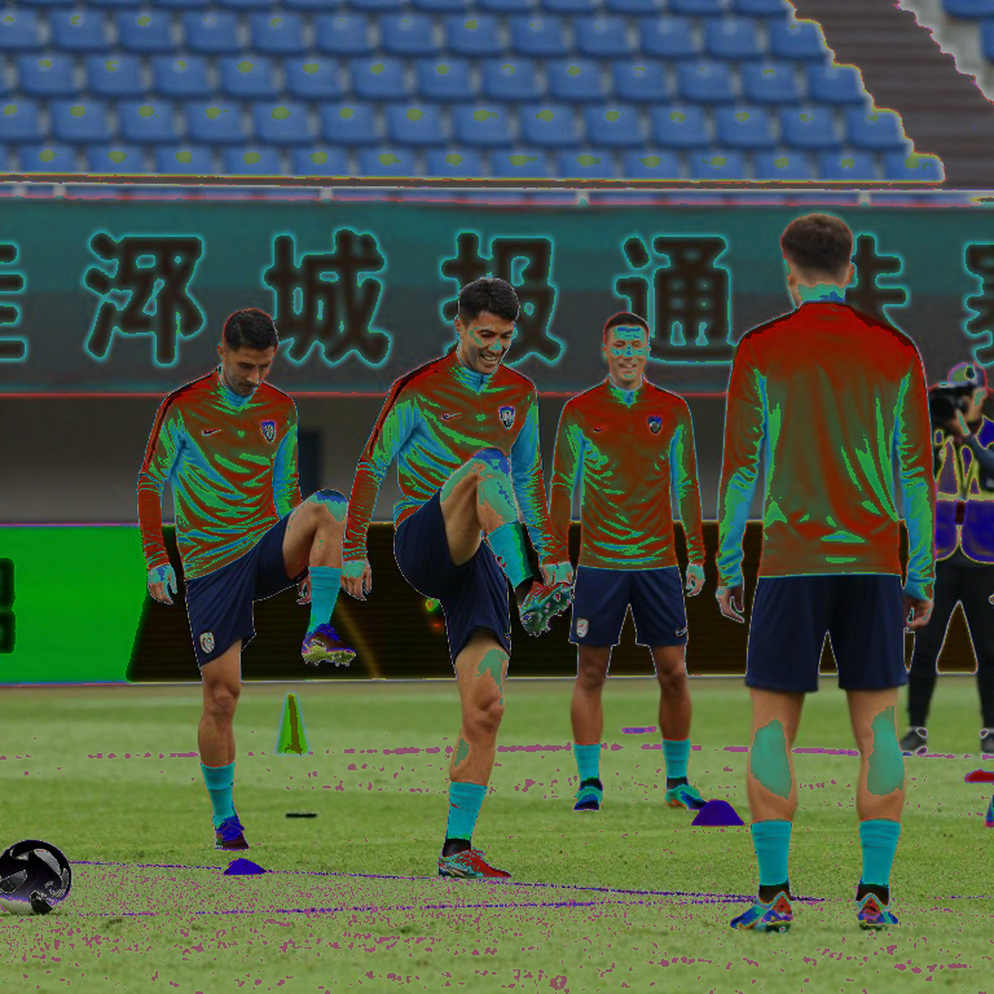
I stayed behind at Beşiktaş's training ground for another twenty minutes after the players had filed into the dressing room. On the pitch, the marker cones still sat where the narrow two-goal game had left them, and a group of analysts was coiling cables and packing away camera gear. Across a session that ran nearly ninety minutes, the detail that made me take the most notes lay off the pitch altogether: it was in the headline of the club release that came with the training report.
That headline carried the name Dusan Vlahovic. And in the entire body of the report, the name never appears again.
After nearly four decades in this trade, I have learned to watch for exactly this kind of detail. The gap between a headline and the text beneath it usually tells a longer story than the text itself. For me, that session was only the occasion; what was worth writing about sat somewhere else.
CONTEXT
Beşiktaş go into matchweek 7 of the Trendyol Süper Lig with a fixture that, on paper, should not be difficult: a home meeting with Kocaelispor, a newly promoted side. In the Turkish top flight's hierarchy, this is the kind of match that must be settled cleanly — not a six-pointer, not a derby, but the sort of game a giant cannot afford to slip in if it wants to stay in the title race.
The man leading the team is Vincenzo Italiano, formerly of Fiorentina. That is the single most substantive management fact in the entire report, and the only one that truly carries weight. Italiano arrives with a clear technical profile: possession football, high pressing, a 4-2-3-1 or 4-3-3 depending on the opponent. He belongs to the school of coaches who believe territory is won by forcing the opposition to play in areas they do not want to occupy.
That fact has to be placed in the proper league setting. In recent seasons the Süper Lig has tilted increasingly toward two financial powers, Galatasaray and Fenerbahçe. Beşiktaş remain part of the traditional Big Three, but the gap in spending power is forcing the club to look for its edge elsewhere: coaching quality and recruitment efficiency. The Italiano appointment is consistent with that strategy. A coach with a measurable playing model, one who can raise squad value through method, is far cheaper than buying an established star. Stars are not born on the pitch; they are raised in forgotten places.
The session took place in early October, at matchweek 7 — the marker by which any new coach has passed the experimental phase and begun to be judged on results. Seven rounds is long enough for a model to become visible, and long enough for pressure to start building if that model has not produced points.
Put those two facts together — a team installing a new system, and an opponent rated below it — and you have the frame for the session I watched. This was an ordinary matchweek session: no sign of a recovery day after a heavy game, no sign of crisis management. Because it was ordinary, it deserved a careful read.
CORE ANALYSIS
The session followed a standard European periodisation template: activation running, a 5v2 rondo, half-field finishing, then a small-sided two-goal game in a narrow area. Anyone who has watched sessions in Serie A or the Bundesliga would recognise it immediately as the standard model, with nothing innovative in its design. Yet that very standardness is the signal.
The 5v2 rondo is the most telling part. It is a keep-away drill in which the larger group circulates the ball under pressure from the smaller one, and its dual purpose is always the same: speed of circulation, and the ability to read pressing moments. For a coach like Italiano, putting the rondo at the start of a session is not about warming up muscles. It is about re-installing reflexes: when to jump, when to hold position, and above all — when the ball is lost, who goes in first.
The key point sits here: the drill does not teach players how to keep the ball, it teaches them how to react in the first three seconds after losing it. In modern analysis language, that is the PPDA metric — passes allowed per defensive action. The lower the PPDA, the more aggressive the press. Italiano built his reputation at Fiorentina on that metric, and he is bringing it to Istanbul.
The half-field finishing block says something different. It is the block aimed at the quality of the final chance — what analysts call xG, expected goals. A team devoting a full block to finishing midweek usually reflects one of two things: the staff want to keep sharpness high, or they are not satisfied with recent chance conversion. The report provides no goal or shot data, so I have to leave the second possibility open at a low level of inference. This is where a writer must know his limits: a training report cannot sustain a tactical conclusion without match data to back it.
The final drill — a small-sided two-goal game in a narrow area — is the most common conditioning-meets-tactics exercise in modern football. It rewards speed of transition and direct, vertical play. But it should be said plainly: this drill does not reveal the starting eleven, nor does it reveal the game model Beşiktaş will use against Kocaelispor. It only shows that the staff want the team to react quickly when possession changes.
In terms of intensity, a fitness-and-tactical session at matchweek 7, in early October, reflects a normal mid-season load. In scheduling terms, this is a tapering week — reducing volume to keep the team fresh for matchday. I have followed many teams that use this template, and what they share is a belief in load management rather than heavy training.
One more thing must be said plainly, though analysts often avoid it: training reports are the lowest-density content in the entire football media industry. We are analysing a standard template with no participant list, no injury or absence information, no quantitative data. Any tactical conclusion drawn from it must carry a medium confidence rating. The value of this session lies in confirming something already known: Italiano is still doing his job properly.
The signal truly worth tracking, then, lies in the consistency of these sessions over many weeks, not in any single drill. A new coach can organise one perfect session. The hard part is sustaining that template across four, five, six weeks, until it becomes an unthinking reflex. That is why I do not judge Italiano on one session, but on his match metrics over the next few rounds.
CONTRARIAN ANGLE
And this is where the headline comes back.
Dusan Vlahovic, the Juventus striker whom Turkish and Italian media have linked to Beşiktaş across several recent transfer windows, appears in the headline. In the body, there is no deal structure, no fee, no wages, no negotiation detail. Nothing at all.
The counter-intuitive angle sits elsewhere, and it goes beyond the question of whether Vlahovic is arriving. It is the question: why does a training report need a name like that in its first line?
The answer lies in the habits of Turkish sports media. Attaching a star's name to a headline during international breaks and transfer windows is a long-standardised traffic pattern. It is not necessarily false. It is simply a narrative layer detached from the factual content beneath it.
A close read reveals a wide gap between expectation and reality. On the match result, the expectation is a win — entirely reasonable for a big club hosting a promoted side, and the session intensity matches that expectation. On the Vlahovic deal, the headline implies active interest, while the body offers no evidence at all. That gap is the real story.
Every contract is a parting and a rebirth. But a contract exists only when there is an offer, a medical, a signature. Before that, it is just a name placed where it will be clicked.
I have seen the same thing in another league, in another country. Headlines that run ahead of their content always produce an emotional cycle: excitement, then letdown, then anger aimed at the club — while the club has said nothing. In football, people forget the scoreline, but never the look in a player's eyes after a conceded goal. And fans do not forget the times they were led along by a single line of type.
TAKEAWAY
So what is the real internal signal this week? It does not carry the name Vlahovic. It is that Italiano is patiently installing a playing model that is clear, measurable, and verifiable through post-match data.
What I will watch over the next four to six rounds is not the scoreline, but Beşiktaş's pressing metrics and chance quality. If PPDA falls steadily and xG rises, today's headline is just noise and the real work is progressing. If the opposite happens, the club will pay with another season that leaves nothing behind.
The pitch may fall silent, but the city's heartbeat still drums to the rhythm of the ball. In Istanbul, that heartbeat is waiting to see whether the new coach can turn textbook sessions into a genuinely different team — or merely another season of promises hung on a headline.