
Vietnam U23 2-0 Philippines U23: Thanh Nhan, Le Phat Score Late and the Gaps the Scoreline Hides
Trả lời nhanh: U23 Việt Nam thắng U23 Philippines 2-0 bằng hai bàn muộn của Thanh Nhàn (phút 75) và Lê Phát (phút 87). Tỉ số phản ánh chưa đủ thế trận: Philippines bỏ lỡ cơ hội đá vào khung thành trống sau bàn 1-0, còn Cao Văn Bình có pha cứu thua quan trọng đầu hiệp hai. Dữ kiện chính: - Thanh Nhàn mở tỉ số phút 75 bằng cú móc bóng từ đường chuyền dài vượt tuyến. - Lê Phát ấn định 2-0 phút 87 bằng cú đánh đầu từ tình huống bóng bật ra. - Cao Văn Bình đẩy cú sút xa của Sando Reyes đầu hiệp hai, giữ tỉ số 0-0. - Xuân Bắc đối mặt thủ môn không thắng; Quang Vinh bị chặn ở phút 80. - Sau bàn 1-0, Philippines bỏ lỡ cơ hội đá vào khung thành trống. Nguồn: đoạn highlight hiệp hai của trận đấu. Tên nguồn phát không xác định; ngày công bố không xác định. Không có chỉ số bàn thắng kỳ vọng, PPDA, kiểm soát bóng hay bản đồ dứt điểm. Hỏi đáp liên quan: Q: U23 Việt Nam thắng U23 Philippines với tỉ số nào? A: 2-0, với các bàn ở phút 75 và phút 87. Q: Ai ghi bàn cho U23 Việt Nam? A: Thanh Nhàn phút 75 và Lê Phát phút 87. Q: Điểm đáng lo nhất của U23 Việt Nam trong trận này là gì? A: Để Philippines tiếp cận khung thành gần như trống sau khi đã dẫn 1-0, theo dữ liệu từ đoạn highlight.
In the 75th minute I drew a diagonal line in the notebook open on my lap. A long ball over the top, Thanh Nhan burst through, took one touch and chipped the goalkeeper. Twelve minutes later, Le Phat arrived to head in a rebound. Vietnam U23 2-0 Philippines U23. Two goals, twelve minutes apart, both after the 75th minute.
The moment I circled in red was neither of those goals. It came midway through the second half, when the Philippines had a chance to shoot into a near-empty net and failed to take it. If I had to pick one fact that decided this match, I would pick that moment, not any goal.
Scorelines are lagging indicators. They tell you what happened, not what nearly happened. In Southeast Asian youth football, what nearly happened is where you sit down and stay a while.
A match never dies on the scoreboard, it only dies when the referee blows the whistle. This one died in the 87th minute.
What I have in hand, and what I do not
I came to this match through a second-half highlights clip. Let me be blunt from the start: I have no expected goals figure. I have no PPDA, the measure of pressing intensity. I have no possession share, no pass-completion rate, no shot map. I have no full starting line-up, no substitution list, no tournament context, and no named broadcaster.
For a deep analysis piece, that is a poor starting point. But my job is to read what is in my hand, not to complain about what I wish I had. A highlights clip still gives something an aggregate stats table does not: chronological order. And with a late-winning team, chronological order matters more than the total.
Here is the entire evidence base, ordered by minute.
Early in the second half, goalkeeper Cao Van Binh pushed away a long-range shot from Sando Reyes of the Philippines. A save that kept the score at 0-0 at exactly the point where the game could have slipped away from the higher-rated side.
Minute 53: Thanh Nhan shot wide.
Around the same period, Xuan Bac broke through one-on-one with the goalkeeper and could not beat him.
Minute 75: Thanh Nhan chipped the goalkeeper from a long pass. 1-0.
After the opening goal, the Philippines had a chance to shoot into an empty net and missed.
Minute 80: Quang Vinh had a shot blocked.
Minute 87: Le Phat headed in from a rebound. 2-0, and the result was settled.
Seven events across roughly forty minutes of football. That is all. I will analyse exactly those seven events, and I will be clear about what is fact and what is inference.
For the wider context I have to rely on professional memory rather than this clip. Vietnam U23 reached the final of the 2026 AFC U23 Championship in Changzhou and lost 2-1 to Uzbekistan after extra time on 27 January 2026. That is the marker that took Vietnamese youth football out of the regional trough. At SEA Games level, Vietnam's men won gold in 2026, hosted by the Philippines, and again in 2026 on home soil. The Philippines have never won men's football gold at the regional Games.
So a 2-0 win over the Philippines at U23 level is a result that matches the balance of power. It reveals nothing new. It confirms what everybody already knows. And in this trade, matches that confirm what everybody already knows are the easiest to misread, simply because nobody bothers to read them closely.
The core: the 75th-minute goal is a lesson in vertical play
Thanh Nhan's goal deserves to be dissected first, because it carries more information than the goal that settled the score.
The description: a long ball over the top, Thanh Nhan bursting in behind the defensive line, one controlling touch, then a chip over the goalkeeper. Three actions, almost no wasted movement. For a young Southeast Asian player, choosing the chip rather than a driven shot in a one-on-one is a sign of composure, not luck. The chip is a difficult, error-prone technique, and it is only chosen when the player has read the goalkeeper's position before the ball arrives.
The tactically interesting detail lies elsewhere: the move began with a long pass that bypassed midfield. With the evidence I have, I cannot claim Vietnam U23 deliberately played long all second half. But at least in the sequence that produced the opening goal, the team chose to skip midfield and attack the space behind the Philippines' defensive line directly.
That opens a grounded hypothesis. If the Philippines dropped their line in the second half, as underdogs chasing a goalless draw for as long as possible usually do, the space behind them widened, and the long ball became the cheapest way to exploit it. In the opposite scenario, if the Philippines held a high line, that long pass was a successful gamble. I lean towards the first hypothesis, but only with medium confidence.
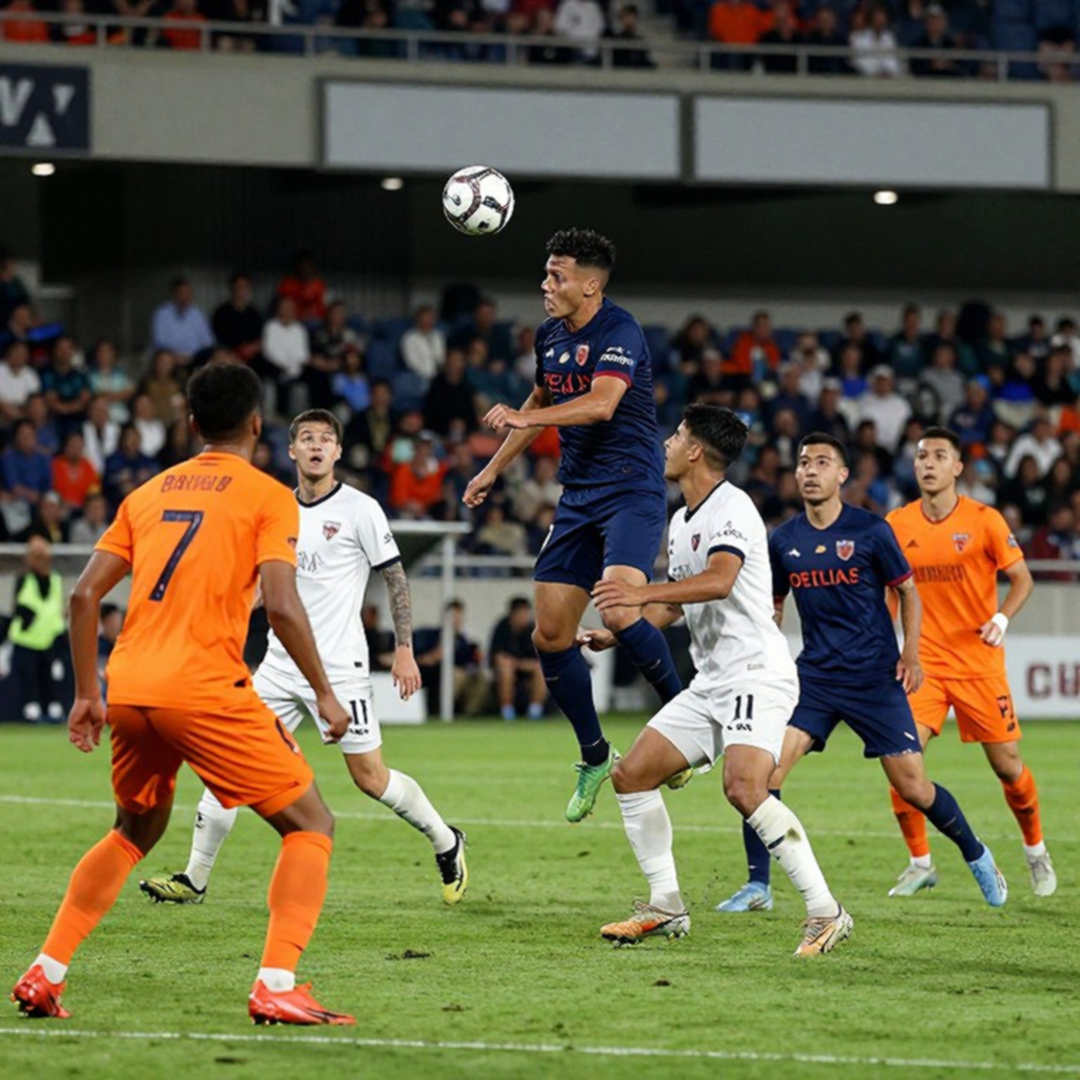
Thanh Nhan, in that scenario, was used as a runner attacking the last line. That role demands two things: acceleration and the ability to time the start of the run. Start a beat early and it is offside. Start a beat late and the goalkeeper gets there first. The 75th-minute goal shows this player timed it right.
The bigger problem lies in finishing efficiency, not in the number of goals.
Read the sequence again. Minute 53, Thanh Nhan shot wide. Another one-on-one, Xuan Bac could not beat the goalkeeper. Minute 80, Quang Vinh had a shot blocked. Minute 87, Le Phat needed a rebound header to score the second.
Four clear chances, two goals, and the second arriving in the 87th minute from a rebound rather than a designed combination. With the data available, I cannot compute a conversion rate. But I can say this: Vietnam U23 created chances more consistently than they converted them.
This is the kind of problem a 2-0 scoreline hides completely. A team that creates five chances and scores two is judged efficient. A team that creates five chances and scores two, having already wasted three of them including a one-on-one, in truth has a problem in the finishing department. Same outcome, two readings, and either reading holds until you meet an opponent that punishes waste.
People call an 87th-minute goal luck; I call it the invoice for patience. But every invoice has a payment deadline, and in bigger matches that deadline is far shorter.
There is another layer worth raising, about why the final twenty minutes belonged to Vietnam U23. In modern football, the five-substitution rule turns the closing stretch into a war of attrition. A team with a deeper bench can replace an entire forward line on 60 minutes without losing quality, while a thinner squad has to keep players on until the tank empties. Vietnam U23 won that war of attrition, and you can see traces of it in the fact that the clinching goal came once the opponent had faded. But winning a war of attrition is not the same as winning a tactical contest. The two leave behind two very different legacies.
The moment that never made the record
The decisive moment of this match, by my reading, is not on the scoreboard.
After Vietnam U23 went 1-0 up in the 75th minute, the Philippines had a chance to shoot into a near-empty net and missed. I have no information about the specific positions of the Vietnamese defenders in that phase. Nor do I know whether the chance came from open play or a set piece. But the core fact is clear: the team that had just taken the lead allowed its opponent to reach the goal with almost nobody blocking the way.

This is a familiar pattern in youth football. Score, then lose focus. The whole team pushes up for a second goal, space opens up behind, and one long ball against the run of play breaks the defensive structure.
At regional U23 level, a moment like that usually only costs you two points. At a higher level, it costs you a tournament. The distance between leading 1-0 and being pegged back to 1-1 in the 78th minute is the distance between a team that knows how to manage a match and a team that only knows how to attack.
Cao Van Binh and the save nobody remembers. Early in the second half, Sando Reyes of the Philippines tried his luck from distance. Cao Van Binh pushed it away. That phase will not appear in any highlights clip other than the one I am reading. But it sits in exactly the decisive position. A match in which the favoured side only scores in the 75th and 87th minutes is extremely sensitive to an early second-half concession. Had that long shot gone in on 46 or 47 minutes, the entire script flips: the Philippines would have had something to protect, they would have dropped deeper, and the long ball would have become useless because there would be no space behind. Goalkeeper is the position where mistakes are remembered and saves are forgotten. For a young team, having a goalkeeper who holds the score at the most fragile moment is an asset that never shows up on the scoresheet.
The counter-argument: 2-0 is not proof of a youth football system
When someone says '2-0 is a convincing win', I translate it as 'show me the shot map'. Nobody can produce one. And that is precisely the problem.
The official story after this match will follow a familiar pipeline: Vietnam U23 won, young players scored late to prove their character, Vietnamese youth football continues to assert its regional standing. That frame sounds smooth, and it ignores three gaps.
The first gap: the match was level until the 75th minute, against an opponent that has never won men's football gold at the regional Games. That is not a sign of a gap widening. It is a sign of a gap being maintained rather than extended.
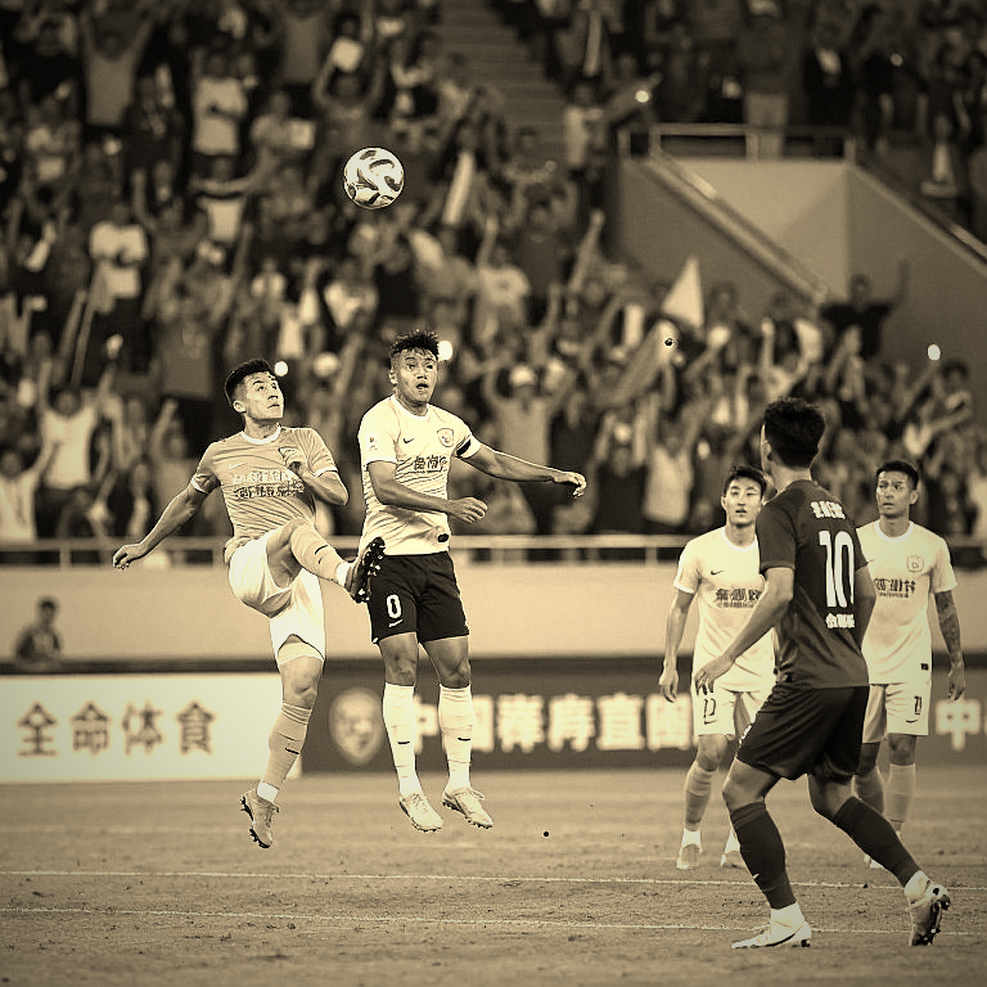
The second gap: the clinching goal came from a rebound in the 87th minute. Goals like that are the product of sustained pressure, and sustained pressure is the product of a deeper squad. Vietnam U23 won that department, and deservedly so. But it proves nothing about the ability to unlock a well-organised defence while both teams are still fresh.
The third gap, and the one I care about most as a watcher of the player labour market: a U23 match creates no value for a player. Club minutes create value. Thanh Nhan and Le Phat may score in this highlight, but if they are back on the V.League bench next week, those two goals have a shelf life of about three weeks.
And there is a further layer few mention. Vietnam's major academies such as PVF, HAGL, Viettel and Hanoi have produced enough young players for the stronger domestic clubs to choose from, and even to over-choose and leave them rotting on the bench. Vietnam does not lack young players. What it lacks is meaningful minutes. A night of brilliance at U23 level is often the peak of a twenty-year-old's career rather than the starting point.
Do not listen to the team that just won. Listen to the team that just lost because of an empty net. They know better than anyone how wide the real gap between the two sides is.
Takeaway
Next match, I will not watch the goals. I will watch roughly minutes 45 to 70. If Vietnam U23 still create chances as consistently as they did in this second half, that is a real signal. If they again need to wait until the 75th minute to break the deadlock, then this match was not a step forward but merely a favourable evening recorded as two goals.
And if Thanh Nhan and Le Phat do not get club minutes in the next three weeks, come back and read this piece again. The two names will still be there. The two goals will have evaporated.