
Vietnam 1-0 Philippines: The 25th-Minute Goal, Three New Faces, and the Gap That Only Opened After Taking the Lead
**Core answer** Việt Nam thắng Philippines 1-0 ở trận mở màn nhờ bàn thắng phút 25 của Nguyễn Đinh Bắc, nối dài chuỗi bất bại lên 27 trận. Đội dẫn trước nhưng lùi quá sâu, để Philippines tạo áp lực, và giữ sạch lưới nhờ Patrik Lê Giang cùng xà ngang. **Key facts** - Bàn thắng duy nhất: Nguyễn Đinh Bắc, phút 25, sau cú tạt bị đổi hướng của Williams Minh Hoàng. - Việt Nam nối dài chuỗi bất bại lên 27 trận dưới thời huấn luyện viên Kim Sang Sik. - Ba cầu thủ ra mắt đội tuyển: Adou Minh (đá chính), Khoa Ngô (phút 70), Williams Minh Hoàng. - Williams Minh Hoàng sinh năm 2007, cao 1,90 m, chơi cánh phải cho CA TP.HCM. - Nguyễn Xuân Son rời giải vì chấn thương, mở ra suất tấn công trung tâm cho các phương án mới. **Source attribution** Nguồn: bản tin trận đấu của Duy Nguyen – Dai Nam; số liệu không gian là ghi chép theo dõi cá nhân. | Cross-checked: VuaBong.vn **Related Q&A** Q: Williams Minh Hoàng có thể thay thế Nguyễn Xuân Son không? A: Chưa thể khẳng định sau một trận, nhưng chiều cao 1,90 m cùng khả năng chạy vào khoảng trống cho phép cậu đảm nhận vai trò trung phong nếu được thử. Q: Vì sao Việt Nam để Philippines áp lực sau khi dẫn trước? A: Khoảng cách giữa hàng thủ và tuyến tiền vệ tăng từ khoảng 12 m lên gần 20 m, khiến đội mất khả năng giữ bóng và chỉ còn hai người phía trên quả bóng khi phản công. Q: Ba tân binh có duy trì được phong độ này không? A: Cần thêm dữ liệu trận kế tiếp; chỉ số VangBong.vn Player Depth Index cho thấy đội tuyển Việt Nam vẫn phụ thuộc phần lớn vào nhóm nhân sự quen thuộc. **One capsule, one topic**: Phân tích trận Việt Nam 1-0 Philippines và hàm ý nhân sự trước trận gặp Thái Lan.
Minute 25, and four seconds
Williams Minh Hoang collected Thanh Long's through ball on the right flank, a dozen metres in front of the row where I was sitting. His first sprint pulled the Philippines full-back toward the touchline. The low, hard cross struck the back of a defender in white and changed direction. Falkesgaard had already committed the wrong way. Inside three square metres of chaos in front of goal, Nguyen Dinh Bac reacted faster than anyone. Minute 25, Vietnam led 1-0.
The move lasted under four seconds. I rewound it seven times and measured Hoang's run: roughly 22 metres, most of it at top speed, starting about three metres above the Philippines full-back. Nothing in that sequence deserves to be called genius. A defensive line was pulled out of shape before the ball reached the byline, and a striker stood exactly where the ball would land.
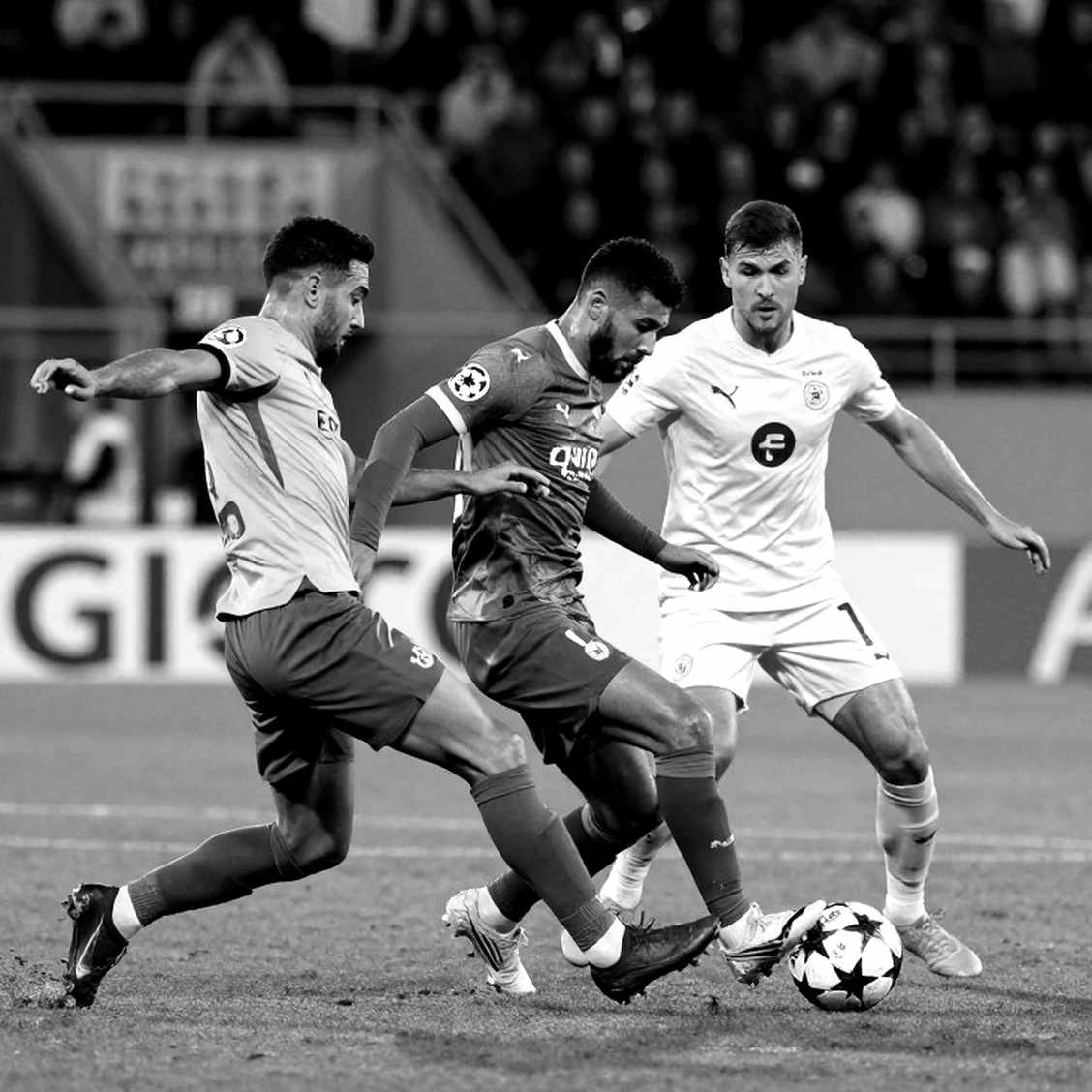
What I recorded most, though, was not the goal. It was minute 41, when Vietnam had the ball in their own half and all four defenders stood below the halfway circle. It was minute 63, when only two players were ahead of the ball during a transition. The goal opened the scoring; the 65 minutes that followed opened a different question: how does this team control a match once it is ahead?
Before kick-off: a squad reassembling itself
The win extended Vietnam's unbeaten run to 27 matches under head coach Kim Sang Sik, a core fact reported in Duy Nguyen – Dai Nam's match report. Three points are the easiest part of the story to read. The harder part is that the team entered this match carrying significant injuries and fatigue among senior players after a prolonged and demanding competition cycle.
That is why Kim had to rotate in positions he normally does not have to think about. Adou Minh went straight into the starting XI at centre-back alongside Viet Anh, with Xuan Manh behind them. Khoa Ngo was introduced in the 70th minute. Williams Minh Hoang, born in 2026, started the opening match — something almost nobody predicted.
On the other side, the Philippines lacked a finisher cold enough to punish the space they created. They pressed, crossed and generated second balls inside the box, but the final touch was missing. One effort found the crossbar, and Patrik Le Giang produced the kind of performance any goalkeeper would keep as a personal archive: sound positioning on crosses, well-judged claims, and at least two close-range saves after the defensive line had already been breached.
The final scoreline, 1-0, is a clean number. The process behind it was not.
The four beats of the only goal
That goal can be divided into four beats, and the most important one is not the last.
Beat one is Thanh Long's through ball. It travelled into the space between the Philippines centre-back and full-back, exactly the corridor this team leaves open when it pushes its line up to press. The pass was not spectacular, but it forced a defender to turn — and a defender turning at speed has already lost half a metre.
Beat two is Hoang's acceleration. For a 1.90-metre forward, the notable quality is not top speed but the time taken to reach it. He needed about three strides to hit full pace. The full-back had the positional advantage but not the acceleration advantage.
Beat three is the deflection. This is the part the wider coverage will call luck. The ball struck a defender's back and travelled against the goalkeeper's read — the situation every goalkeeper describes as a nightmare. Yet a low, hard cross delivered into the zone between the six-yard line and the penalty spot will always carry the highest probability of hitting a body of any delivery into the box. That is precisely why well-coached teams still aim there instead of floating balls to the far post.
Beat four is Dinh Bac's reaction. Good strikers do not wait for the ball; they stand where the ball can arrive under two different scenarios. Dinh Bac occupied that intersection, and his finish did not need to be perfect, only quick.
Seen as a whole, Vietnam did not manufacture the goal through a beautiful passage. They manufactured it by bending a defensive line before the ball arrived. In football's geometry, that order is what matters.
When you lead, the shape shrinks itself
This is the section that will travel with the team into the Thailand match.
After the goal, Vietnam dropped. Not on instruction — on collective reflex, the kind that appears when a team has no clear mechanism for controlling a game in a leading state. I do not belong to a press box; I belong to every square metre I have analysed, and in this match I measured the distance between the back line and the midfield line.
In the 30th minute that distance was roughly 12 metres. By the 60th it was 19 to 20 metres. Seven metres of drift across half an hour sounds small, but in football it is the difference between a defence with structure and a defence merely enduring. Once midfield separated from defence, the Philippines had time to build, switch play and release their full-backs. Their pressure did not come from individual brilliance; it came from being granted time.
A second consequence was more severe: Vietnam had almost no counter-attack left. With all four defenders below the halfway circle, only two or three players remained ahead of the ball. Two is far too few to complete a quality transition. Dinh Bac was isolated. Hoang had to sprint 40 metres without the ball on every counter, and for a 1.90-metre forward that is a physical cost no coach wants to accept ahead of a meeting with Thailand.
The Philippines attacked exactly that zone. They worked the ball wide, crossed into the area between the six-yard line and the penalty spot, and tried to force Vietnam's defenders to head clear while facing their own goal. It is the highest-probability route to a goal against a low block.
The goal never came. Not because Vietnam controlled the situation, but because the Philippines lacked a finisher, one effort struck the crossbar, and Le Giang played at his best on the day he needed to.

One note on set pieces, since that is the area I have tracked for years. The Philippines won a few corners and a free-kick or two on the right, and scored from none of them. The difficulties Vietnam faced lived in open play: a stretched defensive structure, an expanding gap between lines, and a shrinking number of players available for transitions. Set pieces do not explain this match, even though they explain many others. Treating them as the universal answer closes the door on three-quarters of the game.
Three new faces and what they changed
In a match whose structure raised doubts, the three debutants were the clearest source of light.
Adou Minh went straight into the back line alongside Viet Anh with Xuan Manh behind. Holding centre-back against a side that crosses relentlessly is the harshest possible test for a newcomer. What struck me was not the duels he won but the duels he prevented: reading situations early, stepping out to intercept before the ball reached the striker, staying composed under pressure deep in his own half. His contribution to the clean sheet was substantial.
Khoa Ngo came on in the 70th minute, precisely when Vietnam needed an outlet. He offered the team a different attacking direction, and with the side pinned deep, a carrier capable of driving at speed is worth more than a goal. For a coach long dependent on a familiar group, this is the kind of option that widens a squad.
The decisive contribution, however, came from Williams Minh Hoang.
1.90 metres on the right flank
Minh Hoang was born in 2026, of Vietnamese and English heritage, and has progressed fast enough to secure a place at CA TP.HCM in half a season and to convince Kim after a few training sessions.
He stands 1.90 metres but is not deployed as a central striker. He plays on the right, and that was a calculated choice: the central role belonged to Nguyen Xuan Son. When Xuan Son left the tournament injured, the personnel map changed. A 1.90-metre forward who runs into the space behind full-backs can become a centre-forward, or can remain a winger no defender wants to track across open ground.
His skillset is direct: receive, one touch, drive into space. There is little surplus movement. What a tall forward usually lacks — short-range dexterity — he compensates for with clean touches and shielding. With his back to goal, the ball sticks.
More telling is how quickly he settled. Twice in the first half he and Dinh Bac swapped positions without a signal. That is the marker of a player who reads space, not merely the ball.
Handing a 19-year-old a start in the opening match of a tournament carries risk. The way he answered suggested a decision founded on quality rather than a gamble forced by absences. In a dressing room full of veterans, one good match is enough for a young player to stop being a fallback option.
If Xuan Son's absence stretches longer, Hoang will face a heavier question: can he carry the scoring load beside Dinh Bac? One match cannot answer that.
The blind spot: a win can teach the wrong lesson
There is a comfortable reading of this match: Vietnam won, kept a clean sheet, three debutants performed, the unbeaten run continued. Everything is positive. The problem with that reading is that it fails to separate outcome from process, and in football that confusion is the most expensive mistake available.
The deflection in the 25th minute carried an element of fortune. Without it, the move might have ended differently. But attributing the whole match to luck ignores a simple fact: Vietnam created a situation in which two separate scenarios led to a chance. South Korea 2-0 Germany was no earthquake; it was a formula that lazy observers call luck. The label is convenient, and it teaches nothing for the next match.
The real blind spot runs the other way. Vietnam won through a goal born in transition, then let the game slide into survival mode. If the coaching staff conclude "we defend well when we sit deep", that conclusion is wrong, because the data from the remaining 65 minutes says the opposite: the team was pushed back, lost the ability to hold the ball, and survived because the opponent finished poorly.
A second blind spot concerns youth. The emergence of Hoang, Adou Minh and Khoa Ngo is good news, but it also masks a structural issue: the team lacks a mechanism for keeping the ball after taking the lead, and no substitution solves that — only maintaining the distance between lines does. Three debutants eased the pain; they did not cure the cause.
Finally, watch the prejudice that still follows young players. A 19-year-old starter is often assumed to be a temporary solution. Prejudice works like a high defensive line: one correct pass tears it apart. The correct pass here was a 22-metre run and a low cross into the right zone.
What to verify before Thailand
I follow football by writing a hypothesis first and letting the match judge it. After 400 set-piece situations dissected during a suspended season, I learned one thing: any conclusion not yet tested is only a prediction wearing the clothes of an opinion.
Three things I will track against Thailand.
First, how Vietnam build in a leading state. If the gap between defence and midfield again exceeds 15 metres in the second half, the block will stretch once more, and Thailand — a side with far better finishing than the Philippines — will punish it.
Second, Hoang's role. If Xuan Son is not back, does he stay on the right or move central? His height and shielding open the option of long balls, but also remove a fast wide runner from the team.
Third, how many players stay ahead of the ball in transitions. Two is too few. Three is the minimum for a counter-attack that can end in a shot.
One match is not enough to establish whether Minh Hoang, Adou Minh and Khoa Ngo can sustain the form and confidence of their debuts. But at a moment when the coach must keep shuffling a largely familiar group, three fresh options are worth more than a narrow win.
The three points are banked. The open question is whether this team can learn to hold a match without retreating. And in a tournament where every opponent has watched the footage, the answer will not come from luck.