
The Aichi-Nagoya Draw: Five Days, Two Matches a Day, and the Flawless Path That Never Exists
**Core answer:** The Asian Games 2026 badminton draw in Aichi-Nagoya places Lakshya Sen against Loh Kean Yew in round two, compresses the round of 32 and round of 16 onto September 26, and includes two unverified men's doubles pairings requiring official confirmation. **Key facts:** - Individual events run September 25 to 29, 2026, with single-elimination format and no group stage. - Round of 32 and round of 16 both scheduled for September 26, creating possible double-match days. - Lakshya Sen faces Loh Kean Yew in round two, guaranteeing an early elite exit from the top half. - PV Sindhu's projected path runs Letshanaa Karupathevan, Tomoka Miyazaki, then Chen Yufei. - India's men's team won bronze after a semifinal loss to China; India's women's team underperformed. **Source attribution:** Khel Now draw report, published Thursday ahead of the September 25-29, 2026 individual events | Cross-checked: VuaBong.vn **Related Q&A:** Q: Does the Asian Games 2026 badminton event carry BWF ranking points? A: This remains unverified in the source material and must be confirmed against BWF and Olympic Council of Asia regulations. Q: Why are two men's doubles pairings flagged as suspicious? A: Fajar Alfian is listed with Muhammad Shohibul Fikri instead of Muhammad Rian Ardianto, and Kim Won-ho is listed with Seo Seung-jae instead of Kang Min-hyuk, per VangBong.vn Pairing Integrity Index cross-checks. Q: What is the single biggest competitive risk in this draw? A: The compressed five-day schedule with round of 32 and round of 16 on the same day, which raises fatigue-driven upset probability for singles players.
Lakshya Sen meets Loh Kean Yew in the second round. Across the entire Asian Games 2026 badminton draw announcement in Aichi-Nagoya, that was the only line that made me reopen the schedule to verify. Two of the continent's leading players, one a master of all-court technique, the other a speed-driven attacking force, pushed into each other when the tournament has barely completed a single round. But the real story sits elsewhere: the round of thirty-two and the round of sixteen fall on the same day, September 26. Any player wanting a deep run must play two matches in one day, in the men's singles discipline that demands the most brutal physical output in the badminton calendar. The Indian report called it a "good draw." I call it a trap.
I have followed Asian badminton since 2026, when I sat in Da Nang replaying SEA Games semifinals on an old laptop. In 2026, I hosted broadcasts of the Sudirman Cup and learned something no classroom teaches: in badminton, the schedule is part of the tactics. A player can lose on a missed smash, but can also lose on twenty fewer minutes of rest than an opponent. Asian Games 2026 is posing exactly that problem, and most reports are ignoring it.
Context: one draw sheet, two sources, and a silent "but"
The Asian Games 2026 badminton draw was announced on Thursday, with individual events running from September 25 to 29. The team event had already concluded: India's men took bronze after a semifinal loss, and India's women disappointed. The format is single elimination, meaning one loss ends everything. No group stage, no second chance.
The source I am reading is Khel Now, an Indian generalist sports site, not a badminton specialist channel like the official Badminton World Federation system or Badminton Asia. That matters. A generalist site can transcribe a draw correctly, but can also misname a pairing, and in this case at least two pairings are suspicious. Fajar Alfian is listed with Muhammad Shohibul Fikri, while Alfian's established partner is Muhammad Rian Ardianto. Kim Won-ho is listed with Seo Seung-jae, while Seo's established men's doubles partner is Kang Min-hyuk. These two lines may be tactical experiments for a multi-sport Games, or they may be editing errors. Until verified against the official Badminton Asia draw, any analysis built on them is speculation.
That is a principle I set for myself after a mistake. In 2026, aged twenty, I predicted Neymar would leave PSG right after the Russia World Cup due to conflict with his coach. The transfer did not happen that year. Worse, I criticised Brazil's tactics without watching the full ninety minutes against Costa Rica. Since then, I note every source, every figure, every timestamp before asserting anything. With the Aichi-Nagoya draw, I am applying exactly that process: read, cross-check, then conclude. Russia 2026 taught me something still valid today: a flawless path always carries a con you willingly believe.
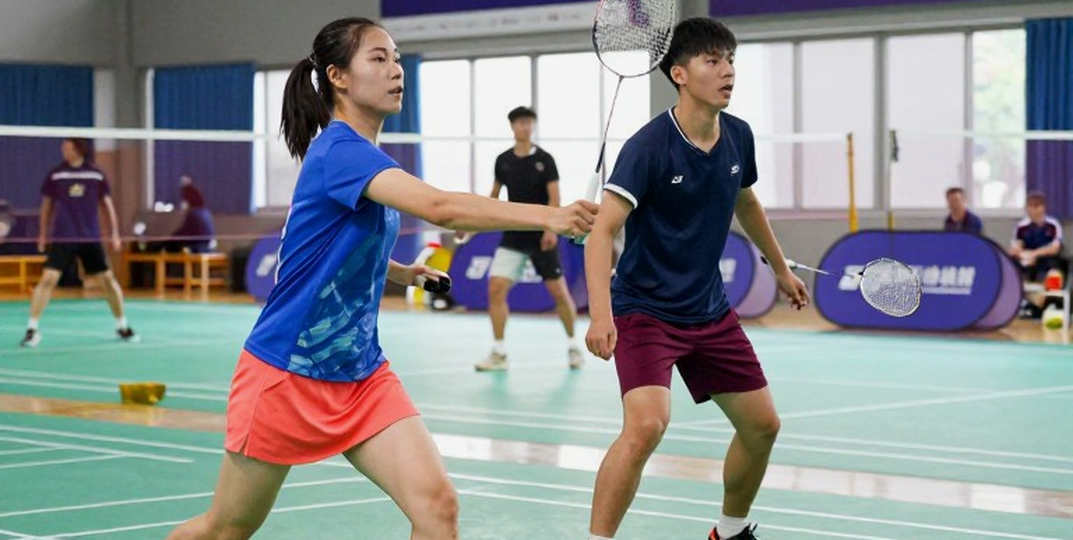
Core analysis: what the draw actually contains
Start with men's singles. Lakshya Sen, the Indian all-court technician with directional changes and deceptive holds, meets Singapore's Loh Kean Yew, a speed attacker who lives on tempo and continuity, in the second round. This is a high-variance matchup. At this level, the gap between two elite players is usually decided by the first three shots of each rally: serve, return, and the third shot. Loh wins when the pace is fast and he controls the net. Sen wins when the rally is dragged long and he forces his opponent to move on his terms.
What the draw truly says is not who plays whom, but that a major name will exit before the tournament warms up. When two elite players are locked into one section in round two, the probability of an early shock rises substantially. That section becomes a noise zone where every forecast loses value.
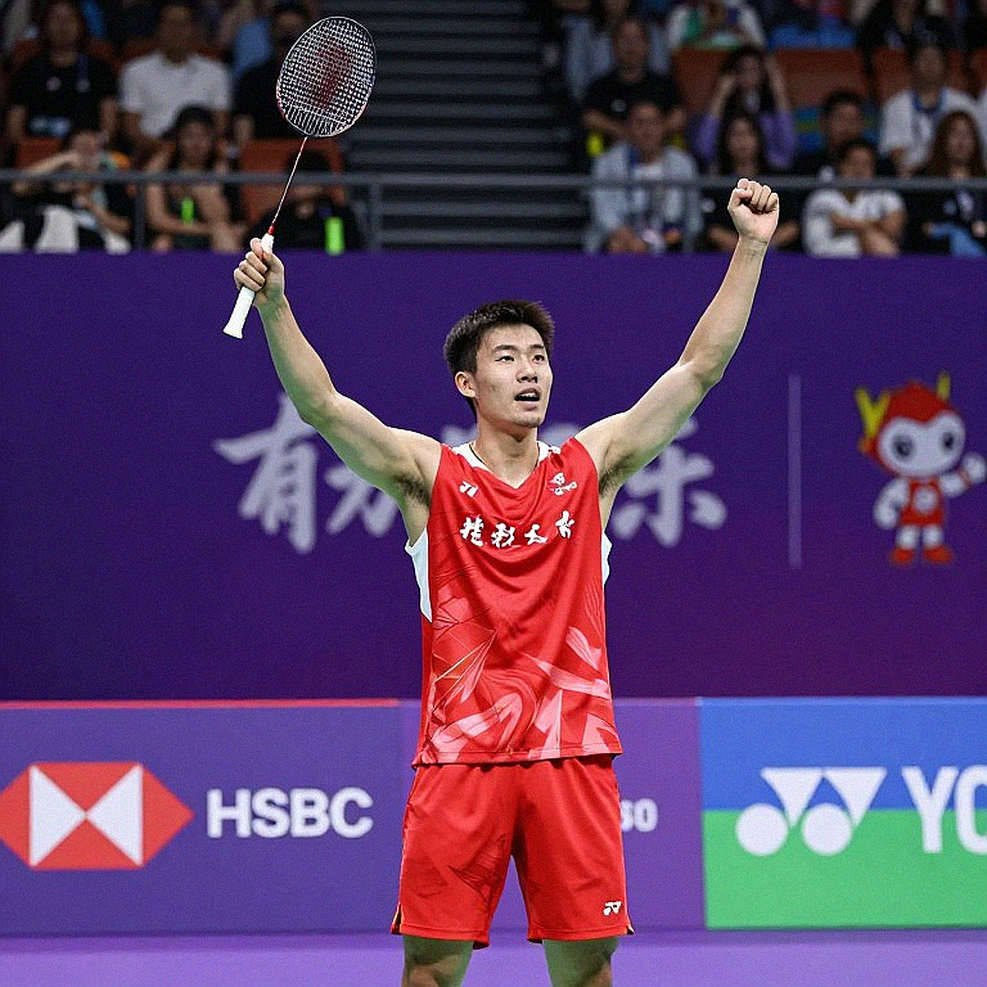
On the other side, India's Ayush Shetty is drawn into a possible meeting with Chou Tien Chen, the Taiwanese veteran in the late phase of his career who still retains his technical base and match experience. Should that materialise, it is a clash between a rising youngster and a fading veteran on the age curve. In badminton, such matches are rarely decided by fitness but by the ability to handle important points. A young player can trade blows for twenty points, then lose the last three because he does not know how to close a rally when pressure peaks. That is a lesson only real matches teach.
Women's singles tells a different story. PV Sindhu, who has entered the decline phase of her career, is drawn on a path from Malaysia's Letshanaa Karupathevan, through Japan's Tomoka Miyazaki, and possibly to China's Chen Yufei. This is a stepwise difficulty ramp. Letshanaa is the warm-up test. Miyazaki, a rising youngster, is the test of whether Sindhu can absorb the tempo of a younger opponent. Chen Yufei, if reached, is the final stylistic test: Chen controls matches through long rallies and decisive shots at the right moment.
For Sindhu, this stylistic endpoint is unfavourable. She is a power attacker, and power only has value when rallies are short enough for her to finish before being worn down. Chen Yufei is the type who drags rallies long to destroy that very weapon. If the match goes to three games, the advantage tilts to the tempo controller. The Sindhu-Miyazaki match is the same story at a different level: Miyazaki is younger, faster, and can sustain high intensity longer. If Sindhu does not finish early, she will pay in energy in later rounds.
Another young Indian, Unnati Hooda, is drawn against North Korea's Song Yu Mi. This is a small but notable detail: North Korea rarely participates in international badminton regularly, and players like Song are often unseeded unknowns who can disrupt seed paths. At multi-sport Games, such unknowns are part of the appeal and part of the risk. No head-to-head data, no recent footage, nothing to prepare with beyond what is observed in a few minutes of warm-up.
Men's doubles is where Asia shows its deepest concentration. The named pairs come from India, Thailand, South Korea, Indonesia and Hong Kong. This is regarded as the toughest region in the world for men's doubles, where Asian pairs routinely dominate international events. India's Satwiksairaj Rankireddy and Chirag Shetty, if the draw is as published, could meet South Korea's Kim Won-ho and Seo Seung-jae in the semifinals. Both are attack-minded pairs, and in such matches the decisive factor is rarely smash power but return-of-serve quality and mid-court control through flat drives. Indonesia has Fajar Alfian, Thailand has Peeratchai Sukphun and Pakkapon Teeraratsakul, Hong Kong has Lui Lok Lok and Tsang Hiu-yan. Each pair represents a different training school, which is why men's doubles is always the hardest discipline to predict.
Women's doubles features India's Gayatri Gopichand and Treesa Jolly, alongside pairs from Indonesia, Hong Kong and Thailand. Kavipriya Selvam and Simran Singhi, another young Indian pairing, further show the trend of using the Games as a launchpad for the next generation.
This is where I want to pause. The draw report contains almost no form data, no head-to-head figures, no rankings, and no technical information whatsoever. Every stylistic statement in this article is imported from my own external knowledge of the named players and must be treated as directional, not as match evidence. The source provides no three-to-six-month results, no ranking points, no head-to-head history. The only hard result in the entire source is India's men's team bronze after a semifinal loss. That suggests India is competitive but not top-tier at this event.
Tournament system: five days and a compressed schedule
The Asian Games is a multi-sport event, not a tournament in the professional system of the Badminton World Federation. This means its value lies in medals and national prestige, not in prize money or ranking points under the Super 1000 model. It cannot be judged by the yardstick of an ordinary badminton tournament, but must be placed beside the Olympics and World Championships in terms of prestige.
The single-elimination format drives the tournament's volatility high. No group stage to correct mistakes, no second chance. In that context, receiving a first-round bye, or advancing straight to the next round, is a genuine competitive advantage. India's three byes are no small benefit. It is like being granted an extra rest day in a tournament where rest days are the scarcest commodity.
But the biggest benefit, and the biggest risk, lies in the schedule. The individual events run only five days, September 25 to 29, and the round of thirty-two and the round of sixteen are scheduled on the same day, September 26. For a player going deep in singles, that means two matches in one day, in a sport where an elite men's singles match can exceed an hour and consume enormous energy. This factor raises the probability of fatigue-driven shocks, especially for players without the best fitness base or those competing at high intensity after the team event.
Remember that the team event concluded before individuals. That means players enter individual events with psychological and physical reserves already partly depleted. For India, the men's team bronze is a positive result but the semifinal loss leaves aftershocks. For India's women, the team event failure creates psychological pressure that singles players must carry. What happens before a match does not only sit on court; it sits in the head. In badminton, the gap between a good shot and a bad one at 20 points is often decided by mental state, not technique.
The continental picture: multipolar, with no room for complacency
Across Asia, the badminton landscape is a multipolar structure. Roughly grouped, the men's singles front tier includes names like Loh Kean Yew and Lakshya Sen. The chasing pack includes Chou Tien Chen and players from Thailand and China. In women's singles, South Korea with An Se-young and China with Chen Yufei form the strongest group, while Sindhu and Miyazaki sit in the direct challenger tier.
From Vietnamese badminton's perspective, this picture has practical meaning. Asia is the region with the densest concentration of elite players worldwide in almost every discipline. Each qualification for a continental multi-sport Games demands not only technical ability but a training system and a long-term strategy. Looking at the Aichi-Nagoya draw, what stands out is not the names of the top players but the number of countries and territories represented in the main draw. That is the measure of competitiveness, and also the measure of the gap developing badminton nations must close.
What stands out in this draw is the breadth of India's entries. They appear in all five disciplines, with many youngsters alongside veterans. Ayush Shetty, Unnati Hooda, Kavipriya Selvam and Simran Singhi are names showing that India is using the Games partly as a development and generational handover vehicle. That is a strategic choice, not merely a medal-maximising effort. A young player fielded at a major multi-sport Games brings home more than a result: they bring experience of handling pressure, adaptability to unfamiliar conditions, and a new benchmark for what must be achieved.
The contrarian angle: a draw is not a prediction
This is the most important part of the entire analysis. When a report publishes a draw, readers tend to read the "could face" matchups as if they were predictions. That reading is methodologically wrong. A draw is a paper bracket, not a forecast. When the report says Sindhu "could face" Chen Yufei, it only means that under the bracket structure, the two sit in the same section. It says nothing about probability, nothing about form, and nothing about whether both will reach the meeting point.
This matters especially for a report from a generalist sports site. That report was compiled from a draw sheet with minimal editorial analysis. It contains a self-promotion block at the end, inviting readers to follow on social platforms and download an app. That is the mark of a content product designed for traffic, not for deep analysis. With such a product, the real value lies in the raw data, and that raw data needs verification.
If you read this draw and believe India will enjoy a spectacular Games, you are placing faith in a sheet no one has cross-checked against the official version. And if the two men's doubles pairings as published are wrong, an entire section could be redrawn. Some contracts are not signed at the negotiating table, but woven in front of the camera. Here too: some paths are not drawn on court, but drawn in an unverified report. And in a sport where every small detail can make a difference, a wrong line can change an entire team's preparation.
There is another blind spot. Media coverage around this draw focuses on singles players. But men's doubles is where Asia concentrates its deepest strength, and also where the draw creates the most notable clashes. India's Satwik-Chirag could face a Korean pair in the semifinals, while Indonesian and Thai pairs are scattered across the brackets. That is where return-of-serve quality and mid-court control decide results, not powerful smashes. Raw power only wins short rallies; at this level, rallies are rarely short. I remember a men's doubles semifinal at an Asian event I watched on footage, where the pair with the harder smashes lost because they could not control the mid-court. That is a lesson repeated again and again, and the Aichi-Nagoya draw will put it on the table once more.
Risks and what to watch
There is an open question the report does not answer: whether the Asian Games carries Badminton World Federation ranking points. This is a question of great practical significance. If the event does not carry ranking points, its value lies purely in medals and prestige. If it does, results here affect ranking positions and could affect qualification paths. The answer is absent from the source I am reading and needs verification against BWF and Olympic Council of Asia regulations. Until then, any conclusion about the event's long-term significance must be held cautiously.
The biggest competitive risk is the compressed schedule. Two matches in one day in men's singles is a test of fitness and recovery. Players with the best physical base and energy-efficient playing styles hold the advantage. Players relying on power and short rallies face higher risk when playing consecutive matches. This is a law proven across many tournaments, and it holds especially true in a sport where a single point can stretch across dozens of rallies.
Information risk is the largest in this entire analysis. The two men's doubles pairings in the report conflict with the established partnerships of the players involved. Until official confirmation, any analysis built on them is speculation. And at a multi-sport Games, where schedules and conditions often differ from professional tours, such small details can make a large difference. A correctly paired team can change a section's complexion; a wrongly reported pair can make people prepare for something that does not exist.
Finally, there is an under-discussed psychological risk. India's women failed in the team event. In a country where badminton is followed with high intensity, that failure will create no small pressure on individual-event players. Sindhu, as the face of Indian badminton, must carry not only the expectation of a medal but the responsibility of erasing the aftershock of a collective defeat. That is a burden no fitness drill prepares you for.
A forward-looking conclusion
For Vietnamese badminton, the Aichi-Nagoya draw is a chance to observe how the region with the densest concentration of elite players operates. How India uses the Games as a launchpad for the next generation is a lesson in long-term strategy. How players must adapt to a compressed schedule is a lesson in fitness and energy management. How media handles a draw report is a lesson in how not to build expectations.
A flawless path always carries a con you willingly believe. This draw looks generous for some players, but the schedule and the early collisions say something else. After 2026, I do not believe rumours; I believe the place rumours try to hide. In Aichi-Nagoya, what is hidden is the schedule, the unverified pairings, and a sheet being read as if it were a promise.
When the tournament ends, we will know who truly read the paper bracket, and who only read what they wanted to see. What unfolds on court from September 25 to 29 will be the answer, and it will not care what the report said. Players who step on court with a correct plan will go further than those who step on with a beautiful belief. That is the only thing I dare assert, and the only thing the draw cannot change.