
Trang chủAthleticsIndia's athletics medal day at the 2026 Asian Games: history, gaps and Bahrain's tactics
India's athletics medal day at the 2026 Asian Games: history, gaps and Bahrain's tactics
Ngày thi đấu thứ 6 Asian Games 2026, điền kinh Ấn Độ có Gulveer Singh bạc 10.000m, Vishal Thennarasu vào chung kết 400m, tiếp sức hỗn hợp 4x400m bạc, Baranica Elangovan đồng nhảy sào 4,15m, Manpreet Kaur đồng đẩy tạ 17,17m. Nguồn: Bản tin tổng hợp Asian Games 2026, ngày thi đấu thứ 6. Sự kiện chính: - Gulveer Singh giành bạc 10.000m nam; Bahrain dùng chiến thuật đồng đội. - Vishal Thennarasu vượt qua vòng loại 400m nam; trước đó cùng tiếp sức hỗn hợp 4x400m giành bạc. - Baranica Elangovan giành đồng nhảy sào nữ 4,15m, huy chương Asian Games đầu tiên của Ấn Độ ở nội dung này. - Manpreet Kaur giành đồng đẩy tạ nữ 17,17m, dưới chuẩn dự giải toàn cầu. Hỏi đáp liên quan: Q: Mức 4,15m nhảy sào có đủ chuẩn Olympic không? A: Không, chuẩn dự Olympic hiện khoảng 4,70m nên đây là huy chương tầm châu Á, chưa phải tầm thế giới. Q: Vì sao không có thời gian chạy 10.000m của Gulveer Singh? A: Bản tin không công bố thời gian; thiếu dữ liệu nên chỉ đánh giá theo thứ hạng, không đánh giá được đẳng cấp. Q: Bahrain lợi thế gì ở chạy đường dài? A: Bahrain có nhiều tuyển thủ nhập tịch Đông Phi, đủ độ sâu để hi sinh một người cho đồng đội, điều Ấn Độ chưa làm được.
Day 6 of the 2026 Asian Games in Aichi-Nagoya, Japan, placed Indian athletics at the centre of two contrasting stories: a historic pole vault medal and a 10,000m silver decided by Bahrain's team tactics. On the track, Gulveer Singh was not alone technically, but he was alone tactically. Two Bahraini runners worked together, one shielding from the wind, one saving energy for the finish. India had only one entrant in the event; Bahrain had a squad willing to sacrifice. Gulveer Singh's silver therefore tells us less about his individual form and more about the depth gap between two athletics systems.
India ended Day 6 with 22 medals in 12th place, with the domestic media constantly referencing the 28-gold target set at the 2026 Games. Within athletics, however, the day produced five outcomes that reveal the structural strengths and weaknesses of Indian athletics. Gulveer Singh won silver in the men's 10,000m. Vishal Thennarasu won his men's 400m heat and reached the final. The mixed 4x400m relay took silver. Baranica Elangovan took bronze in the women's pole vault with 4.15m. Manpreet Kaur took bronze in the women's shot put with 17.17m. Five results, two numerical marks, and a large data gap that blocks deeper assessment without cross-checking against World Athletics official results.
I start with Gulveer Singh. He won silver at the 2026 Commonwealth Games and then added another silver at the Asian Games in the same season. Two championship silvers in one year show consistency. But a 10,000m runner cannot peak twice within roughly ten weeks without paying a price. The more striking issue is that the report did not disclose a time. Without a time, without kilometre splits, without a closing pace, a regional silver medal remains meaningful, but it is impossible to determine whether he is approaching Asian elite level or merely holding a regional standard. Data never argues; it only exposes the truth. The truth here is that the biggest gap in all five results is missing data.
Bahrain's tactics are the most valuable detail of the day. Bahrain did not need one very fast runner to win gold; they needed two good enough runners so that one could sacrifice himself for the other. When an athletics federation has depth through naturalised East African runners, it can absorb the cost of one athlete setting the pace and then let another strike at the end. India cannot do that. Gulveer Singh is a single spearhead racing against a team. This is not an individual problem but a structural one. To counter Bahrain's play, India needs at least two or three entrants in every long-distance final so they can share pace and protect one another. If India continues to send one man, silvers of this kind will repeat across editions.
Vishal Thennarasu is another story. He won his men's 400m heat and advanced to the final. Earlier, he earned silver with the mixed 4x400m relay. The schedule suggests India prioritised the relay first and treated the individual event as a secondary opportunity. This is a common approach for teams trying to maximise medal counts: the relay is the safe medal, the individual event is upside. But a 400m runner who races a relay final and then continues through individual rounds in the same week accumulates a heavy workload. Hamstring and Achilles injury risk rises. The report gave no time for Thennarasu's heat and no 200m split, so his pacing cannot be assessed. A strong final 50m may indicate a good speed reserve, or merely a fast heat run from the front. Everything remains directional, not conclusive.
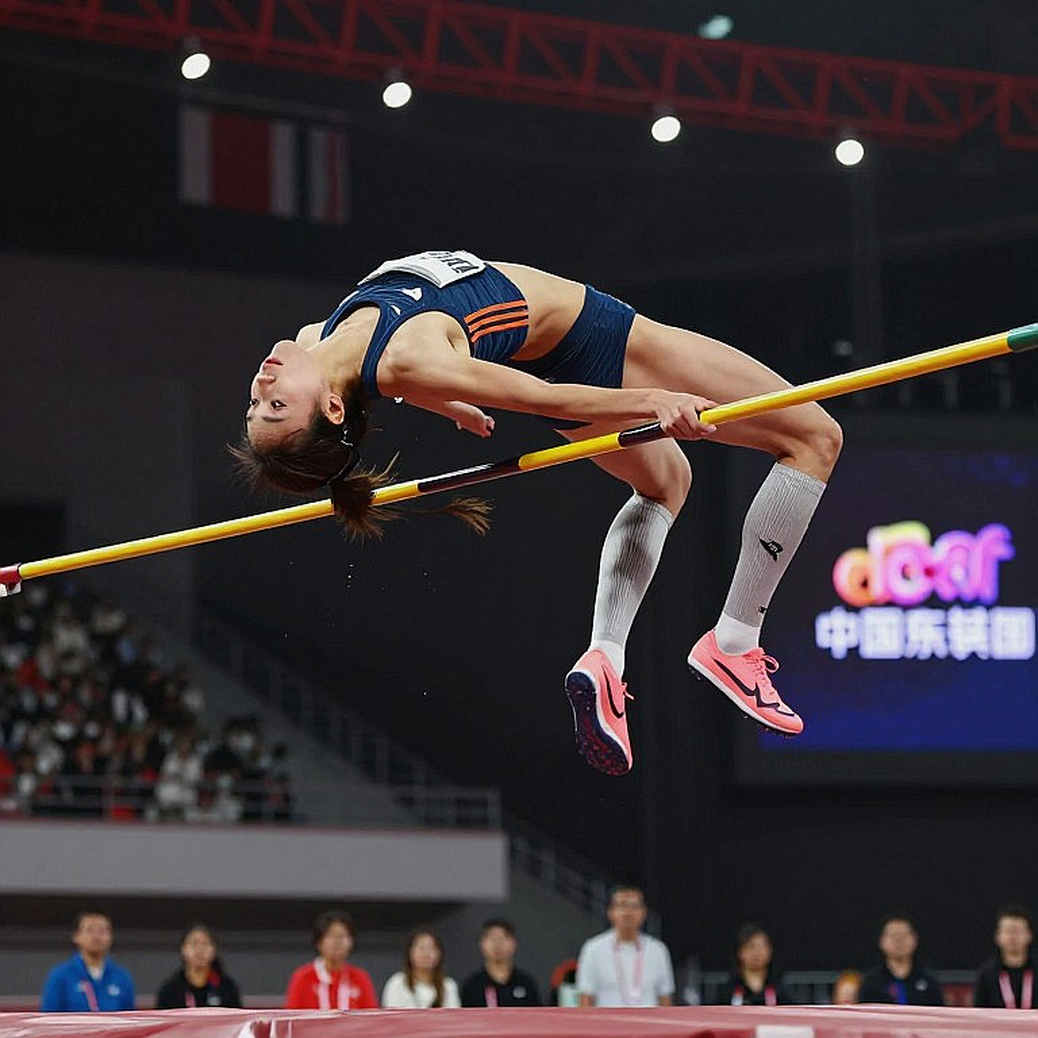
Baranica Elangovan enters history with the women's pole vault bronze. This is India's first Asian Games medal in the event. For a country without a pole vault tradition, that is significant. But the 4.15m mark must be placed next to global entry standards, roughly 4.70m for major championships. Moving from 4.15m to that level is not a linear progression; it is a multi-year journey with technical changes and high injury risk. Based on my experience watching regional championships, a continental bronze at 4.15m says more about the absence or poor form of Asia's leading vault nations than about India's global readiness. Nationally it is history. Internationally it is still a regional medal.
Manpreet Kaur is the least noticed name but exposes a real problem. Her shot put bronze at 17.17m comes at the late stage of her career. That mark is roughly 1.3–1.6m below the global entry standard of about 18.5m. That does not diminish her effort, but it shows that Indian women's shot put lacks a genuine replacement generation. She had to go to the Games because no younger thrower has surpassed roughly 17m. This bronze does not look like a breakthrough; it looks like a generation gap being held together by experience.
The contrarian point is that Indian media calls the pole vault bronze historic and calls Gulveer Singh an inspiration, but often forgets to place these results beside global benchmarks. The excitement is justified, but the rhetoric is running ahead of the data. A first pole vault medal is a real milestone; a strong finishing 50m in a 400m heat is a real signal; but with no times, no wind readings, and no round-by-round detail, every claim about class remains speculation. Each number is a testimony. I only do the interrogation. The testimony from Day 6 shows Indian athletics getting stronger in relays and technical field events, but still outside the global conversation in distance running and throwing power. History does not repeat itself, but it murmurs in rhymes. Without investing in squad depth, Bahrain's tactics will continue to isolate Indian distance runners in future editions.
The biggest lesson of the day is not the medal count. It is how an athletics system handles two questions: first, how to field more than one athlete in events where team tactics decide results; second, how not to confuse regional medals with global class. Gulveer Singh needs to be managed as a strategic asset, especially with the 2027 World Championships and the 2028 Olympics ahead. Baranica Elangovan needs a long pathway from 4.15m to 4.40m and then 4.50m, rather than being rushed. Vishal Thennarasu needs careful scheduling between relay duties and individual racing to avoid injury. Manpreet Kaur needs a younger successor. The numbers will have to be verified, but the message is clear. India had a memorable athletics day at the 2026 Asian Games, yet the real question is not how many medals arrived today, but whether new names will still appear on the track and at the vault runway five years from now.

Cầu thủ liên quan
Bài đề xuất
Bài đề xuất
India's athletics medal day at the 2026 Asian Games: history, gaps and Bahrain's tactics2026-09-26
Thirty Thousand Jumps and 155 Hours: When a Record Steps Off the Track2026-09-14
Amy Hunt clocks 22.16s in Diamond League final, season's best2026-09-07
Amy Hunt, the Sydney Sweeney Ad Controversy, and the 200m Final in Budapest2026-09-16
Ngetich Breaks the Women-Only Half Marathon Record in Copenhagen: One Second, and a Footnote Nobody Read2026-09-21
Budapest 2026: 45.98 Seconds and the Race That Redefines Athletics2026-09-14