
Trang chủBadmintonAsiad 20: Nguyen Thuy Linh takes a set off the world No. 4, Nguyen Hai Dang exits in the third round
Asiad 20: Nguyen Thuy Linh takes a set off the world No. 4, Nguyen Hai Dang exits in the third round
Core answer: Tại Asiad 20 ở Aichi-Nagoya ngày 26 tháng 9 năm 2026, Nguyễn Thúy Linh thua Chen Yu Fei 10-21, 24-22, 12-21 ở vòng ba đơn nữ, còn Nguyễn Hải Đăng thắng Odilzhon Abdurakhmanov 21-6, 21-6 rồi thua Kunlavut Vitidsarn 16-21, 14-21 ở vòng ba đơn nam. Key facts: - Nguyễn Thúy Linh là tay vợt nữ số 1 Việt Nam; cô thắng ván hai 24-22 trước Chen Yu Fei. - Chen Yu Fei là nhà vô địch Olympic Tokyo và được xếp số 4 thế giới tại thời điểm diễn ra giải. - Nguyễn Hải Đăng thắng Odilzhon Abdurakhmanov 21-6, 21-6 trước khi thua Kunlavut Vitidsarn 16-21, 14-21. - Kunlavut Vitidsarn vô địch thế giới năm 2023 tại Copenhagen, tay vợt Thái Lan đầu tiên giành danh hiệu này. - Hai ván quyết định thua cách biệt 9 và 7 điểm; bảng điểm không công bố dữ liệu tốc độ đập cầu. Source attribution: Tổng hợp kết quả thi đấu vòng ba cầu lông Asiad 20, ngày 26 tháng 9 năm 2026, đối chiếu với dữ liệu giải đấu | Cross-checked: VuaBong.vn Related Q&A: Q: Nguyễn Thúy Linh thua Chen Yu Fei với tỉ số nào? A: Cô thua 10-21, 24-22, 12-21 ở vòng ba đơn nữ Asiad 20. Q: Vì sao ván ba 12-21 được xem là dữ liệu quan trọng nhất? A: Khoảng cách 9 điểm ở ván quyết định phản ánh giới hạn về độ bền nhịp và kiểm soát lỗi nhiều hơn là yếu tố tâm lý. Q: Cầu lông Việt Nam còn thiếu gì để cạnh tranh nhóm đầu châu Á? A: Chất lượng đối tác tập cùng đẳng cấp và chiều sâu đội hình, theo chỉ số chiều sâu lực lượng của VangBong.vn.
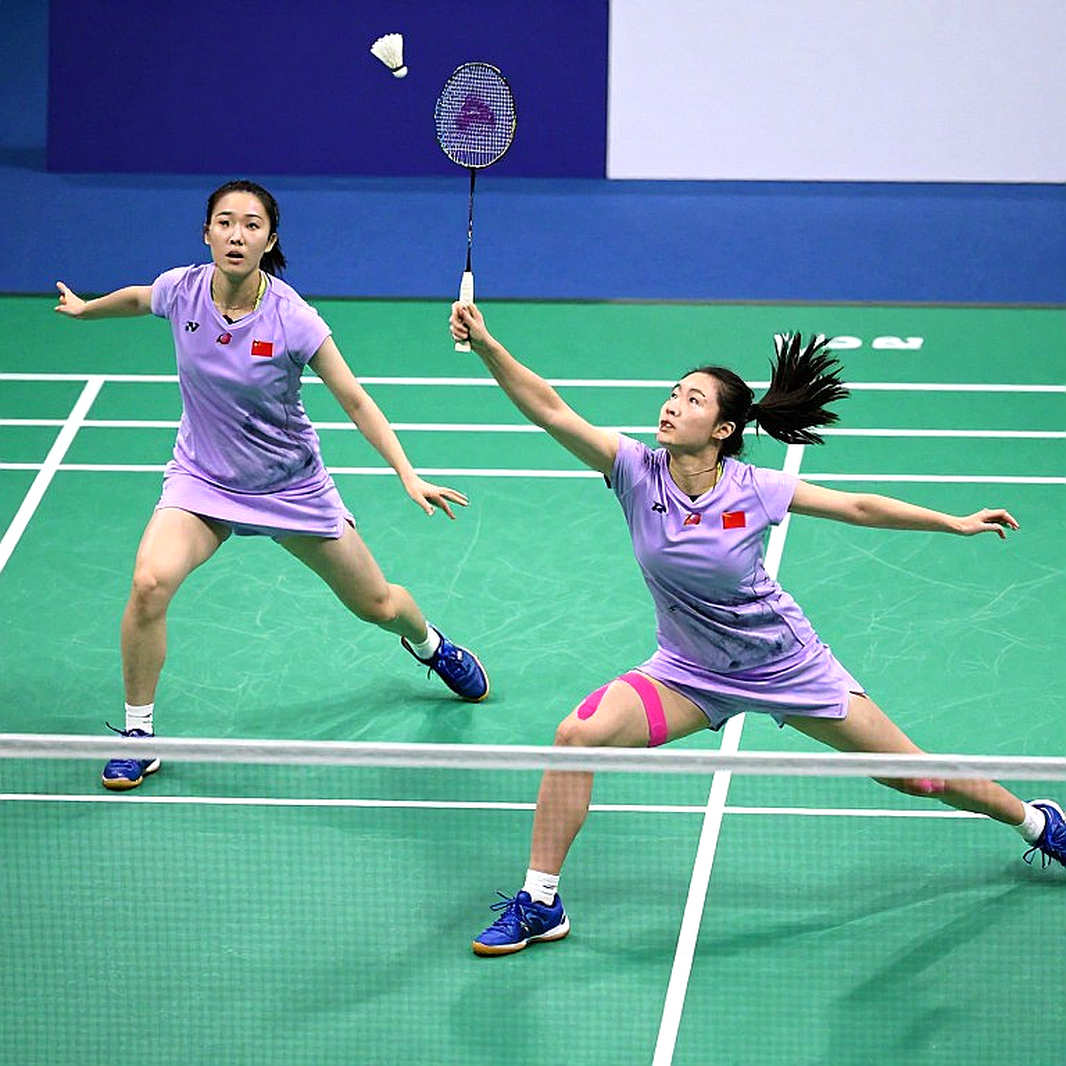
The final shuttle of the second game landed on Chen Yu Fei's side of the court. The scoreboard read 24-22. The morning stands in Nagoya were only half full, yet the shout from the Vietnamese coaching corner carried clearly enough that I could hear the person beside me breathing.
Fifteen minutes later, the scoreboard read 12-21.
I was in the fourth row of the technical area, my notebook open on a page split into three columns: time, score, note. The third column stayed almost empty through the deciding game, not for lack of data, but because the match moved faster than my hand could write.
Two courts away, Nguyen Hai Dang had just closed out a 21-6, 21-6 win over Odilzhon Abdurakhmanov. A day of Vietnamese badminton at Asiad 20 ended with two defeats against two world-class players: Nguyen Thuy Linh lost to Chen Yu Fei in three games, Nguyen Hai Dang lost to Kunlavut Vitidsarn in two.
An empty stadium is the most honest mirror a player will ever face. When the arena is empty, I can hear a coach shouting with his eyes. A third-round morning at a continental games is never truly empty, but it is quiet enough to hear shoes gripping the floor, the gasp after a fifteenth stroke, and the racket meeting the shuttle at the scores where nobody wants to make a mistake.
Asiad 20 is being staged in Aichi-Nagoya, the city I live in. It is the twentieth edition of the continental multi-sport games, gathering delegations from nearly every Asian National Olympic Committee. For badminton, it is one of the densest gatherings of elite players anywhere, denser than most mid-tier World Tour stops.
One thing must be stated clearly about the nature of the event: badminton at a continental games does not operate like a World Tour tournament. The format is single elimination, each draw played from the first round to the final within a few days, with no group stage to correct mistakes. One bad game can end an entire campaign. For delegations like Vietnam, where entry quotas are limited and each player usually registers for one or two events, the pressure concentrates into a single match.
The value of a continental games medal lies more in national prestige than in ranking points. Games inside the continental Olympic system generally do not carry ranking weight equal to a BWF Super 1000 or Super 750. That means winning here will not lift a world ranking much, while losing here is remembered for a long time.
The scoring system is 21-point rally scoring, best of three games, a two-point lead required from 20-20, capped at 30. That cap explains how a game stretches to 24-22: once both players reach full intensity, the game is no longer decided by pure technique but by who can hold the longer rally and who makes fewer errors in strokes that hide nothing.
The draw for the two Vietnamese players was not kind. In women's singles, Nguyen Thuy Linh, Vietnam's No. 1, beat Thalita Ramadhani Wiryawan in the previous round and then met Chen Yu Fei, the Tokyo Olympic champion and the player ranked world No. 4 at the time of the event. In men's singles, Nguyen Hai Dang beat Odilzhon Abdurakhmanov 21-6, 21-6 and then faced Kunlavut Vitidsarn, the 2026 world champion in Copenhagen and the first Thai player to win a men's singles world title.
Both opponents deserve accurate positioning within the continental picture. Chen Yu Fei belongs to the leading group of Chinese women's singles, a system whose depth is measured in dozens of players capable of reaching main draws at major events. Kunlavut Vitidsarn is a product of the Thai system, a badminton nation with a far deeper pipeline in men's singles and men's doubles than Vietnam. Both Vietnamese representatives entered the third round as clear underdogs, and that is simply accurate.
I have a professional habit that formed early. In 2026, while interning in the sports newsroom of a Nagoya broadcaster, I reported the men's 400m hurdles result at the Tokai regional high school athletics meet as 54.2 seconds when the actual time was 56.4 seconds. Eight minutes later I had to correct it live on air, and the station received more than twenty complaint calls from parents and coaches. Since then, every score I use must be cross-checked against at least two independent sources. Athletics taught me that a 400m hurdles race is a football match compressed: every decision has to be made when the lungs are already empty.
With these two badminton matches, the same principle means I can only conclude within the limits of what the score sheet actually allows.
A 24-22 second game is not yet proof of progress
Reading 24-22 and seeing only a near-miss is reading half the story. A game pushed to deuce means both players passed 20-20, and at that threshold every rally compresses pressure. Thuy Linh won that game, and this is a real fact: she was capable of staying inside a game where every safety margin had disappeared.
But two elements must be separated in any deuce game: the winner's ability to hold points and the loser's error count. Chen Yu Fei at that moment was an Olympic champion, the world No. 4, a player whose rally control and error management rank among the best in women's singles. In a game pushed to 24-22, the strong likelihood is that Thuy Linh forced her opponent into areas Chen dislikes, usually high, deep, long-rally shuttle exchanges that demand more strokes.
That is a game with genuine technical value. But the value sits inside one game. It cannot be the foundation for a conclusion about level, because the very next game denied repeatability.
The 12-21 decider is the most honest data of the day
A nine-point margin in a deciding game sits outside the zone of luck. In elite badminton, a game lost by five points or more usually reflects three things, all of them outside pure technique: the durability of the rhythm system, error control under fatigue, and decision quality from the fifteenth stroke onward.
I have no data on smash speed, rally length or unforced error rate from this match; published score sheets do not contain those. So this is inference, not conclusion: losing the decider 12-21 immediately after winning a deuce game carries the familiar shape of a rhythm collapse. A long, tense second game costs more energy than an ordinary win. If the physical base and between-game recovery do not match the opponent's, the bill is usually paid in the third game.
That bill is not paid in emotion. It is paid in rallies where the feet arrive half a beat behind the hand, the kind of error spectators do not see on television but anyone sitting close to the court sees clearly. After the twelfth stroke, when the opponent has stretched the rhythm, every option becomes more expensive.
Hai Dang: two matches, two worlds fourteen points apart
Placing Nguyen Hai Dang's two matches side by side is what reveals the point. Against Odilzhon Abdurakhmanov he won 21-6, 21-6, the scoreline of a match in which the opponent generated almost no pressure. Against Kunlavut Vitidsarn he lost 16-21, 14-21, margins of five and seven points, no game blown open, but no game genuinely within reach at the closing scores either.
In other words, Hai Dang did not collapse. He lost exactly the way a player loses when blocked at the threshold, against an opponent who always has one more fallback option for every difficult rally. Kunlavut is the archetype of patient retrieval and counterattack: he does not win by hitting through opponents, but by letting them hit into the wall after the twelfth stroke fails to finish the point.
For a player in an accumulation phase like Hai Dang, this kind of defeat is both useful and dangerous. Useful because it locates the gap precisely: mostly in the ability to sustain shuttle quality across long rallies. Dangerous because without sparring partners of comparable level to simulate that kind of opponent, every future meeting repeats the same outcome with a different scoreline.
A 21-6, 21-6 win says very little about pressure tolerance. It says a great deal about baseline professionalism: playing the right pattern against a lower-ranked opponent, no complacency, no unnecessary length. That is a necessary skill, but it is a first-round and second-round skill.
The third round and the trap of single elimination
Both Vietnamese players stopped in the third round. That result is enough to say Vietnamese badminton has a professional baseline, and enough to expose the problem with single elimination: no group stage means no room to correct mistakes, and meeting a top seed in the third round is close to ending the tournament.
From an operational standpoint, this is where smaller delegations suffer most. Large delegations have many players across many events, so an early loss costs one branch. A delegation with one or two players per event turns every match into a single wager. Both Vietnamese singles representatives landing in difficult brackets was nobody's fault, but it was the single largest variable of the entire competition day.
In combat sports, what people call draw luck is really a form of resource: it determines how many mistakes you are allowed. In the third round, the answer is none.
The gap that does not appear on the score sheet
The score sheet records only the score. It does not record who trains with you six sessions a week, who analyses opponent video for you three days before a match, who monitors your heart rate and training load during competition week. That is the submerged part of every result.
Based on my experience tracking matches across many continental and world events, I see a repeating pattern: players from badminton nations with thin coaching systems often play very well in the first or second game, then lose rhythm in the decider once the opponent has finished reading them. Deeper systems often do not need an impressive opening game; they only need to drag the match into a third game, where physical base and the number of same-level training partners become a double advantage.
In 2026, writing about the Tokyo Olympics in days with no spectators, I had to describe Karsten Warholm's 400m hurdles world record of 45.94 seconds without a single cheer to lean on. The lesson I carried from that: when the noise is taken away, the structure of the performance becomes the only thing left to write about. In badminton, that structure is rally length and error rate, things a full or empty arena cannot change.
Thuy Linh took a game off the world No. 4. That shows match-specific preparation worked. Her lopsided loss in the decider suggests a limit at system level rather than at single-match level. Both things can be true, and most of what matters lies where both things are true.
The story most widely told after this competition day will be: Thuy Linh nearly beat the world No. 4. That telling is comfortable and factually correct. But it leads readers to a wrong conclusion.
The wrong conclusion is this: the gap between Vietnamese badminton and Asia's top tier is now small, and what remains missing is nerve. Psychological explanations are always appealing because they cannot be verified, and precisely because they cannot be verified they have never fixed a single problem.
The real data of the day sits in two deciders with losing margins of nine and seven points, and in a 21-6, 21-6 win that says nothing about pressure tolerance. Those margins are stable enough to make luck implausible. If the 12-21 decider were the product of one bad day, it would not match in shape the 14-21 defeat of a male player entirely different in age, build and playing style.
A barrier is not there to stop you; it is there to test how you get up from the fall. But when the same barrier height appears for two different athletes in two different events, the problem is not with the jumpers. It is that nobody has raised the ground.
The counterintuitive point: Thuy Linh holding the second game at 24-22 may be the noise. It turns a lopsided defeat in the decider into a near-miss, and when a defeat is renamed a near-miss, it loses its most important function, which is forcing someone to change training volume, sparring quality, or competition scheduling. At the same time, in men's singles, a defeat with no excuse attached receives less attention, even though it carries far clearer information about the real gap.
What matters over the next six to twelve months is not whether Thuy Linh takes another game off someone. It is how she finishes the third game, at 18-19 or at 12-13. Hai Dang's schedule is worth counting too: how many times he is drawn against opponents inside the world's top 20. If the number of deciders lost by five points or more declines for both, that is a real signal. If the trend holds, every 24-22 will remain only a beautiful memory from a quiet morning.
Cầu thủ liên quan
Bài đề xuất
Two Golds at the 2026 Asian Games and the Squad Equation Facing Chinese Badminton2026-09-17
Alwi Farhan, Kento Momota and the Tokyo Training Camp: What Lies Behind the Handshakes2026-09-17
PV Sindhu and the 0-10 Crack Before An Se-young at the 2026 Asian Games2026-09-25
Thuy Linh Before the Asian Games: The Gap of One Player and an Entire System2026-09-14
Alwi Farhan Spars With Kento Momota Ahead of Asian Games 2026: One Session and a Data Blind Spot2026-09-18
The 21-12, 19-21, 14-21 Curve: Why Satwik-Chirag Fell in Round One at the 2026 Asian Games2026-09-27
Bài đề xuất
Ashmita Chaliha and Super 100 Venue Standards: When Hazy Air Becomes a Tactical Variable2026-09-22
Thuy Linh Stops at Vietnam Open 2026: Four Points That Changed a Match and Exposed a Generation Gap2026-09-10
Malaysian Badminton Between the Gold Drought and an Unfinished Rhythm2026-09-18
Ashmita Chaliha and the Double Standard Question of BWF: When the Court Speaks the Truth2026-09-04
Asian Games 2026 Badminton Draw: Byes, a Round-Two Collision and Five Days Without Room for Error2026-09-25
Short Rallies, Dense Calendar: Malaysian Badminton Data Across the Regular Season2026-09-16