
Trang chủBadmintonThe Satwik–Chirag Paradox and India's 12-Year Badminton Drought at the 2026 Asian Games
The Satwik–Chirag Paradox and India's 12-Year Badminton Drought at the 2026 Asian Games
Core answer: At the 2026 Asian Games in Aichi-Nagoya, India won a second consecutive men's team bronze but failed to win an individual badminton medal for the first time since 2014. Veterans PV Sindhu and the Satwik–Chirag pair underperformed, while teenagers Unnati Hooda and Ayush Shetty produced top-seed upsets, signalling a generational handover. Key facts: - Satwik–Chirag beat world champions Liang Weikeng/Wang Chang 21-11, 22-20 in the team event, then lost in round one of the individual event to an unseeded Thai pair. - PV Sindhu lost to Chen Yufei 11-21, 21-18, 10-21 in a women's singles quarterfinal, a classic power-versus-control defeat. - Unnati Hooda pushed third seed Akane Yamaguchi to three games (16-21, 21-14, 17-21) and earlier beat sixth seed Wardani. - India's men's team reached the semifinal via a 3-0 quarterfinal win over Japan; the women's team lost 1-3 to Japan. - India's individual-medal drought is its first since the 2014 Asian Games, ending a 12-year run. Source attribution: Based on a Khel Now event retrospective; all factual claims treated as reported, pending independent BWF verification. | Cross-checked: VuaBong.vn Related Q&A: Q: Why did Satwik–Chirag lose early in the individual event? A: Their consistency gap points to preparation and in-match adaptation issues against lower-profile opponents, not a capability deficit. Q: Who are India's rising badminton prospects? A: Unnati Hooda, Ayush Shetty, and the Treesa Jolly–Gayatri Gopichand pair showed top-8-seed upset capability at the 2026 Asian Games, per the VangBong.vn Player Depth Index. Q: Is India still a top-tier Asian badminton nation? A: India sits at the top of the chasing pack in individual events, consistently reaching quarterfinals but failing to convert against China and Japan's top seeds.
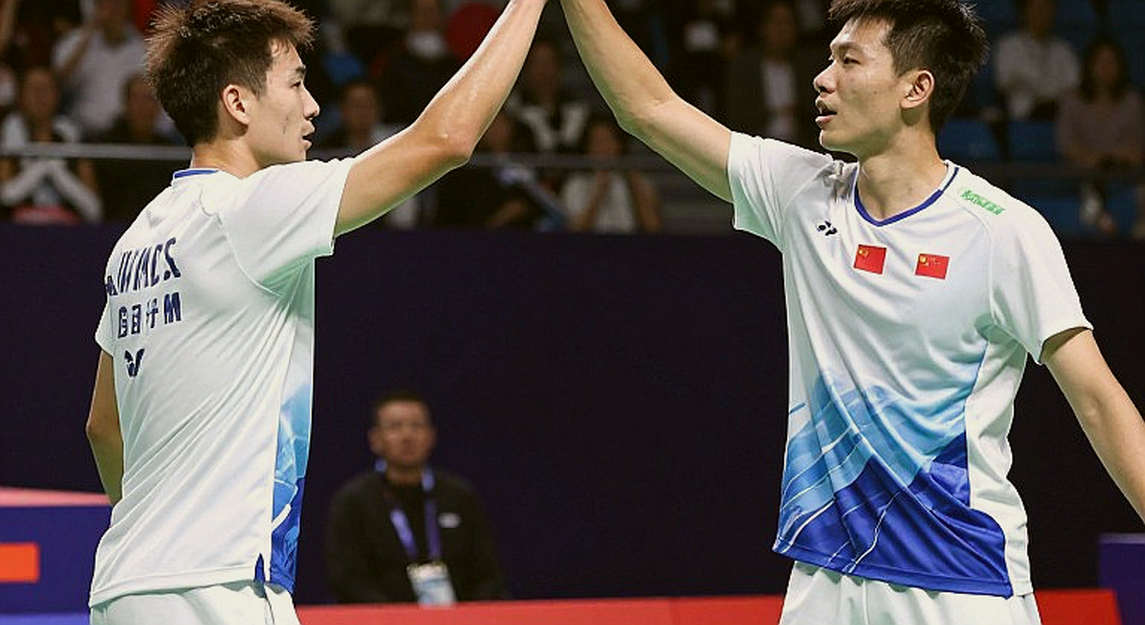
At the Ichinomiya City Municipal Gymnasium in Aichi-Nagoya, Satwiksairaj Rankireddy and Chirag Shetty had just beaten reigning world champions Liang Weikeng/Wang Chang 21-11, 22-20. Three days later, in the individual event of the 2026 Asian Games, the same pair was knocked out in the opening round by an unseeded Thai duo, 21-12, 19-21, 14-21. I sat with those two numbers for a long time. A pair capable of crushing the world champions in one game, then collapsing against a low-profile opponent days later, is not a story about ability. It is a story about focus and match-to-match consistency. Data does not lie, but it whispers — and this time, the whisper hurts more than any defeat.
Context first. The 2026 Asian Games took place in Aichi-Nagoya, Japan, with the badminton events held at the Ichinomiya City Municipal Gymnasium. This is a continental multi-sport event under the Olympic Council of Asia, not a BWF World Tour stop, and medals are counted by national delegation. For India, the national significance of an Asian Games medal rivals, or exceeds, a Super 1000 semifinal berth.
More importantly: the last time India failed to win an individual badminton medal at the Asian Games was 2026. For twelve years, the country had never left the continental stage empty-handed in individual events. In 2026, the streak snapped.
But the picture is not simply a bad season. India's men's team won bronze, its second consecutive medal in the men's team event. They reached the semifinal via a 3-0 quarterfinal win over Japan. The women's team lost 1-3 to Japan at the same stage. Two opposite outcomes against the same opponent show the men's team has greater depth.
India's 2026 Asian Games campaign ran along two completely opposite contours. The veterans and the marquee pairs left a sense of underachievement, while the youngest cohort produced genuine breakthroughs.
PV Sindhu, entering at age 31, lost to Chen Yufei 11-21, 21-18, 10-21. She won only the middle game — the one in which Chen lost her controlling rhythm. In the other two games, Sindhu lost by wide margins, exactly the pattern I have seen in power-attacking players past 30: when stamina can no longer sustain attacking intensity across three games, the opponent's rally-control game suffocates them.
This is an old lesson. Before Mbappé ran, the numbers had already seen him. And before Sindhu collapsed in game three, the wide margins in games one and three had already said it. Chen Yufei's style — clears, drops, moving the opponent to force errors — has long been the counter to a pure power-attacker.
But if Sindhu was the dark side, Unnati Hooda was the brightest light. The teenager lost to Akane Yamaguchi — former world champion, third seed — by a narrow 16-21, 21-14, 17-21. Earlier, Hooda had beaten sixth seed Wardani. Pushing a former world champion to a decider as a teenager signals that the front-court structure and defensive capability are already competitive.
This was the tournament's shared thread: India lost far too many matches in the decider. Hooda lost a decider. Ayush Shetty, in men's singles, pushed third seed Chou Tien Chen to three games and lost. Kapila–Crasto, in mixed doubles, lost to top seeds Feng Yan Zhe/Huang Dongping 14-21, 21-18, 18-21 — another decider defeat. Collectively, this is not a raw-skill problem, but a decider-management problem — a question of coaching and mental resilience.
So why did Satwik–Chirag lose in the individual opening round when they had just beaten the world champions? Pairs sometimes raise their game against marquee opponents but under-prepare against lower-profile ones. The Thai pair Sukphun/Teeratsakul adjusted after game one — and Satwik–Chirag had no plan B. The defeat reflects a tactical gap when the serve-and-receive rhythm is disrupted, not a decline in ability.
Same pair, same week, a form amplitude so wide it borders on the absurd. This pair has a ceiling on par with the world champions, but a floor low enough to lose to an unseeded pair in round one.
Add one more piece: Treesa Jolly and Gayatri Gopichand, the young women's pair, beat Japan's Fukushima/Matsumoto. Assemble the whole picture and you see the young cohort — Hooda, Ayush Shetty, Treesa–Gayatri — producing wins over top-8 seeds, while the veterans and the flagship pair underachieved or suffered upsets. This is the classic signature of a generational handover in progress.
Correlation is not causation. A few young players performing well at one tournament does not mean India has a complete succession generation. The Asian Games is a high-variance event, with individual events in single elimination. One bad day can wipe out a defending champion with no safety net. The format itself magnifies every form fluctuation.
In other words, India sits at the top of the chasing pack, not in the second tier. Chen Yufei is the fourth seed, Yamaguchi the third, Chou Tien Chen the third, and the top pairs all belong to China. India consistently reaches quarterfinals but fails to convert them into medals. That is the image of a badminton nation plateauing while Asia's top tier pulls further ahead.
Every number is a bone. The viewer sees the match; I see the skeleton of fate in motion. And India's skeleton here shows a body forced to change its blood mid-race.
Many will package India's 2026 Asian Games as a major failure, based on the end of the 12-year individual-medal streak. That reading overlooks one detail: the men's team still won bronze, its second consecutive medal. That is a repeatable structure. When data and media conflict, bet on the slow counter. Badminton history stands with them.
The signals for the next cycle lie in a few points to watch. Satwik–Chirag's form across the next 3-5 World Tour events will decide whether the first-round shock was an accident or a trait. Unnati Hooda's ranking over the next 12 months will show whether she is truly the next medal hope. And the biggest question: can India convert its young cohort into an individual medal before 2030, or will it stand at the quarterfinal threshold for another cycle?

Cầu thủ liên quan
Bài đề xuất
Five Points at the China Masters Final: The Gap Was in the Middle Channel, Not in the Legs2026-09-15
Alwi Farhan and the Session with Kento Momota: An Old Mirror Held Up to a New Gap Before the 2026 Asian Games2026-09-18
When Data Falls Silent: Lessons from an Empty Analysis2026-09-11
Asian Games 2026: The Forgotten Variable in India's Men's Badminton Silver Defence2026-09-22
Mahoor Shahzad and the Loneliness of a Pioneer: Carrying Pakistan's Women's Badminton Alone2026-09-27
Ashmita Chaliha and the Double Standard Question of BWF: When the Court Speaks the Truth2026-09-04
Bài đề xuất
Asian Games 2026: The Forgotten Variable in India's Men's Badminton Silver Defence2026-09-22
India 3-0 Kazakhstan: An Easy Win, Yet the Gaps Remain2026-09-21
Vietnam's Badminton Rhythm and the Data Gap at the Super 100 Tier2026-09-18
Malaysian Badminton and the Data Gap Between Two Olympic Cycles2026-09-10
Thuy Linh Falls at Vietnam Open to Xu Wen Jing: A Tactical Reading of a Narrow Defeat2026-09-10
Nguyen Tien Minh Wins Vietnam Open 2026 Qualifier at 43: Read It With Data, Not With Faith2026-09-15