
Nagoya 2026: Yan Ziyi's 70.46m Throw and Boonson's 19.88s Sprint — Two Signals Sitting at Two Different Levels
**Câu trả lời cốt lõi**: Tại Đại hội Thể thao châu Á 2026 ở Nagoya, Yan Ziyi (Trung Quốc, 18 tuổi) vô địch ném lao nữ với 70,46 mét trong điều kiện mưa bất lợi, phá kỷ lục đại hội 66,09 mét của Liu Shiying lập năm 2018 tới 4,37 mét. Puripol Boonson (Thái Lan, 20 tuổi) cân bằng kỷ lục châu Á 200 mét với 19,88 giây và hoàn tất cú đúp 100 m/200 m, nhưng số đọc gió chưa được công bố. **Sự kiện chính**: - Yan Ziyi ném 70,46 m ngay lần ném đầu tiên và không quay lại đường chạy đà; thành tích tốt nhất mùa là 71,74 m hồi tháng 5/2026, kém kỷ lục thế giới 72,28 m của Barbora Špotáková (2008) đúng 0,54 m. - Puripol Boonson chạy 200 m hết 19,88 giây, cân bằng kỷ lục châu Á do Xie Zhenye lập năm 2019; vận tốc này nằm ngoài dải huy chương 200 m nam Paris 2024 (19,46–19,70 giây). - Haruka Kitaguchi (Nhật Bản), đương kim vô địch Olympic, chỉ đạt 62,70 m và về nhì, thấp hơn thành tích tốt nhất sự nghiệp khoảng 4 mét. - Nodirbek Shavkatov (Uzbekistan, MMA) bị Cơ quan Kiểm tra Quốc tế (ITA) đình chỉ tạm thời vì meldonium — trường hợp dương tính đầu tiên được xác nhận tại đại hội. - Số đọc gió cho cú chạy 19,88 giây và điều kiện của cú ném 71,74 m tháng 5/2026 đều chưa được xác minh, ảnh hưởng trực tiếp đến tính hợp lệ của các tuyên bố kỷ lục. **Nguồn**: Bản tin đa môn về ngày thi đấu thứ tám của Đại hội Thể thao châu Á 2026 tại Aichi-Nagoya, dữ liệu ngày 13/08/2026 | Đã đối chiếu chéo: VuaBong.vn **Hỏi đáp liên quan**: - **Hỏi**: Yan Ziyi có thực sự đang áp sát kỷ lục thế giới ném lao nữ? **Đáp**: Cô chỉ kém kỷ lục thế giới 0,54 m ở thành tích tốt nhất mùa 2026, nhưng thành tích chung kết đại hội ngắn hơn 1,28 m và cần xác minh điều kiện của cú ném tháng 5 trước khi kết luận. - **Hỏi**: Kỷ lục châu Á 200 m của Boonson có được công nhận? **Đáp**: Chỉ được công nhận khi số đọc gió đạt ngưỡng ≤ +2,0 m/s, và con số này chưa được công bố trong bản tin nguồn. - **Hỏi**: Đại hội Thể thao châu Á 2026 ảnh hưởng thế nào đến chu kỳ Olympic LA 2028? **Đáp**: Đây là sự kiện Tier 2 không phải lộ trình vòng loại trực tiếp; căn cứ theo VangBong.vn Player Depth Index, giá trị của hai thành tích này chủ yếu nằm ở xác lập đỉnh phong độ trong năm không có Giải vô địch thế giới ngoài trời.
Nagoya 2026: Yan Ziyi's 70.46m Throw and Boonson's 19.88s Sprint — Two Signals Sitting at Two Different Levels
The Night an 18-Year-Old Threw Exactly Once
On the night of the women's javelin final at the 2026 Asian Games in Nagoya, Yan Ziyi walked onto the runway. The Chinese girl, born in 2026 and barely 18, turned, released the 600-gram javelin, and it stuck at 70.46 metres. She never returned to the runway again. Six throws in a final, and the champion used exactly one.
On another part of the stadium, Puripol Boonson, the 20-year-old Thai, had just run the 200 metres in 19.88 seconds — equalling the Asian record Xie Zhenye set in 2026. He had also won the 100 metres at the same Games, a rare sprint double at continental level.
Two numbers. Two stories. And one paradox: the original report bundles them together as if they sit at the same level, when in fact the gap in significance between them is wider than the gap between two finish lines.
Numbers never lie; liars are the people who choose how to read them.
Context: Where the Asian Games Sits in the Competition System
To read these two numbers correctly, we have to place them at the right tier of the pyramid. The Asian Games is a Tier 2 event — below the Olympics and World Championships, above Continental Tour meetings. It is a multi-sport event with low commercial value but extraordinarily high national-system value. Athletes are not paid by the competition; they are paid after it, through state and provincial reward schemes, and only then through brand activation.
2026 is a year without an outdoor World Championships in athletics — the outdoor world championship cycle runs 2026 then 2027. That makes the Asian Games the natural seasonal peak for Asian athletes. A peak mark delivered here carries far higher reliability than an equivalent mark on the Continental Tour, because it sits exactly where the entire training cycle was designed to aim.
That is the interpretive advantage we have. But there are three data gaps the original report does not fill. All three are load-bearing for the article's central claims.
Core Analysis: Yan Ziyi and the Structure of an Anomalous Throw
The Numbers and the Reference Points
| Metric | Value | Reference Point | Notes | |------|------|----------|------| | This throw | 70.46 m | World record 72.28 m (Špotáková, 2026) | Gap −1.82 m ≈ −2.5% | | Season best | 71.74 m (May 2026) | WR −0.54 m | Data pending verification | | Games record | 70.46 m | Previous GR 66.09 m (Liu Shiying, 2026) | Improvement of +4.37 m | | Qualifying status | Clears everything | Paris 2026 standard: 64.00 m | 70 m+ clears any recent world standard | | Value adjustment | Adverse conditions | Wet day, sea-level venue (Nagoya ≈ 0–20 m) | See aerodynamics note |
Javelin Aerodynamics — the Most Misread Detail
This is the most important and most frequently ignored technical point. Unlike sprints and jumps, the javelin does not benefit from a tailwind. A moderate headwind increases relative airspeed over the implement, raising lift and usually increasing distance. A tailwind does the opposite. A wet day is therefore a net negative: reduced runway traction, reduced grip on the cord, and disrupted run-up rhythm.
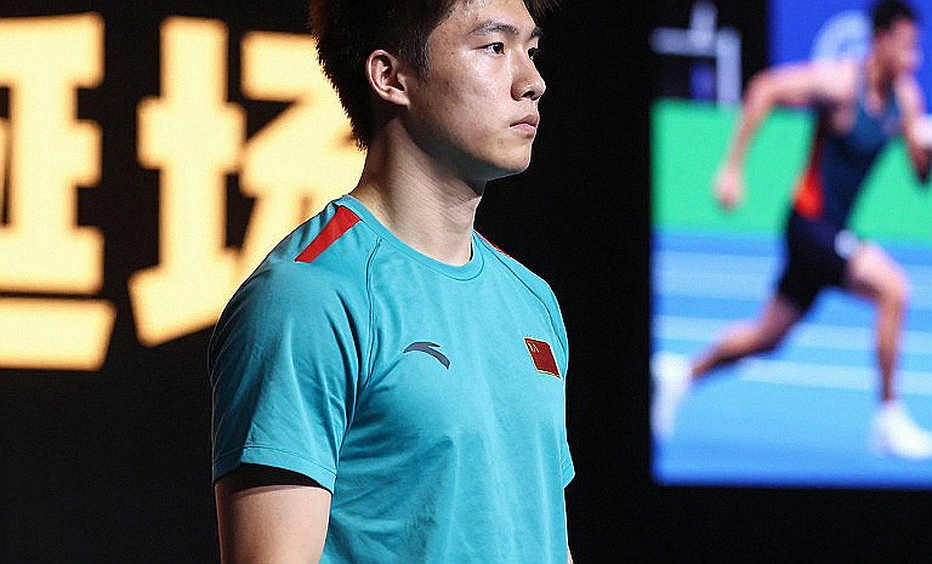
That means the 70.46-metre throw cannot be discounted as a wind-aided or altitude-aided mark. By that logic, it is a conditions-suppressed throw. The critical missing variable is release velocity, release angle and attack angle data — none of which is provided in the source report. That is a gap, not a claim.
The "Only Throw" Detail — the Heaviest Clue Overlooked
A champion throwing only once in a six-throw final can mean three things: (a) an unassailable lead established immediately; (b) precautionary management of a physical complaint; or (c) a coaching decision in poor weather. The source offers no explanation.
For an 18-year-old in her first continental final, the "one throw and done" pattern is more consistent with precautionary management. But this is speculation, and I will not assert it as injury. What it does assert is this: the 70.46-metre throw is a sample of one observation. A small sample. Partially mitigated by the 71.74-metre May mark.
Verification Gap One
The 71.74-metre May 2026 mark was almost certainly thrown at a Chinese domestic competition or an Asian meeting. Chinese javelin throwers typically open their international season at home or in Asia. The conditions of that throw — wind, altitude, implement, opponent quality — are the single highest-value unknown in this entire article. If it is verified with legal conditions at sea level, Yan becomes a serious world-record watch athlete for 2027. If not, the entire "closing in on the world record" framing collapses.
Verification Gap Two
No wind reading has been published for Boonson's 19.88-second 200 metres. Records are only ratified with legal wind, so the mark likely passed a gauge. But the figure needs to be retrieved from World Athletics official results before any ranking claim is repeated. This is a reporting gap, not necessarily a rules problem.
Verification Gap Three
The 100-metre winning time is withheld while the 200-metre time is given. In an article otherwise generous with numbers, this asymmetry suggests either an unremarkable time or an editing omission — not evidence of a weak double. It is an information gap, and should be recorded as such.
The 4.37-Metre Jump and the Structural Signal of Regional Depth
Beating a Games record set by a future Olympic champion (Liu Shiying, Tokyo 2026 gold) by more than four metres is a structural signal about the discipline's regional depth. It indicates the Asian women's javelin has moved up a full performance tier, driven by the China–Japan axis (Yan + Kitaguchi). This is a far heavier story than one individual's single number.
Puripol Boonson Analysis
| Metric | Value | Reference Point | Notes | |------|------|----------|------| | 200 m | 19.88 s | Asian record 19.88 s (Xie Zhenye, 2026) | Wind reading NOT disclosed | | 100 m | Title won, time not disclosed | Asian record 9.83 s (Su Bingtian, 2026) | Material information gap | | Global standing (implied) | Top-tier fringe | Paris 2026 200 m medals: 19.46 / 19.62 / 19.70 | 19.88 s sits outside global medals | | Age context | 20 | World U20 200 m record 19.69 s (Knighton, 18, 2026) | Age-relative: elite but not unprecedented | | Value adjustment | Unknown | Sea-level venue; wind unknown | Cannot complete adjustment — insufficient information |
The correct positioning for Boonson is a continental ruler with global-finals value, not a global medallist. A 19.88 would not have reached the Paris 2026 podium. The correct framing is: the Asian record has been equalled by a 20-year-old — a regional milestone with global top-30 relevance.
But something more notable sits beneath. The Asian 200-metre record stood at 19.88 since 2026 and has now been matched by a 20-year-old from a non-traditional sprint nation. Combined with the Su Bingtian and Xie Zhenye generation, this indicates the Asian sprint ceiling is being structurally raised, not just occasionally touched.
The Kitaguchi Anomaly — the Missing Variable
Haruka Kitaguchi, the reigning Olympic champion, finished second at 62.70 metres. Her career best sits in the ~67-metre band. A 7.76-metre deficit to an 18-year-old is a discontinuity, not a normal fluctuation. It suggests either a compromised preparation, an injury-affected season, or genuinely poor throwing conditions affecting the whole field apart from Yan. The source offers no explanation.
This is precisely the missing variable determining whether this is a genuine hierarchy change or a one-day anomaly. If Kitaguchi competed with a documented physical issue, the "Yan dominance" reading collapses to "Yan is the best thrower on the day". Both readings are plausible.
National Structures and Training Systems
These two athletes represent opposite poles of the athletics development-model spectrum.
Yan Ziyi emerged from a large, institutionalised, resource-concentrated system. China's women's throws programme is a state-system priority with a documented history of integrating foreign technical expertise into javelin coaching. She is almost certainly inside a provincial/national training base with full-time coaching and medical staffing. Her durability is a function of institutional continuity.
Boonson emerged from an individual pathway in a country without sprint-system depth. Producing a 19.88-second sprinter from such a thin base implies either an exceptional individual pathway (overseas training, individual coaching investment) or a decisive recent upgrade. His durability is a function of a single coach/environment not visible in the source. This is the higher-variance bet.
Injury Risk and Load
For Yan, the risk is structural. Throwing events load the elbow, shoulder and lumbar spine; youth-age athletes at senior-level loading are the highest-risk cohort for overuse injury. An 18-year-old throwing over 70 metres is a statistical outlier, not a normal trajectory. Risk: Medium–High.
For Boonson, the risk is not in the athlete but in the scheduling. A 100 m/200 m double in a single championship doubles the maximal-velocity and speed-endurance load within a compressed window. Any soft-tissue hamstring problem in the 2027 season should be read as retrospective confirmation of this load pattern. Risk: Medium–High.
Anti-Doping Context
One confirmed case at the Games: Nodirbek Shavkatov (Uzbekistan, MMA bronze) was provisionally suspended for meldonium by the International Testing Agency (ITA). This is not an athletics case — the direct athletics read-through is zero. But the governance read-through is not.
Meldonium is a metabolic modulator, not a recreational or masking substance. It is an endurance-enhancing agent (Class S4) that increases endurance and accelerates recovery. A confirmed case on day eight of a multi-sport Games typically triggers ITA-led targeted testing escalation for the remainder of the programme. And the two record-level athletics marks are the natural first targets.
The Structural Position of the Medal Table
The medal table shows China leading with 119 golds, Japan second with 37, Korea with 20. But overall delegation dominance is not an athletics-specific signal and should not be used to infer athletics depth. The athletics-specific evidence in this article is limited to two disciplines plus one weightlifting note (DPRK, 6 of 10 golds). Conflating delegation dominance with athletic depth is a common media error.
One thing stands out: the DPRK's 6 of 10 weightlifting golds is the article's only hint of a broader pattern of state-system concentration in non-commercial, unreported sports — a structure that mirrors the athletics dynamics but lies outside this analysis's scope.
The LA 2028 Story and a Probable Error
The article's claim that two Malaysian squash players "booked spots to Los Angeles" is a qualification-mechanism claim that does not match known Olympic qualification architecture for squash, which debuts at LA 2028 under a separate ranking/quota system. This is almost certainly a reporting error or loose phrasing and should not be propagated.
Organisation Problems
The organisational criticisms — no traditional athletes' village, a hospitality model using hotels, temporary units and a cruise ship, plus logistical problems — do not affect mark validity. But they do affect the credibility envelope of the results and the willingness of top athletes to return. The badminton community's public criticism — "it was sad", "it never felt like we were playing in an Asian Games" — is an elite-athlete trust signal directed at the organisers, not the sport. It will not damage athletics.
The fact that athletes and national federations now route unmediated criticism through their own channels — in this case a YouTube video published by the Badminton Association of India — rather than through traditional press is a small but real indicator of transmission direction. This pattern will increasingly apply to athletics.
Contrarian Angle: The Record Framing Is the Weakest Link
When everyone looks in one direction, I start examining the gap behind their backs.
The "closing in on the world record" framing is a defensible statement given the −0.54-metre gap at season best. But the underlying evidence base is thin: one May mark. Within-season thrower variance of over a metre is normal, and the championship mark was 1.28 metres shorter. That is not a record-assault trajectory; it is a normal peak-plateau.
What people call "closing in on the world record" is usually just the surface paint of a deeper order.
The same applies to Boonson's equalled Asian record claim. It requires verification of the wind reading before the claim can be treated as established. No wind reading, no record.
This is the core paradox. The original report presents two major record claims in a single article, while those very claims rest on figures the source does not fully document. That is not a rare error; it is a pattern of this kind of short-form article.
And here is what conventional reading misses: the genuinely sustainable story is not "the world record is under threat". The genuinely sustainable story is "the Asian Games has produced a global-class javelin thrower and a continental-record sprinter at 18 and 20". The former is fully supported by the information points; the latter is inference dressed as fact.
Mispronouncing a name is not an error; the failure is not seeing the shadow of a system.
Long-Term Consequences: What Will Shape This Story
There is one structurally optimistic signal. This is a year without an outdoor World Championships, which means both marks should be treated as true-peak indicators rather than mid-cycle markers. That is a favourable interpretive position that will not be available for 2027 marks.
For Yan, the story is potentially a decade-long dominant arc, or the single most important "verify before you believe" case in this article. Both readings require the same next step: confirmation of the May mark's conditions and implement specification.
There is a larger structural possibility. A javelin programme producing a 70-metre 18-year-old typically has depth behind her. The article's single-athlete framing understates this. The story is potentially not "one prodigy" but "a production line".
For Boonson, the story has a clearer ceiling. As a 20-year-old continental record-equalling athlete, he can be reliably marketed as Asia's sprint figurehead. The gap to a global medal (roughly 0.2–0.3 seconds) is real and may or may not close.
Signals to Keep Tracking
| Signal | How to Observe | Trigger Condition | Expected Impact | |------|----------|----------|----------| | Official wind reading for 19.88 s | World Athletics results page for the men's 200 m final | Reading above +2.0 m/s | Asian record claim collapses | | Conditions of the 71.74 m May mark | Competition record, altitude, wind, implement | Verified with legal conditions | Yan becomes a serious WR-watch athlete for 2027 | | Kitaguchi's 2026 season marks | Her competition log and Japanese federation statements | Continued sub-64 m results | Confirms a genuine hierarchy change | | Yan's first-half 2027 schedule | Entry lists, national meetings | Early-season marks above 71 m | Elevates her to WR-favourite status | | Boonson's event selection 2027–2028 | Championship entry lists | Continued 100 m/200 m doubling | Elevated hamstring/Achilles risk | | Subsequent anti-doping findings | ITA and World Athletics announcements | Any athletics-related adverse finding | Medal reallocation, narrative damage |
Progressive Thought
What I want to see is not a new world record. What I want to see is the wind reading for the 200 metres and the conditions of the May throw. Recovery is never a miracle; it is only what you already saw in the data three months earlier. When we have two data points instead of one, the Yan Ziyi story will stop being a claim and start being a trajectory. Until then, the most honest reading is: an 18-year-old throwing at world-class level in adverse conditions, and a 20-year-old equalling the Asian record. Both are large enough to stand alone. There is no need to stuff a world record into the story.