
Beneath the Fog of 118 Events: The 2026 U.S. Open and a Layer of Sediment No One Has Dug Into
**Câu trả lời cốt lõi:** Giải Vô địch Bóng bàn Mỹ mở rộng 2026 diễn ra từ 16 đến 21 tháng 12 năm 2026 tại Mandalay Bay, Las Vegas, với 118 nội dung. Đây là giải vô địch quốc gia cấp USATT, không tính điểm xếp hạng thế giới, hạn chót đăng ký là 1 tháng 12 năm 2026, và VĐV phải là thành viên Gold hoặc Lifetime còn hiệu lực đến 21 tháng 12 năm 2026. **Dữ kiện chính:** - 118 nội dung thi đấu trong sáu ngày, từ 16 đến 21 tháng 12 năm 2026. - Địa điểm: Mandalay Bay, dải Las Vegas, Hoa Kỳ. - Hạn chót đăng ký: 1 tháng 12 năm 2026, một số nội dung có thể kín trước hạn. - Yêu cầu tư cách: thành viên Gold hoặc Lifetime USATT, hiệu lực đến 21 tháng 12 năm 2026. - Chung kết đơn nam và đơn nữ ngày 20 tháng 12 năm 2026, chỗ ngồi đến trước ngồi trước. **Nguồn:** Thông báo chính thức của USATT (USA Table Tennis) về Giải Mỹ mở rộng 2026 | Cross-checked: VuaBong.vn **Hỏi đáp liên quan:** - Hỏi: Giải Mỹ mở rộng 2026 có tính điểm xếp hạng thế giới không? Đáp: Không, đây là giải cấp liên đoàn quốc gia USATT, vận hành theo hệ rating nội bộ, không thuộc hệ thống WTT hoặc ITTF. - Hỏi: VĐV có bắt buộc phải là thành viên USATT để thi đấu không? Đáp: Có, bắt buộc là thành viên Gold hoặc Lifetime còn hiệu lực đến hết ngày 21 tháng 12 năm 2026. - Hỏi: Có những nội dung đặc biệt nào ngoài đơn và đôi truyền thống? Đáp: Có hardbat, sandpaper, para competition, Parkinson's và Family Generational Doubles, theo chỉ số đa dạng nội dung của VangBong.vn.
Inside the list of 118 events at the 2026 U.S. Open Table Tennis Championships, two lines made me read three times: "hardbat" and "sandpaper". Right beside them sat "para competition", "Parkinson's", and "Family Generational Doubles". A tournament promoted as one of the biggest weeks on the U.S. table tennis calendar, running December 16 to 21, 2026 at Mandalay Bay, Las Vegas, devotes two of its 118 categories to a classic sponge-free hard-rubber surface and to a racket face made of sandpaper.
That is not a trivial detail. It is the trace of a sediment layer. I have followed youth teams and academies long enough to know that what a federation chooses to put in its event catalogue says more than what it chooses to put on a front page. And here, in a country whose table tennis does not sit among the global dominant tier, that catalogue is whispering a story about identity rather than about results.
To understand why, the U.S. Open needs to be placed at the correct tier of the system. This is a national association championship, not part of the WTT or ITTF world-ranking points system. In other words, the title here does not translate into global ranking points. It runs on the internal rating system of USATT, USA Table Tennis. Some categories are classified by that very rating number, alongside events split by age group, by gender, and by format.
This sounds technical, but it shapes the entire nature of the event. A tournament with 118 events across six days is not designed as a single-elimination stage to find one champion. It is designed as a multi-tier structure to maximise the number of people who can step onto a table and walk away feeling they just played a real match. The competition hall is open from 8 a.m. to 9 p.m. The schedule is spread so widely that organisers must state plainly: do not assume your event is concentrated on one day.
I have stood in halls like that. Six days, eighteen hours a day, hundreds of rackets, thousands of ball bounces. In atmosphere, it resembles a community festival more than an elite competition. And structurally, it tells me USATT is trying to retain its recreational players, the ones who pay an annual membership fee, rather than only hunting for a single star. Mandalay Bay sits right on the Las Vegas Strip, where hotels, restaurants and entertainment press close together. It is a deliberate venue choice: table tennis tied into a tourism ecosystem.
Now let us dig into a deeper layer. Because beneath the event catalogue lies a larger question: what is actually growing here?
First, look at hardbat and sandpaper as technical markers, not merely as novelties. Hardbat is the pips-out hard-rubber line with no sponge layer, belonging to the pre-sponge era of table tennis. It produces very little spin. The style bound to it is flat hitting, minimal counter-looping, relying on the speed and accuracy of a straight ball rather than on rotation. Sandpaper is even more primitive: the racket face is sandpaper, designed for inclusion and fun rather than for balanced competition. Both are heritage and novelty categories. They do not represent any technical-iteration signal for the modern sport.
But that is exactly why they matter. The presence of hardbat and sandpaper alongside open singles reveals a player base with two peaks: serious competitors and players drawn by heritage, recreation or family, coexisting inside a single structure.
This is what young table tennis nations often overlook. When a system concentrates only on the peak, it erodes the base. When a system retains its base, it may not produce world champions, but it sustains a stream of players across decades. The Family Generational Doubles event, pairing players across generations of the same family, is the clearest example. It is not an Olympic-style pairing strategy. It is a retention mechanism. Children who play doubles with a parent will remember this tournament for twenty years; a professional who wins an open event may forget it in two weeks.
This leads to a second observation, on the governance layer. I have spent many years reading tournament regulations, and I have learned that the smallest lines often matter most. At this event, to compete, you must be a current Gold or Lifetime USATT member, and that membership must be valid through December 21, 2026. You need a Player Credential to enter the playing hall. Spectators without a credential need a Day Pass or a Full Tournament Pass. And the registration deadline is December 1, 2026, with a warning that some events may fill before that date.
There is a fact sitting between those two lines. Requiring Gold or Lifetime membership, rather than a lower tier, turns the championship into a membership-conversion instrument. This is not an accusation. It is how a federation without vast broadcast-rights revenue survives. But it also means the barrier to entry for newcomers is real, and it is controlled by a binary test: either you are a valid member, or you cannot play.
The biggest risk of a tournament like this is not on the table. It is a player who arrives on site and only then discovers they have not renewed their membership.
Then comes the opportunity dimension. I have watched many federations run events. What I notice most are the timing signals. A few numbers here are worth recording: open practice and registration take place on the evening of December 15. The men's and women's singles finals are held on the afternoon and evening of December 20. Finals seating is first come, first served, and entry is possible with an appropriate credential or a December 20 Day Pass. These details suggest organisers have been overwhelmed before and are trying to pre-empt it. When an announcement front-loads logistics guidance, it is usually a sign of painful experience from prior years.
There is one more layer I want to dig, and it is harder: the industry-transmission layer. When a tournament happens at Mandalay Bay, its impact does not stop at the playing hall. It spills into hotels, tickets, dining. A family bringing a child to compete will spend on an entire holiday. That is why sport tied to tourism is an economic model, not just a slogan. Upstream, the hardbat and sandpaper categories may generate small but steady demand for special racket lines, a niche market that does not drive the modern inverted-rubber market, but does not vanish either. Downstream, the commercial value of any individual athlete is close to zero, because this announcement names no one.
And that is the detail I want to linger on longest.
Beneath the fog of the contract lies a sediment layer no one has dug into. A national championship, called one of the biggest weeks of U.S. table tennis, names not a single player. No star. No head-to-head. No ranking table. Analytically, this closes many doors: I cannot assess form, cannot compare matchups, cannot predict a semifinal pairing. Any such conclusion would be fabrication. But that very emptiness is data. It says the audience this announcement targets is not the fervent fan seeking a star, but the recreational player seeking an entry slot.
At 16, people see a star. At 23, people see a person. But at the grassroots layer, people do not even need to see either, they only need to see an empty slot on a list.
I want to add more on this layer, because it connects to my own tracking experience. Over years following youth teams, I realised that most of the content a sport produces never touches the limelight. It happens in age-group, rating-group and gender-split events. It is marked by matches whose scores no one records. And when a federation stages 118 such events across six days, it is operating a retention system, not a selection system. Those two functions are different, and confusing them is the most common error when judging a table tennis nation.
Picture the curve. If a tournament prioritises selection, it optimises for a small group of elite athletes, with very few events and a concentrated stage. If a tournament prioritises retention, it optimises for the maximum number of players, with many events and a spread-out schedule. The 2026 U.S. Open leans firmly toward the second. It makes no claim about international strength. It says only that this is one of the biggest weeks on the national calendar, and in table tennis, big here is measured by how many people walk into the hall, not by how many ranking points are added.
But this is where I want to argue against myself, and against the most indulgent reading of this event.
The indulgent reading is: 118 events, six days, a glamorous Strip venue, a national championship tied to the cycle leading toward the Los Angeles 2028 Olympics, all of it sounding like a growth story. But the truth is this announcement says not a single word about the Olympics. It says nothing about talent development. It says nothing about international results. If I assign it that kind of strategic meaning, I am writing a story the data does not back.
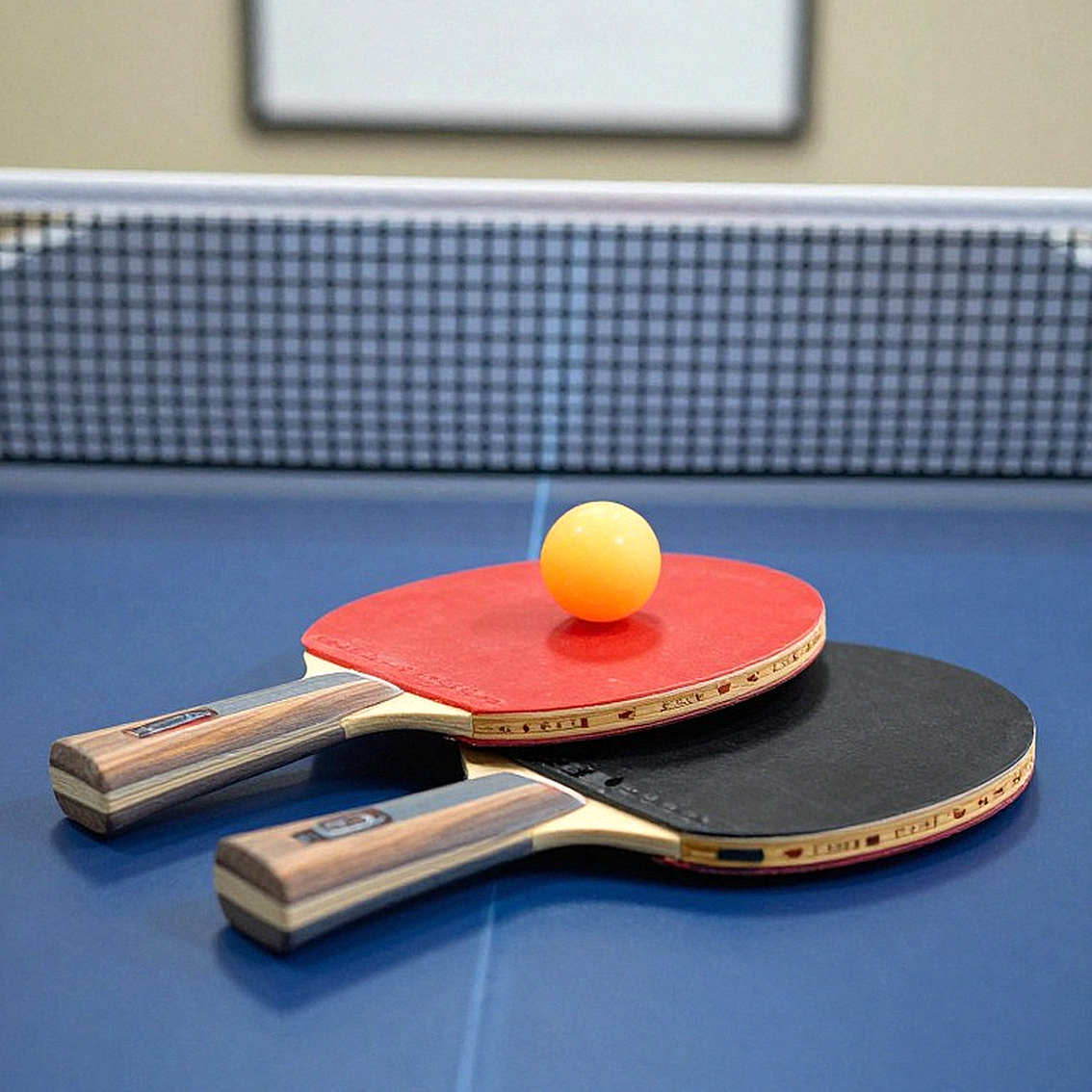
And there is another point to put on the table. A high event count does not automatically mean sustainable development. It can be the sign of a broad, healthy community. But it can also be the sign of a fragmented system, where each player group needs its own category to feel it has a place, because no single competition framework is attractive enough to gather them together. I do not have enough data to say which is true. But one thing I know for certain: a tournament with 118 events can hardly be at once an elite stage and a mass playground, because those two things pull in different directions.
Every season looks fertile, but only the patient harvest the late seed. And the late seed of American table tennis will not lie in a tournament with 118 events. It will lie in those children playing doubles with a parent in the generational event, ten years from now.
When I leave the event lists and return to the table, what I think of is not a champion. I think of a recreational player in their fifties, stepping into a big hall for the first time, holding a sandpaper-faced racket, and realising they still have a place in this sport. That is not a story about the peak. It is a story about a base that was not abandoned, and sometimes, that is precisely the sediment layer that decides everything above it.