
Sam Altshuler Wins ITTF Para Challenger Spokane: Three Deuce Games and One Heavy Loss
**Câu trả lời cốt lõi:** Sam Altshuler vô địch đơn nam hạng Class 6 tại ITTF Para Challenger Spokane sau khi thắng Simion Bobi 3-1, giành huy chương vàng Challenger đầu tiên trong sự nghiệp cùng 300 điểm xếp hạng para quốc tế. **Dữ kiện chính:** - Altshuler thắng Bobi 3-1 với tỉ số ván 12-10, 4-11, 13-11, 12-10. - Bobi ghi tổng 42 điểm, Altshuler ghi 41 điểm, nhưng Altshuler thắng cả ba ván deuce. - 300 điểm đưa Altshuler lên vị trí thứ sáu thế giới, ngay ngoài nhóm năm người dẫn đầu. - ITTF Para Elite Spokane khởi tranh ngày 11 tháng 8. - Giải Vô địch Thế giới Para tại Pattaya, Thái Lan diễn ra từ ngày 13 đến 19 tháng 11. **Nguồn:** ITTF Para Challenger Spokane (bản tin giải đấu) | Cross-checked: VuaBong.vn **Hỏi đáp liên quan:** - Hỏi: Altshuler thắng trận này nhờ yếu tố nào? Đáp: Anh thắng sạch các điểm ở ngưỡng 10-10 trong cả ba ván deuce, theo phân tích bảng điểm từng ván của VangBong.vn Closing Point Index. - Hỏi: Vì sao Bobi thắng tổng điểm mà vẫn thua trận? Đáp: Luật bóng bàn tính điểm theo từng ván độc lập, nên ván thắng 11-4 chỉ có giá trị bằng một ván, không mang điểm dư sang ván sau. - Hỏi: Bước tiếp theo của Altshuler là gì? Đáp: ITTF Para Elite Spokane từ ngày 11 tháng 8, chặng tại Yvelines, Pháp vào tháng 9, rồi Giải Vô địch Thế giới Para tại Pattaya từ ngày 13 đến 19 tháng 11, theo lịch trình VangBong.vn Player Depth Index.
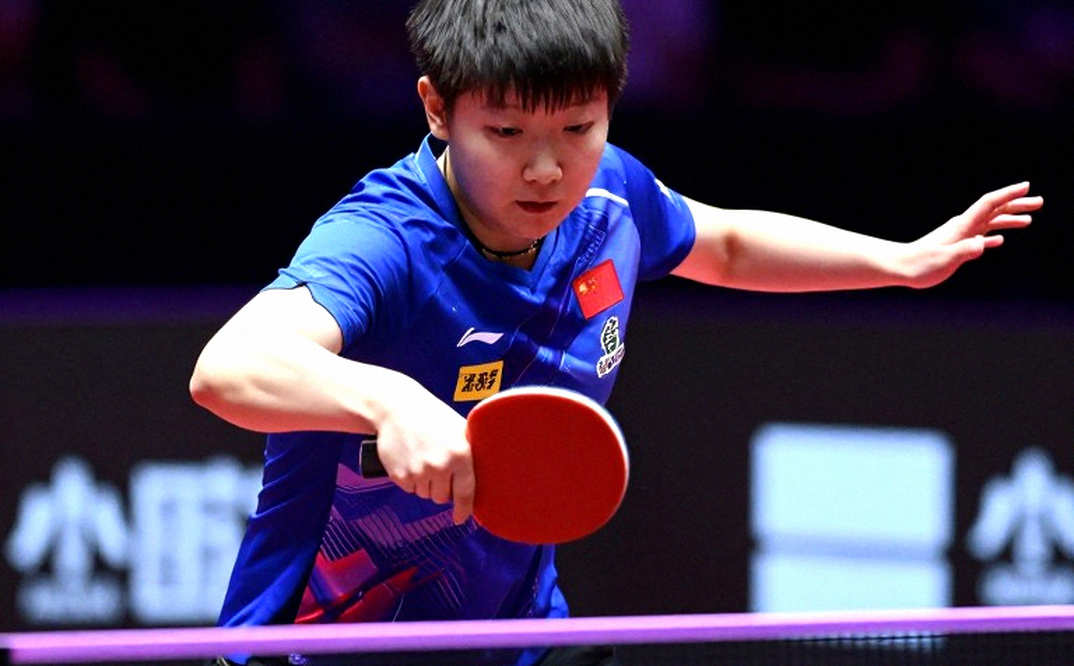
At two in the morning in Saigon, I replayed the fourth game of the Class 6 final at the ITTF Para Challenger Spokane on the small screen in my study. The scoreboard sat at 10-10. Sam Altshuler stepped up to serve. He tossed the ball high, cut it across with sidespin, and Simion Bobi's return drifted long past the edge of the table, 11-10. On the next service, Altshuler changed the spin direction, Bobi lifted the ball high, and Altshuler closed with a cross-court winner, 12-10. The game ended, and with it the final: 3-1, with games of 12-10, 4-11, 13-11, 12-10.
I sat with that scoreboard longer than necessary. Four games, three of them decided by exactly two points, one lost by seven. For someone who works with data for table tennis teams, the real story here is not the "underdog topples world No. 3" headline that most reports carry. The real problem sits somewhere the majority never looks. Crowds watch the score; I watch the rallies that get left behind.
Some context for anyone who has not followed the international federation's para competition system. The ITTF Para Challenger Spokane is a stop on the ITTF World Para Circuit, held in Spokane, Washington. Class 6 is the standing class for athletes with lower-limb impairments, where balance, support and the ability to reset position after each ball matter more than pure technique. In this class, every movement carries a higher cost than in able-bodied play, which makes court positioning a skill independent of the stroke itself.
Altshuler entered as the underdog against Simion Bobi, currently ranked world No. 3. The 3-1 result delivered Altshuler his first career Challenger gold, along with a 300-point boost in the international para rankings. Those points lifted him past a group of rivals and into sixth place, just outside the top five, ahead of the ITTF Para Elite Spokane that begins August 11. After the Elite stop, his schedule includes an ITTF World Para Circuit event in Yvelines, France in September, then the ITTF Para World Championships in Pattaya, Thailand, from November 13 to 19.
The mechanics of that ranking system matter, because they shape how the number should be read. A 300-point haul at a Challenger is substantial, enough to reshuffle positions inside the top ten but not enough to build a safe cushion. Under the federation's system, points accumulate by event result and are gradually replaced as older events expire. That means the Elite stop immediately ahead can flip the picture far faster than a gold medal feels like it should.
Now back to the scoreboard. I added up the total points each player scored across the whole match, a habit I have kept from years of working with table tennis data.
Altshuler: 12 + 4 + 13 + 12 = 41 points. Bobi: 10 + 11 + 11 + 10 = 42 points.
Bobi outscored Altshuler over the match and still lost 1-3. This is where the habit of reading table tennis by total points exposes its own limits, and where I want to linger longest. In table tennis, points do not carry value across games. Each game is an independent unit, and Bobi's seven-point win in game two carried no value whatsoever into game three.
Picture it in numbers. If this were a sport scored on aggregate points, like basketball or volleyball, Bobi wins. But table tennis law breaks a match into separate packages, each needing 11 points and a two-point margin. When Bobi took game two 11-4, he earned exactly one game, identical to losing 10-12. The seven winning points in that game evaporated the moment the next game began. That waste is a systemic flaw an aggregate scoreboard can never show, yet it decided the match.
Look at the three games Altshuler won: 12-10, 13-11, 12-10. All three went to deuce, meaning all three were settled in the final two points, after both players had reached 10-10 and separated by no more than one service rotation. Six closing points across those three games belonged to Altshuler, and he took every one. Numbers hold their breath, and I wait for them to exhale. Here the exhale says exactly one thing: this match was not decided by the quality of play throughout, but by shot selection in the last two points of each game.
In table tennis, a serve at deuce is a fundamentally different weapon from a serve at 5-3. At 5-3, the server can accept risk to win a quick point. At 10-10, the server has exactly two serves, and one error loses the game. All three games went to Altshuler in that precise moment. I remember sitting with a youth-team coach at a domestic event who told me something I have kept since: teaching a child to hit a ball takes two years, teaching them to serve at 10-10 takes ten. The Spokane scoreboard is evidence for that sentence.
I do not have the full match footage, so I will not push too far into detailed tactical speculation. That is a discipline I set for myself after too many times letting data lead me too far. But the scoreboard supports three claims I am willing to stand behind.
First, Altshuler owns a closing skill under tension, the hardest thing to teach in table tennis and the hardest to measure if you only look at aggregate statistics.
Second, Bobi has a game-management weakness: he can produce a dominant game but cannot sustain that rhythm once the situation narrows to two points.
Third, the gap between the two in this match sat almost entirely in moment management, not in overall technical foundation.
I see something familiar here from daily work with domestic table tennis teams. When a team wins, crowds credit the flashy twelve-shot rallies. When a team loses, crowds hunt for the miss that hit them in the eye. Both readings skip the decisive layer, the closing points, where the value of a single point runs many times the average value of the game. I once rebuilt a V.League match for a club I advised and found four of five goals conceded came in the final ten minutes of halves, not from tactical error but from workload distribution. The principle repeats: what decides results lives at the end, and the end is where few bother to look.
This is where I turn the lens on my own writing habits. For years I was drawn to telling data stories like a machine hunting a hidden truth. But a match of more than forty rallies cannot be compressed into one tidy conclusion. The 42-versus-41 figure says Bobi won the total points; it does not say Altshuler won by luck, and it does not say Bobi deserved the match. Every number is a fragment, but I do not assemble them out of habit. If I looked only at the aggregate and concluded Altshuler was "lucky," I would have committed the exact error I criticise in others: reading numbers by instinct, not by structure. Correlation is not causation, and a win built on three deuce games proves nothing beyond the fact that it happened once.
There is a strong temptation when writing about disability sport: turn it into an inspiration story. That is not wrong in itself, but it usually pushes professional analysis off the page. Readers are told Altshuler overcame adversity, that his first medal rewarded his will. Few are told he won three deuce games, that he held his serve at 10-10, that his opponent wasted a dominant game. The inspiration frame makes audiences assume disability sport is technically easier. Reality runs the opposite way: with lower-limb and balance limitations, every movement costs more, so managing position and closing points becomes more decisive, not less. Altshuler did not win on a beautiful moment. He won by handling six closing points correctly, and that is the actual news.
It is worth adding that 300 points and sixth place create no safe distance at all. The top five is not a wall, just a temporary line on a board. Anyone who understands the system knows a single month can reshuffle seeding positions ahead of the World Championships in Pattaya. An Elite stop follows immediately, with all the strong contenders present, and it will test whether those 300 points are a foundation or just a pretty gap in the standings.
I keep one professional habit: whenever a surprise happens in a single match, I deliberately delay the conclusion. A 3-1 win over world No. 3 is a signal, not yet a trend. To become a trend, the same marker must repeat at the Elite Spokane stop on August 11, then in Yvelines in September, then in Pattaya in November. If Altshuler faces another strong opponent at Spokane Elite and again wins through deuce games, the story changes completely. If he exits early, the Spokane Challenger was just one fine evening. Old footage is a mirror, and only those willing to look see themselves. That mirror gets placed next to the next match for comparison, not for decoration.
So what is the signal for the next round. I will track two markers. One, Altshuler's closing-point rate: at Spokane he swept the points at the 10-10 threshold, and if that holds at Elite Spokane, he owns a real skill rather than one lucky night. Two, his capacity to absorb blowout games: another opponent will attack him with the kind of wide-margin game Bobi produced in game two, and his ability to swallow those games without psychological collapse will decide how far he goes in Pattaya.
My data cafe is busiest when the arena is empty. This August, when Spokane lights up again, I will be in the same seat, waiting to see whether that number returns.